

























The used electric vehicle market in Canada has crossed a psychological line. A category once known for high sticker prices and cautious buyers is now producing enough affordable inventory that more than half of used EVs sold in March were priced below $35,000 in Clutch’s Canadian used-vehicle dataset.
The change is not just about bargain hunting. It reflects lease returns, softer resale values, changing incentives, and a growing pool of mainstream models that are no longer rare on dealer lots. For households that once saw electric driving as a premium leap, the math is starting to look more familiar. A used EV can now sit beside a compact SUV or family sedan in the same budget conversation, while still offering a different ownership equation around fuel, maintenance, warranty, and battery health.
The $35,000 Line Has Become a Real Market Signal
For years, $35,000 has been an important price point because it feels reachable for many car shoppers without entering luxury-vehicle territory. In the used EV market, that threshold now matters even more. Clutch reported that more than half of used EVs sold in March were below $35,000, while the share below $30,000 rose from 37.1% to 43.3% over 12 months. That means affordability is no longer limited to older, short-range electric cars.
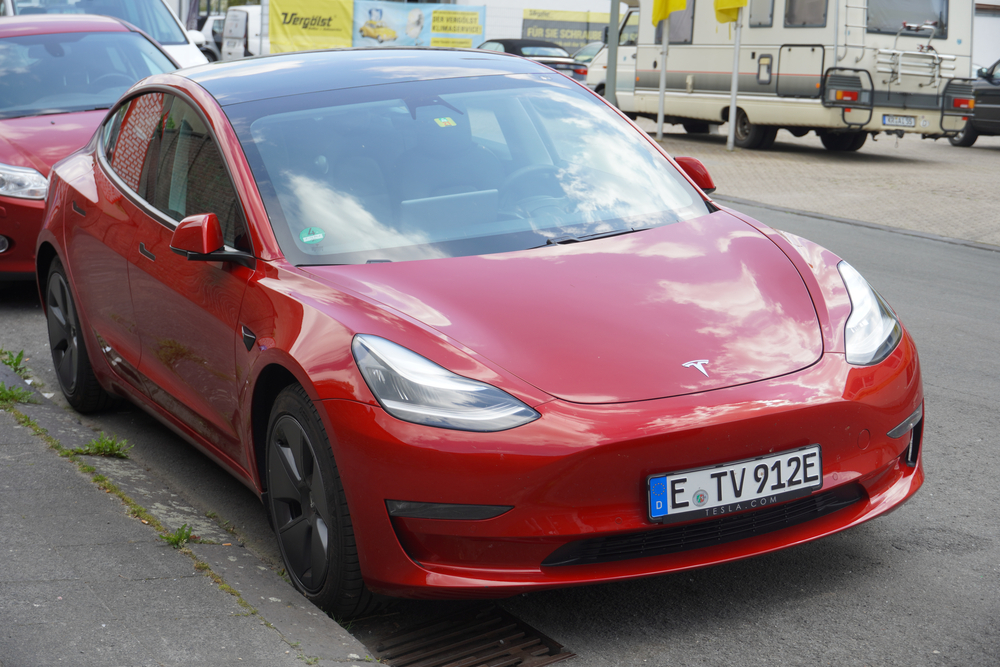
The model examples show how quickly the category has changed. A used Tesla Model 3 averaged $28,499, while a Nissan LEAF averaged $16,443 and a Chevrolet Bolt EV averaged $19,542 in the same pricing snapshot. Those numbers put some EVs below the average used gasoline vehicle price of $32,288. For a commuter replacing an aging compact car, the conversation has shifted from “Can an EV fit the budget?” to “Which EV makes sense for the daily route?”
Lease Returns Are Pushing More EVs Into the Used Market
The affordability shift is not happening in isolation. Clutch’s data pointed to a wave of 2022 and 2023 off-lease EVs arriving in the used market, which helped push used EV prices down by $1,765 in a single month. That was described as the largest monthly EV price drop in its dataset. Importantly, the decline was not simply because every individual EV suddenly lost that much value. A larger mix of cheaper EVs entered the pool of vehicles being sold.
That matters for buyers because the used EV market is becoming younger and broader at the same time. The average model year of sold EVs in the dataset rose from 2021.70 to 2022.44 year over year, suggesting that many of the lower-priced options are not necessarily ancient technology. A three-year-old lease return can still feel modern, especially if it has remaining warranty coverage, active software support, and enough range for ordinary commuting. Dealers, meanwhile, are adjusting to a category that is moving from specialty inventory to regular used-car stock.
Tesla, LEAF, and Bolt Are Setting the Affordable Floor
The most affordable used EVs are not all the same kind of vehicle. The Nissan LEAF remains one of the cheapest entry points, but it often appeals most to city drivers or second-car households that can live with modest range. The Chevrolet Bolt EV offers a different value case, with more practical range for many commuters and pricing that has moved well below many new compact cars. Tesla’s Model 3 brings brand recognition, charging-network familiarity, and stronger mainstream appeal, but it also faces heavy resale pressure as more units reach the used market.
This is where shoppers need to separate price from fit. A $16,000 LEAF may be a smart local runabout but less appealing for frequent highway travel. A sub-$20,000 Bolt may be more useful for a longer commute. A Model 3 under $30,000 may feel like the headline deal, but condition, accident history, battery health, and insurance costs still matter. The best deal is not automatically the cheapest EV; it is the one whose range, charging needs, and ownership costs match the household’s real driving pattern.
Affordability Still Depends Heavily on the Province
The national headline hides major regional differences. In Clutch’s January 2026 used EV data, Quebec already had 59.6% of used EVs priced below $35,000, while British Columbia sat at 46.6%, Ontario at 36.2%, and the rest of Canada at 38.4%. That means a buyer in Montreal may see a very different selection from a buyer in Mississauga, Calgary, Winnipeg, or Halifax. The same model can feel common in one market and scarce in another.
The provincial divide reflects years of different incentive programs, consumer adoption patterns, and inventory flows. Quebec has long had a deeper EV market, which naturally creates more used supply. British Columbia has also had strong EV adoption, while Ontario has been more uneven since provincial support changed years earlier. For shoppers, geography can now be a price strategy. Expanding a search radius, comparing provincial inventory, or watching cross-province dealer listings may uncover better value, although taxes, inspection requirements, transport costs, and warranty access should be considered before chasing a lower sticker price.
Canada’s Earlier EV Boom Is Now Feeding the Used Market
Canada’s used EV inventory today is partly the result of new-EV growth from previous years. Statistics Canada reported 270,985 new zero-emission vehicle registrations in 2024, representing 14.6% of all new motor vehicle registrations. Battery-electric vehicles made up 74.6% of those ZEV registrations, while plug-in hybrids accounted for 25.4%. That wave of new registrations is now beginning to show up in resale channels.
The timing is important. New EV demand cooled in 2025 after incentive changes and market uncertainty, but vehicles sold or leased during stronger years still exist. As those vehicles age into the used market, they create more choice for buyers who were priced out when the vehicles were new. The used market often becomes the bridge between early adopters and mainstream households. Once a technology moves from launch hype to second-owner pricing, it becomes easier for regular families to test the category without paying the steepest part of the depreciation curve.
Lower Prices Change the Total-Cost Conversation
A cheaper used EV can make the ownership math much more compelling because the purchase price is only one part of the cost. CAA says the average Canadian spends close to $3,000 a year on gasoline, while a battery-electric vehicle may cost only a few hundred dollars a year to fuel, depending on local electricity rates and driving habits. CAA also estimates that battery-electric vehicle owners save about 40% to 50% on maintenance compared with gas-powered vehicles.
That does not mean every used EV is automatically cheaper overall. Insurance, tires, financing rates, charging setup, and depreciation can change the calculation quickly. A household that can charge at home may see the strongest savings because overnight electricity is usually far cheaper than public fast charging. A condo owner relying mostly on paid public chargers may have a weaker cost case. The key change is that lower used prices reduce the biggest barrier. When an EV starts below $35,000, fuel and maintenance savings no longer have to overcome such a large upfront premium.
Battery Health Is Now the New Inspection Checklist
Used EV shoppers are learning that battery condition can matter more than mileage alone. CAA-Quebec advises checking remaining warranty coverage and notes that most EVs come with an eight-year or 160,000-kilometre warranty on major EV drivetrain components. That remaining coverage can be valuable on a used vehicle, but warranty terms vary by automaker and may not cover every battery concern in the same way.
Battery degradation is real, but current data suggests it is often manageable. Geotab’s large EV battery-health analysis found an average annual degradation rate of 2.3% across more than 22,700 EVs and 21 models. The same research found that frequent high-power DC fast charging can accelerate degradation compared with lower-power charging patterns. For buyers, that makes a pre-purchase inspection more specialized. It is no longer enough to check tires, brakes, and accident history. A strong used-EV checklist should include battery health, charging history where available, remaining warranty, winter range expectations, and whether the vehicle still meets daily driving needs.
The Next Stage May Reward Patient, Informed Buyers
The used EV market is likely to keep changing as more lease returns arrive, new affordable EVs enter showrooms, and shoppers compare electric options against hybrids and gas vehicles. Transport Canada’s current Electric Vehicle Affordability Program applies to qualifying new EVs, with up to $5,000 available for eligible battery-electric and fuel-cell vehicles and up to $2,500 for eligible plug-in hybrids, subject to program rules. While that does not make ordinary used EVs eligible, it can still affect buyer expectations around what an affordable electric vehicle should cost.
For dealers, the opportunity is to sell confidence, not just discounts. Clear battery reports, realistic range estimates, transparent charging guidance, and simple total-cost comparisons can make used EVs easier to understand. For buyers, the opportunity is to avoid both extremes: dismissing EVs as too expensive or assuming every cheap EV is a bargain. More than half of used EVs falling below $35,000 is a major affordability milestone. The smartest purchases will still come from matching the vehicle to the commute, the charger, the warranty, and the household budget.