
























For many Canadians, the driveway no longer feels like a guaranteed safe place to leave one of the household’s most valuable possessions. Nearly three-quarters believe stronger anti-theft protection should be built into new vehicles rather than offered later as a costly accessory. Confidence in existing security has fallen even as police, border officials and insurers report meaningful progress in reducing thefts.
The findings expose a growing disconnect in the automotive market. New vehicles have become more connected, computerized and expensive, yet many owners believe criminals have adapted faster than manufacturers. Canadians are increasingly questioning why families should need steering-wheel locks, signal-blocking pouches, aftermarket immobilizers and tracking subscriptions after spending tens of thousands of dollars on a modern vehicle.
Canadians Want Security Included at the Factory
The headline finding requires an important distinction. Seventy-two per cent of respondents said security protections should be built into vehicles rather than sold as aftermarket additions. Separate reporting on the results found that 60 per cent specifically supported government-mandated protections in new vehicles. Together, those numbers show broad agreement that manufacturers should assume more responsibility, even when Canadians differ on whether Ottawa should impose the requirement through regulation.
The results came from an online Angus Reid Forum study commissioned by Équité Association between June 1 and June 8, 2026. It included 2,503 Canadian adults, with the responses weighted by age, gender, region and education to align with census data. A comparable probability sample of that size would have a margin of error of approximately 1.8 percentage points, 19 times out of 20. The findings therefore represent more than frustration among a small group of theft victims. They point to a widespread belief that anti-theft protection should be treated more like airbags or electronic stability control: a basic feature designed into the vehicle from the beginning.
Confidence in Modern Vehicle Security Has Collapsed
Only 18 per cent of respondents believed vehicles currently being sold can withstand modern, technology-based theft methods. That is a striking level of distrust for products often promoted through advanced cameras, smartphone integration, remote services and sophisticated driver-assistance systems. A vehicle may recognize lane markings and automatically apply its brakes, yet many owners are unconvinced that it can reliably distinguish its legitimate key from equipment operated by a thief.
The concern is also personal. More than one-third of Canadians said they had been directly affected by auto theft, while 64 per cent worried about becoming a victim. For a household, losing a vehicle can mean more than replacing metal and machinery. Parents may suddenly lack transportation to daycare, commuters may miss work and families can spend weeks dealing with police reports, rental arrangements and insurance paperwork. Fifty-five per cent identified the changing tactics of organized crime as a reason for continued concern, while 66 per cent said meaningful progress would require governments, manufacturers, police and vehicle owners to work together. That was up from 61 per cent in 2023.
Theft Is Declining, but the Numbers Remain Serious
Canada recorded 46,999 stolen private passenger vehicles in 2025, down from 57,359 in 2024. The 18 per cent year-over-year decline was substantial, while the total was approximately 33 per cent lower than in 2023. Quebec experienced the largest regional improvement in 2025, with thefts falling 25 per cent. Ontario reported a 22 per cent decline, Western Canada fell 11 per cent and Atlantic Canada recorded a comparatively small two per cent reduction.
Those gains do not mean the problem has disappeared. Équité estimated that auto-theft insurance claims still cost Canadians approximately $900 million in 2025. The national recovery rate improved only slightly, rising from 58 per cent in 2024 to 59 per cent in 2025. Recovery was particularly difficult in the two provinces most closely connected to large-scale vehicle exports: only 51 per cent of stolen vehicles were recovered in Ontario and 48 per cent in Quebec. The unrecovered vehicles may have been shipped overseas, stripped for parts, given altered identification numbers or resold through domestic criminal networks. Every unrecovered vehicle leaves an owner waiting for an insurance settlement while investigators attempt to determine where it went.
Criminals Are Using the Vehicle’s Technology Against It
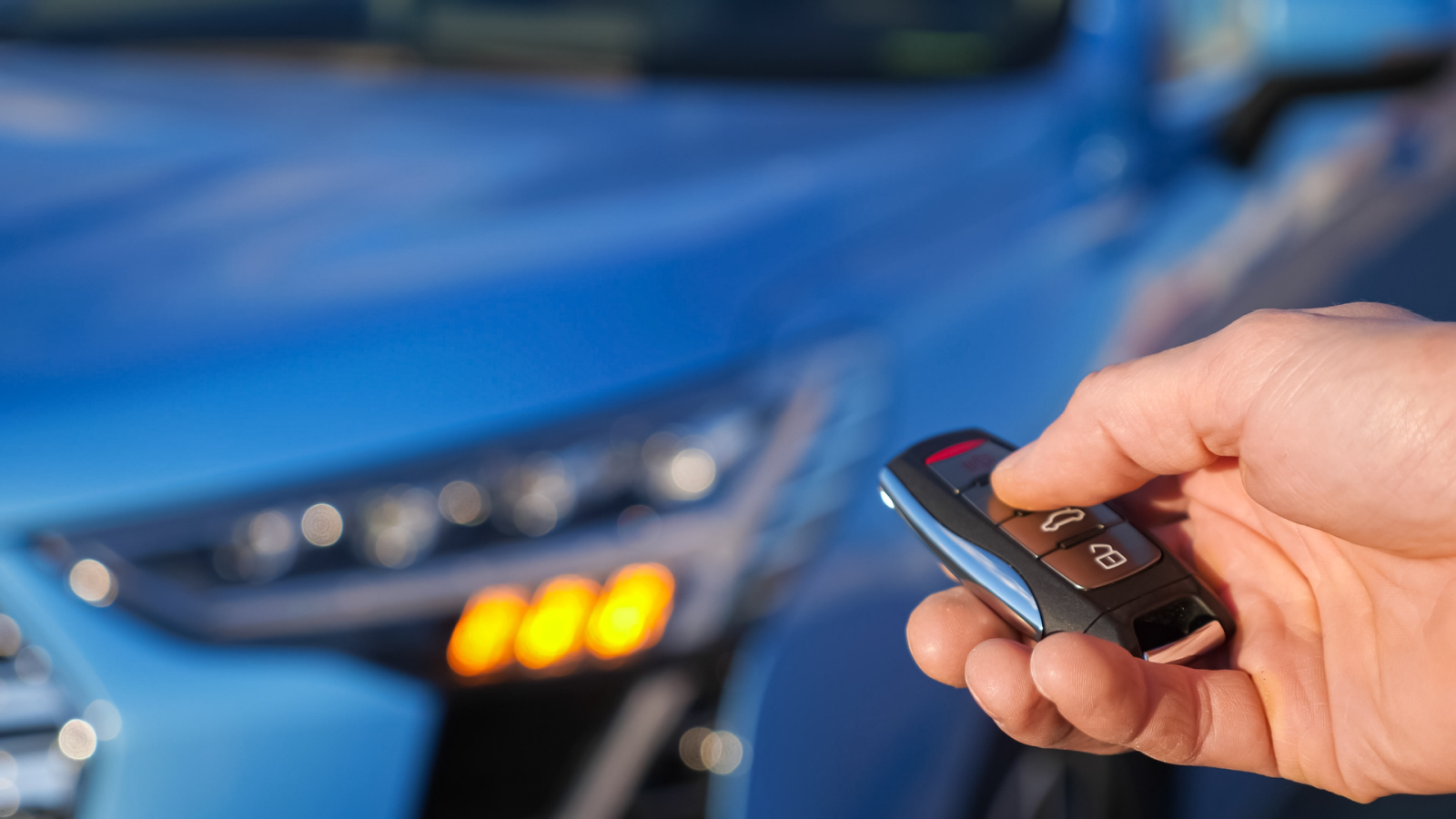
Modern theft frequently begins without a broken window or visibly damaged ignition. In a relay attack, electronic equipment captures or extends the signal from a key fob located inside a home. The vehicle may interpret that copied or relayed signal as proof that the legitimate key is nearby, allowing the doors to open. Criminals can then use key-programming equipment to create another fob, sometimes starting and removing the vehicle within minutes.
Other methods target the vehicle’s diagnostic or communications systems. Equipment connected through an on-board diagnostic port may be used to reprogram security components, while some attacks manipulate the network connecting the vehicle’s electronic control units. Thieves have also been known to disable factory tracking services or use signal jammers against hidden tracking devices. These techniques explain why locking the doors may not be enough. The owner can follow every traditional precaution and still lose a vehicle because the attack is directed at its software, wireless signals or internal electronics. Older methods, including stolen keys and unattended idling vehicles, have not disappeared, but organized groups can now combine conventional theft with readily available electronic tools.
Canada Is Trying to Modernize Outdated Standards
Canada already requires prescribed categories of new vehicles to include immobilization systems. When activated, an immobilizer prevents an essential control unit—such as the ignition, fuel or engine-management system—from operating without an authorized coded key or device. The problem is that some standards referenced in Canada’s existing rules date back many years, including a Canadian standard from 1998 and United Nations requirements from 2007 and 2009.
Transport Canada proposed amendments in December 2025 that would replace outdated references with the ANSI/CAN/UL/ULC 338:2025 standard and updated United Nations immobilizer requirements. The proposal followed consultations in which stakeholders broadly supported modernization, although manufacturers and other participants raised questions about implementation time and compliance costs. Équité has argued that immobilizer rules should be accompanied by stronger cybersecurity testing based on frameworks such as UN Regulation 155 and ISO/SAE 21434. That distinction matters because an immobilizer may meet conventional performance requirements while still being vulnerable to electronic manipulation. Updating the hardware standard is therefore an important step, but keeping vehicle software secure throughout a model’s life may prove equally important.
Drivers Are Paying for Security Gaps Through Insurance
Vehicle theft creates costs that extend far beyond the owner whose SUV or pickup disappears. Insurers price coverage partly according to the frequency and cost of claims associated with a particular make, model and location. When criminals repeatedly target certain vehicles, those models can become more expensive to insure. Some companies have introduced theft-related surcharges or required additional protective equipment, although insurers may waive extra charges when owners install approved tracking or immobilization systems.
The pressure became especially visible during the earlier peak in theft losses. Insurance Bureau of Canada reported that claims to replace stolen vehicles reached a record $1.5 billion in 2023, an increase of 254 per cent from 2018. In 2024, the organization estimated that vehicle theft added approximately $130 to the average annual auto-insurance premium in Ontario. Conditions have improved since the 2023 peak, and Ontario’s insurance regulator has said pricing should reflect the more favourable recent trend. However, losses remain above pre-crisis levels. Factory-installed security could reduce the need for families to pay separately for devices and subscriptions while also giving insurers more consistent protection to evaluate when setting rates.
Enforcement Is Catching More Vehicles Before Export
Canada’s National Action Plan on Combatting Auto Theft brought federal departments, police, insurers, manufacturers, ports and railway operators into a more coordinated effort beginning in 2024. One major priority has been intercepting stolen vehicles before they leave the country. The Canada Border Services Agency says it acts on all referrals received from police and also uses its own intelligence to select export containers for examination.
CBSA officers intercepted or detained 2,277 stolen vehicles in 2024, compared with 1,806 in 2023. The agency recorded another 1,590 in 2025 and 636 during 2026 as of its July 7 update. Most interceptions have occurred in Quebec, the Greater Toronto Area and Atlantic Canada, reflecting the routes used to move vehicles toward marine terminals and overseas markets. Enforcement has helped push theft totals lower, but it largely intervenes after a vehicle has already been taken. Stronger factory security would attack the problem at an earlier stage by making theft slower, less predictable and less profitable. The public appears to recognize that border inspections and police operations are necessary, but they cannot replace effective prevention.
Owners Still Need Several Layers of Protection
Until stronger requirements become standard, drivers are being advised to use multiple barriers rather than relying on one device. Basic precautions include locking doors, closing windows, avoiding unattended remote starts and parking in a secure garage or well-lit area. A visible steering-wheel or brake-pedal lock can make a vehicle less attractive by forcing the thief to overcome an additional physical obstacle.
Electronic protection can include an OBD-port lock, a signal-blocking pouch for the key fob, an aftermarket immobilizer and more than one discreet tracking device. Owners should speak with their insurer and dealership before installing equipment because eligibility for discounts, approved-device requirements and warranty considerations can vary. None of these steps can guarantee that a vehicle will remain safe, particularly when professional groups are prepared to tow, reprogram or dismantle targeted models. That limitation is central to the demand for change. Canadians are not rejecting personal responsibility; many are already buying extra protection. They are questioning why the burden falls so heavily on the customer when effective security could be engineered into every vehicle before it reaches the dealership.