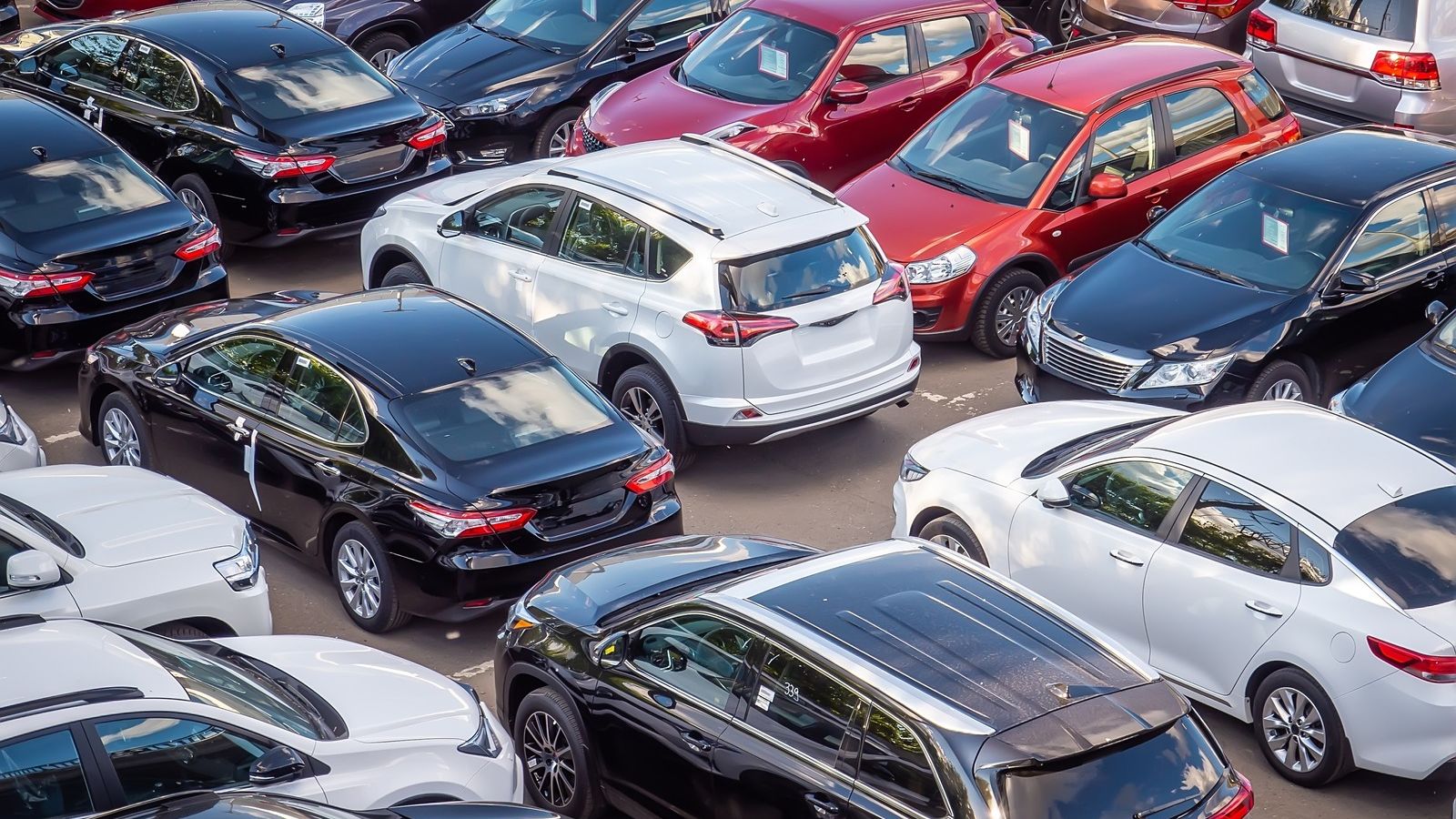
Ontario appears dramatically more expensive than Quebec at first glance. An October 4 Canadian dealer-inventory snapshot put Ontario’s average asking price at $50,317, compared with $36,664 in Quebec—a gap of $13,653.
There is an important qualification behind those eye-catching numbers. The provincial figures come from a broader pool of active dealer listings that includes multiple vehicle conditions, rather than a clean used-only provincial price series. The same dataset places the national average for listings explicitly identified as used at $37,782. That distinction does not make the Ontario-Quebec gap meaningless, but it changes what the numbers actually prove. Instead of showing that an identical used vehicle costs almost $14,000 more in Ontario, the figures reveal how dramatically inventory composition, vehicle type, supply and market coverage can change the average price seen by shoppers.
The Ontario-Quebec Gap Is Still Striking
The October 4 snapshot contained 53,401 listing records mapped to Ontario, with an average asking price of $50,317. Quebec had 101,134 records and an average of $36,664. Subtracting the two produces a $13,653 difference. Put another way, Quebec’s reported average was roughly 27 per cent below Ontario’s. That is large enough to catch the attention of anyone who has spent an evening scrolling through dealer inventories and wondering whether crossing a provincial boundary might produce a much better deal.
The numbers become even more interesting when the rest of Canada is included. Alberta was listed at an average $53,622, Saskatchewan at $57,246, British Columbia at $46,086 and Nova Scotia at $35,375. Ontario, therefore, was expensive in this particular dataset, but it was not the highest-priced province. The provincial results show that there is no single Canadian asking price. They also demonstrate why national averages can hide enormous differences in the vehicles being advertised from one region to another.
The $50,317 Figure Is Not a Pure Used-Car Average
This is the most important limitation in interpreting the headline number. AutoDeal Canada’s methodology says its primary unit is an active vehicle-listing record and that new and used vehicles exist within the same active cohort. The October 4 report separately identified 98,292 listings as used, with a national average asking price of $37,782. It also reported 146,016 new listings averaging $49,217. The provincial table, however, presents regional listing totals and averages without restricting those figures solely to used vehicles.
That means Ontario’s $50,317 figure should not be interpreted as proof that the typical used vehicle in Ontario is being advertised for more than $50,000. The more precise description is that vehicles in the report’s Ontario dealer-listing sample averaged $50,317. This matters because new vehicles, nearly-new demonstrators and more expensive trucks or luxury models can lift an arithmetic average considerably. For buyers, it is a reminder that a provincial average is useful for spotting patterns, but far less useful for valuing one specific three-year-old crossover sitting on a dealer’s lot.
Vehicle Mix Can Move an Average by Tens of Thousands
The report itself provides a good illustration of why inventory composition matters. Across its national sample, trucks averaged $68,566, while SUVs averaged $46,928 and sedans averaged $37,096. Ford listings averaged $61,733, compared with $33,669 for Honda and $32,497 for Nissan. A province containing a larger share of late-model pickups, premium SUVs or higher-priced trims could therefore show a much higher average without every comparable vehicle suddenly becoming more expensive there.
The same pattern appears among individual models. The Ford F-150, the most numerous named model in the October 4 dataset, averaged $73,004. The Ram 1500 averaged $70,898 and the GMC Sierra 1500 averaged $67,236. By contrast, the Hyundai Elantra averaged $24,687 and the Nissan Kicks $29,007. The report does not publish enough province-by-province model, age and mileage information to prove that vehicle mix explains the Ontario-Quebec gap. It does, however, show why comparing raw provincial averages without controlling for those variables can create a misleading impression.
Quebec’s Much Larger Sample Adds Another Complication
Quebec contributed 101,134 geographically mapped listings to the snapshot, compared with Ontario’s 53,401. In other words, the dataset contained almost twice as many Quebec listing records even though Ontario has Canada’s largest provincial population. That does not establish that Quebec literally has twice as many vehicles available for sale. AutoDeal specifically cautions that its geographic coverage is incomplete and that the same physical vehicle can appear in more than one source record.
This is a crucial statistical issue. Online marketplace data reflect what a data provider can observe, categorize and map—not necessarily the entirety of a provincial auto market. A dealer group with a large digital inventory feed can affect the sample, as can differences in how listings are distributed across websites. Missing or duplicated records can alter the result as well. The numbers are still useful as a current snapshot of observed inventory, particularly because the dataset covers hundreds of thousands of listings. They simply should not be treated like a comprehensive provincial census of every used vehicle actually available.
National Used-Car Prices Are Closer to the High-$30,000 Range
A second source provides a useful reality check. Canadian Black Book reported a 14-day moving average used-vehicle listing price of approximately $38,250 in late September, based on about 170,000 vehicles offered on Canadian dealer lots. AutoDeal’s separate used-only national average of $37,782 sits remarkably close to that figure. That makes the Ontario provincial number stand out even more—and reinforces why it should not be described as a straightforward Ontario used-car average without qualification.
The broader market was also cooling modestly heading into October. Canadian Black Book reported that wholesale used-vehicle values declined 0.14 per cent in the week ending September 26. Car values slipped 0.07 per cent, while truck and SUV values fell 0.20 per cent. Those movements are small, but they show a market easing rather than suddenly accelerating nationwide. A shopper seeing a $50,000-plus regional average should therefore resist assuming prices everywhere are moving higher. National values, regional inventory and individual vehicle prices can move in different directions at the same time.
Prices Are Softening, but Affordability Is Still a Major Problem
AutoTrader’s second-quarter 2026 price analysis found that average used-vehicle prices had fallen 2.6 per cent while used-vehicle sales were down 2.5 per cent year over year during the quarter. In the first half of the year, used sales were down only 1.0 per cent. The company described affordability as a continuing constraint, noting that vehicle prices remain historically elevated even after recent declines. For many households, a small percentage reduction from a very high starting point does not suddenly make a replacement vehicle inexpensive.
That reality is familiar at the dealership level. A family replacing an aging compact SUV may find that a relatively recent model with reasonable kilometres still sits well above the price remembered from before the pandemic. Higher trims, larger vehicles and newer technology can push the bill higher again. Meanwhile, buyers whose budgets are already stretched by housing, insurance, fuel and other expenses have less room to absorb elevated auto payments. Falling market values therefore do not necessarily translate into a feeling of affordability, particularly for buyers who need dependable transportation rather than those simply shopping for an upgrade.
Tight Used-Vehicle Supply Keeps a Floor Under Prices
One reason the market has not simply returned to old pricing levels is supply. Canadian Black Book’s 2026 outlook forecast that the Canadian supply of zero-to-eight-year-old used vehicles would decline another 2.6 per cent this year. Its forecast put that supply at roughly 1.53 million units, down from about 1.57 million in 2025. The organization said availability remained too constrained to meaningfully eliminate affordability pressure, even as depreciation became more predictable.
That shortage has roots in earlier new-vehicle market disruptions. The pool of late-model used vehicles available today depends heavily on how many vehicles were originally sold or leased several years ago and are now being traded, returned or remarketed. Canadian Black Book also expects leasing to gradually recover, which can eventually send more relatively young vehicles back into the used market. Until that pipeline improves, desirable late-model vehicles with clean histories and reasonable mileage can remain competitive. That helps explain how used values can soften nationally while still feeling stubbornly expensive in many dealer showrooms.
Shopping Across Provincial Lines Can Work—but the Average Is Not the Saving
An Ontario shopper who sees Quebec’s lower number may understandably start searching Montreal or Gatineau inventory. Comparing neighbouring markets can make sense, particularly when looking for a specific model, trim, colour or powertrain. But the headline’s $13,653 provincial gap should never be treated as the amount someone can automatically save by travelling east. The correct comparison is between equivalent vehicles: same model year, trim, drivetrain, kilometres, accident history, condition and warranty status.
There are also transaction costs and administrative details to consider. Ontario requires additional steps when registering a vehicle brought in from another province, and the applicable tax treatment can depend on where and from whom the vehicle was purchased. Quebec purchasers also have GST, QST and registration requirements when buying through a dealership. Travel expenses, inspections and transportation can further reduce a theoretical saving. In many cases, the best cross-border opportunity will be a particular vehicle priced unusually well—not the simple fact that one province happens to show a lower overall listing average.
What Buyers Should Take From the $14,000 Difference
The most useful lesson from the Ontario-Quebec comparison is not that Ontario buyers are automatically paying $14,000 too much. It is that broad vehicle-market averages need context. The October 4 data clearly show a large regional difference in observed dealer asking prices, but the underlying inventory includes different vehicle conditions, makes, models and price segments. The provider also warns that its coverage is incomplete, duplicate records can exist and asking prices are not completed transaction prices.
A stronger buying strategy starts much narrower. A shopper interested in a three-year-old Honda CR-V, Toyota RAV4 or Ford F-150 should compare dozens of genuinely similar examples rather than an entire province’s vehicle inventory. Mileage, accident history, maintenance records, trim, drivetrain and age can easily explain thousands of dollars. National data suggest Canada’s used market is gradually cooling, yet limited late-model supply continues to keep prices elevated. Ontario’s $50,317 figure is therefore an intriguing market signal—but not a verdict on what every used-car buyer in the province should expect to pay.