





















• About
  • Contact
AutoIgloo
  • News & Trends
    Canada-U.S. Auto Tariff Talks Go Down to the Wire With 50% Duties Three Days Away

    Canada’s Auto Industry Lost Its 15% U.S. Tariff Escape Route When Trade Deal Collapsed

    Trump Trade Fight Puts Ford and GM’s Canadian-Built Trucks Back in the Crosshairs

    Trump Trade Fight Puts Ford and GM’s Canadian-Built Trucks Back in the Crosshairs

    Lucid Launches 1,070-HP Gravity GT-S in U.S. — Canadian Buyers Are Left Out

    Stellantis Shares Drop About 3% as Canada-U.S. Tariff Fight Reopens Fears Over Canadian Plants

    Canada-U.S. Auto Tariff Talks Go Down to the Wire With 50% Duties Three Days Away

    Canadian Auto Tariff Deal Fell Apart After Written U.S. Terms Didn’t Match What Ottawa Thought It Had Agreed To

    Canada’s Auto Tariff Fight Enters Final 48 Hours With LeBlanc Still in Washington and No Deal Announced

    Canada’s Ambassador Says U.S. Auto Fine Print Threatened the Survival of Canadian Truck Assembly

    Doug Ford Says U.S. ‘Wasn’t Budging’ on 25% Auto Tariffs as Ontario Puts ‘Every Single Tool’ on the Table

    Doug Ford Says U.S. ‘Wasn’t Budging’ on 25% Auto Tariffs as Ontario Puts ‘Every Single Tool’ on the Table

  • Car Reviews
    18 Things That Can Make a Car Unsafe for Winter Road Trips

    Why Some Drivers Are Avoiding Vehicles With Complex Infotainment Systems

    21 Cars Canadians Are Starting to Regret Buying

    Why Some Drivers Regret Buying Big Wheels and Low-Profile Tires

    17 Vehicles That Are Quietly Getting Crushed by Insurance Costs in Canada

    Why So Many Drivers Are Nervous About Chinese-Made EV Batteries

    20 Used SUVs Canadians Should Think Twice About Buying

    20 Used SUVs Canadians Should Think Twice About Buying

    15 Vehicles That Are Starting to Feel Like a Bad Deal Around May Long Weekend

    15 Vehicles That Are Starting to Feel Like a Bad Deal Around May Long Weekend

    15 Vehicles That Are Starting to Scare Off Canadian Buyers

    15 Vehicles That Are Starting to Scare Off Canadian Buyers

  • Buying Guides
    25 EV Charging Mistakes Canadians Make in March (That Wreck Range)

    Why Some Canadians Are Choosing Hybrids Over Full EVs Again

    22 Signs a Car Has Been in a Serious Crash Even if the Report Looks Clean

    21 Things That Make a Used Car Listing Seem Suspicious

    23 Features That Are Making New Cars Harder (and Pricier) to Repair in Canada

    Why Some Buyers Regret Choosing the Cheapest Trim Level

    18 Things That Can Make a Car Unsafe for Winter Road Trips

    Why Some Drivers Are Avoiding Vehicles With Complex Infotainment Systems

    22 Things Canadians Should Know Before Buying a Diesel Vehicle

    22 Things Canadians Should Know Before Buying a Diesel Vehicle

    15 Ways a Low Monthly Payment Can Fool Canadian Car Buyers

    The Car Buying Mistake That Gives Dealers More Control

  • Comparisons
    25 EV Charging Mistakes Canadians Make in March (That Wreck Range)

    Why Some Canadians Are Choosing Hybrids Over Full EVs Again

    21 Used Car Features That Can Become Expensive Problems Later

    Why Some Canadians Are Choosing Front-Wheel Drive Over All-Wheel Drive

    Canada’s Auto Fight Gets Uglier as BYD Threatens to Sue Trump Administration

    Tesla Vs. BYD: Are Chinese EV’s Actually Better for Canadians?

    17 Vehicles That Are Quietly Getting Crushed by Insurance Costs in Canada

    Why So Many Drivers Are Nervous About Chinese-Made EV Batteries

    20 Used SUVs Canadians Should Think Twice About Buying

    20 Used SUVs Canadians Should Think Twice About Buying

    16 Cars That Are a Nightmare to Repair Because Parts Are Backordered

    23 Cars Canadians Love That Have One Deal-Breaker Flaw

  • EVs & Hybrids
    20 Signs Your Car Battery Is About to Leave You Stranded

    Canadian Auto Jobs Become a Central Fault Line as Ottawa Reveals Why It Rejected U.S. Vehicle Terms

    25 EV Charging Mistakes Canadians Make in March (That Wreck Range)

    Why Some Canadians Are Choosing Hybrids Over Full EVs Again

    The EV Charging Habit That Can Annoy Everyone Around You

    Canada Is Missing an EV-Battery Export Opening as EU Lithium Demand Heads for a 9-to-12-Fold Jump: Report

    16 Used-EV Surprises Canadians Don’t See Coming Until After They Buy

    The EV Charging Habit That Can Annoy Everyone Around You

    17 SUVs That Are Losing Their Appeal Fast in Canada

    GM Canada Says EV Sales Jumped More Than 30% as CUSMA Uncertainty Hangs Over Showrooms

    9 Auto Brands Canadians Are Watching Much More Closely Right Now

    Toyota Canada Says Electrified Vehicles Are Now Nearly 70% of Its Q2 Sales

  • More
    • Pricing & Deals
    • Winter Driving
    • Ownership & Maintenance
No Result
View All Result
AutoIgloo
  • News & Trends
    Canada-U.S. Auto Tariff Talks Go Down to the Wire With 50% Duties Three Days Away

    Canada’s Auto Industry Lost Its 15% U.S. Tariff Escape Route When Trade Deal Collapsed

    Trump Trade Fight Puts Ford and GM’s Canadian-Built Trucks Back in the Crosshairs

    Trump Trade Fight Puts Ford and GM’s Canadian-Built Trucks Back in the Crosshairs

    Lucid Launches 1,070-HP Gravity GT-S in U.S. — Canadian Buyers Are Left Out

    Stellantis Shares Drop About 3% as Canada-U.S. Tariff Fight Reopens Fears Over Canadian Plants

    Canada-U.S. Auto Tariff Talks Go Down to the Wire With 50% Duties Three Days Away

    Canadian Auto Tariff Deal Fell Apart After Written U.S. Terms Didn’t Match What Ottawa Thought It Had Agreed To

    Canada’s Auto Tariff Fight Enters Final 48 Hours With LeBlanc Still in Washington and No Deal Announced

    Canada’s Ambassador Says U.S. Auto Fine Print Threatened the Survival of Canadian Truck Assembly

    Doug Ford Says U.S. ‘Wasn’t Budging’ on 25% Auto Tariffs as Ontario Puts ‘Every Single Tool’ on the Table

    Doug Ford Says U.S. ‘Wasn’t Budging’ on 25% Auto Tariffs as Ontario Puts ‘Every Single Tool’ on the Table

  • Car Reviews
    18 Things That Can Make a Car Unsafe for Winter Road Trips

    Why Some Drivers Are Avoiding Vehicles With Complex Infotainment Systems

    21 Cars Canadians Are Starting to Regret Buying

    Why Some Drivers Regret Buying Big Wheels and Low-Profile Tires

    17 Vehicles That Are Quietly Getting Crushed by Insurance Costs in Canada

    Why So Many Drivers Are Nervous About Chinese-Made EV Batteries

    20 Used SUVs Canadians Should Think Twice About Buying

    20 Used SUVs Canadians Should Think Twice About Buying

    15 Vehicles That Are Starting to Feel Like a Bad Deal Around May Long Weekend

    15 Vehicles That Are Starting to Feel Like a Bad Deal Around May Long Weekend

    15 Vehicles That Are Starting to Scare Off Canadian Buyers

    15 Vehicles That Are Starting to Scare Off Canadian Buyers

  • Buying Guides
    25 EV Charging Mistakes Canadians Make in March (That Wreck Range)

    Why Some Canadians Are Choosing Hybrids Over Full EVs Again

    22 Signs a Car Has Been in a Serious Crash Even if the Report Looks Clean

    21 Things That Make a Used Car Listing Seem Suspicious

    23 Features That Are Making New Cars Harder (and Pricier) to Repair in Canada

    Why Some Buyers Regret Choosing the Cheapest Trim Level

    18 Things That Can Make a Car Unsafe for Winter Road Trips

    Why Some Drivers Are Avoiding Vehicles With Complex Infotainment Systems

    22 Things Canadians Should Know Before Buying a Diesel Vehicle

    22 Things Canadians Should Know Before Buying a Diesel Vehicle

    15 Ways a Low Monthly Payment Can Fool Canadian Car Buyers

    The Car Buying Mistake That Gives Dealers More Control

  • Comparisons
    25 EV Charging Mistakes Canadians Make in March (That Wreck Range)

    Why Some Canadians Are Choosing Hybrids Over Full EVs Again

    21 Used Car Features That Can Become Expensive Problems Later

    Why Some Canadians Are Choosing Front-Wheel Drive Over All-Wheel Drive

    Canada’s Auto Fight Gets Uglier as BYD Threatens to Sue Trump Administration

    Tesla Vs. BYD: Are Chinese EV’s Actually Better for Canadians?

    17 Vehicles That Are Quietly Getting Crushed by Insurance Costs in Canada

    Why So Many Drivers Are Nervous About Chinese-Made EV Batteries

    20 Used SUVs Canadians Should Think Twice About Buying

    20 Used SUVs Canadians Should Think Twice About Buying

    16 Cars That Are a Nightmare to Repair Because Parts Are Backordered

    23 Cars Canadians Love That Have One Deal-Breaker Flaw

  • EVs & Hybrids
    20 Signs Your Car Battery Is About to Leave You Stranded

    Canadian Auto Jobs Become a Central Fault Line as Ottawa Reveals Why It Rejected U.S. Vehicle Terms

    25 EV Charging Mistakes Canadians Make in March (That Wreck Range)

    Why Some Canadians Are Choosing Hybrids Over Full EVs Again

    The EV Charging Habit That Can Annoy Everyone Around You

    Canada Is Missing an EV-Battery Export Opening as EU Lithium Demand Heads for a 9-to-12-Fold Jump: Report

    16 Used-EV Surprises Canadians Don’t See Coming Until After They Buy

    The EV Charging Habit That Can Annoy Everyone Around You

    17 SUVs That Are Losing Their Appeal Fast in Canada

    GM Canada Says EV Sales Jumped More Than 30% as CUSMA Uncertainty Hangs Over Showrooms

    9 Auto Brands Canadians Are Watching Much More Closely Right Now

    Toyota Canada Says Electrified Vehicles Are Now Nearly 70% of Its Q2 Sales

  • More
    • Pricing & Deals
    • Winter Driving
    • Ownership & Maintenance
No Result
View All Result
AutoIgloo
No Result
View All Result

Home » EVs & Hybrids

Canadian Auto Jobs Become a Central Fault Line as Ottawa Reveals Why It Rejected U.S. Vehicle Terms

Nate Brewer by Nate Brewer
August 25, 2026
Reading Time: 6 mins read
A A
Photo Credit: Shutterstock

Photo Credit: Shutterstock

465
SHARES
1.5k
VIEWS
Share on FacebookShare on Twitter

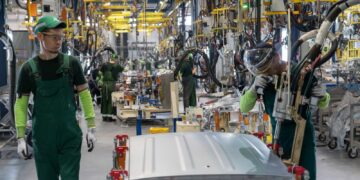
A trade agreement can look close on a briefing sheet and still collapse when the legal language lands on the table. That is what Ottawa says happened in the final hours of its latest negotiations with Washington. Canadian officials believed they were moving toward meaningful tariff relief for the auto sector, only to conclude that the written U.S. terms did not match their understanding of what had been negotiated. One particularly sensitive gap involved medium- and heavy-duty vehicles — precisely the categories tied to major Ford and General Motors operations in Ontario. With more than 125,000 Canadians directly employed in automotive manufacturing and a deeply integrated North American supply chain built over decades, the disagreement quickly became bigger than tariff percentages. It became a fight over whether Canada would retain a full-scale vehicle assembly industry at all.

The Fine Print Changed Ottawa’s View of the Deal

Canada’s ambassador to the United States, Mark Wiseman, offered one of the clearest explanations of why negotiations suddenly ended on August 21. He said the breakdown was not caused by one demand. Instead, Canadian negotiators repeatedly found that language appearing in draft documents differed from what they believed had been settled during discussions. Wiseman compared the experience to agreeing on a house purchase and later discovering that important parts of the property were excluded from the deal.

That distinction matters because Ottawa had been prepared to make significant concessions of its own. Prime Minister Mark Carney said Canada was willing to remove remaining retaliatory tariffs on strategic sectors if Washington substantially reduced U.S. duties to commercially workable levels. But as the details accumulated, Ottawa concluded that the overall package had become uneconomic and unreliable. Medium- and heavy-duty vehicles emerged as a particularly important example because their exclusion threatened major Canadian manufacturing investments already underway.

Heavy-Duty Trucks Became an Industrial Red Line

The dispute over larger trucks may sound narrow compared with the overall Canada-U.S. trading relationship, but it struck directly at the economics of Canadian assembly plants. Wiseman said Ottawa needed medium- and heavy-duty vehicles included in the tariff relief package. Washington, according to Canadian accounts and subsequent reporting, resisted providing the same treatment for those categories that it was prepared to extend to passenger vehicles and other automotive products.

That distinction could have left Canadian-built work trucks carrying a structural tariff disadvantage when entering the United States. Canadian-made vehicles have already faced a 25% U.S. tariff on their non-American content since April 2025, even when qualifying U.S. content remains exempt under CUSMA rules. Ottawa’s concern was therefore not simply that tariffs would remain high. It was that particular vehicles assembled in Canada could be left outside a negotiated escape route, weakening the business case for continuing to manufacture them north of the border.

Ford’s Oakville Investment Raised the Stakes

Ford’s Oakville Assembly Complex illustrates why Ottawa viewed the truck language as more than a technical negotiating point. In 2024, Ford announced plans to bring production of its highly profitable F-Series Super Duty pickups to Oakville, reversing an earlier plan that had centred the plant’s future on electric vehicles. The company said the Canadian operation could eventually produce as many as 100,000 Super Duty trucks annually, including models such as the F-350, F-450 and F-550.

Ford put the scale of the broader investment at roughly $3 billion, including about $2.3 billion for Oakville assembly and stamping operations and spending at supporting facilities. That commitment represented an important industrial lifeline for a plant that had been undergoing a lengthy retooling. If trucks built there faced materially worse access to Ford’s largest market than comparable U.S.-assembled models, the tariff difference could become a recurring cost on every vehicle. Ottawa consequently treated the plant’s competitiveness as a national jobs issue.

GM’s Oshawa Plant Shows the Other Side of the Risk

General Motors provides an equally tangible example in Oshawa, Ontario. The plant produces both light-duty and heavy-duty Chevrolet Silverado pickups, making it unusual within GM’s North American manufacturing network. In June 2026, GM said Oshawa had produced more than 500,000 Silverados since truck production restarted there in November 2021. The company also announced another C$343 million investment to prepare the facility for the next generation of gasoline-powered full-size trucks.

The human stakes extend far beyond vehicle totals. Unifor represents roughly 2,750 workers at Oshawa, part of more than 4,600 unionized GM employees covered by the company’s current Canadian bargaining pattern. Some GM workers elsewhere in Ontario have already experienced prolonged layoffs as the wider industry adjusts to tariffs and changing investment plans. Against that background, Ottawa feared accepting trade terms that treated Canadian-built heavy pickups less favourably could gradually shift future capital spending and model allocation toward U.S. plants, even without an immediate closure announcement.

The Employment Exposure Extends Far Beyond Assembly Lines

Canada’s automotive industry directly supports roughly 125,000 jobs, but the economic footprint is much wider. Federal figures put indirect employment supported by the industry at approximately 427,000 positions when suppliers, dealerships, aftermarket businesses and related activities are included. In 2024, the sector contributed about $16.8 billion to Canadian GDP. Those numbers help explain why a tariff affecting a particular class of truck can quickly become an issue for communities far removed from an assembly line.

Recent labour data also show that the pressure is no longer hypothetical. Statistics Canada reported that overall manufacturing employment fell by nearly 36,000 positions between December 2024 and December 2025. Employment in motor-vehicle-parts manufacturing dropped 9.3%, while employment in motor-vehicle manufacturing declined 1.3%. The agency has also documented the unusually high exposure of automotive production to American demand. For toolmakers, plastics suppliers, transport companies and parts plants, weaker assembly volumes can therefore travel rapidly through the employment chain.

The Border Is Effectively Part of the Production Line

The North American auto industry was designed around integration rather than three separate national production systems. Parts can cross the Canada-U.S. border several times before a completed vehicle reaches a dealership. Canadian government and industry evidence has described some components crossing as many as seven times during production, accumulating work from plants and suppliers located on both sides of the boundary.

That interdependence is visible in Canadian export figures. More than 90% of vehicles manufactured in Canada and about 60% of Canadian-made auto parts are currently exported to the United States. Canada produced more than 1.2 million passenger vehicles in 2025 alone. Canadian-assembled vehicles also contain substantial U.S.-made content, meaning tariffs aimed at Canadian production can indirectly tax American engines, electronics, steel, software and other inputs when they return across the border inside a finished vehicle. That is why automakers have repeatedly warned that disrupting Canadian production does not neatly isolate economic pain within Canada.

A Truck Carve-Out Could Reshape Future Investment Decisions

Vehicle assembly decisions are made years ahead and often involve billions of dollars in tooling, supplier contracts and plant upgrades. Once a model is assigned to a factory, companies still evaluate how transportation costs, tariffs, labour expenses, exchange rates and capacity affect the economics of every unit produced. A permanent tariff disadvantage for one Canadian plant can therefore influence where a manufacturer places the next generation of a vehicle, even if current production continues.

That is particularly important for Canada because the domestic industry is smaller than the U.S. manufacturing base and relies heavily on exports. More than 1.1 million of the roughly 1.3 million light-duty vehicles Canada produced in 2024 were exported to the United States. Ottawa’s concern was that accepting different tariff treatment for medium- and heavy-duty vehicles could normalize a system in which Canadian plants remained inside an integrated supply chain while becoming progressively less attractive for new assembly mandates. The eventual employment losses could occur slowly rather than through one dramatic closure.

The Failed Deal Has Now Given Way to a Much Bigger Threat

The consequences of the collapse quickly extended beyond the original truck dispute. After negotiations ended, the United States proceeded with 50% tariffs on roughly US$20 billion worth of Canadian goods. Carney announced that Canada would respond with dollar-for-dollar counter-tariffs beginning September 8. The confrontation intensified again on August 24 when President Donald Trump threatened to raise tariffs on Canadian-made cars, trucks and automotive parts to 50% beginning January 1, 2027.

That threatened rate would be far more severe than the existing 25% automotive duty structure and would place enormous pressure on cross-border vehicle production if implemented as announced. It would also hit American-owned companies with major Canadian operations, including Ford and GM. The escalation demonstrates how rapidly a disagreement over the scope of tariff relief turned into a broader industrial confrontation. A few disputed vehicle categories became part of a struggle over where North America’s next generation of manufacturing investment will ultimately land.

Ottawa Is Defending Industrial Scale, Not Simply a Tariff Number

The federal government has already committed billions of dollars to keeping automotive manufacturing viable through its 2026 auto strategy, including more than $6.9 billion in announced measures spanning investment support and industry transformation. Those policies make little sense if trade rules simultaneously place Canadian assembly plants at a lasting disadvantage in their overwhelmingly important U.S. market. That helps explain why Ottawa was unwilling to view medium- and heavy-duty truck treatment as a small concession needed to close a larger agreement.

Workers are negotiating their futures in the middle of that uncertainty. Unifor and GM recently reached tentative agreements covering more than 4,600 employees, while Ford and its Canadian workforce have been trying to establish Oakville as a major Super Duty production centre. The larger question now is whether those plants remain integral pieces of one continental industry or become bargaining chips in a prolonged relocation fight. For Ottawa, the rejected terms ultimately raised that question too directly to ignore.


Recommended.

19 Things to Photograph Immediately After a Car Accident

Canadian Collision Repair Values Fall Again as 60,000-Order Study Shows Shop Efficiency Slipping

August 17, 2026
20 Car Features Canadians Pay For Then Barely Use

20 Car Features Canadians Pay For Then Barely Use

April 16, 2026

Trending.

⁠$28 Billion in Canadian Goods Face 50% Trump Tariffs at Midnight as Deal Still Isn’t Final

Canada-U.S. Trade Deal Fell Apart After Washington Left Ontario-Built Ford and GM Trucks Out of Auto Tariff Relief

August 23, 2026
Quebec’s BRP Prepares 2027 Vehicle Reveal Tonight as Canadian Manufacturer Pushes New Can-Am Lineup

Quebec’s BRP Prepares 2027 Vehicle Reveal Tonight as Canadian Manufacturer Pushes New Can-Am Lineup

August 17, 2026
Mexico Pushes U.S. to Cut Auto Tariff From 25% to 5%–10% — and Give Canadian Parts More Room

Ottawa’s Chinese-EV Quota Opens Canada to 6.1% Tariffs Instead of the Former 100% Surtax

August 22, 2026
Doug Ford Says U.S. ‘Wasn’t Budging’ on 25% Auto Tariffs as Ontario Puts ‘Every Single Tool’ on the Table

Doug Ford Says U.S. ‘Wasn’t Budging’ on 25% Auto Tariffs as Ontario Puts ‘Every Single Tool’ on the Table

August 23, 2026
19 Things That Can Make Your Car Insurance Claim Get Denied

Foreign Insurer Can Apply to Enter Canada’s Auto-Insurance Market Starting Today

August 17, 2026
  • About
  • Contact
  • Privacy Policy
  • Disclaimer
  • Editorial Policies
  • Terms and Conditions
A Revir Media Group Website

2026 Autoigloo - © All rights reserved

No Result
View All Result
  • News & Trends
  • Car Reviews
  • Buying Guides
  • Comparisons
  • EVs & Hybrids
  • More
    • Pricing & Deals
    • Winter Driving
    • Ownership & Maintenance

2026 Autoigloo - © All rights reserved

This website uses cookies. By continuing to use this website you are giving consent to cookies being used. Visit our Privacy and Cookie Policy.


