
























Canada’s electric-vehicle price floor is moving lower again. As of October 2026, a combination of manufacturer discounts and the federal Electric Vehicle Affordability Program means 12 battery-electric models can effectively come in below $41,000 before sales tax under the pricing assumptions used here. Several are below $40,000, while the heavily discounted Fiat 500e falls below $30,000.
The federal EVAP incentive currently provides eligible battery-electric purchases with up to $5,000 after tax. For easier comparison, the prices here use the roughly $4,425 pre-tax equivalent in a province with a 13% sales tax, such as Ontario. Advertised fees, discounts and availability can vary by location, making dealer-level verification important. Even with those qualifications, the October numbers show how quickly the affordable end of Canada’s EV market is changing.
Hyundai Kona Electric — About $40,519 After Discount and EVAP
The 2026 Hyundai Kona Electric sits just under the $41,000 line once current incentives are included. Hyundai lists the Preferred model at a $43,999 MSRP, with a starting price around $46,944 once the applicable destination charges, fees and levies used in the comparison are incorporated. An October bonus price adjustment of $2,000 lowers that figure to approximately $44,944. Applying the federal EVAP benefit on the same pre-tax-equivalent basis brings the effective starting figure to roughly $40,519.
That puts a relatively established electric crossover into territory that was difficult to reach only a few years ago without moving into a much smaller vehicle. Hyundai rates the Kona Electric for up to 420 kilometres of range from its 64.8-kWh battery. It remains front-wheel drive, but standard equipment includes heated features and Hyundai’s SmartSense driver-assistance technologies. For households looking for one vehicle capable of commuting, errands and longer regional trips, the combination of useful range and the October price adjustment makes the Kona more competitive than its regular sticker price initially suggests.
Toyota bZ — About $40,275 With Two Incentives Applied
Toyota’s refreshed 2026 bZ is another electric crossover being pushed below $41,000 through incentives rather than a dramatically reduced MSRP. The entry XLE front-wheel-drive model carries a starting MSRP of $45,990. Toyota’s October customer incentive is worth $5,000 after tax, which works out to roughly $4,425 on the pre-tax comparison used here. When that manufacturer incentive is combined with an eligible $5,000 federal EVAP rebate, the resulting effective starting figure is approximately $40,275 after the other estimated charges used in the comparison.
The lower price arrives at the same time Toyota has substantially revised its electric SUV. The 2026 bZ gains a native NACS charging port, a new 14-inch multimedia display and updated battery technology. The entry front-wheel-drive version uses a 57.7-kWh battery and is rated for 380 kilometres, while the XLE AWD stretches manufacturer-estimated range to 468 kilometres. That makes the base bZ less of a range leader, but its new pricing puts Toyota into a much more aggressive part of the Canadian EV market.
Kia Niro EV — Around $39,472 After October Savings
The 2026 Kia Niro EV moves below $40,000 once Kia’s current savings and the federal incentive are considered. Its Wind trim starts at a $45,595 MSRP, with the comparison placing the regular starting cost including estimated charges at approximately $47,897. Kia’s roughly $4,000 monthly offer lowers that to around $43,897 before the federal benefit. Factoring in EVAP on the same basis brings the effective price to about $39,472.
That price is significant because the Niro EV is already a mature product rather than an unfamiliar entry created primarily to hit a low sticker price. Kia rates it for up to 407 kilometres of electric driving, enough for most daily routines with considerable reserve. The cabin includes matching 10.25-inch displays, while an available heat pump is particularly relevant in Canada because it can reduce the energy required to warm the cabin and battery in cold weather. The Niro’s conventional crossover shape also makes it an approachable option for buyers who want an EV without an especially futuristic layout or unusual packaging.
Chevrolet Equinox EV — Roughly $39,218 in the October Comparison
Chevrolet’s Equinox EV is one of the more striking entries below $40,000 because of how much vehicle is being offered for the money. The base 2026 LT front-wheel-drive model carries a $46,199 vehicle MSRP before freight and various charges. Current Chevrolet discounts can substantially reduce the transaction price, and the October comparison calculates an effective figure of approximately $39,218 after the applicable manufacturer savings and federal EVAP benefit. Chevrolet’s own online configurator can produce somewhat different totals depending on location and the specific offers applied.
Range is where the Equinox EV separates itself from several cheaper competitors. Chevrolet estimates up to 513 kilometres from the front-wheel-drive model, while AWD models are rated slightly lower. The LT also comes with a 17.7-inch centre touchscreen, heated front seats and steering wheel, adaptive cruise control and a substantial collection of driver-assistance technology. For a family comparing an EV against a similarly priced gasoline compact crossover, the Equinox demonstrates how discounts are beginning to erase some of the upfront price premium that has traditionally defined electric vehicles.
Toyota C-HR — Approximately $39,185 After Incentives
Toyota’s revived C-HR name now belongs to a battery-electric crossover, and aggressive October incentives put the 2026 entry model below $40,000 in this comparison. The C-HR SE FWD starts at a $44,900 MSRP. Toyota is advertising a $5,000 customer incentive on that model for the October offer period, applied after tax. Converted to the pre-tax-equivalent methodology used here and combined with an eligible federal EVAP incentive, the estimated starting figure falls to approximately $39,185 after the relevant charges.
The C-HR also brings unusually strong range numbers to the affordable end of Toyota’s EV lineup. The front-wheel-drive SE is rated for up to 496 kilometres and produces 221 horsepower. Buyers wanting more traction can move to dual-motor AWD models with as much as 338 horsepower, although their range is lower. A built-in NACS charging port, 14-inch multimedia interface and DC fast-charging capability round out the package. Its combination of sub-$40,000 effective pricing and near-500-kilometre range makes the base version particularly notable for Canadians previously worried that a lower-cost EV would necessarily mean a small battery.
Chevrolet Bolt — Around $39,019 Before Additional Local Offers
The Chevrolet Bolt’s return creates another important benchmark for EV affordability. The 2027 Bolt LT carries a vehicle MSRP of $39,999, making it one of the few entries on this list that starts below $40,000 before the federal incentive is considered. Once freight and the estimated charges in the October comparison are added, the advertised starting figure is about $43,443. Applying the EVAP benefit on the same pre-tax basis results in an estimated $39,019, even before certain location- or customer-specific Chevrolet promotions that may lower the number further.
The new Bolt is also much more than a reprise of the previous generation. Chevrolet now estimates up to roughly 422 kilometres of range, and the LT uses a 65-kWh lithium-iron-phosphate battery. DC charging capability rises to 150 kW or more, while a native NACS connector simplifies access to compatible fast chargers. The cabin adds an 11.3-inch infotainment display and 11-inch driver screen. That combination of range, charging improvements and a relatively low base MSRP could make the Bolt one of the toughest competitors in Canada’s entry-level EV market.
VinFast VF 8 — About $38,310 With the Biggest Cash Discount
The 2025 VinFast VF 8 shows what happens when a manufacturer uses deep discounts to clear remaining model-year inventory. Its Eco trim carries a $53,600 MSRP, which normally puts it well outside this group. For October, however, the reported cash discount reaches $14,000. Using the applicable charges in the current comparison, that drops the cash starting price from approximately $56,735 to $42,735. Applying EVAP brings the effective cash figure to about $38,310. A separate finance discount of roughly $13,000 results in an estimated $39,530 after the federal benefit.
That makes the VF 8 an unusual value proposition because it is considerably larger and more powerful than many of the lowest-priced vehicles here. VinFast lists 349 horsepower for the Eco model and up to 412 kilometres of range from its 87.7-kWh usable battery. The important catch is inventory and offer structure. These discounts apply to older 2025 vehicles and can differ according to purchase method and location. For buyers comfortable considering a newer automotive brand, the markdown can turn what began as a $50,000-plus electric SUV into a sub-$40,000 proposition.
Kia EV4 — Approximately $37,022 Without a Manufacturer Markdown
Kia’s 2026 EV4 reaches the lower end of the market without depending on a huge clearance incentive. The Light FWD model carries a $38,995 MSRP, and Kia positioned it from launch as an affordable dedicated electric car. With estimated freight and other charges included, the October comparison puts its advertised starting figure at roughly $41,447. Applying the federal EVAP incentive drops the effective pre-tax comparison price to approximately $37,022.
The EV4 is also noteworthy because it gives buyers an alternative to the stream of electric crossovers dominating showrooms. The entry Light uses a 58.3-kWh battery and is rated for about 391 kilometres of range. Buyers willing to spend more can move to an 81.4-kWh long-range battery, with certain front-wheel-drive versions rated for as much as 552 kilometres. Kia also equips the EV4 with a native NACS port and a nearly 30-inch combined dashboard display formed by dual 12.3-inch screens and a smaller climate-control display. For commuters who still prefer a sedan’s driving position and efficiency, the EV4 fills a surprisingly empty niche.
Subaru Uncharted — About $36,406 After Cash Discount and EVAP
Subaru enters the lower-priced EV race with the new 2026 Uncharted, and its introductory pricing becomes considerably more attractive once current incentives are included. The entry front-wheel-drive model has a $42,995 MSRP. Subaru lists freight and other fees that push the regular starting figure into the mid-$45,000 range, but a $5,000 cash discount dramatically changes the calculation. Using the October comparison’s charges and adding the federal EVAP benefit produces an effective figure of approximately $36,406.
The base Uncharted uses a 57.7-kWh battery and is rated for up to 399 kilometres of range. Subaru also offers a longer-range front-wheel-drive version and more powerful all-wheel-drive configurations higher in the lineup. Standard equipment includes a 14-inch touchscreen, wireless Apple CarPlay and Android Auto, dual wireless phone chargers, heated front seats and Subaru’s EyeSight driver-assistance technology. One interesting wrinkle is that the cheapest model is front-wheel drive, unusual for a brand so closely associated with AWD. For shoppers focused primarily on range and price, however, that trade-off helps put the Uncharted firmly into the mid-$30,000 range after incentives.
Kia EV3 — Approximately $35,022 With Federal EVAP
The 2027 Kia EV3 arrived with a $36,995 starting MSRP, immediately putting pressure on the affordable electric-crossover segment. Kia’s own launch announcement positioned the Light FWD as Canada’s lowest-priced EV at the time it was introduced in August, before Nissan subsequently announced an even cheaper Leaf. Once typical charges are incorporated, the October comparison calculates an advertised price around $39,447. Applying the federal EVAP benefit brings the effective figure down to approximately $35,022.
The EV3 is small, but Kia has avoided giving the entry version an extremely short-range battery simply to achieve the low price. Its 58.3-kWh pack is expected to deliver up to 356 kilometres under Kia’s testing. An 81.4-kWh long-range battery is available farther up the lineup, giving front-wheel-drive versions as much as 517 kilometres. A native NACS port is standard, and Kia estimates a 10-to-80% fast charge in about 31 minutes under suitable conditions. Available all-wheel drive further broadens the lineup. For urban households that want crossover practicality without spending close to $50,000, the EV3 could become one of the market’s most important new entries.
Nissan Leaf — About $33,541 With EVAP
The fourth-generation 2027 Nissan Leaf changes the affordability conversation because its entry price does not rely on a large manufacturer clearance rebate. Nissan lists the new Leaf S at a $34,998 MSRP, currently making it the lowest-MSRP new EV in Canada. Once Nissan’s advertised freight and other charges are included, the starting figure used in the October comparison comes to approximately $37,966. Applying the EVAP benefit reduces the effective comparison price to roughly $33,541.
There is a trade-off at that price: the Leaf S uses a smaller 53-kWh battery than the more expensive Leaf variants. Nissan rates it for 341 kilometres of driving range, compared with up to 488 kilometres from versions equipped with the larger 75-kWh pack. Still, 341 kilometres is comfortably beyond what many commuters use in several days. The new generation also adopts NACS fast-charging compatibility, solving one of the biggest limitations associated with earlier Leafs and their CHAdeMO connection. Availability of the newly introduced S grade may initially be limited, but its price establishes a new benchmark for mainstream EV competition in Canada.
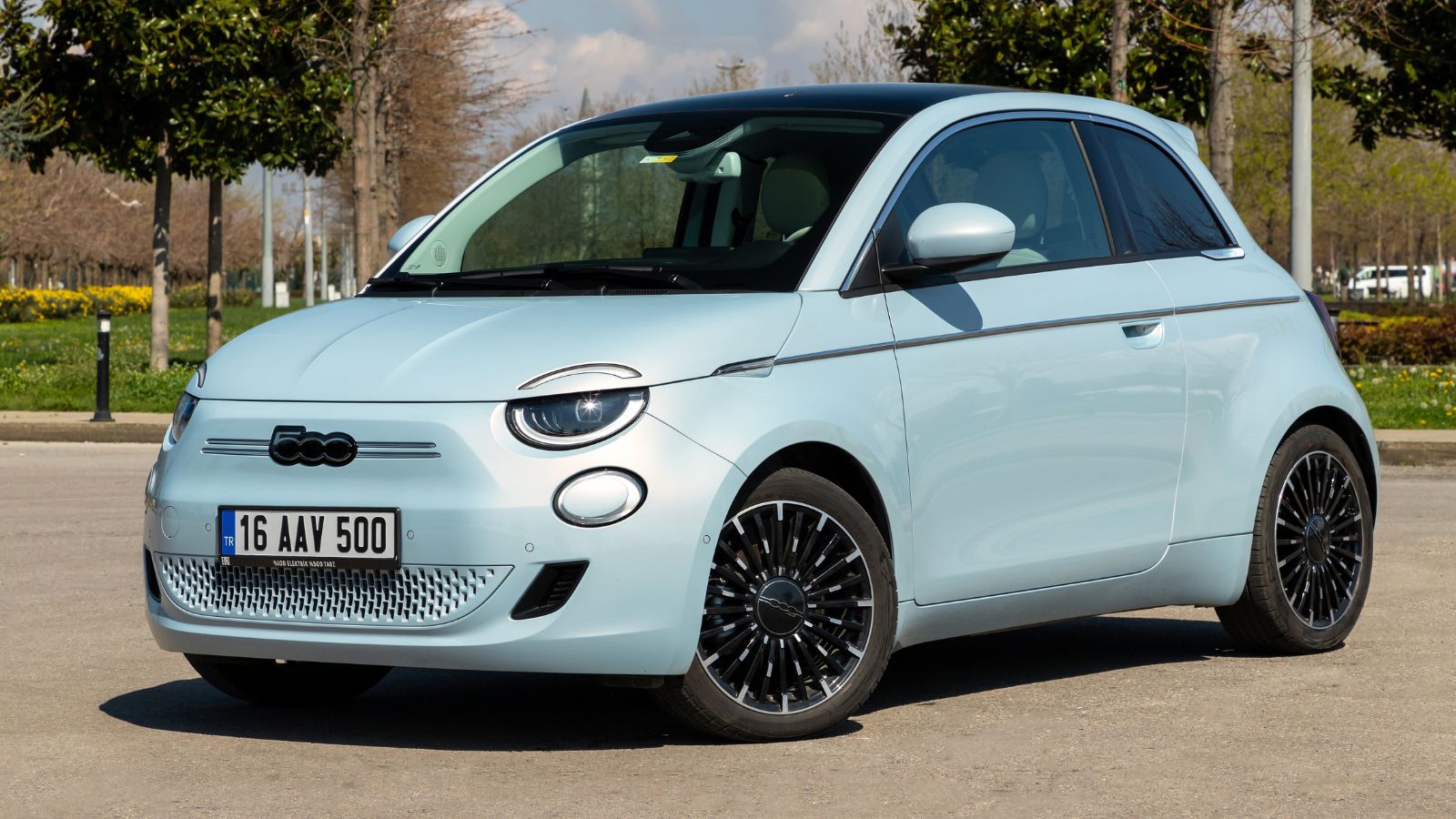
Fiat 500e — Approximately $29,865 After an $8,000 Discount and EVAP
The Fiat 500e delivers the headline number. Its 2026 Pop model carries a $39,995 MSRP, with the regular starting figure reaching approximately $42,290 once the charges used in the October comparison are included. Fiat is currently offering an $8,000 cash discount, cutting that figure to about $34,290 before EVAP. Add the federal incentive and the resulting effective comparison price falls to approximately $29,865. Fiat Canada’s own consumer site is advertising essentially the same sub-$30,000 starting figure when current FCA incentives and the government rebate are combined.
There are clear reasons why the 500e costs less than larger alternatives. It is a tiny four-seat city car with a 42-kWh battery, 117 horsepower and an estimated maximum range of 227 kilometres. That limits its appeal for households regularly covering long highway distances, especially in winter. Yet those compromises can make much less difference to someone using the car primarily for a short commute or urban driving. At under $30,000 after current incentives, the 500e enters territory normally occupied by gasoline-powered subcompacts—and demonstrates just how aggressively manufacturers are now pricing some EVs to attract Canadian buyers.