























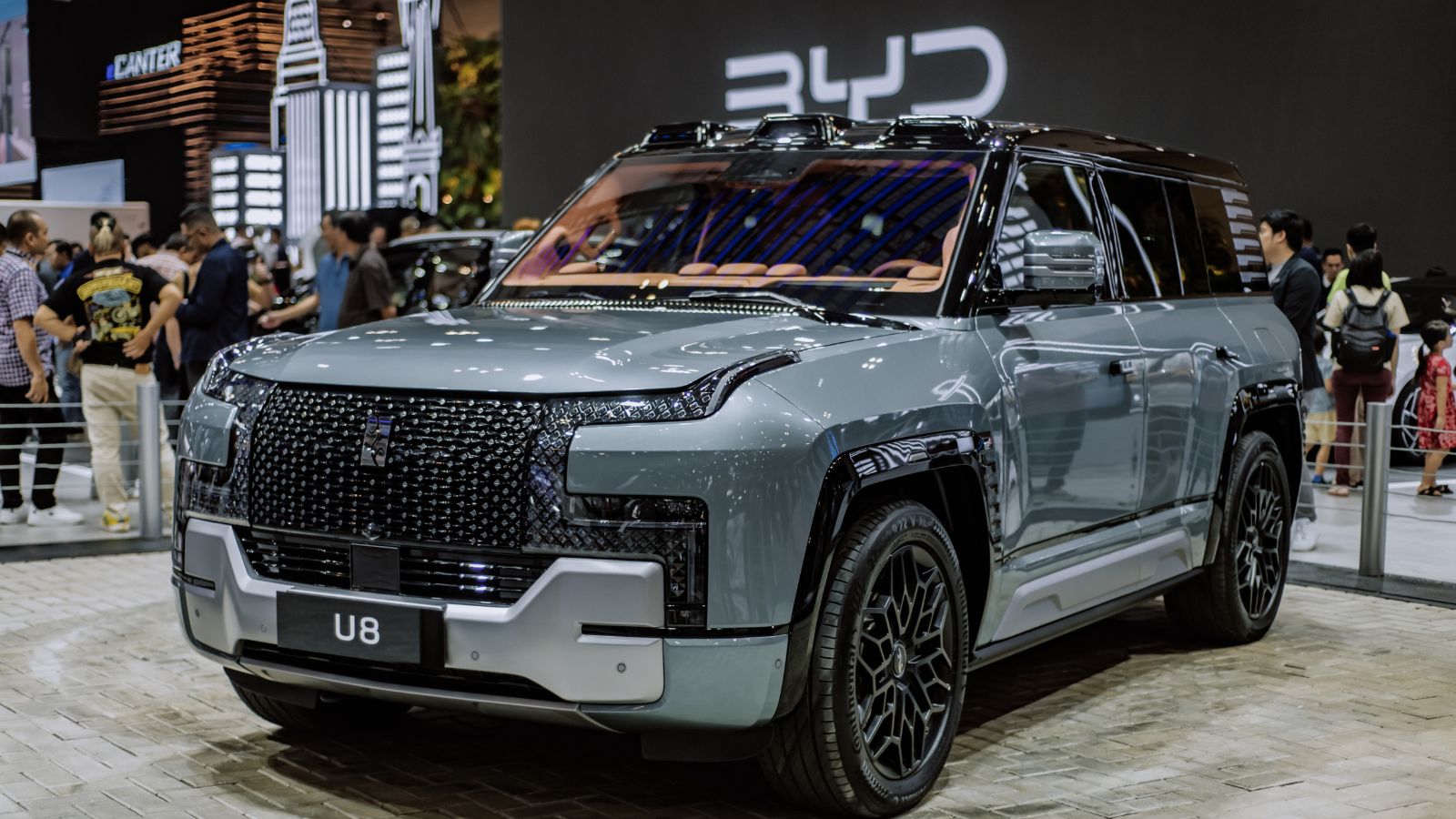
BYD’s Canadian web presence is no longer just a corporate placeholder. The automaker is now showcasing some of its newest electric-vehicle technology directly to Canadians, including a charging system built around a striking promise: move from 10% to 70% battery charge in five minutes, while retaining unusually strong charging performance even at temperatures as low as -30°C.
Those numbers immediately stand out in a country where winter performance remains one of the most persistent questions surrounding EV ownership. Yet the details matter. BYD has not announced that every Canadian model will receive the technology, nor does its Canadian website currently allow consumers to order a vehicle. What has appeared is something more preliminary but still significant: a Canadian-facing introduction to technology BYD intends to take beyond China.
The Canadian Website Makes BYD’s Intentions Harder to Ignore
BYD Canada’s official site now presents the company, its battery technology and several vehicle platforms to a Canadian audience. The company says it was founded in 1994 and generated more than RMB 804 billion in revenue in 2025, illustrating the scale of the manufacturer potentially preparing to compete for Canadian buyers.
There is still an important dividing line between establishing a website and formally launching passenger vehicles. BYD Canada’s terms of use, effective August 3, state that the Canadian site does not currently permit purchases, leases, financing applications, reservations, pre-orders or deposits. That makes the website more of a market-building step than a conventional retail launch. Still, manufacturers rarely build localized consumer infrastructure without a reason. For Canadians who have watched BYD expand through Europe, Latin America and other markets, the Canadian page provides a much more concrete signal than speculation about whether the company is studying the market.
Five Minutes Does Not Mean a Completely Full Battery
The headline number on BYD’s charging technology requires some explanation. The second-generation Blade Battery paired with the company’s FLASH Charging system is claimed to charge from 10% to 70% state of charge in five minutes at room temperature. BYD says the same system reaches 97% in nine minutes.
That distinction is significant because a casual description of “five-minute charging” can sound as though the battery goes from empty to full in the time required to fill a gasoline tank. It does not. The five-minute figure represents a 60-percentage-point increase. Even so, that would be a substantial advance compared with the charging experience most EV drivers currently know. Natural Resources Canada says contemporary DC fast charging commonly requires roughly 20 to 30 minutes, although actual performance depends on the vehicle, charger, battery condition and temperature. BYD is effectively trying to compress a typical highway charging stop into something much closer to a conventional fuel stop.
The -30°C Figure Could Matter More in Canada
BYD’s cold-weather claim may ultimately be the more consequential number for Canadian consumers. The company says its second-generation Blade Battery can charge from 20% to 97% in 12 minutes at -30°C, only three minutes longer than the corresponding charging period under normal-temperature conditions.
Cold-weather charging is a genuine technical challenge rather than simply an inconvenience created by cabin heating. At low temperatures, lithium-ion battery chemistry slows, internal resistance rises and charging power commonly has to be restricted. Research summarized by the U.S. National Renewable Energy Laboratory explains that cold temperatures reduce ion mobility and charging efficiency, requiring sophisticated thermal management. That makes -30°C an unusually demanding benchmark. Canadian winter temperatures vary enormously, but severe cold is routine across parts of the Prairies, northern Ontario, Quebec and the territories. If BYD’s performance can be reproduced consistently outside controlled demonstrations, it would address one of the most recognizable Canadian objections to EV road-trip practicality.
BYD Is Pushing Passenger Cars Into Megawatt Charging Territory
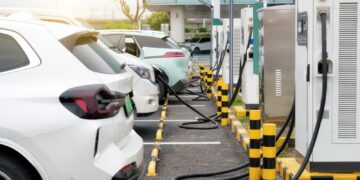
The charger behind the numbers is equally unusual. BYD says its FLASH Charging system can deliver as much as 1,500 kilowatts through a single connector. That is 1.5 megawatts of peak charging power, far beyond the output associated with most existing Canadian passenger-EV charging locations.
The International Energy Agency categorizes chargers rated at 150 kW and above as ultra-fast, while many of the highest-output public passenger-car chargers deployed internationally have traditionally operated around the 250-to-350-kW range. The IEA has identified BYD’s 1.5-MW system as one of the clearest examples of megawatt-scale charging moving from heavy vehicles into passenger cars. That does not mean a BYD automatically draws 1.5 MW during an entire charging session. Charging power varies throughout the battery curve. The significance is that the vehicle, battery, electronics and charger have been engineered around dramatically higher peak power than conventional EV platforms.
The Battery Is Only Half of the Engineering Problem
Sending that much electricity into a passenger vehicle is not simply a matter of installing a larger charger. BYD’s system combines its second-generation Blade Battery with high-voltage vehicle electronics, aggressive thermal management and specialized charging infrastructure. Its Canadian page describes a silicon-carbon anode, LMFP cathode chemistry and energy density in the 190-to-210-Wh/kg range.
Managing heat and battery degradation becomes particularly important as charging rates increase. Extreme fast charging can create large thermal loads, which is why battery temperature, cooling systems and charge-management software are crucial. BYD is effectively trying to solve several problems simultaneously: moving ions through the battery rapidly, preventing excessive heating, maintaining safety and preserving acceptable battery life. The International Energy Agency notes that next-generation batteries from companies including BYD can reach charging rates many times higher than those of an average EV using a 150-kW charger. The engineering challenge is making that performance repeatable rather than producing one impressive laboratory result.
BYD Is Adding Battery Storage to the Charging Station Itself
A 1.5-MW charger creates another problem before a vehicle even plugs in: many local electrical connections were never designed to deliver that much instantaneous power. BYD’s response is to pair its FLASH stations with on-site energy storage. The stationary battery can accumulate electricity more gradually and then release it quickly when a vehicle needs an ultra-fast charge.
That architecture functions partly as a buffer between the charger and the electricity grid. Instead of requiring every charging site to obtain a grid connection capable of continuously supplying maximum charger output, stored energy can help meet short bursts of demand. The IEA has highlighted battery-backed charging as one potential way of reducing the grid-upgrade burden created by megawatt chargers. It does not eliminate infrastructure constraints—high-volume stations could still require substantial electrical capacity—but it could expand the range of locations where very high-power equipment is practical. For Canada, where highway distances can be enormous, site economics could be just as important as raw charging speed.
China Is Already Getting Thousands of FLASH Chargers
BYD is not presenting FLASH Charging solely as a concept. When it introduced the second-generation Blade Battery in March, the company said 4,239 FLASH Charging stations had already been installed across China. Its stated target is 20,000 Chinese stations by the end of 2026, supported by an international expansion.
The company has subsequently outlined plans for thousands of installations beyond China as well. BYD has said its premium Denza brand will help introduce the technology in Europe, with the Z9GT among the first international vehicles to use the new battery and charging system. That sequencing is worth watching from Canada. New automotive technology often reaches premium vehicles first because the cost can be absorbed more easily before manufacturing scale brings it into less expensive models. Whether Canada eventually receives FLASH Charging through mainstream BYD products, higher-priced Denza vehicles or a mixture of both remains unconfirmed. The underlying infrastructure strategy, however, is clearly designed for markets beyond China.
Canada’s Existing Network Operates on a Very Different Scale
Canada has been expanding EV infrastructure steadily, but BYD’s proposed charging speeds illustrate how quickly the technical benchmark is moving. The federal government said in February that more than 30,000 EV chargers had already been installed through Natural Resources Canada’s Zero Emission Vehicle Infrastructure Program. Additional funding is supporting thousands more.
Much of today’s network was planned around vehicles that charge substantially below one megawatt. NRCan describes current DC fast charging as typically taking approximately 20 to 30 minutes, while the International Energy Agency uses 350 kW as one of its reference points for modern ultra-fast charging. A future Canadian FLASH station delivering anything near 1,500 kW would therefore represent a very different infrastructure class. Connector compatibility, electricity supply, storage requirements, charger utilization and economics would all matter. For BYD, introducing five-minute-capable vehicles without providing access to appropriately powerful chargers would leave a large portion of the technology’s potential unused.
The Biggest Canadian Questions Are Still Unanswered
The Canadian page answers an important question about what technology BYD wants consumers to notice, but it leaves the commercial details largely open. There is no current ability to reserve or purchase a passenger vehicle through the site, according to BYD Canada’s own legal terms. Canadian pricing, a nationwide passenger-vehicle lineup and a domestic FLASH Charging deployment plan have not been established there.
That means Canadians should treat the charging figures as technology specifications and company claims rather than promises about what will immediately be available at a local dealership. Nevertheless, the timing is notable. BYD has moved from demonstrating megawatt charging in China to actively promoting the second-generation Blade Battery on a Canadian-specific website. The next meaningful signals will be considerably more concrete: certified Canadian models, launch dates, pricing, dealership or direct-sales arrangements, connector choices and actual charging locations. Until those pieces arrive, the new page is best understood as an opening move—and an unusually technology-heavy one.