



















• About
  • Contact
AutoIgloo
  • News & Trends
    The EV Charging Habit That Can Annoy Everyone Around You

    Leapmotor and FAW Team Up on Solid-State and Sodium-Ion Batteries as China’s EV Tech Race Accelerates

    Chinese EV Price Pressure Gets a New Benchmark as Voyah Opens $63,420 Luxury MPV Orders

    Europe’s EV Share Jumps to 30.5% as Electric-Car Sales Blow Past Forecasts

    Volvo Starts Scoring How Drivers Brake and Corner for Insurance Discounts — Canada Is Left Out of First Rolloutv

    Volvo Plans 13 New Models by 2030 as EV and Hybrid Battle Intensifies

    BYD Quietly Adds Canada to Its Global Website With a ‘Coming Soon’ Page as U.S. Auto Fight Deepens

    BYD Launches Updated Atto 2 From About US$11,070 With 501-Km Range

    Stellantis Launches Up to $7,500 in Canadian Jeep Discounts as Tariff Fight Squeezes Auto Market

    Unifor Calls New Stellantis Update as Brampton Plant Fight Returns to Centre Stage

    China’s Vehicle Exports Surge 88% as Canada’s New China-Built Vehicle Quota Starts Filling

    EU Pushes China to Cap Hybrid Sales at 15% as Auto Trade Fight Spreads Beyond EVs

  • Car Reviews
    Honda Asked Suppliers for 30% Parts Cost Cuts as $9.4-Billion Savings Drive Hits Global Supply Chain

    Why Some Buyers Are Choosing Older Hondas Over Newer SUVs

    18 Things That Can Make a Car Unsafe for Winter Road Trips

    Why Some Drivers Are Avoiding Vehicles With Complex Infotainment Systems

    21 Cars Canadians Are Starting to Regret Buying

    Why Some Drivers Regret Buying Big Wheels and Low-Profile Tires

    17 Vehicles That Are Quietly Getting Crushed by Insurance Costs in Canada

    Why So Many Drivers Are Nervous About Chinese-Made EV Batteries

    20 Used SUVs Canadians Should Think Twice About Buying

    20 Used SUVs Canadians Should Think Twice About Buying

    15 Vehicles That Are Starting to Feel Like a Bad Deal Around May Long Weekend

    15 Vehicles That Are Starting to Feel Like a Bad Deal Around May Long Weekend

  • Buying Guides
    18 Things That Can Make a Car Harder to Park Than Expected

    Why Some Buyers Regret Choosing the Sport Package

    The Traffic Stop Mistake That Can Turn a Warning Into a Ticket

    20 Things Canadians Should Check Before Buying a Vehicle With a Loan Still Owing

    The Dealership Fee That Buyers Should Always Ask About

    The Dealership Fee That Buyers Should Always Ask About

    23 Features That Are Making New Cars Harder (and Pricier) to Repair in Canada

    Why Some Canadians Are Avoiding Cars With Expensive Windshields

    18 Red Flags a Used Vehicle May Be a Money Pit

    The Car Buying Mistake That Makes Negotiating Almost Impossible

    Why Some Canadians Are Regretting Buying Vehicles With No Spare Tire

    Why Some Canadians Are Regretting Buying Vehicles With No Spare Tire

  • Comparisons
    Honda Asked Suppliers for 30% Parts Cost Cuts as $9.4-Billion Savings Drive Hits Global Supply Chain

    Why Some Buyers Are Choosing Older Hondas Over Newer SUVs

    25 EV Charging Mistakes Canadians Make in March (That Wreck Range)

    Why Some Canadians Are Choosing Hybrids Over Full EVs Again

    21 Used Car Features That Can Become Expensive Problems Later

    Why Some Canadians Are Choosing Front-Wheel Drive Over All-Wheel Drive

    Canada’s Auto Fight Gets Uglier as BYD Threatens to Sue Trump Administration

    Tesla Vs. BYD: Are Chinese EV’s Actually Better for Canadians?

    17 Vehicles That Are Quietly Getting Crushed by Insurance Costs in Canada

    Why So Many Drivers Are Nervous About Chinese-Made EV Batteries

    20 Used SUVs Canadians Should Think Twice About Buying

    20 Used SUVs Canadians Should Think Twice About Buying

  • EVs & Hybrids
    The Used EV Question Canadians Should Ask Before Buying One

    The Used EV Question Canadians Should Ask Before Buying One

    Why Some EV Owners Are Getting Sticker Shock From Home Charging Setups

    Why Some EV Owners Are Getting Sticker Shock From Home Charging Setups

    20 Signs Your Car Battery Is About to Leave You Stranded

    Canadian Auto Jobs Become a Central Fault Line as Ottawa Reveals Why It Rejected U.S. Vehicle Terms

    25 EV Charging Mistakes Canadians Make in March (That Wreck Range)

    Why Some Canadians Are Choosing Hybrids Over Full EVs Again

    The EV Charging Habit That Can Annoy Everyone Around You

    Canada Is Missing an EV-Battery Export Opening as EU Lithium Demand Heads for a 9-to-12-Fold Jump: Report

    16 Used-EV Surprises Canadians Don’t See Coming Until After They Buy

    The EV Charging Habit That Can Annoy Everyone Around You

  • More
    • Pricing & Deals
    • Winter Driving
    • Ownership & Maintenance
No Result
View All Result
AutoIgloo
  • News & Trends
    The EV Charging Habit That Can Annoy Everyone Around You

    Leapmotor and FAW Team Up on Solid-State and Sodium-Ion Batteries as China’s EV Tech Race Accelerates

    Chinese EV Price Pressure Gets a New Benchmark as Voyah Opens $63,420 Luxury MPV Orders

    Europe’s EV Share Jumps to 30.5% as Electric-Car Sales Blow Past Forecasts

    Volvo Starts Scoring How Drivers Brake and Corner for Insurance Discounts — Canada Is Left Out of First Rolloutv

    Volvo Plans 13 New Models by 2030 as EV and Hybrid Battle Intensifies

    BYD Quietly Adds Canada to Its Global Website With a ‘Coming Soon’ Page as U.S. Auto Fight Deepens

    BYD Launches Updated Atto 2 From About US$11,070 With 501-Km Range

    Stellantis Launches Up to $7,500 in Canadian Jeep Discounts as Tariff Fight Squeezes Auto Market

    Unifor Calls New Stellantis Update as Brampton Plant Fight Returns to Centre Stage

    China’s Vehicle Exports Surge 88% as Canada’s New China-Built Vehicle Quota Starts Filling

    EU Pushes China to Cap Hybrid Sales at 15% as Auto Trade Fight Spreads Beyond EVs

  • Car Reviews
    Honda Asked Suppliers for 30% Parts Cost Cuts as $9.4-Billion Savings Drive Hits Global Supply Chain

    Why Some Buyers Are Choosing Older Hondas Over Newer SUVs

    18 Things That Can Make a Car Unsafe for Winter Road Trips

    Why Some Drivers Are Avoiding Vehicles With Complex Infotainment Systems

    21 Cars Canadians Are Starting to Regret Buying

    Why Some Drivers Regret Buying Big Wheels and Low-Profile Tires

    17 Vehicles That Are Quietly Getting Crushed by Insurance Costs in Canada

    Why So Many Drivers Are Nervous About Chinese-Made EV Batteries

    20 Used SUVs Canadians Should Think Twice About Buying

    20 Used SUVs Canadians Should Think Twice About Buying

    15 Vehicles That Are Starting to Feel Like a Bad Deal Around May Long Weekend

    15 Vehicles That Are Starting to Feel Like a Bad Deal Around May Long Weekend

  • Buying Guides
    18 Things That Can Make a Car Harder to Park Than Expected

    Why Some Buyers Regret Choosing the Sport Package

    The Traffic Stop Mistake That Can Turn a Warning Into a Ticket

    20 Things Canadians Should Check Before Buying a Vehicle With a Loan Still Owing

    The Dealership Fee That Buyers Should Always Ask About

    The Dealership Fee That Buyers Should Always Ask About

    23 Features That Are Making New Cars Harder (and Pricier) to Repair in Canada

    Why Some Canadians Are Avoiding Cars With Expensive Windshields

    18 Red Flags a Used Vehicle May Be a Money Pit

    The Car Buying Mistake That Makes Negotiating Almost Impossible

    Why Some Canadians Are Regretting Buying Vehicles With No Spare Tire

    Why Some Canadians Are Regretting Buying Vehicles With No Spare Tire

  • Comparisons
    Honda Asked Suppliers for 30% Parts Cost Cuts as $9.4-Billion Savings Drive Hits Global Supply Chain

    Why Some Buyers Are Choosing Older Hondas Over Newer SUVs

    25 EV Charging Mistakes Canadians Make in March (That Wreck Range)

    Why Some Canadians Are Choosing Hybrids Over Full EVs Again

    21 Used Car Features That Can Become Expensive Problems Later

    Why Some Canadians Are Choosing Front-Wheel Drive Over All-Wheel Drive

    Canada’s Auto Fight Gets Uglier as BYD Threatens to Sue Trump Administration

    Tesla Vs. BYD: Are Chinese EV’s Actually Better for Canadians?

    17 Vehicles That Are Quietly Getting Crushed by Insurance Costs in Canada

    Why So Many Drivers Are Nervous About Chinese-Made EV Batteries

    20 Used SUVs Canadians Should Think Twice About Buying

    20 Used SUVs Canadians Should Think Twice About Buying

  • EVs & Hybrids
    The Used EV Question Canadians Should Ask Before Buying One

    The Used EV Question Canadians Should Ask Before Buying One

    Why Some EV Owners Are Getting Sticker Shock From Home Charging Setups

    Why Some EV Owners Are Getting Sticker Shock From Home Charging Setups

    20 Signs Your Car Battery Is About to Leave You Stranded

    Canadian Auto Jobs Become a Central Fault Line as Ottawa Reveals Why It Rejected U.S. Vehicle Terms

    25 EV Charging Mistakes Canadians Make in March (That Wreck Range)

    Why Some Canadians Are Choosing Hybrids Over Full EVs Again

    The EV Charging Habit That Can Annoy Everyone Around You

    Canada Is Missing an EV-Battery Export Opening as EU Lithium Demand Heads for a 9-to-12-Fold Jump: Report

    16 Used-EV Surprises Canadians Don’t See Coming Until After They Buy

    The EV Charging Habit That Can Annoy Everyone Around You

  • More
    • Pricing & Deals
    • Winter Driving
    • Ownership & Maintenance
No Result
View All Result
AutoIgloo
No Result
View All Result

Home » News & Trends

Europe’s EV Share Jumps to 30.5% as Electric-Car Sales Blow Past Forecasts

Nate Brewer by Nate Brewer
September 17, 2026
Reading Time: 6 mins read
A A
Photo Credit: Shutterstock

Photo Credit: Shutterstock

465
SHARES
1.5k
VIEWS
Share on FacebookShare on Twitter

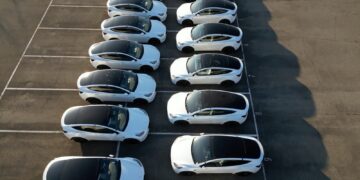
Europe’s electric-car market has shifted from steady growth to a much sharper acceleration. Battery-electric vehicles captured 30.5% of new-car registrations across 16 major European markets in August 2026, after registrations jumped 54.2% from a year earlier to 202,833 vehicles. The monthly result was far above the full-year market-share forecasts many analysts had been using at the start of 2026.

The surge does not mean three in every ten cars sold across Europe this year have been electric. The January-to-August share in the same dataset was 22.5%, making August an unusually strong month rather than the new annual average. Even so, the direction is difficult to ignore: electric-car demand is strengthening across several large markets, while falling prices, new models, incentives and tougher emissions rules are reshaping the competitive landscape.

August Pushes Electric Cars Into the Mainstream

August delivered the kind of number that changes the tone of the EV debate. Across 16 major European markets, battery-electric registrations reached 202,833 vehicles, up 54.2% from August 2025. That lifted BEVs to 30.5% of new-car registrations, meaning nearly one in three new vehicles registered during the month ran entirely on batteries.

The coverage is broad enough to matter. The 16 markets include Germany, France, Italy, Spain, Belgium, the Netherlands, the Nordic countries and several other important European markets, representing about 90% of the combined EU and European Free Trade Association car market. The result therefore cannot be dismissed as a quirk produced by one small country. It reflects a substantial move in the region’s mainstream car market, even if monthly registrations can fluctuate with incentives, fleet purchases and model-launch timing. The bulletin separately estimated the EU-only BEV share at 31.2%.

The Forecasts Suddenly Look Conservative

What makes the August figure especially striking is how far it sits above forecasts published earlier in the year. Transport & Environment projected a 23% BEV share for the EU in 2026, while Rho Motion expected roughly 21% across Europe. August’s 30.5% share cleared both benchmarks by a wide margin on a monthly basis.

That comparison needs one important qualification. A single month cannot be treated as a full-year result. From January through August, the same 16-market dataset put BEV share at 22.5%, with more than 1.67 million battery-electric vehicles registered. Even so, registrations were up 33.1% from the same period in 2025. T&E’s forecast was already based on stronger EU emissions targets, so August suggests demand is running ahead of many expectations. The distinction matters: the headline is significant without implying that Europe has already locked in a 30.5% annual share.

July Had Already Signalled the Acceleration

The jump to 30.5% looks less like an isolated spike when placed beside July. In July, the same 16 markets registered 224,266 BEVs, up 13.6% year over year, giving battery-electric cars a 25.7% market share. August then pushed the share almost five percentage points higher, even though absolute BEV registrations were lower than in July.

That difference shows why market share matters alongside raw sales. August is normally a lower-volume registration period in several major European markets, so a smaller overall market can amplify changes in powertrain share. Electric vehicles still posted strong year-over-year growth while taking a larger portion of new registrations. Nearly 1.5 million BEVs had already been registered by the end of July, and the cumulative total moved above 1.67 million in August. The momentum is therefore visible in both market share and year-to-date volume rather than depending entirely on one unusually strong percentage.

Germany Is Turning EV Growth Into Real Scale

Germany is doing much of the heavy lifting because of the sheer size of its car market. The country registered 68,980 battery-electric cars in August, giving BEVs a 32.5% share of new registrations. That represented a 34.5% increase from a year earlier and placed one of Europe’s most important automotive markets above the regional average for the month.

The shift matters far beyond German showrooms. Germany is home to Volkswagen, BMW and Mercedes-Benz, and its demand patterns influence production planning, supplier investment and model strategy across Europe. The International Energy Agency estimated that German electric-car sales had already reached about 850,000 in 2025, up roughly 50%, helped by the arrival of more affordable models and lower average BEV prices. August 2026 indicates that expansion is continuing. For manufacturers and component suppliers, a roughly one-third BEV share in a market of Germany’s size has become a central commercial consideration rather than a niche experiment.

France Is Moving Even Faster

France produced an even higher electric share in August. The 16-market dataset recorded 36,159 BEV registrations and a 38.3% share, with battery-electric registrations rising 72.2% from a year earlier. Separate French industry tracking also placed the electric share at roughly 38% to 39%, confirming that August represented a major step up for fully electric passenger cars.

The supporting ecosystem is expanding at the same time. France passed 200,000 public charging points by the end of August, according to Avere-France and government-linked infrastructure data. The network was 13% larger than a year earlier, while average charging sessions per point rose from roughly 31 to 39.3. Average energy delivered per point increased 34%. Those numbers matter because adoption depends on more than showroom supply. Stronger vehicle sales create greater charging demand, while a larger and more heavily used network can make electric ownership more practical for households that cannot depend entirely on charging at home.

Norway and Denmark Show What Maturity Looks Like

Northern Europe shows what can happen once electric cars move from alternative choice to default choice. Norway reached a record 98.7% BEV share in August, while Denmark was close to 86%. Finland moved above 50%, and the Netherlands and Belgium were also among the region’s most heavily electrified new-car markets.

Those results were built over years rather than months. Norway has long used tax policy to make zero-emission cars financially attractive, while Denmark’s registration-tax structure has increasingly favoured electric models. The International Energy Agency has highlighted how those policies helped accelerate adoption, although incentives are evolving as the markets mature. Across Norway, Sweden, Denmark and Finland together, nearly seven in ten new passenger cars registered in August were electric. The wider lesson is not that every European market will follow the same timetable. It is that aligned pricing, taxation, charging access and model availability can shift EVs from minority status to the mainstream remarkably quickly.

Europe Is Still a Two-Speed EV Market

Europe’s headline average hides a much more uneven map. Italy’s BEV share was only 6.4% in August, even after edging up from 5.9% in July. Poland was lower still at 4.8%, with 2,189 fully electric passenger cars registered during the month. Czech registration data also showed a single-digit BEV share, underscoring the enormous distance between Europe’s leading and lagging electric markets.

Policy changes help explain part of the gap. Italian industry groups said the earlier boost from purchase incentives had faded, while Polish industry data linked weaker BEV registrations to the absence of purchase subsidies. Poland’s August battery-electric registrations were down 33.8% from a year earlier. The contrast with Norway, Denmark, France and Germany shows why a Europe-wide average can be misleading in isolation. Automakers must serve markets where electric demand ranges from near-total dominance to low single digits, making pricing, charging investment, dealer strategy and product planning considerably more complicated.

Cheaper Electric Cars Are Changing the Buyer Pool

Affordability is becoming a more important part of the growth story. Transport & Environment estimated that the average new electric-car price in the EU fell by €1,800, or 4%, in 2025 to about €42,700. The decline followed the arrival of smaller, less expensive models such as the Renault 5 and Citroën ë-C3, along with broader pricing pressure across the market.

The International Energy Agency reached a similar conclusion. It found that average BEV prices in Germany fell by about 6% in 2025, helped by cheaper models and declining battery costs. The affordability gap has not disappeared: Europe still has relatively few BEVs priced below €30,000 compared with combustion vehicles. But the direction has changed. As electric cars move into familiar hatchback and compact-crossover price bands, buyers are no longer choosing mainly from premium offerings. That broadening product range gives the market access to a much larger pool of households and helps explain why adoption can accelerate faster than projections based on older, more expensive EV lineups.

Chinese Competition Is Raising the Pressure

The sales surge is also intensifying competition between European and Chinese manufacturers. Transport & Environment found that China-built BEVs accounted for 17% of the EU battery-electric market in the first quarter of 2026, down from a 22% peak in 2024. Part of that decline came as Western brands including Tesla, BMW and Volvo shifted more production into Europe.

Chinese brands, however, continue to expand their presence. T&E estimated that Chinese-brand BEVs remained about 21% cheaper on average than European offerings, while Chinese manufacturers now account for more than half of the battery-electric cars imported from China. Several companies are also planning European production, reducing reliance on finished-vehicle imports. For established European automakers, the challenge is therefore two-sided: they must increase electric sales while defending market share against aggressively priced competitors. As BEVs take a larger share of total registrations, the industry’s competitive battle increasingly becomes an electric-car battle as well.

Charging and Policy Now Have to Catch Up

The next constraint may be less about whether Europeans want electric cars and more about whether infrastructure and policy can keep pace. A September assessment cited by the European Automobile Manufacturers’ Association estimated that the EU had roughly 1.2 million public charging points, while total public charging capacity reached 41.6 gigawatts by June 2026. Deployment was still growing quickly, but major differences remained between countries.

That leaves August’s 30.5% share as both a milestone and a stress test. More electric cars mean greater demand for reliable public charging, grid connections, apartment charging and faster infrastructure along major roads. Industry groups are also calling for predictable regulatory conditions so manufacturers can plan factories, batteries and model cycles with greater certainty. August does not guarantee that Europe will maintain a 30% BEV share every month. It does demonstrate that the market is already capable of reaching that level considerably sooner than many forecasts implied when demand, vehicle supply, pricing and policy factors align.


Recommended.

Honda Indy Leaves Toronto Behind as Markham’s New 3.52-km Street Circuit Opens Today

Honda Indy Leaves Toronto Behind as Markham’s New 3.52-km Street Circuit Opens Today

August 17, 2026
15 “Hidden Fees” Canadians Keep Paying at Dealerships in 2026

15 “Hidden Fees” Canadians Keep Paying at Dealerships in 2026

March 30, 2026

Trending.

⁠$28 Billion in Canadian Goods Face 50% Trump Tariffs at Midnight as Deal Still Isn’t Final

Canada-U.S. Trade Deal Fell Apart After Washington Left Ontario-Built Ford and GM Trucks Out of Auto Tariff Relief

August 23, 2026
Doug Ford Says U.S. ‘Wasn’t Budging’ on 25% Auto Tariffs as Ontario Puts ‘Every Single Tool’ on the Table

Doug Ford Says U.S. ‘Wasn’t Budging’ on 25% Auto Tariffs as Ontario Puts ‘Every Single Tool’ on the Table

August 23, 2026
Chinese EV Price Pressure Gets a New Benchmark as Voyah Opens $63,420 Luxury MPV Orders

Ottawa EV Owners Put Electric Cars on Display as Gas Prices Push Back Toward $2 a Litre

September 5, 2026
Mexico Pushes U.S. to Cut Auto Tariff From 25% to 5%–10% — and Give Canadian Parts More Room

Ottawa’s Chinese-EV Quota Opens Canada to 6.1% Tariffs Instead of the Former 100% Surtax

August 22, 2026
16 Cars That Could Lose Their Cool Factor Fast in Canada This Summer

Tesla Raises Canadian Prices by as Much as $30,000 as U.S. Auto Tariffs Hit Buyers

September 4, 2026
  • About
  • Contact
  • Privacy Policy
  • Disclaimer
  • Editorial Policies
  • Terms and Conditions
A Revir Media Group Website

2026 Autoigloo - © All rights reserved

No Result
View All Result
  • News & Trends
  • Car Reviews
  • Buying Guides
  • Comparisons
  • EVs & Hybrids
  • More
    • Pricing & Deals
    • Winter Driving
    • Ownership & Maintenance

2026 Autoigloo - © All rights reserved

This website uses cookies. By continuing to use this website you are giving consent to cookies being used. Visit our Privacy and Cookie Policy.