

























A labour dispute at a relatively small auto-parts plant in Puebla has become the latest test of North America’s trade rules. On October 8, Washington invoked CUSMA’s facility-specific Rapid Response Labor Mechanism against GLM Components Mexico after an independent union alleged that workers faced interference, intimidation and unlawful dismissals tied to union activity. U.S. officials say the petition contained enough credible evidence to justify asking Mexico for a formal review, while stressing that the allegations have not yet been proven. The United States has also frozen the final customs processing of unliquidated entries from the facility. What happens next could affect more than one factory: the case arrives as Canada, Mexico and the United States prepare for another major review of the continental trade agreement and as labour enforcement becomes increasingly intertwined with the deeply integrated North American auto industry.
Washington Has Formally Triggered the Rapid-Response Process
The Office of the U.S. Trade Representative opened the case after receiving a petition on September 8 from the Sindicato Regeneración Nacional de Trabajadores y Empleados de la República Mexicana, known as Morenas. The independent Mexican union alleged that employees at GLM Components Mexico were being denied their rights to freely associate and bargain collectively. U.S. officials reviewed the filing for 30 days before determining that there was “sufficient, credible evidence” to invoke CUSMA’s enforcement machinery.
That determination is important, but it is not a verdict against GLM. Washington has asked Mexico to investigate whether a denial of rights is actually occurring at the Puebla facility. At the same time, USTR directed the U.S. Treasury to suspend liquidation of all still-unliquidated entries of goods from the factory. GLM manufactures automotive components, putting the dispute squarely inside a sector where Mexican factories routinely feed parts into complex North American supply chains. The next formal decision now rests with Mexico.
The Allegations Extend Beyond the Reported Firings
The U.S. request is broader than a dispute over several dismissed employees. According to the formal filing, Washington wants Mexico to examine whether GLM interfered with workers attempting to organize, join or support a union of their choosing. The document specifically encompasses alleged threats, intimidation, coercion and other forms of interference, along with allegations that workers were unlawfully dismissed because of union activity. It also covers actions by company employees, representatives or agents, including conduct allegedly coordinated with third parties.
Those remain allegations until the review process establishes what happened. That distinction is essential because the Rapid Response Labor Mechanism intentionally operates before a full dispute has been adjudicated. The threshold at this stage is credible evidence sufficient to warrant investigation, not proof of liability. Morenas itself is listed in Mexico’s federal labour registry as a national workers’ organization not affiliated with a larger labour central. For employees, the issue is unusually personal: freedom of association means little in practice if supporting a different union can threaten a livelihood.
GLM’s Puebla Factory Sits Inside a Vast Auto-Parts Economy
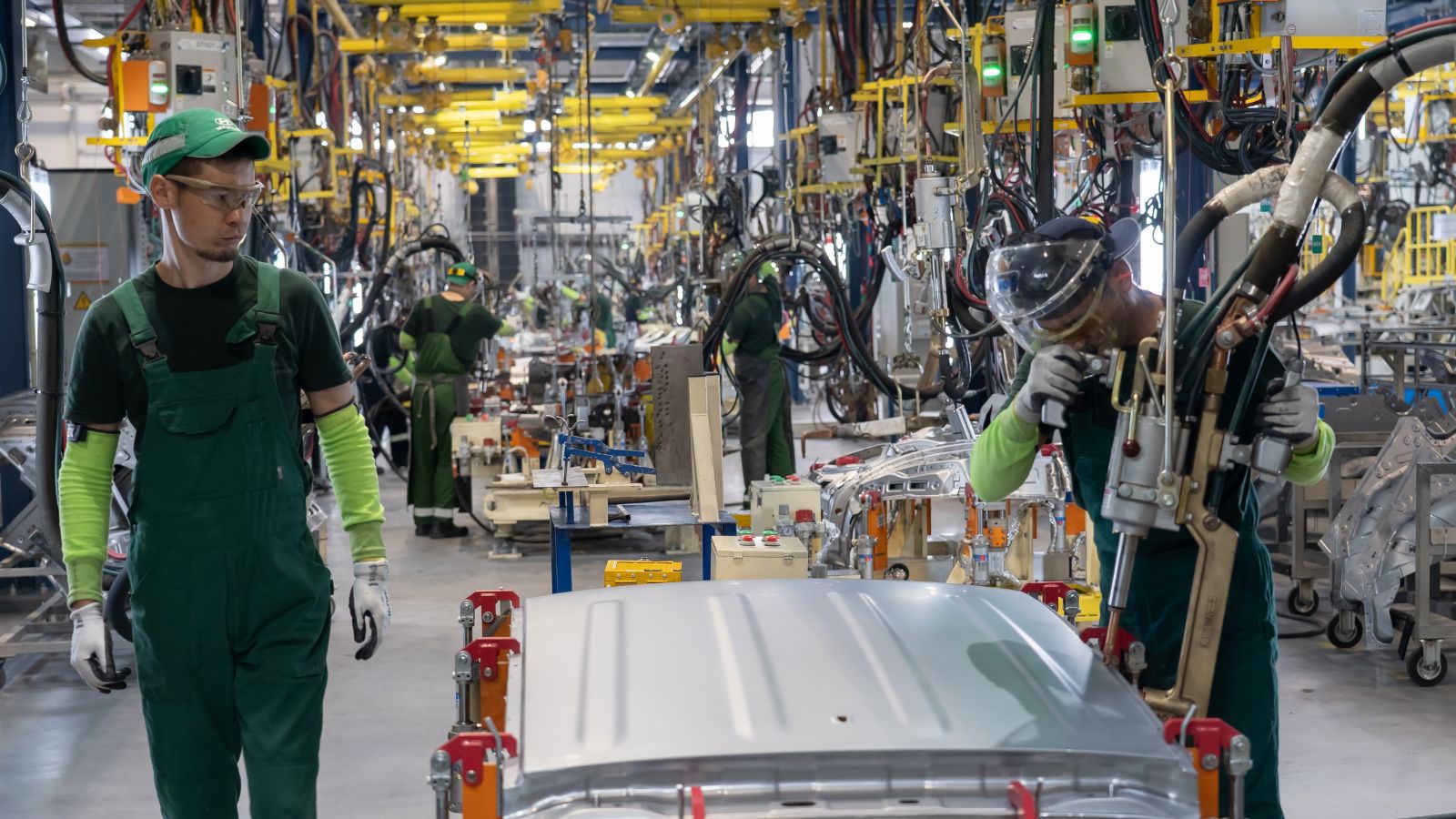
GLM Components Mexico operates in the Chachapa industrial area of Amozoc, Puebla. The company describes the Mexican division as a producer of tube and sheet-metal brackets for automotive exhaust applications, along with supports, hooks and pressure tubes. Its own corporate information lists an 85-person team and approximately 4,500 square metres of manufacturing space, with CNC forming equipment and robotic and manual welding. The Mexican operation traces its origins to a joint venture established in 2011, with GLM taking full ownership before inaugurating a new Puebla plant in 2018.
Its size is modest compared with major assembly plants, but its location is significant. U.S. Commerce Department data identify Puebla as responsible for roughly 6.6% of Mexico’s auto-parts manufacturing activity, with Volkswagen and Audi among the major vehicle manufacturers operating in the state. Across Mexico, auto-parts production reached about US$121.3 billion in 2024, while exports were approximately US$106 billion. A labour dispute at one supplier can therefore sit inside a production network many times larger than the factory itself.
The Customs Action Is Pressure, Not Yet an Import Ban
The phrase “suspended liquidation” can sound as though Washington has blocked every GLM shipment at the border. That is not what the customs term means. Under U.S. regulations, liquidation is the final computation or determination of duties on an imported entry. USTR’s October 8 instruction tells the Treasury Department to suspend that final customs step for all unliquidated entries of goods from the Puebla facility while the labour case proceeds.
That distinction does not make the measure meaningless. Keeping entries unliquidated preserves Washington’s ability to apply the eventual outcome of the case and creates commercial uncertainty for importers dealing with the factory. U.S. customs regulations even recognize that merchandise can be released conditionally before final liquidation. Stronger remedies are available later if a denial of rights is established and remains unresolved. CUSMA permits withdrawal of tariff benefits and, in more serious or repeated cases, restrictions including denial of entry for goods from an offending facility. The current measure is therefore an enforcement hold, not the maximum penalty.
Mexico Now Faces a Deliberately Short Clock
CUSMA’s rapid-response system earns its name from the deadlines built into it. Mexico has 10 days to tell Washington whether it will conduct the requested review. If it agrees, the Mexican government has 45 days from the U.S. request to investigate and report its findings. The process is designed to prevent facility-level labour disputes from disappearing into years of conventional trade litigation while workers and employers remain uncertain about the outcome.
If Mexico concludes that workers were denied their protected rights, the two governments can move toward a remediation plan. U.S. Department of Labor guidance says that, after Mexico finds a denial of free-association or collective-bargaining rights, the governments generally have 10 days to seek agreement on how it will be corrected. If Mexico declines the review, disputes the allegation or the two sides cannot agree on remediation, Washington may request a formal rapid-response panel. A finding against the facility can eventually lead to the loss of trade benefits. The system therefore strongly encourages a negotiated correction before sanctions become necessary.
CUSMA Was Designed to Reach Inside Individual Factories
Traditional trade agreements were often criticized because labour promises existed on paper but were difficult to enforce quickly. CUSMA changed that relationship by creating mechanisms capable of targeting conditions at individual workplaces. Mexico’s landmark 2019 labour reforms established new institutions and protections intended to strengthen independent unions, worker voting and collective bargaining. CUSMA then incorporated many of those principles directly into enforceable continental trade rules.
The agreement is unusually specific. Annex 23-A requires Mexican labour law to protect workers engaging in collective activity and to allow employees to organize, form and join the union of their choice. It also calls for prohibitions against employer domination of unions, interference with union activity, discrimination and coercion directed at workers because of their union support. Those provisions closely mirror the conduct Washington is asking Mexico to investigate at GLM. The mechanism is therefore not being stretched into an unrelated labour dispute; alleged retaliation for independent organizing is precisely the type of conduct it was built to address.
Labour Tensions at GLM Predate the Latest U.S. Petition
The October 2026 filing is new, but public reports of disagreement over worker representation at GLM are not. Puebla media documented work stoppages at the plant during May and June 2025, when employees involved in a separate representation dispute sought to leave their existing union and move to another labour organization. Local reports described workers demanding reinstatement of dismissed colleagues and alleging harassment after supporting a change in representation.
One June 2025 report said two workers had been dismissed after participating in efforts to obtain different union representation, while another cited labour representatives claiming that an overwhelming majority of the plant’s workforce wanted a change. Those claims were made by workers and their representatives and should not be treated as established findings against the company. They also involved different union actors from the Morenas petition now before Washington. Still, they provide useful history: questions about representation, dismissals and worker organizing at the Puebla operation were publicly visible more than a year before the current CUSMA action reached USTR.
Previous Auto-Parts Cases Show What a Settlement Can Look Like
The mechanism has already produced concrete remedies at other Mexican automotive suppliers. In September 2026, the United States and Mexico closed a case involving Akwel Juárez México after addressing allegations that included employer interference and retaliatory dismissals. Once the agreed measures were implemented, Washington instructed Treasury to resume liquidation of the facility’s goods. That sequence demonstrates that the customs hold can be lifted when the governments agree that the underlying problem has been corrected.
Another recent auto-parts case involved ThyssenKrupp Springs & Stabilizers in San Luis Potosí. Its 2026 resolution included reinstating two dismissed workers under their previous terms, paying full back wages and benefits, establishing a union-access protocol, adopting a neutrality statement and training employees on freedom-of-association rules. An earlier Panasonic Automotive case resulted in recognition of an independent union, reinstatement with back pay and repayment of wage deductions. GLM’s case may develop differently, but those precedents show that rapid-response cases frequently focus on practical workplace remedies rather than punishment alone.
Canada Is Part of CUSMA but Not the Complainant in This Case
For Canadian readers, an important legal distinction sits behind the CUSMA label. The action against GLM was filed under Annex 31-A, the United States-Mexico Facility-Specific Rapid Response Labor Mechanism. Canada is not a complainant in this particular proceeding. CUSMA contains a separate, nearly identical Canada-Mexico mechanism under Annex 31-B, which Ottawa can use when it has a good-faith basis to believe workers at a covered Mexican facility are being denied freedom of association or collective-bargaining rights.
Canada nevertheless has a substantial economic interest in how these rules function. Canada-Mexico merchandise trade reached $62.4 billion in 2025, and automotive parts were among Canada’s leading exports to Mexico. CUSMA also deliberately treats the automobile industry as a North American production system: qualifying vehicles generally face a 75% regional-value-content requirement, alongside specific rules for core parts, steel, aluminum and labour value. Parts can move between plants and borders before a completed vehicle reaches a dealership. Labour enforcement at a Mexican supplier therefore operates within the same integrated system supporting Canadian assembly and parts production.
The Case Arrives as the Three Countries Prepare to Reassess CUSMA
Timing gives the GLM dispute additional significance. On October 2, less than a week before opening the Puebla case, USTR launched its public consultation process for the 2027 joint review of CUSMA. Comments are due by January 12, 2027, and Washington plans a public hearing as governments, manufacturers, unions and other stakeholders assess how the agreement has worked. Labour enforcement is likely to receive close attention because the rapid-response mechanism has evolved from an untested innovation into a frequently used trade tool.
Mexican business newspaper El Economista describes the GLM action as the 50th rapid-response case, while USTR recently announced the 14th formal course of remediation agreed between the United States and Mexico. Those numbers illustrate how central the mechanism has become. The immediate GLM case is much narrower: Mexico must determine whether workers at one Puebla auto-parts factory were actually denied protected rights. But the outcome will feed a larger discussion about how aggressively North America should link market access to workplace conduct. For now, the most important words in Washington’s announcement remain “alleged” and “review.”