


























GM Canada’s latest sales update lands at a moment when the country’s auto market feels pulled in two directions. On one side, electric vehicles are gaining traction, with the company saying its Canadian EV sales rose 33.4% year over year in the first half of 2026. On the other, uncertainty around the Canada-United States-Mexico Agreement is adding fresh pressure to pricing, supply chains, and showroom conversations.
The result is a market that looks stronger than expected on the surface but more fragile underneath. GM’s mix of Chevrolet, Cadillac, GMC, and Buick models gives it reach across budgets and lifestyles, yet buyers are still weighing monthly payments, trade risk, rebates, and long-term resale value before signing.
GM’s EV Momentum Comes With a Bigger Message
GM Canada said it finished the first half of 2026 as Canada’s best-selling automaker, delivering 148,640 vehicles across Chevrolet, Buick, GMC, and Cadillac while capturing 15.4% market share. The headline number was its electric-vehicle performance: EV sales rose 33.4% year over year, a stronger pace than the broader Canadian zero-emission vehicle market recorded in the first quarter. For a company long associated with pickups, SUVs, and work vehicles, that shift is significant.
The growth also suggests EV demand is not limited to early adopters in major urban centres. GM’s Canadian lineup now reaches from mainstream Chevrolet models to luxury Cadillac SUVs and full-size GMC electric trucks. That matters in a country where many households need winter range, cargo space, and highway confidence. A buyer looking at an Equinox EV is not necessarily the same person considering a Cadillac LYRIQ, but both help GM tell the same story: electric demand is broadening.
Affordable EVs Are Doing More of the Heavy Lifting
A key reason GM’s EV message may be landing is its renewed emphasis on affordability. The company pointed to the Chevrolet Equinox EV and the relaunched Chevrolet Bolt as two lower-cost electric options, each offering an estimated range of more than 400 kilometres. That gives dealers a more practical answer when shoppers ask whether an EV can handle daily commuting, weekend driving, and winter errands without becoming a luxury purchase.
This matters because affordability has become one of the biggest barriers in the Canadian auto market. TD Economics noted that monthly vehicle payments continue to hover around $1,000, keeping many households cautious even when they need a new vehicle. In that environment, the EV conversation is not only about battery technology or climate goals. It is about whether the payment fits the household budget, whether rebates apply, and whether the total cost of ownership feels predictable enough to justify the jump.
Cadillac Is Giving GM a Luxury-EV Advantage
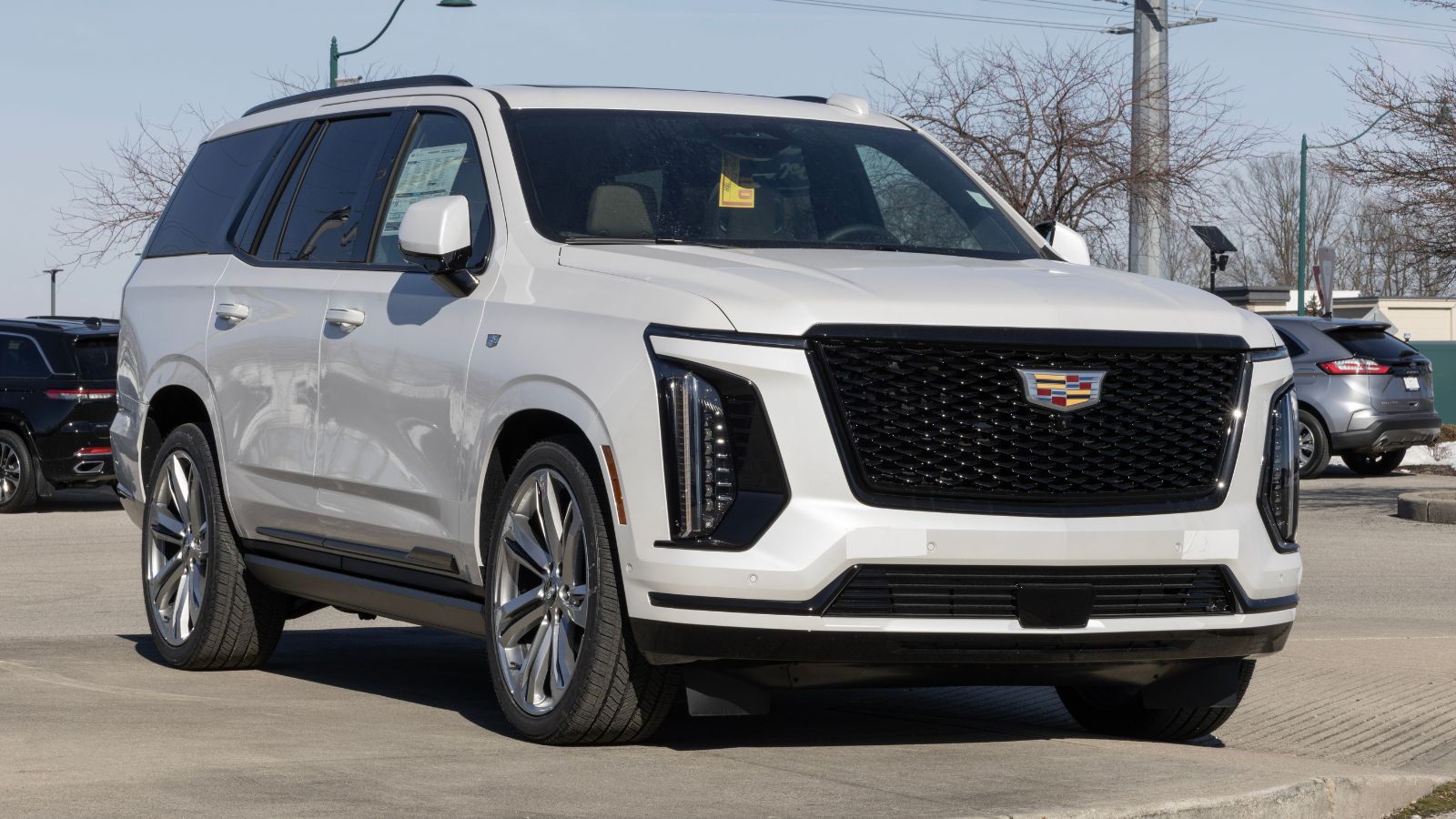
GM’s EV growth was not only driven by budget-friendly models. Cadillac has become a major part of the company’s Canadian electric strategy, with GM reporting strong first-half gains across its newer luxury EV portfolio. The company said the Cadillac VISTIQ EV rose 319%, the OPTIQ EV climbed 108.2%, and the LYRIQ increased 7.6%. Earlier in 2026, GM also said Cadillac held more than half of Canada’s luxury EV market in the first quarter.
That gives GM a useful two-lane strategy. Chevrolet can compete for buyers who want an EV that feels attainable, while Cadillac can court households that want refinement, status, and technology. Luxury EV buyers may be less sensitive to small payment changes, but they still care about charging access, range, brand confidence, and resale value. In a showroom, that means Cadillac sales staff are not just selling a vehicle; they are selling the idea that an established North American luxury brand can compete in a space once dominated by newer EV-first names.
CUSMA Uncertainty Is Now Part of the Showroom Conversation
The challenge for GM and other automakers is that rising EV demand is happening alongside growing trade uncertainty. Canada says CUSMA remains in force until 2036, but the first mandatory joint review began on July 1, 2026. Reuters reported that the Trump administration declined to extend the agreement in its current form, keeping the pact in place while opening the door to annual reviews and negotiations over changes.
For auto buyers, that may sound distant, but the effects can show up quickly. North American vehicles are built through deeply integrated supply chains, with parts and partially completed vehicles crossing borders multiple times before reaching a dealer lot. If rules of origin become stricter or tariff preferences change, automakers may face higher compliance costs, pricing uncertainty, or production adjustments. A family comparing a gas SUV, hybrid, and EV may not follow every trade detail, but they will notice if incentives change, delivery timelines stretch, or prices move.
Dealers Are Selling Confidence as Much as Cars
Canadian dealers are used to handling nervous buyers, but 2026 adds a different kind of uncertainty. Instead of simply explaining trims, financing rates, and delivery windows, sales teams now have to answer questions about tariffs, rebates, EV charging, resale value, and whether waiting six months could save or cost money. That changes the tone of a showroom visit. A customer who once asked, “What is the monthly payment?” may now ask, “Is this price going to change?”
That is where GM’s broad lineup helps. Dealers can keep shoppers in the brand even if they shift from an EV to a gasoline SUV, from a luxury Cadillac to a Chevrolet, or from a new vehicle to a more affordable trim. But the pressure is real. Canadian Auto Dealer has described trade tensions and shifting policy as forces pushing manufacturers and dealers into a period of uncertainty. When confidence gets shaky, trust becomes a sales tool.
Canada’s EV Market Is Recovering, But Unevenly
GM’s 33.4% first-half EV gain stands out because Canada’s broader zero-emission vehicle market has been uneven. Statistics Canada reported that 43,113 new ZEVs were registered in the first quarter of 2026, representing 10.8% of all new motor vehicle registrations and rising 15.8% from the same quarter in 2025. That marked the first year-over-year increase since the fourth quarter of 2024, helped by the return of federal purchase incentives.
Still, the recovery is not uniform across the country. Statistics Canada said first-quarter ZEV registrations rose sharply in Quebec, Manitoba, Saskatchewan, Ontario, and British Columbia, while several Atlantic provinces saw declines. That patchwork matters for GM Canada because EV adoption depends heavily on local incentives, charging availability, electricity costs, weather, and driving patterns. A model that sells well in suburban Toronto or Montreal may face a different reception in smaller communities where public charging is thinner and winter range anxiety remains part of the buying decision.
The CUSMA Risk Goes Beyond Sticker Prices
The CUSMA issue is not only about whether a vehicle becomes more expensive at retail. It also affects production planning, investment decisions, and the confidence automakers need to assign future models to Canadian plants. The Bank of Canada has warned that a significantly renegotiated agreement could make trade more expensive, especially if rules of origin become stricter or tariff preferences are reduced. It also said an unfavourable outcome could lower export volumes and weigh on investment and hiring.
That matters to Canada because auto manufacturing is one of the clearest examples of a continental industry. Government of Canada material notes that a vehicle assembled in the United States may cross the border multiple times during production, and that automotive manufacturing is one of the sectors built around shared North American supply systems. For GM Canada, EV sales momentum is welcome, but the company’s long-term Canadian footprint will also depend on whether trade rules remain stable enough to support investment.
The Next Test Is Affordability, Not Just Range
For years, the EV debate focused heavily on range. That still matters, especially in Canada, but the next test may be simpler: whether EVs can compete on monthly payment, availability, and trust. GM’s Canadian results suggest more buyers are willing to consider electric options when the lineup includes practical crossovers, recognizable brands, and models with more than 400 kilometres of estimated range. But buyers still need the numbers to work.
That is why CUSMA uncertainty arrives at such an awkward time. The market is showing signs of EV recovery, federal incentives have returned, and GM is gaining traction across both mainstream and luxury segments. Yet tariffs, trade reviews, and affordability concerns could reshape the math quickly. GM Canada’s sales jump is real momentum, but the next few months may determine whether that momentum feels durable — or whether showroom optimism gets tested by forces far beyond the dealership floor.