


























Cars rarely announce that they have been overloaded. The doors close, the luggage fits, and the suspension may appear normal—yet the combined weight of passengers, bags, accessories, roof cargo, bicycles, and trailer tongue load can quietly exceed a vehicle’s limits. The central mistake is treating empty space as unused carrying capacity.
These 12 checkpoints explain how ordinary holiday gear can consume payload faster than expected, why gross vehicle weight is only part of the calculation, and how tires and individual axles can be overworked without an obvious warning. They also show where to find the correct ratings, how to account for commonly missed weight, and when a public scale becomes the most reliable safety check.
Cargo Space Is Not Payload Capacity
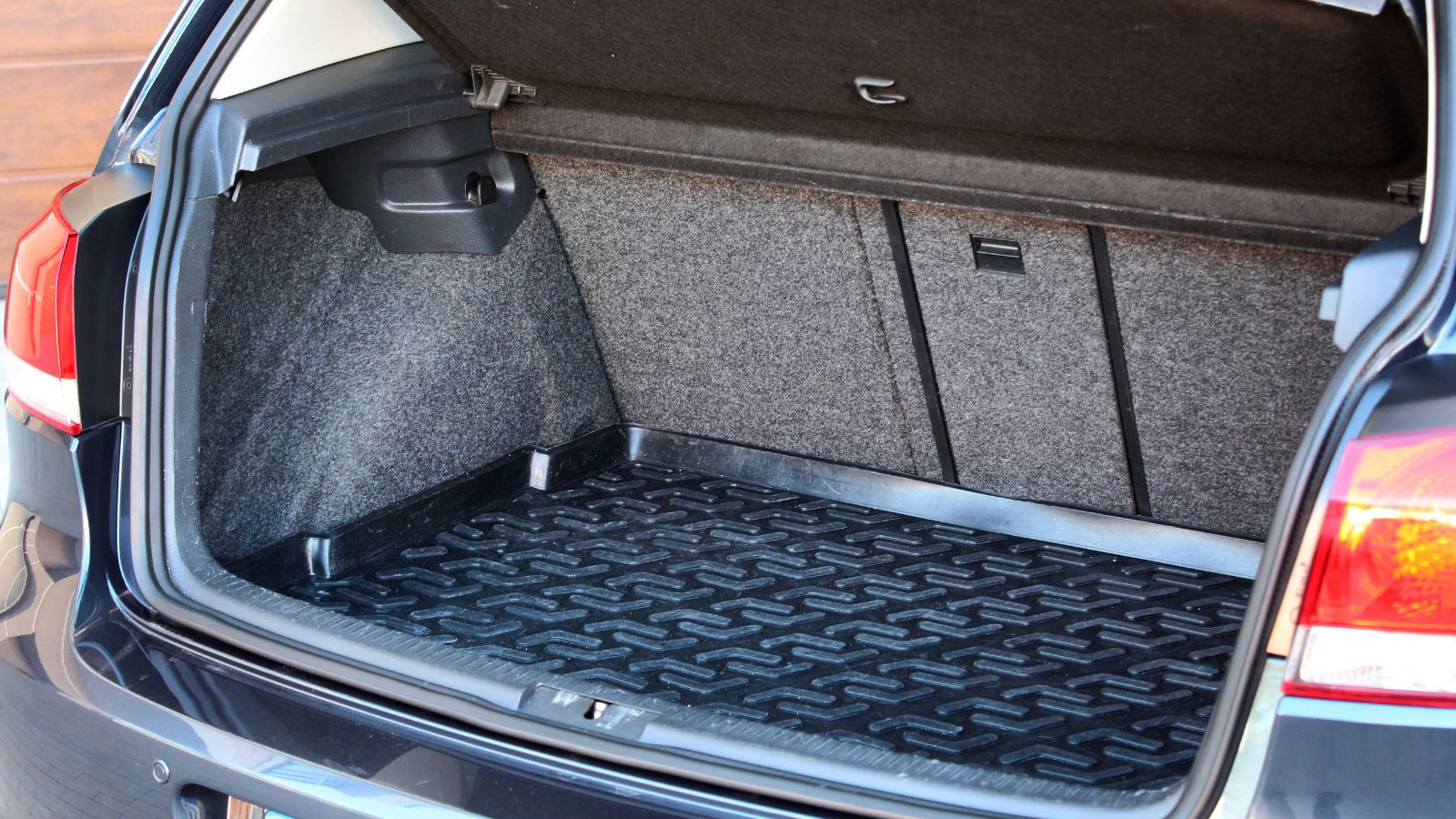
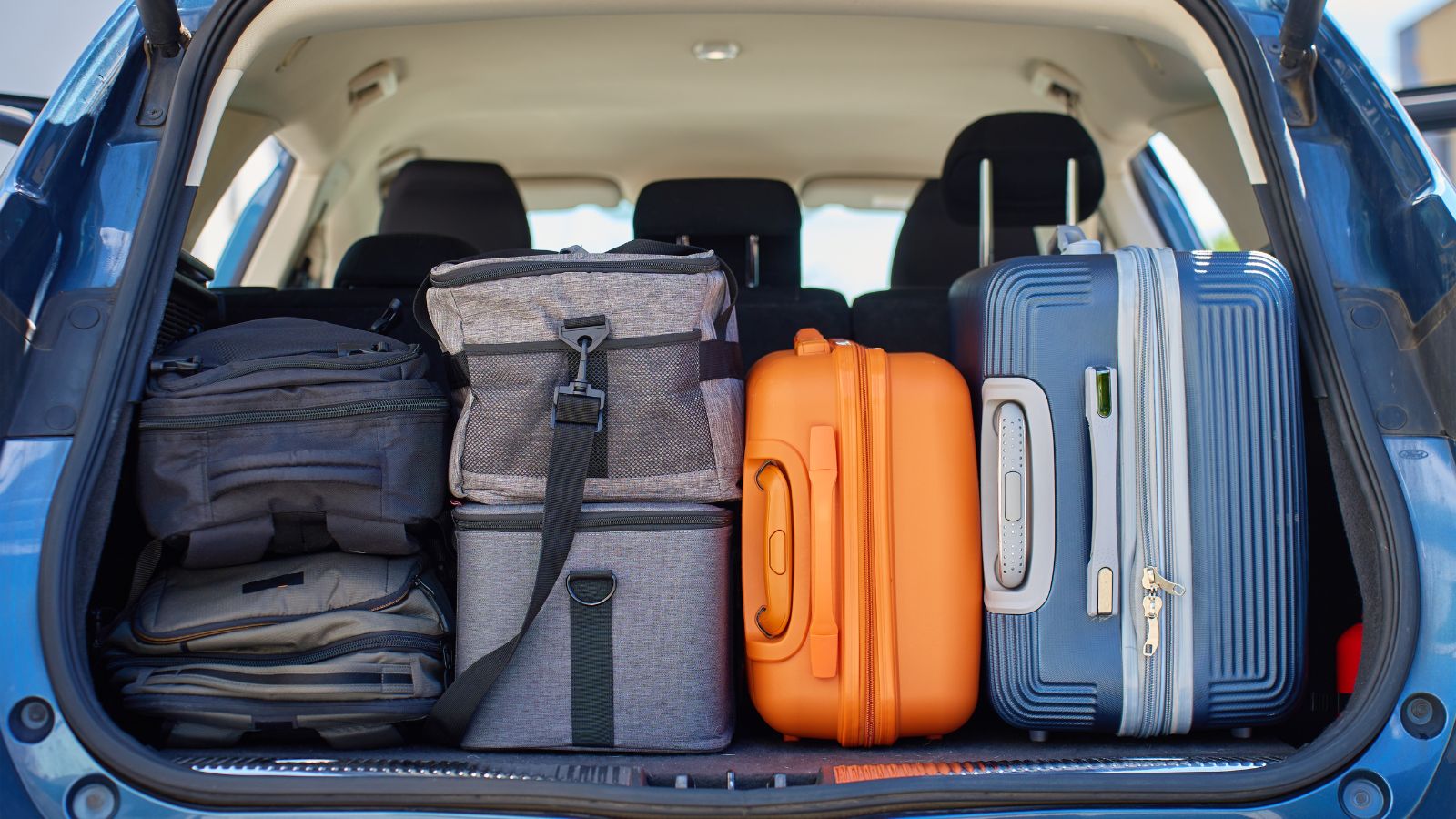
A road-trip car can look comfortably packed and still be overweight. Cargo volume measures how much space fits behind the seats; payload measures how much weight the entire vehicle may carry. That second figure includes people, bags, accessories, pets, and any load pressing on the hitch. Folding every suitcase neatly does nothing to increase the manufacturer’s weight limit.
Consider a vehicle with a 450-kilogram occupant-and-cargo allowance. Four adults weighing 75 kilograms each use 300 kilograms before a suitcase is loaded. Add 90 kilograms of luggage, a 30-kilogram roof setup, and a 30-kilogram bike carrier, and the allowance is gone. The suspension may not visibly sag, and no dashboard warning may appear. That is what makes the mistake so easy: drivers judge the pile by sight, while the car is governed by numbers. The safest starting point is the capacity label, not the apparent room left inside on a long trip.
The Door-Jamb Label Is the Real Packing Limit
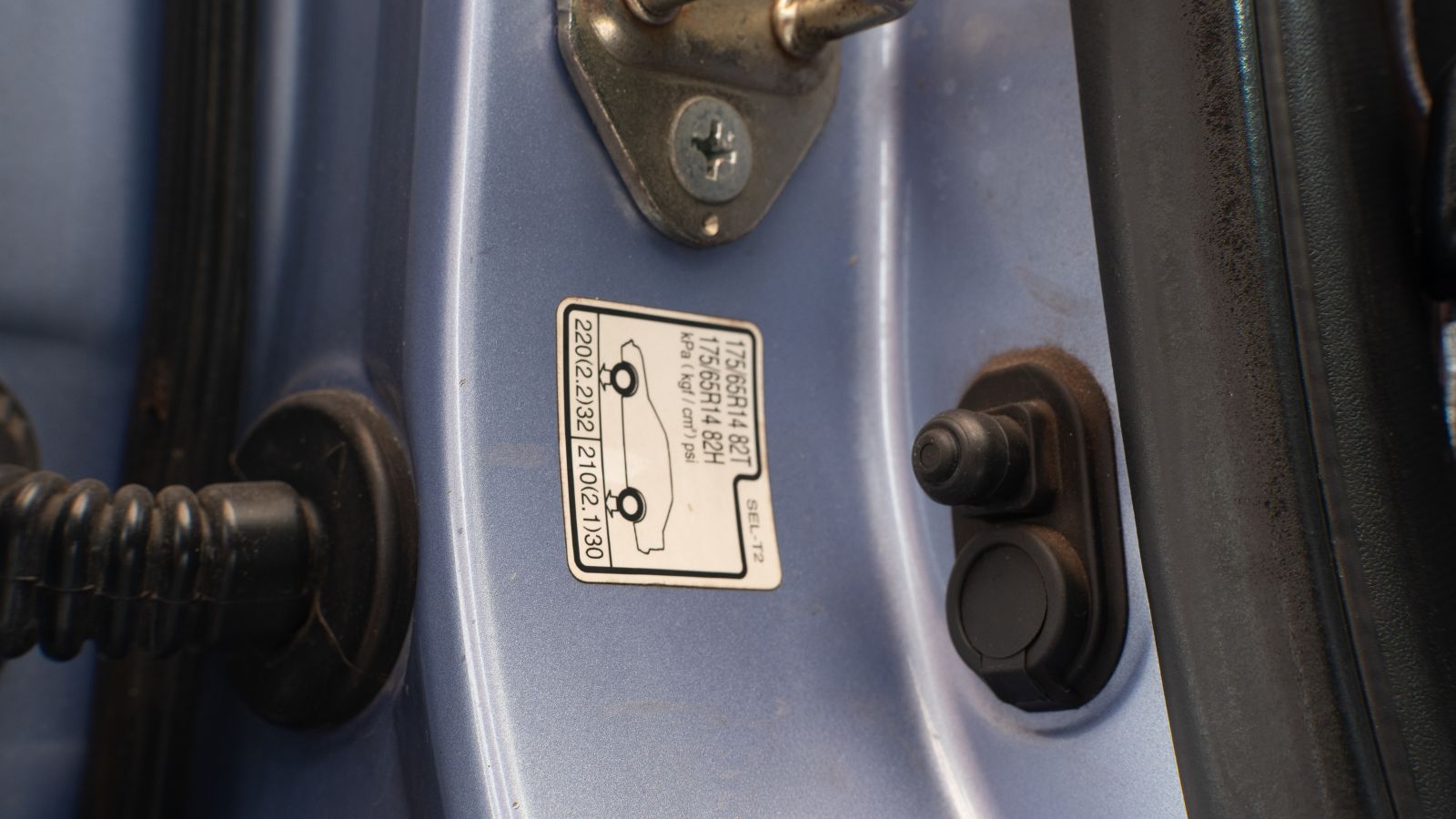
The useful road-trip number is often printed where few owners look: on the driver’s door edge or door pillar. The tire-and-loading placard typically states that the combined weight of occupants and cargo must not exceed a specific figure. That vehicle-specific limit is more reliable than a brochure’s generic payload claim because trim level, factory equipment, and installed options can change carrying capacity.
A family may remember that its SUV was advertised with “about 600 kilograms” of payload, yet the placard on the actual vehicle might show less. A panoramic roof, larger wheels, powered seats, or other equipment can consume part of the rating before anyone climbs aboard. The practical calculation is simple: start with the placard limit, subtract the actual weight of every occupant, then subtract all cargo and added equipment. What remains is the genuine packing budget. When the answer approaches zero, empty-looking footwells and unused cupholders are irrelevant.
Passengers Consume Capacity Before the Bags Arrive

Road-trip planning treats passengers as background, but every person counts against the same limit as suitcases. A seven-seat vehicle is not automatically rated to carry seven adults plus a week of gear. Seating capacity describes belted positions; it does not promise enough payload for every seat to hold an adult with the cargo area full.
Five adults averaging 75 kilograms total 375 kilograms. In a vehicle carrying 500 kilograms, that leaves only 125 kilograms for coolers, strollers, bags, roof equipment, and pets. Two large suitcases and a stocked cooler can erase that remainder quickly. Children weigh less, but child seats, travel cots, and other equipment add weight back. A useful habit is to list people first, carefully using realistic weights rather than flattering estimates. This feels unusually formal for a family holiday, yet it prevents the common surprise of discovering that most of the vehicle’s allowance disappeared before packing began.
Permanent Accessories Quietly Shrink the Margin
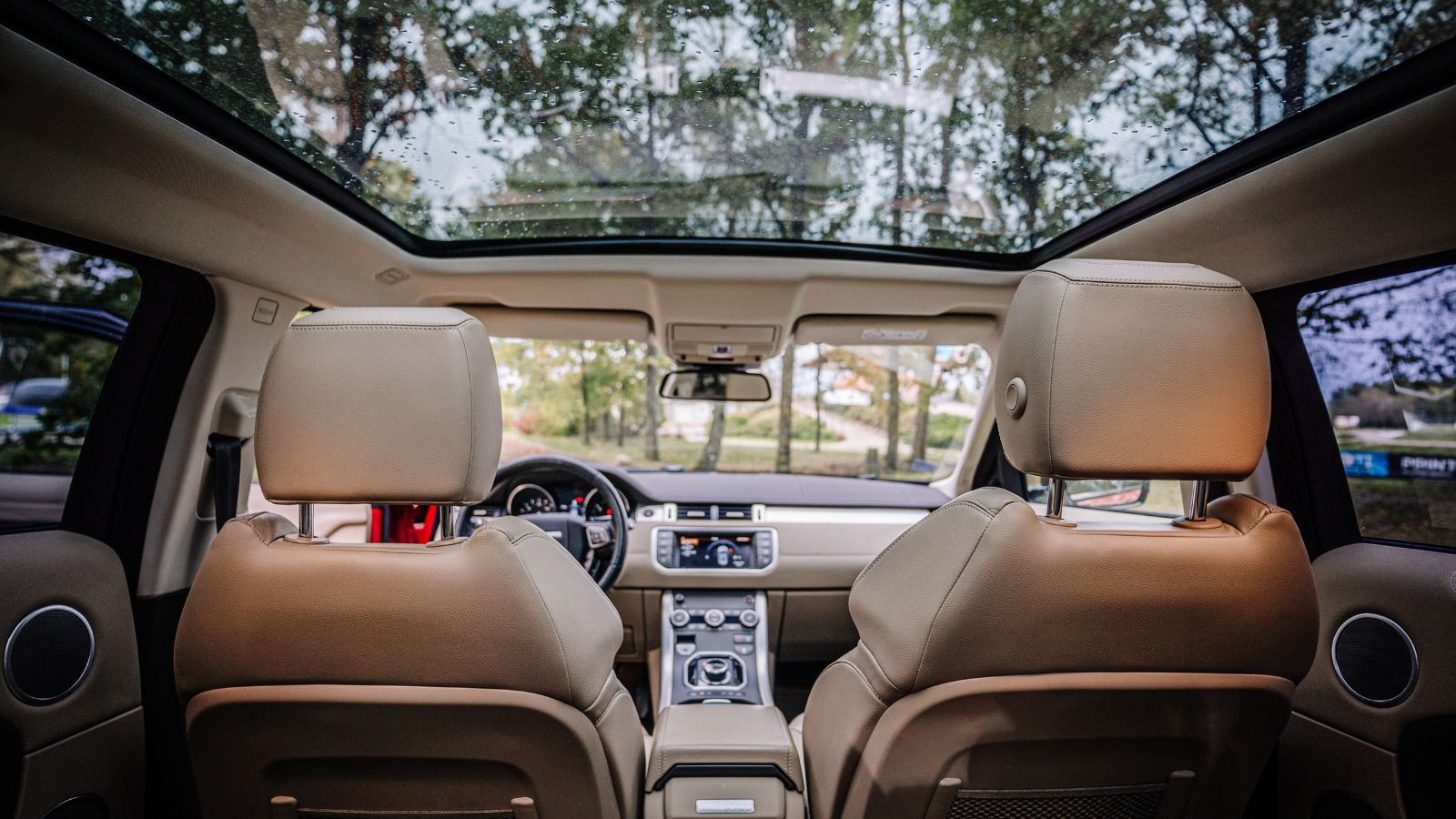
Payload is reduced not only by what is packed on departure morning, but by equipment that lives on the vehicle. Running boards, skid plates, cargo drawers, toolboxes, aftermarket wheels, recovery gear, roof crossbars, and tow-hitch hardware add mass. Some factory options are reflected in the vehicle’s placard; later additions are not removed from the printed number automatically.
Imagine a crossover whose label allows 480 kilograms. A 25-kilogram hitch, 20 kilograms of roof hardware, 35 kilograms of drawer storage, and 15 kilograms of emergency gear consume 95 kilograms before passengers arrive. Owners become accustomed to these items and stop seeing them as load. The car, however, carries them on every kilometre. Keeping a one-time inventory of permanent additions makes trip calculations easier. Receipts, product manuals, or a household scale can provide reasonable weights. For heavily modified vehicles, an actual scale reading is better than a spreadsheet because small additions accumulate fast.
Water, Ice, and Food Become Heavy Fast

Soft bags attract attention because they look bulky, while dense supplies hide their impact. Water is an example: one litre has a mass of about one kilogram. A 20-litre camping container contributes roughly 20 kilograms before its container is counted. Add drinks, ice, canned food, and a cooler, and one box can rival the weight of a passenger’s luggage.
This is how a grocery stop can push a full vehicle over its limit midway through the trip. A family that departed with 30 kilograms of spare capacity may add two cases of drinks, groceries, and ice without reconsidering the calculation. The visual change seems minor, but the numerical change is not. Dense items should be counted and loaded low, secure, and as far forward as the vehicle manual recommends. Buying consumables near the destination, carrying only the water needed, or splitting supplies between vehicles can recover margin without sacrificing comfort.
Roof Cargo Counts Twice: Weight and Balance
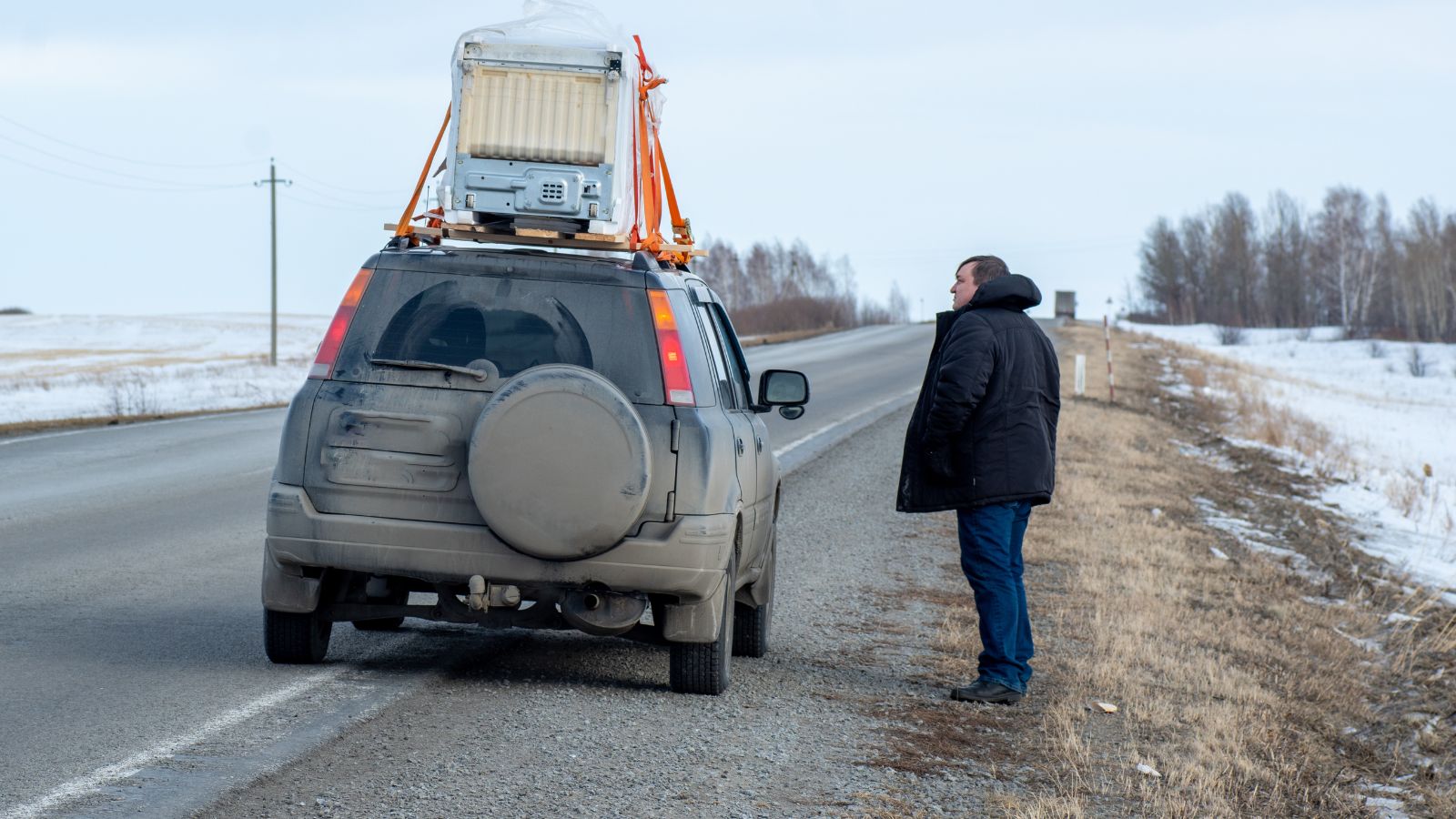
A roof box creates extra space, but it does not create extra payload. The box, crossbars, mounting hardware, and everything inside count against the vehicle’s combined occupant-and-cargo limit. They must also remain within the roof system’s rating, which may be lower than the vehicle’s remaining capacity. The lowest applicable limit always wins.
Loading 45 kilograms of gear into a 20-kilogram box adds 65 kilograms high above the road. That elevated mass raises the vehicle’s centre of gravity and can make steering responses, crosswind sensitivity, and emergency manoeuvres feel different. Research on load distribution shows that moving weight changes axle loading and vehicle dynamics even when total capacity is not fully used. Roof cargo should favour light, bulky items such as sleeping bags rather than water, tools, or canned food. Drivers should secure the load and reduce speed when conditions demand it. The roof is overflow space, not a weight loophole.
Hitch-Mounted Carriers Can Overwork the Rear Axle
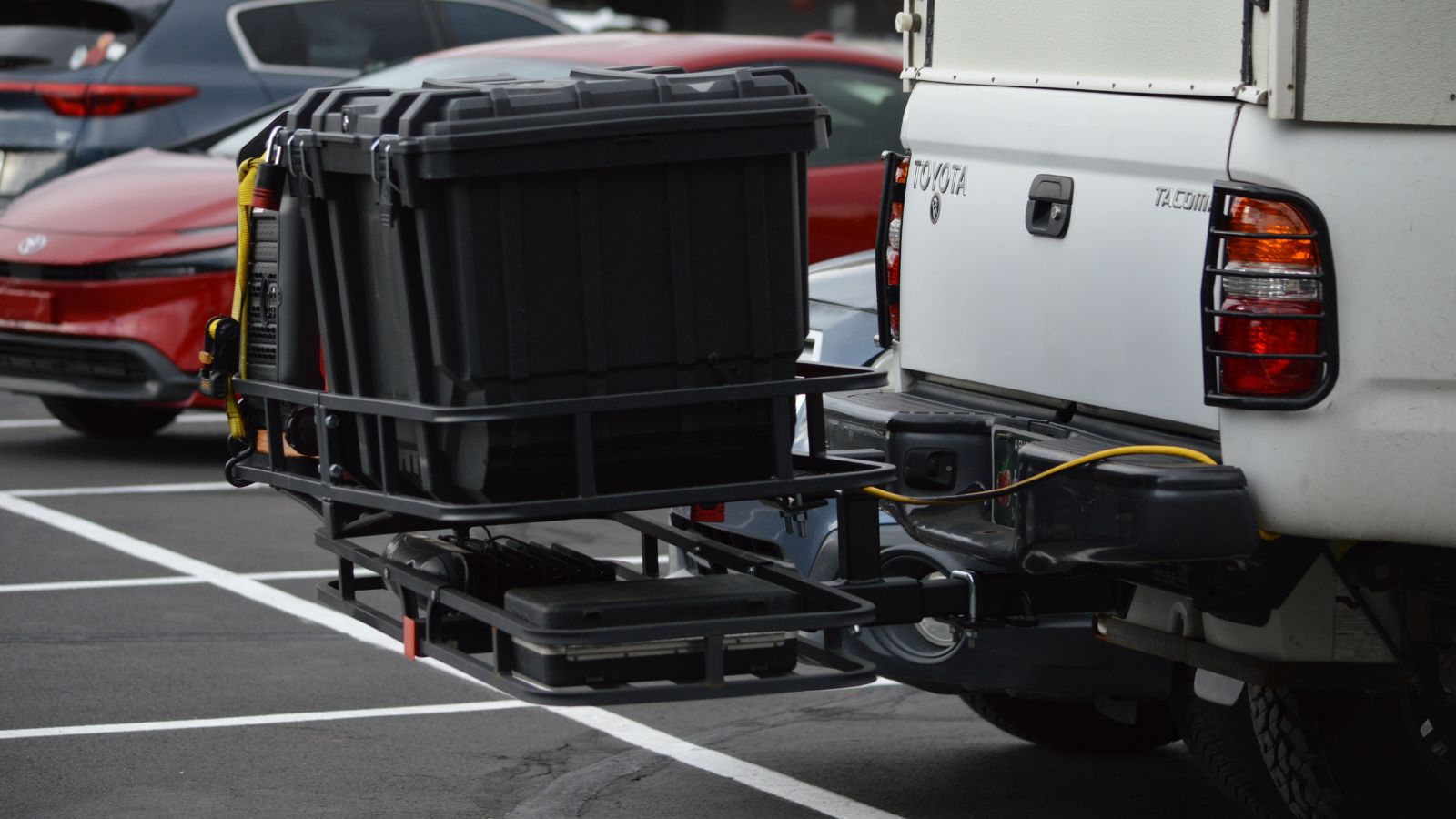
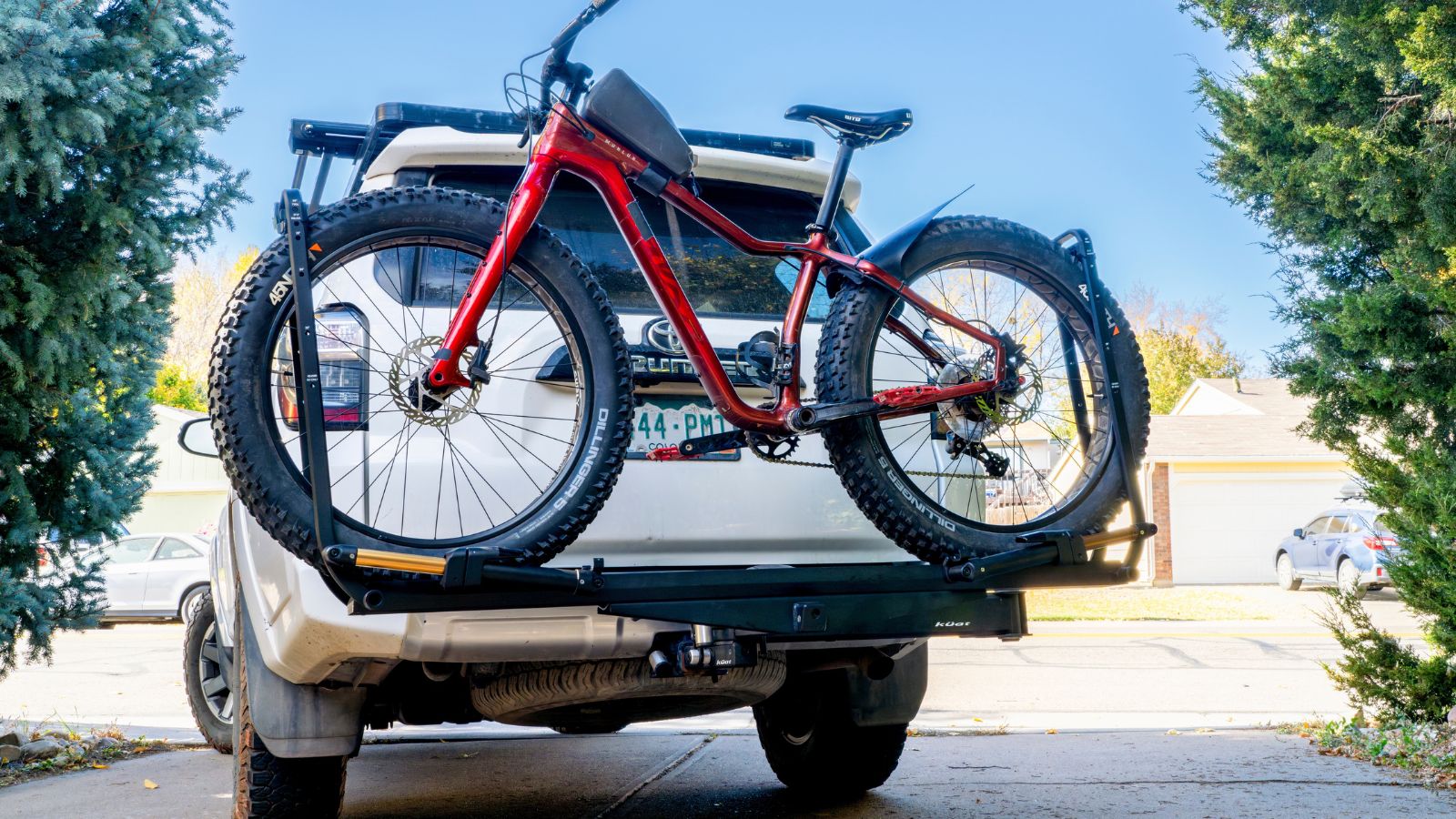
A hitch-mounted cargo tray or bike rack seems separate from the cabin, yet its load is carried by the vehicle. Because the carrier sits behind the rear axle, its leverage can increase rear-axle loading while reducing weight on the front axle. That can alter steering feel and leave the rear axle or tires with less margin than the payload calculation suggests.
Suppose a rack weighs 25 kilograms and carries four bicycles totalling 60 kilograms. The payload charge is 85 kilograms, but placement matters too. Heavy coolers or fuel cans on a rear tray intensify the rearward shift. The hitch has a maximum vertical-load rating that must not be exceeded. Manufacturers and researchers stress checking axle limits, not merely gross vehicle weight. Place heavy luggage farther forward inside the vehicle when permitted, keep hitch loads within every applicable rating, and confirm rear-axle weight at a scale when the setup is substantial.
Trailer Tongue Weight Uses the Tow Vehicle’s Payload
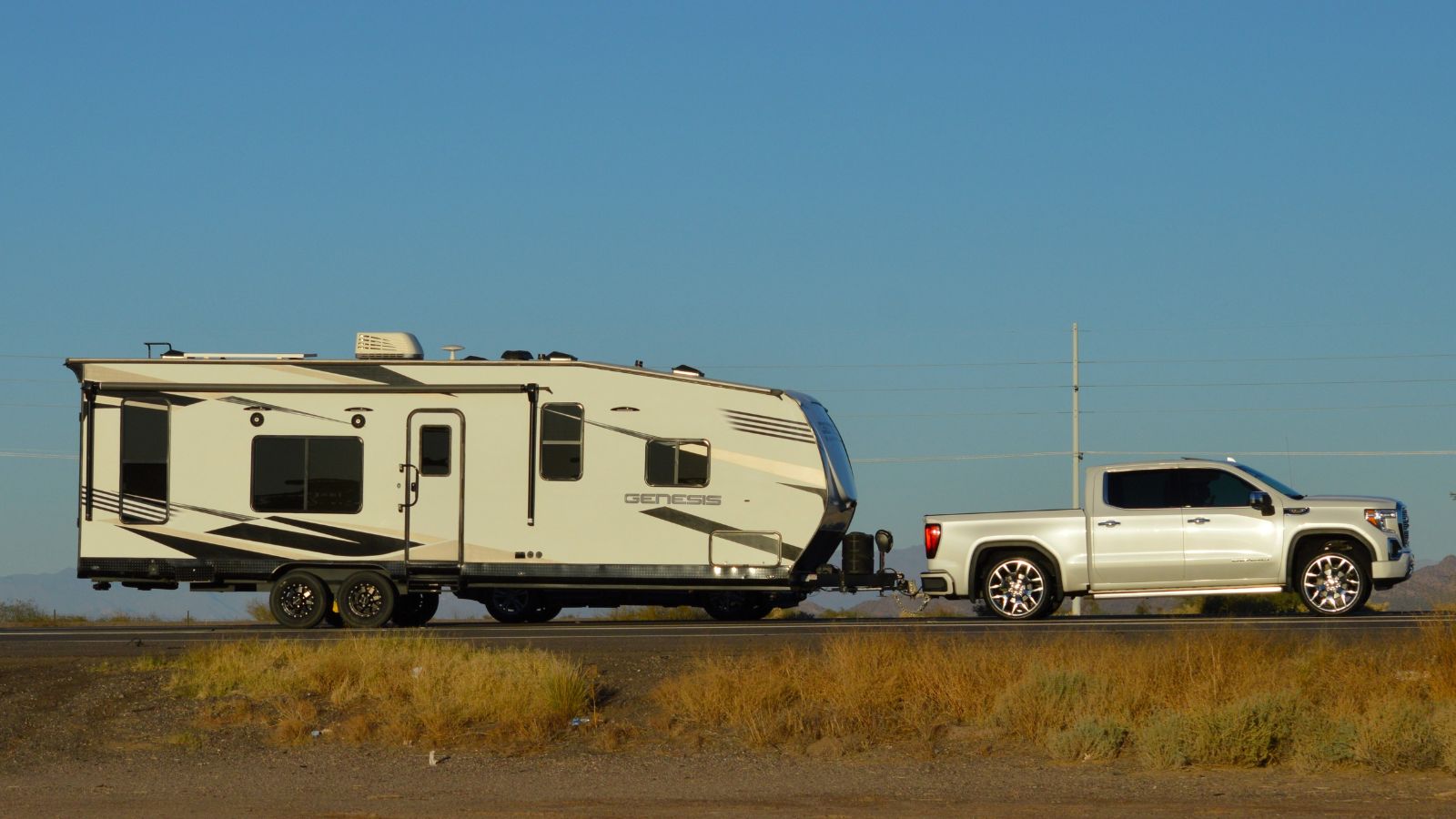
A trailer may roll on its own wheels, but part of its loaded weight presses downward on the tow vehicle’s hitch. That tongue weight counts against the tow vehicle’s payload, gross vehicle weight rating, rear-axle rating, and hitch rating. This is why a vehicle can remain below its trailer limit yet still be overloaded once passengers and luggage are included.
For a conventional trailer weighing 2,000 kilograms, a 12 percent tongue weight equals 240 kilograms. If the tow vehicle has 500 kilograms of payload, half is consumed before accounting for people, bags, the hitch, or accessories. Chevrolet’s guidance places conventional tongue weight around 10 to 15 percent of loaded trailer weight, while noting that trailer-specific instructions take priority. Too little tongue weight can contribute to sway; too much can overload the tow vehicle’s rear. The figure comes from weighing the loaded setup, not relying on the trailer’s empty brochure weight.
An Axle Can Be Overloaded Before the Whole Car Is
Gross vehicle weight is only one ceiling. Manufacturers also set gross axle weight ratings for the front and rear axles. A car can remain under its rating while one axle exceeds its limit because cargo is concentrated too far forward or rearward. Research has documented this problem: load capacity may remain unused even as an axle becomes overloaded.
Road-trip packing favours the rear. Suitcases fill the cargo bay, a cooler sits rearward, bicycles hang behind the bumper, and trailer tongue weight presses on the hitch. The total may look acceptable on paper, yet the rear tires, springs, and axle carry extra weight. Loading the heaviest items low and farther forward helps, but estimates cannot reveal every distribution effect. A scale that reports front- and rear-axle weights provides the answer. Each reading must be compared with the corresponding rating on the certification label, not merely added together and checked against GVWR.
Tire Pressure Cannot Compensate for Excess Weight
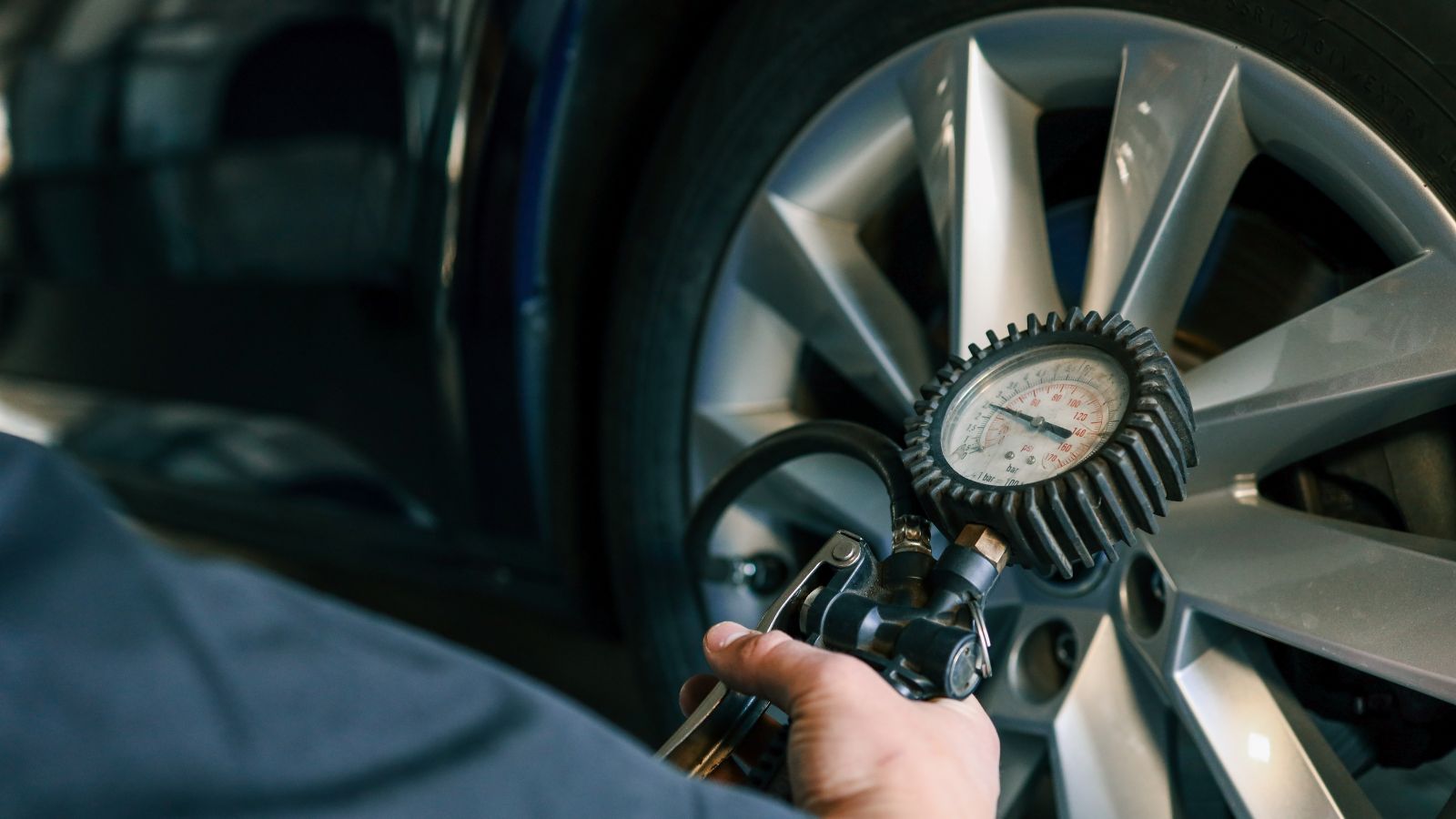
Air pressure lets tires carry the vehicle, passengers, and cargo, but adding extra air is not permission to exceed vehicle limits. The cold pressures on the vehicle placard are chosen for vehicle load, ride, and handling requirements. The maximum pressure molded on a tire’s sidewall is a tire limit, not an alternative road-trip setting.
Check pressure properly when the tires are cold, before the trip begins, and use the placard values unless the owner’s manual gives an instruction. Transport Canada warns that tire-pressure monitoring systems alert only after a tire is underinflated, so dashboard silence is not proof that pressure is correct. Tire load index matters when replacements are fitted; a tire with inadequate carrying capacity should not be substituted. Proper inflation protects the rating, but it cannot expand it. An overloaded, perfectly inflated vehicle is still overloaded, and its tires are still being asked to carry more than intended.
Highway Heat Makes Overloading More Punishing

A loaded vehicle may feel acceptable during a drive around town, then face a harsher environment on the highway. Tires flex as they rotate, and underinflation and overloading increase stress and heat buildup. Bridgestone warns that overloading can cause excessive heat and structural damage, potentially leading to failure later rather than when the damage begins.
Summer pavement, speed, long distances, and a near-maximum load create no room for neglected pressure or tire damage. A bulge, deep cut, crack, or worn tread deserves attention before departure. Drivers should not release air from a hot tire because pressure has risen; normal driving raises tire temperature and pressure. Instead, pressures should be set cold and rechecked after the vehicle has rested. If a blowout occurs, NHTSA advises maintaining control, gradually releasing the accelerator, stabilizing the vehicle, and slowing before pulling off safely. The best outcome is preventing overload-related heat in the first place.
A Loaded Scale Ticket Ends the Guessing
The dependable way to confirm a setup is to weigh it as it will travel: passengers aboard, fuel and water aboard, luggage packed, roof gear fitted, bicycles mounted, and trailer attached if applicable. A scale ticket replaces estimates with gross and axle weights. It can expose a rear-axle problem that a total-weight figure would hide.
Multi-platform truck scales place the front axle on one platform, the rear axle on another, and trailer axles on a third. CAT Scale notes that its system reports axle-group and total weights, though not individual wheel weights. Compare each result with the vehicle’s GVWR and front and rear GAWR, plus trailer and hitch limits where relevant. Chevrolet states that weighing the loaded combination is the only way to ensure all ratings are respected. Leave a margin for last-minute groceries or souvenirs. A ticket showing “just under” every limit is not an invitation to keep shopping.
22 Things Canadians Do to Their Cars in Spring That Mechanics Hate

Spring brings relief to many Canadian drivers after months of snow, freezing temperatures, and icy roads that put serious strain on vehicles. As temperatures rise across the country, drivers begin washing cars, switching tires, and preparing vehicles for warmer weather and upcoming road trips. However, mechanics across Canada notice the same mistakes every spring when drivers attempt to recover from winter damage. Road salt, potholes, and harsh winter driving conditions often leave vehicles with hidden problems that drivers ignore. Some spring habits even create new mechanical issues that could have been avoided with proper maintenance. Here are 22 things Canadians do to their cars in spring that mechanics hate.