
























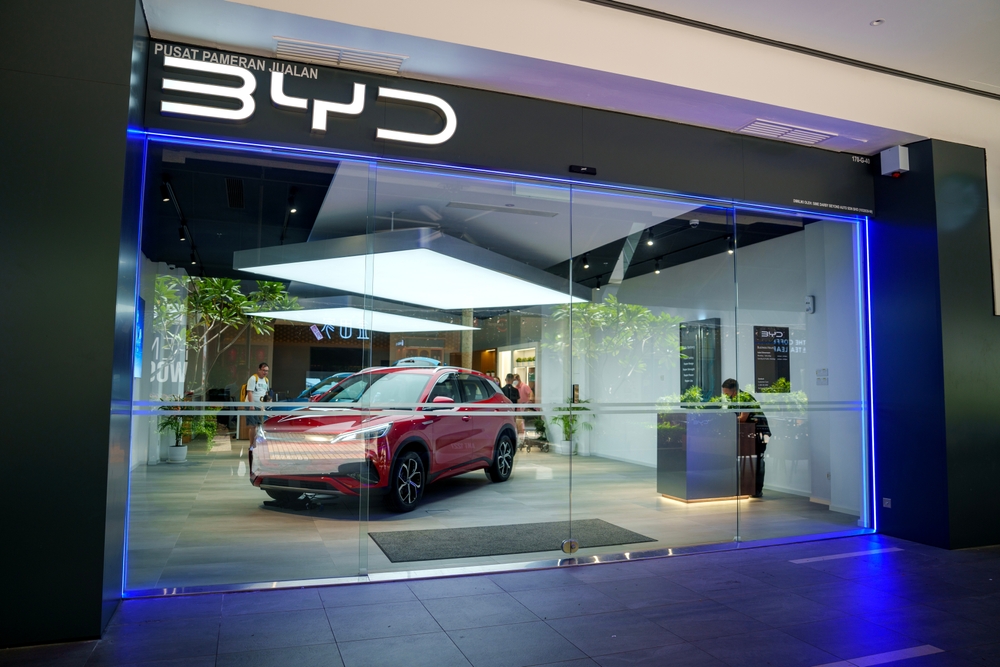
Canada’s auto trade fight has moved from tariff math to courtroom brinkmanship, and BYD is now at the center of the storm. The Chinese EV giant is threatening legal action after the Pentagon added it to a list of companies it claims are tied to China’s military, a designation BYD rejects. At the same time, Canada has opened the door to a limited flow of Chinese-made electric vehicles, breaking from Washington’s harder line and raising alarms across the North American auto industry.
The result is a messy collision of national security claims, consumer affordability, factory jobs, and trade politics. For Canada, the question is no longer just whether cheaper EVs should be allowed in. It is whether Ottawa can protect its auto base while refusing to let Washington dictate every move.
BYD Turns a Trade Clash Into a Legal Test
BYD’s threat to sue over the Pentagon designation lands at a moment when the company is already fighting the Trump administration in court. Earlier this year, BYD’s U.S. subsidiaries filed a lawsuit seeking refunds on tariffs paid under Trump’s emergency tariff program, arguing that the law used to impose those levies did not actually authorize tariff-like border taxes. That matters because BYD is not simply making noise from outside the American system. It has U.S. operations, including commercial vehicles, batteries, energy storage, and solar-related business.
The new dispute is different but potentially just as explosive. BYD says the Pentagon’s designation is factually wrong and has signaled it will use legal tools if talks with U.S. officials fail. This is not a routine public-relations complaint. A military-linked label can chill contracts, scare off partners, and make banks, suppliers, and governments more cautious. For a company trying to expand globally, reputation is part of the product.
Why Canada Is Suddenly at the Center
Canada became a key part of this story when Ottawa cut a deal with Beijing to allow up to 49,000 Chinese-made EVs into the Canadian market at the normal 6.1% tariff rate. That reversed the harsh 100% surtax Canada had imposed on Chinese EVs in 2024 and marked a clear split from the United States. Ottawa framed the move as a controlled opening, noting that the quota represents less than 3% of the Canadian new-vehicle market.
The deal was not only about cars. China agreed to lower tariffs on major Canadian farm exports, including canola seed, giving Ottawa a broader trade win at a time when U.S. tariffs have battered Canadian industries. But the political trade-off is sharp. Canada gets cheaper EVs and better farm access, while Ontario’s auto sector worries about a flood of competition from one of the world’s most aggressive automakers. In Windsor, Oshawa, Alliston, and Oakville, that concern is not abstract. It is about shifts, suppliers, and future product commitments.
The Pentagon List Raises the Stakes
The Pentagon’s Section 1260H list does not operate like a classic sanctions list, but it still carries real weight. Companies on the list can continue many types of business in the United States, yet they face reputational damage and restrictions involving Defense Department contracting. For BYD, the timing is especially sensitive because the company is trying to present itself as a mainstream global automaker rather than a geopolitical risk.
The U.S. government says BYD is linked to Chinese state industrial bodies and fits Washington’s broader concern about “military-civil fusion,” where civilian technology may support military goals. BYD rejects that characterization and says it is not a military enterprise. This is where the fight gets uglier for Canada. If Washington treats BYD as a security risk, Canadian officials may face pressure to explain why the same company should be allowed to build a dealership network, charging infrastructure, and possibly partnerships in Canada.
North America’s Auto Pact Is Under Strain
For decades, Canada, the United States, and Mexico built cars as if the border were more like a seam than a wall. Under CUSMA, vehicles must meet strict regional-content rules, including a 75% regional value-content requirement, strong core-parts rules, North American steel and aluminum requirements, and labour-value rules. Those provisions were designed to keep more value inside North America while allowing factories to specialize across borders.
Trump’s auto tariffs disrupted that logic. The administration imposed a 25% tariff on imported vehicles and key parts, with a special system allowing USMCA-compliant vehicles to pay only on their non-U.S. content. In practical terms, that means even a Canadian-built vehicle can face new costs if enough of its value is considered non-American. For automakers, the problem is not only the tariff rate. It is the uncertainty. Product planning takes years; tariff shocks arrive overnight.
Ontario’s Auto Jobs Sit in the Crossfire
Canada’s auto industry is not a side business. It contributed $16.8 billion to national GDP in 2024, directly employed more than 125,000 people, and indirectly supported hundreds of thousands more through dealerships, aftermarket services, logistics, and suppliers. Vehicles are also one of Canada’s most important exports, and the United States remains the dominant customer for Canadian-built vehicles.
That dependence makes every new tariff fight feel personal in Ontario. A parts maker in the Windsor-Essex corridor does not just sell into one plant; it may be tied to multiple assembly lines, cross-border trucking schedules, and contracts that assume predictable trade rules. Industry data shows parts and components can cross borders several times before final assembly. When Washington changes the cost of crossing that border, it does not only pressure foreign competitors. It can hit American, Canadian, and Mexican production networks all at once.
Cheap EVs Create a Political Trap
The appeal of BYD for Canadian consumers is obvious. EV prices remain a barrier for many households, especially families looking for a practical second vehicle or commuters trying to cut fuel costs. Ottawa’s agreement anticipates that, within five years, more than half of the permitted Chinese EV imports will be lower-cost models with import prices below $35,000. That is exactly the kind of number that gets attention in a market where many EVs still feel out of reach.
But affordability comes with a political trap. If Chinese EVs lower prices, consumers may cheer while domestic automakers complain. If Ottawa blocks them, critics can argue the government is protecting incumbents at the expense of buyers. If Canada allows them in but fails to secure local assembly, battery investment, or supplier work, the policy could be attacked as a giveaway. The challenge is to turn consumer savings into industrial leverage, not just import volume.
BYD’s Global Ambition Makes Washington Nervous
BYD is not a niche EV startup trying to sneak into North America. It sold 4.6 million vehicles in 2025 and ranked sixth globally, while its chairman has said the company aims to become the world’s largest automaker within five years. It is expanding in Europe, growing exports, and pushing battery and charging technology as strategic advantages. That scale explains why the company attracts both investor attention and political suspicion.
Its Canadian push appears broader than simply shipping cars. Recent reporting points to BYD preparing a Canadian flash-charging strategy, including hiring in Toronto for a role focused on charging network expansion. That matters because charging infrastructure can become a moat. Tesla did not win early EV loyalty only with vehicles; it built confidence through its Supercharger network. If BYD tries a similar strategy in Canada, it could arrive not just as a cheaper car brand, but as a full mobility ecosystem.
What Comes Next for Canada, Consumers, and Carmakers
The next phase will test whether Canada can manage three goals at once: keep access to the U.S. auto market, diversify trade away from total dependence on Washington, and make EVs more affordable. None of those goals is easy on its own. Together, they create a policy balancing act that could define Canada’s auto strategy for years.
For consumers, the fight could mean more choices and lower prices, but also more uncertainty about brands, service networks, charging standards, and resale values. For automakers, it is a warning that the old North American model is being rewritten under pressure from tariffs, security claims, and Chinese competition. For Ottawa, BYD’s legal fight with Washington is more than a foreign company’s dispute. It is a preview of the pressure Canada will face if it insists on charting its own course.