
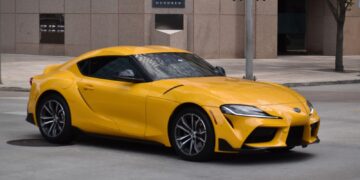
























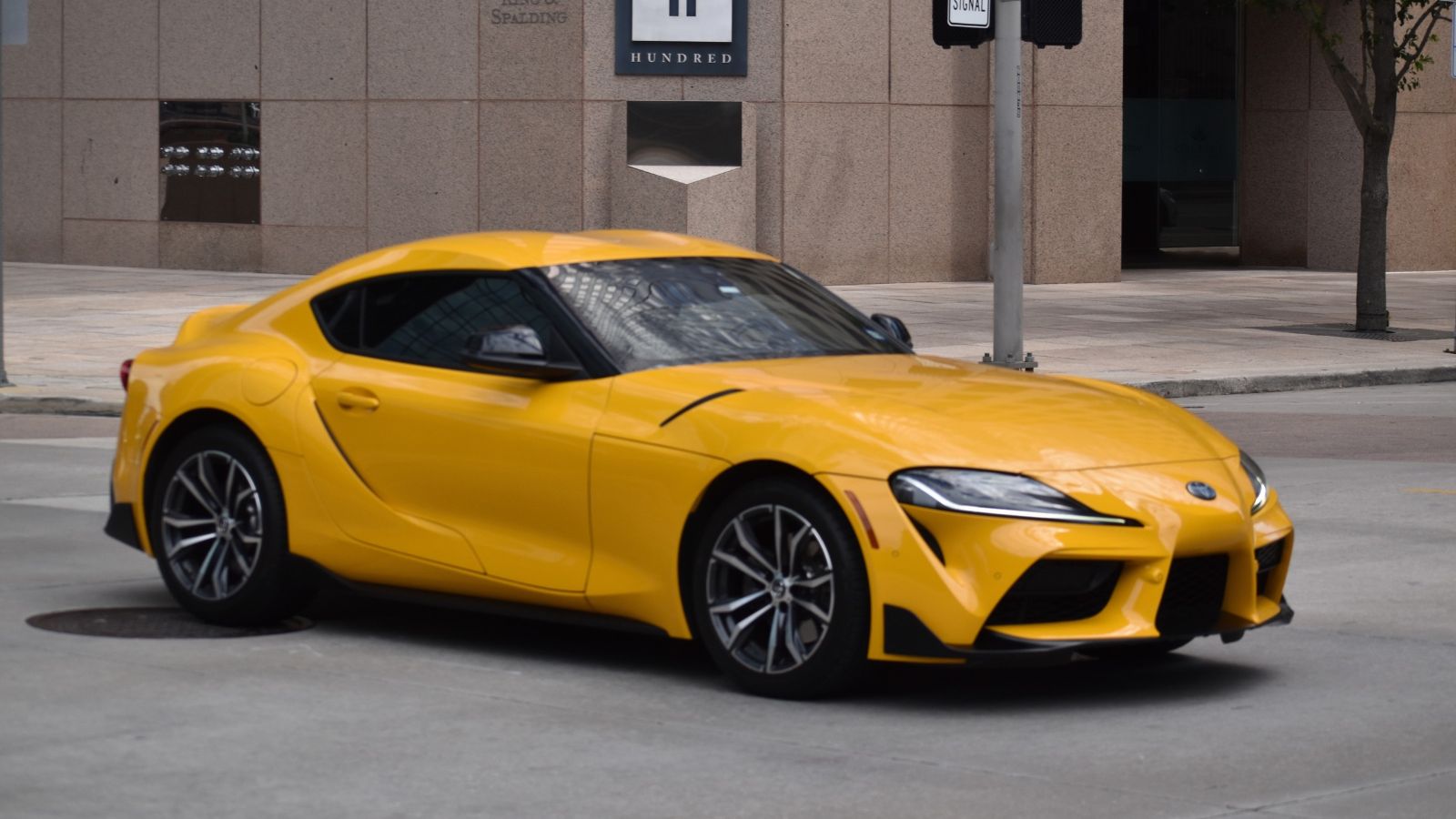
The chance to order a new Toyota GR Supra in Canada has closed. In an October 3, 2026 report, Canadian automotive publication Empty Tank said Toyota Canada confirmed that the 2026 model was sold out, with no additional units coming to the country. For enthusiasts who had postponed a purchase, this is no longer a question of waiting for another shipment. It marks the end of the fifth-generation Supra’s Canadian run—a car that brought the name back, gained a manual transmission and finished with a 25-car Canadian Final Edition. What remains uncertain is whether, and when, another Supra will take its place.
A closed order book is different from a long wait
Toyota had already made the production timetable clear in April 2025, when it announced the MkV Final Edition and said fifth-generation manufacturing was scheduled to conclude in spring 2026. The October sellout report therefore describes the end of Canadian availability, not a newly announced decision to stop building the car that day. The 2026 designation is a model year; it should not be mistaken for a promise that vehicles would remain orderable throughout the calendar year.
That distinction matters when an old advertisement or configuration page remains online. Toyota Canada’s Supra page was still accessible when checked on October 3, including model descriptions and build-and-price links. A functioning webpage, however, is not proof of an unsold vehicle. Anyone pursuing a remaining listing should ask the retailer to identify the actual car, its vehicle identification number and whether it is available for purchase. A cancelled transaction or a previously registered example would be a specific sales opportunity—not evidence that another Canadian shipment is coming.
A comeback with a personal history
The Supra story began in North America with the Celica Supra in 1979, before the third generation dropped the Celica name in 1986. Decades later, the fifth-generation car made its world debut at the Detroit auto show in January 2019 and reached Canada for the 2020 model year. Its return was therefore more than the arrival of another two-door Toyota. It restored a familiar name to showrooms after a lengthy absence and gave enthusiasts a new car to judge against an unusually memorable past.
There was a personal motivation behind that return, too. At the 2019 unveiling, Akio Toyoda recalled driving an older, out-of-production Supra at Germany’s Nürburgring while other manufacturers tested new prototypes. He recalled privately wanting a new Supra even when Toyota had no plans to make one. That account gives the modern Supra’s departure a human dimension: this was a revival that had mattered inside the company as well as outside it. Its final Canadian sellout closes that particular comeback, rather than erasing the history that inspired it.
BMW hardware, a distinct Toyota brief
The fifth-generation Supra was developed with BMW and shared its foundations with the Z4. As Car and Driver noted in its Final Edition review, the two cars were built alongside one another in Austria. The relationship went beyond a shared factory: BMW supplied the engine, and the Supra’s fixed-roof body distinguished it from its convertible relative. That background is an essential part of understanding this generation, rather than a detail that should disappear from its farewell story.
Toyota nevertheless established its own priorities. At the original unveiling, chief engineer Tetsuya Tada emphasized how enjoyable the car felt to drive, rather than treating horsepower and lap times as the only measures of success. Toyota highlighted a short, 2,470-millimetre wheelbase and an even front-to-rear weight balance. By the final Canadian model year, the familiar combination was a 382-horsepower turbocharged inline-six, rear-wheel drive and two seats. Standard equipment such as an active rear differential and adaptive suspension reinforced that performance focus. The partnership supplied much of the hardware; Toyota’s development brief centred on what the driver experienced through it.
Not every fifth-generation Supra is the same
A used Supra search now demands more attention to model years than the familiar body shape might suggest. The 2020 launch car’s turbocharged 3.0-litre six-cylinder produced 335 horsepower. For 2021, Toyota raised that output to 382 horsepower—a gain of 47—and introduced a separate 2.0-litre turbocharged four-cylinder model with 255 horsepower. Those are meaningful differences within the same generation. An early six-cylinder car and a later example can look closely related while offering different factory specifications.
The range narrowed again toward the end. Toyota Canada’s 2025 announcement listed two six-cylinder versions, differentiated by their automatic or manual transmissions, rather than retaining the four-cylinder option. For a prospective owner, that history provides a more useful starting point than simply searching for the newest or rarest car. Confirm the engine, transmission and equipment on the specific example, then compare vehicles with equivalent specifications. A lower advertised price may reflect a different version rather than a bargain on the same car. The sellout makes careful comparison more important, not less.
The manual changed the experience, not just the specification sheet
Toyota added a six-speed manual transmission for the 2023 model year after persistent requests from enthusiasts. The engineering work went beyond fitting a clutch pedal. Toyota adapted the gearbox for the six-cylinder engine, used a larger clutch and revised the centre console to provide 43 millimetres of clearance between the gear lever and nearby controls. Engineers even selected a 200-gram shift knob to achieve the desired feel. Those small details reveal how seriously the company treated the physical act of changing gears.
The intelligent manual transmission also offered automatic rev-matching, which adjusts engine speed during shifts, with the ability to turn the assistance off. It was not simply the quickest choice: Toyota’s published 2026 figures put the automatic at 4.1 seconds from zero to 100 km/h and the manual at 4.4 seconds. The appeal was participation rather than a faster stopwatch result. A driver could choose when to shift, work the clutch and make each gear change part of the journey. For buyers seeking that experience, transmission choice deserves as much attention as mileage or paint colour.
Only 25 Final Edition cars were allocated to Canada
Toyota’s Canadian farewell was deliberately limited: just 25 examples of the 2026 GR Supra MkV Final Edition. That number applies to the special edition, not the country’s entire allocation of 2026 Supras. Each Canadian Final Edition was based on the manual-transmission model and included the GT4 Style Pack. Buyers had two matte paint choices, Burnout and Undercover, alongside distinctive graphics, matte-black wheels and a carbon-fibre rear spoiler. The package made the last special-edition cars recognizably different without abandoning the familiar shape.
Inside, Toyota specified black Alcantara sport seats with leather trim, red seatbelts, embroidered GR headrest logos and special badging. Even a camouflage-pattern car cover was included. These details gave the edition a commemorative character, but the GT4-inspired appearance should not be confused with the specification of a competition car. It remained a road-going Supra. For an enthusiast seeking one later, the relevant question is whether a particular vehicle genuinely has the Canadian factory package. A spoiler, graphics or matte finish alone would not establish that identity.
The farewell focused on handling—not a Canadian power boost
Canada’s Final Edition kept the 382-horsepower engine, with the main mechanical changes concentrated elsewhere. Front brake rotors increased from 13.7 to 14.7 inches, while Toyota added suspension bracing, stiffer mounting components and revised damper settings. Changes to steering and differential control were intended to sharpen responses and improve cornering behaviour. That is a different approach from simply increasing engine output: it targets how the car responds under braking, turns into a corner and puts power down on the exit.
Care is needed when comparing those details with international coverage. Toyota Europe announced a separate A90 Final Edition limited to 300 units worldwide, with an engine rated at 435 metric horsepower, or 320 kilowatts. That version also received equipment including adjustable KW suspension and a prominent rear wing. Canada’s 25-car MkV Final Edition was not the same specification. Photographs and headlines about the more powerful overseas model should therefore not be used to describe what Canadian buyers received. The Canadian farewell emphasized chassis development while preserving the established six-cylinder power rating.
Buying one now calls for patience, not panic
For someone still hoping to own a Supra, the sensible response is to evaluate actual vehicles rather than chase a disappearing factory allocation. Request maintenance records, a vehicle-history report and clear disclosure of modifications. An independent pre-purchase inspection can then assess the specific car instead of relying on photographs or a seller’s description. The attraction of a rare edition should not displace basic questions about condition. Nor does a sold-out announcement, by itself, establish what any example should cost or guarantee future appreciation.
Published warranty terms are also more useful than assumptions about discontinued cars. Toyota Canada’s 2026 Supra page lists vehicle warranty coverage of 36 months or 60,000 kilometres, whichever comes first, plus 36 months of roadside assistance with unlimited kilometres. A buyer should have the dealer confirm the original in-service date, remaining coverage and applicable conditions for the vehicle being considered. Existing owners should likewise keep service documentation and check outstanding recalls through Toyota’s official channels. The end of new Canadian shipments is a sales milestone; it is not a substitute for checking the paperwork attached to an individual car.
Toyota’s performance lineup carries on
The Supra’s departure does not mean Toyota has stopped offering enthusiast-focused cars in Canada. Its August 2026 announcement for the 2027 GR86 described a rear-wheel-drive coupe with a 2.4-litre engine producing 228 horsepower. The 2026 GR Corolla takes a different approach, combining a 300-horsepower turbocharged three-cylinder engine with all-wheel drive and a hatchback body. These are distinct interpretations of a performance car, rather than smaller and larger versions of the same formula. Both remain relevant to the company’s Canadian performance story.
There is recent evidence of demand elsewhere in that range: Toyota Canada reported a record quarter for the GR Corolla in its October 1, 2026 sales release. That result should not be treated as proof that Supra buyers are switching to the hatchback; the announcement does not establish that connection. It does show why one model’s exit should not be mistaken for the disappearance of the entire GR range. The missing piece is more specific: neither alternative reproduces the Supra’s combination of a turbocharged inline-six, rear-wheel drive and a dedicated two-seat body.
The name’s future remains open
The October 3 report says a sixth-generation Supra has not been announced. That leaves no confirmed successor, Canadian launch date or replacement specification for shoppers to plan around. It also does not establish that Toyota has permanently retired the name. Those are separate claims: the fifth generation has reached the end of its Canadian sales run, while the longer-term product decision remains unconfirmed. Memories of the previous comeback may encourage optimism, but they cannot supply a timetable.
There is a distinction between the showroom story and the racing story as well. When announcing its farewell models, Toyota Europe said the GR Supra would continue to be developed through motorsport after production ended. That commitment is not an announcement of another road car, but it means the badge’s activities need not stop with new-car sales. For Canadian enthusiasts, the immediate change is more personal and practical: the opportunity to specify a new example has passed. The cars already here now carry this generation’s story forward, through the owners who maintain them and the kilometres they choose to drive.