



















A robotaxi that can handle an evening commute still has to cope with something far less predictable: a pet in the road. Tesla is extending its Austin service from 10 p.m. to 11 p.m., while Elon Musk says nighttime animal detection remains a challenge. The October 3, 2026, announcement brings a practical benefit for late passengers, but also a reminder that longer operating hours are not a safety certificate. The key questions reach beyond whether a car can identify a cat: how soon does it react, what happens when visibility deteriorates, and what evidence shows the system is improving?
A Later Closing Time, Not an All-Night Service
An extra hour can matter to someone finishing a restaurant shift or leaving a late dinner. It turns the service into a possibility for trips that previously fell outside its schedule. But the practical benefit should not be confused with unrestricted availability. Tesla’s support guidance says operating hours differ by area, and riders cannot request trips when their local service is closed. The app, rather than a general announcement, remains the place to check whether a particular journey is available.
Tesla currently lists limited service areas in six cities: Austin, Dallas and Houston in Texas, plus Miami, Orlando and Tampa in Florida. That footprint does not mean every address in those cities is covered. For passengers planning an evening out, the useful distinction is between a service operating later and a service operating everywhere. A later closing time expands one boundary of the experience; it does not remove the geographic limits or guarantee a vehicle for every proposed trip.
The Small Animal Behind a Bigger Visibility Problem
Musk’s most memorable description was specific: “Literally trying to avoid grey kittens on grey tarmac in the dark.” The example raises a practical question: can a vehicle distinguish a small animal from the road early enough to avoid it? Consider a cat beside a parked car, then imagine the same cat moving into a lane. A useful safety assessment would need to examine both situations, rather than treating successful recognition in one image as the whole task.
Tesla’s own Model Y documentation warns that low light, rain, snow, direct sunlight and fog can significantly degrade Full Self-Driving (Supervised) performance. Those warnings concern the consumer driver-assistance product, not an independent assessment of the robotaxi fleet. Nevertheless, they provide important context for the visibility challenge. Musk’s kitten example should not be turned into a claim that Tesla has admitted killing cats. It identifies an engineering concern; determining how frequently that concern produces dangerous encounters requires evidence beyond the wording of a social-media post.
AI Can Improve Images, but Safety Requires More
Musk also suggested that AI-assisted camera processing can improve vision in darkness. There is a genuine research foundation for that broader idea. In the 2018 study “Learning to See in the Dark,” researchers trained a neural network to process raw, low-light camera data. Their work demonstrated striking improvements in extremely dark photographs and examined problems such as image noise and the trade-off between short exposures and motion blur. It shows why dismissing software’s contribution to low-light imaging would be too simplistic.
However, that study was not a test of Tesla’s robotaxis or their ability to avoid pets. Producing a clearer photograph and safely handling a moving animal are different measures of success. A meaningful vehicle evaluation would ask when the animal was detected, how confidently its movement was tracked and whether braking or steering prevented harm. It would also count missed detections, not just impressive examples. The relevant question is therefore not whether AI can improve an image, but whether the complete driving system responds reliably enough.
An Earlier Austin Collision Makes the Concern Concrete
The animal-safety issue is not entirely hypothetical. A Tesla robotaxi struck a dog in Austin in September 2025, according to a company crash narrative filed with the National Highway Traffic Safety Administration and later reported by Electrek. Tesla’s account said the vehicle was approaching a green light when a dog entered the intersection from the right. The automated system reduced speed and steered left, but the dog moved toward the vehicle and contacted the lower part of its front-right bumper.
The narrative said the dog was subsequently seen running away. That observation should not be treated as confirmation that the animal suffered no injury. Nor does the account, as reported, establish that darkness caused the collision. Those limits matter because an individual incident can easily become a larger claim than the evidence supports. What the description does illustrate is the difference between taking evasive action and successfully avoiding contact. A system’s response deserves examination even when it detects an animal and attempts to react.
KitKat’s Death Shows Why Neighborhoods Care
A separate incident in San Francisco shows how deeply these encounters can affect a neighborhood. KitKat, a nine-year-old tabby associated with Randa’s Market in the Mission District, was killed in a collision involving a Waymo vehicle on October 27, 2025. Residents knew the cat as a familiar presence rather than an abstract road hazard. Flowers, candles and tributes accumulated outside the store, turning a technical debate about autonomous vehicles into a visibly personal loss for the surrounding community. Store owner Mike Zeidan told Business Insider that customers traveled to see KitKat and bring treats and toys.
Waymo said the cat darted beneath its vehicle as it pulled away after stopping to collect passengers. That was the company’s account, not proof that every question about the incident had been settled. KitKat’s death does not establish that one robotaxi operator is safer than another, and it should not be presented as a Tesla incident. Its relevance is more direct: public acceptance depends partly on how these vehicles affect people and animals outside the passenger cabin, including those who never chose to use the service.
Different Sensors Still Face the Same Safety Test
The debate inevitably turns to the hardware watching the road. Tesla describes Cybercab as navigating through camera vision and sensors. Waymo has publicly emphasized a combination of sensing technologies: its sixth-generation system, announced in August 2024, included 13 cameras, four lidar units and six radar units. Lidar measures distance using laser pulses, while radar supplies information about distance and speed. Waymo said the sensors’ overlapping coverage was designed to provide complementary information across different conditions. These are descriptions of different engineering approaches, not equivalent measures of demonstrated animal-avoidance performance.
A sensor inventory alone cannot settle which vehicle will handle a particular encounter better. The relevant test must include what the system perceives, what action it chooses and whether that action works. Waymo also describes using simulation, closed-course testing and real-world driving in development, underscoring that hardware is only part of the process. Its sixth-generation specifications should not be assumed to describe the vehicle involved in KitKat’s death. Likewise, that collision does not erase potential benefits of complementary sensors; it shows why individual outcomes still require investigation.
Robotaxi Service Is Not the Same as Retail FSD
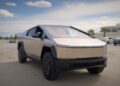
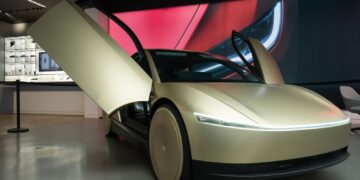
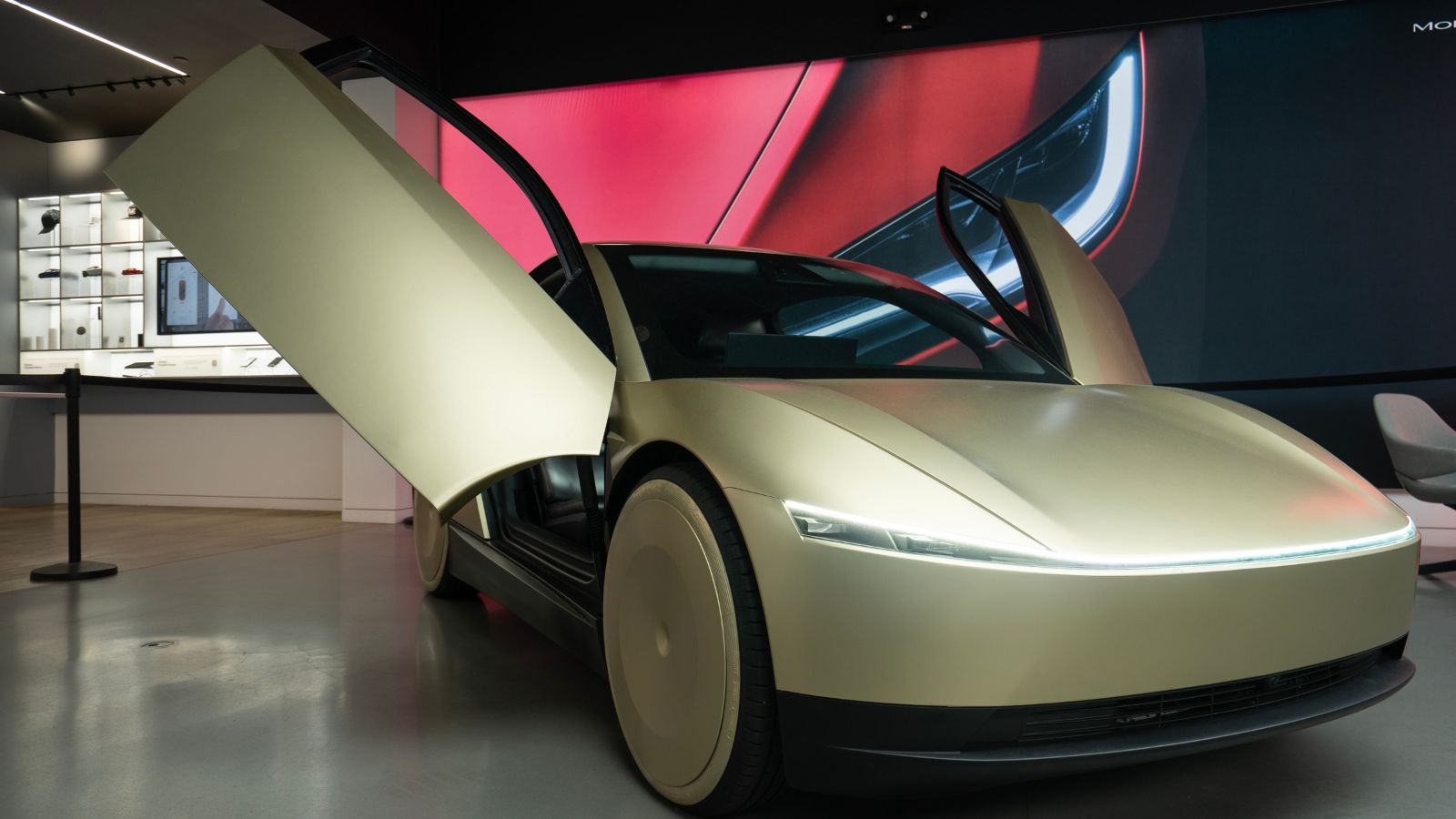
The names can blur together, but Tesla’s passenger service and its consumer driving software should not be treated as interchangeable. The Robotaxi fleet includes Model Y vehicles and Cybercab, a purpose-built two-seater without a steering wheel. Tesla’s Cybercab guidance says rides in that vehicle are available in limited areas of Austin. For a passenger, the distinction is tangible: booking transportation in a fleet vehicle is a different activity from supervising driving assistance in a privately owned car.
Tesla’s owner documentation explicitly says Full Self-Driving (Supervised) does not make a Model Y autonomous and requires an attentive driver ready to intervene. Nothing about later robotaxi hours changes that instruction. An owner cannot reasonably interpret a commercial-service announcement as permission to stop supervising a consumer vehicle at night. Equally, the presence of an ordinary-looking Model Y in the robotaxi fleet does not establish that every retail vehicle has the same operating permissions or configuration. Clear product labels matter because they describe different responsibilities, not merely different branding.
The Visibility Investigation Predates This Announcement
Federal scrutiny of Tesla’s visibility performance did not begin with the latest operating-hours change. On March 18, 2026, NHTSA opened an engineering analysis covering an estimated 3.2 million Tesla vehicles equipped with Full Self-Driving. The inquiry examined whether the system recognized reduced visibility and warned drivers with enough time to respond. In its opening document, the agency described reviewed crashes in which the system failed to identify deteriorating visibility or delivered warnings too late, alongside failures to track vehicles ahead.
These are substantial concerns, but the investigation’s scope matters. It addresses Full Self-Driving Beta and Full Self-Driving (Supervised), rather than serving as a direct verdict on every configuration in the commercial robotaxi fleet. NHTSA also said it would examine Tesla’s changes to the visibility-monitoring system and their safety implications. The inquiry therefore connects to the pet discussion through a broader question: can the technology recognize when its view is becoming unreliable? It was not an investigation launched in response to the October kitten remarks.
Cybercab Faces a Separate Compliance Review
A separate federal review concerns the vehicle’s design. On September 4, 2026, NHTSA announced an audit of Tesla’s certification that Cybercab meets applicable Federal Motor Vehicle Safety Standards. The agency said the inquiry would examine the technical basis and processes Tesla used to certify a vehicle without traditional driver controls. That is a different question from whether a camera can identify an animal in low light, although both concern driverless transportation.
NHTSA explained that manufacturers self-certify compliance, subject to federal oversight. It also said existing requirements remain in effect while the agency works on changes for automated vehicles. The announcement was an audit opening, not a published conclusion that Cybercab had failed the review. Keeping the two investigations separate prevents a misleading impression that regulators opened a new cat-safety case when Musk discussed pets. One review examines visibility-related driving performance; the other examines the certification of an unconventional vehicle design.
What Passengers Should Know Before a Late Trip
For an evening passenger, the most useful preparation is straightforward: check the service area, estimated fare and wait time in the app before confirming. It is also worth knowing where the support controls are before departure. Tesla says selecting “Pull Over” in the app or on the vehicle’s touchscreen causes the robotaxi to stop at the nearest safe location, with customer support then contacting the cabin. That is a request for a safe stopping maneuver, not a promise of an instantaneous stop.
There is also an important distinction for animal owners. Tesla’s rules do not allow ordinary pets as passengers, although disabled riders may bring service animals. The restriction concerns animals inside the vehicle; it does not solve the separate challenge of animals entering its path. A late journey with a pet therefore requires another transport arrangement under the published rules. For everyone else, understanding the available support features is more useful than assuming a familiar-looking vehicle offers the same controls as a conventional taxi.
What Evidence Would Make Longer Hours More Reassuring?
The strongest next step would be a clearer account of nighttime performance, not simply another change to the schedule. Useful disclosures would separate night driving from daytime mileage and explain how animal encounters are tested. They could include controlled scenarios involving small, dark objects, sudden crossings and obscured views, alongside the conditions in which the service slows down or stops operating. These are proposed measures of transparency, not claims that Tesla has already published a complete set of such results.
Raw collision totals would not answer those questions on their own. NHTSA cautions that its crash-reporting data are not normalized for miles traveled or fleet size, making straightforward comparisons between operators unreliable. Better evidence would connect incidents and near misses to the amount and type of driving performed, while explaining the limitations of the data. Longer evening availability can still be useful progress. The more consequential achievement would be showing that the system can protect small animals while bringing passengers home safely after dark.