


























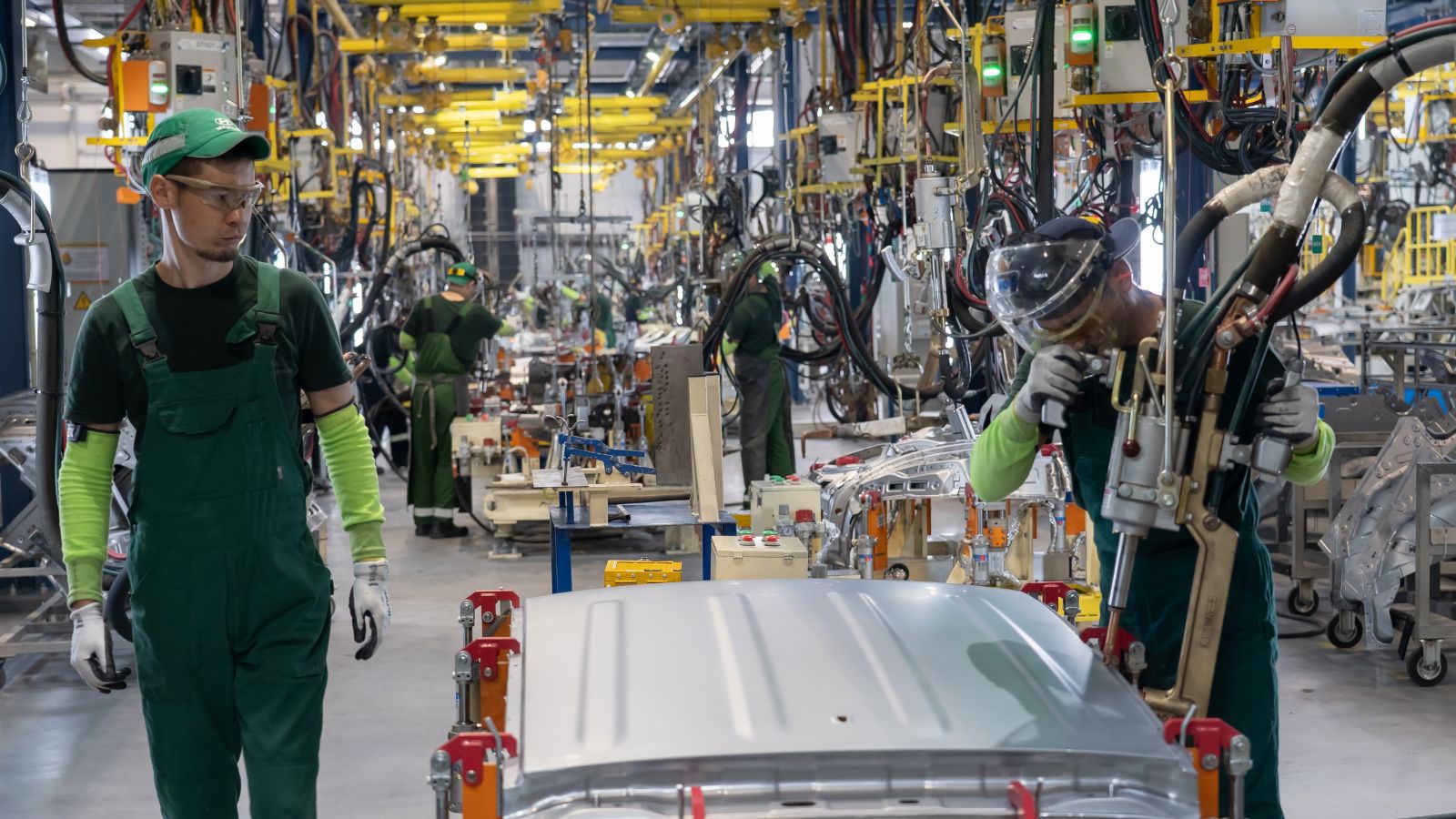
Canada’s factories entered June with plenty of reasons to lose momentum. Trade uncertainty remained elevated, energy markets were volatile and an early Statistics Canada estimate had pointed toward a modest decline. Instead, manufacturing sales edged higher for a fifth consecutive month, with the auto-parts industry helping push the result in the opposite direction.
Motor-vehicle-parts sales climbed 6.2% from May, while overall manufacturing sales increased 0.1% to $78.8 billion. That may appear like a small headline gain, but economists cited by The Wall Street Journal had expected a 0.1% decline. Even more striking, inflation-adjusted manufacturing sales increased 1.2%. The numbers provide another sign that Canadian factories have been more resilient than many feared, although tariffs, international demand and rising business costs continue to complicate the outlook.
Factories Beat Expectations Instead of Slipping Back
Statistics Canada reported that manufacturing sales increased 0.1% in June to $78.8 billion on a seasonally adjusted basis. The result extended the industry’s run of monthly increases to five. Market expectations had been pointing in the other direction: economists cited by The Wall Street Journal anticipated a 0.1% decline. The difference between a 0.1% gain and a 0.1% loss may seem tiny, but the direction matters after months of uncertainty surrounding tariffs, costs and Canada’s relationship with its biggest export market.
The June result also looks more significant when viewed alongside the breadth of the increase. Sales advanced in 15 of the 21 manufacturing subsectors tracked by Statistics Canada. That means the positive headline was not produced by a single unusually strong industry. Chemicals and transportation equipment made major contributions, while weakness in petroleum and coal products held the national total back. For factory communities, that distinction matters: June showed activity spreading across much of the manufacturing base rather than relying entirely on one temporary surge.
Auto-Parts Sales Were One of June’s Standout Gains
The motor-vehicle-parts industry provided one of the clearest signs of strength. Sales increased 6.2% from May, according to Statistics Canada. That contributed to a 2.8% increase in the broader transportation-equipment subsector, which reached $12.4 billion. Transportation-equipment sales have now increased for five consecutive months. Aerospace products and parts also posted a strong June, increasing 6%, giving the sector two sizable sources of growth at the same time.
For Canada’s automotive supply chain, the parts number carries particular weight. Parts manufacturers occupy the space between raw materials and final vehicle assembly, producing components that ultimately have to arrive at assembly plants on tightly managed schedules. A significant monthly increase therefore provides a snapshot of greater activity flowing through part of that supply chain. It does not guarantee that every supplier or factory experienced stronger business, and monthly numbers can move sharply. Still, a 6.2% gain at a time of persistent North American trade uncertainty is difficult to dismiss as an insignificant detail.
The Auto Gain Followed a Big Jump in Vehicle Manufacturing
June’s improvement did not emerge from nowhere. In May, Canadian motor-vehicle manufacturing sales had jumped 11.8% to $4.6 billion after falling 4.6% in April. Statistics Canada attributed that rebound to stronger sales of automobiles and light-duty vehicles as well as heavy-duty trucks. On a year-over-year basis, motor-vehicle industry sales in May were 9% higher. The subsequent 6.2% June increase in parts sales suggests transportation equipment continued contributing to Canada’s manufacturing recovery, even as the source of growth shifted within the sector.
That sequence illustrates why a single monthly number can tell only part of the story. Assembly plants and parts suppliers routinely experience production changes because of model transitions, maintenance, supply interruptions and shifting demand. What makes the latest figures more notable is the persistence of the wider transportation-equipment increase. By June, the subsector had recorded five straight monthly advances. For workers and suppliers tied to automotive manufacturing, a sustained run is more meaningful than one unusually strong month because it suggests the rebound has survived several reporting periods.
Manufacturing Volumes Were Stronger Than the Headline Suggests
The 0.1% increase in manufacturing sales is measured in current dollars, meaning changes in selling prices can influence the headline figure. Statistics Canada also calculates manufacturing sales in constant dollars to provide a better indication of changes in physical volume. On that basis, sales rose 1.2% in June. The Wall Street Journal reported that manufacturing volumes were also 4.2% higher than a year earlier. Those figures make the month’s performance look considerably stronger than the modest 0.1% nominal increase alone might suggest.
That difference is important in an environment where commodity and energy prices have been moving sharply. If prices fall while factories continue shipping substantial quantities of goods, nominal sales can understate the underlying level of production activity. Economists consequently pay close attention to inflation-adjusted data when judging how manufacturing may feed into gross domestic product. June’s 1.2% volume gain suggests Canadian factories were not simply benefiting from higher prices. More goods were effectively moving through the manufacturing economy, strengthening the case that the sector contributed meaningfully to second-quarter economic activity.
Petroleum’s 14.1% Drop Hid Strength Elsewhere
Canada’s manufacturing total would have been substantially stronger without a sharp reversal in petroleum and coal products. Sales in that subsector dropped 14.1% in June to about $10.1 billion after increasing for three consecutive months. Statistics Canada linked the decline largely to lower petroleum and energy prices. Because the industry represents a sizable portion of Canadian factory sales, such a large decrease was enough to offset much of the growth appearing elsewhere in manufacturing.
Strip that weakness away and the month’s pattern looks very different. Statistics Canada’s earlier estimate indicated that manufacturing sales excluding petroleum and coal products were rising strongly even as falling energy-related sales threatened to push the overall number negative. Meanwhile, chemical manufacturing increased 6% to $6.3 billion in June, reaching its highest sales level since October 2022 after a fourth consecutive monthly increase. Pharmaceuticals, resins, synthetic rubber and related products helped drive the chemical gain. In other words, June’s near-flat national result concealed significant movement beneath the surface—both sharply upward and sharply downward.
The Second Quarter Set a Manufacturing Sales Record
June capped a particularly strong three-month period. Manufacturing sales increased 9.3% in the second quarter on a non-annualized basis, reaching just over $235 billion. Statistics Canada described that quarterly total as the highest on record. June also represented the fifth consecutive monthly increase in factory sales, while May’s gain was subsequently revised higher. Statistics Canada initially reported a 1.3% May increase, but later data put the gain at 1.6%.
The quarterly picture is especially notable because Canadian manufacturing had entered 2026 after a difficult period shaped by tariffs and trade uncertainty. A record dollar value does not mean every manufacturer is thriving, particularly because prices influence nominal sales, but it demonstrates the scale of the rebound. The stronger volume data add credibility to that improvement. Manufacturing activity is also important beyond factory gates: transportation companies, industrial suppliers, warehousing operations and local service businesses can all feel changes in production. A stronger quarter therefore has implications for communities whose economies depend on industrial activity even when residents never work directly on a production line.
Quebec and Alberta Helped Broaden the Increase
The June gains were geographically dispersed rather than confined to one province. Manufacturing sales increased in seven provinces, with Quebec and Alberta recording particularly notable advances. Quebec’s factory sales rose 1.5% to $20.3 billion after declining 1% in May. Alberta posted an even slightly larger percentage increase, with manufacturing sales climbing 1.6% to $10.8 billion. Statistics Canada reported increases across 13 of Alberta’s 21 manufacturing subsectors.
Those provincial gains help explain why the national number remained positive despite the large decline in petroleum and coal products. Canada does not have a single manufacturing economy: Quebec’s aerospace, pharmaceutical and food operations differ substantially from Alberta’s energy-linked processing and industrial businesses, just as Ontario’s automotive concentration gives its factories another set of pressures. When several provinces and industries advance simultaneously, the national picture becomes less dependent on one company, commodity or region. That diversity does not eliminate the risks facing manufacturers, but it can make the sector better able to absorb weakness when a major category suddenly contracts.
Factories Were Also Building Inventories and Order Backlogs
Sales were not the only factory indicator moving higher. Statistics Canada reported that total manufacturing inventories increased 0.6% in June to $126.8 billion, including a 2% increase in goods being processed. Unfilled manufacturing orders also rose strongly over the quarter, increasing 8.4% during the second quarter of 2026. These indicators provide another view into what is happening behind the sales figures because they capture products at different stages of the manufacturing process and demand that has yet to be fulfilled.
Rising inventories require careful interpretation. They can be positive when companies are deliberately stocking materials to meet stronger demand, but uncomfortable inventory accumulation can also occur when finished products are not selling as expected. Recent purchasing-manager data have suggested another factor is at work: Canadian businesses have been holding additional supplies amid shipping disruptions and concerns over product availability. That means some inventory growth may represent defensive stockpiling rather than pure optimism. Still, an expanding order backlog alongside rising sales gives the manufacturing rebound more substance than a sales figure would provide on its own.
Other Factory Indicators Point in the Same Direction
Statistics Canada’s June numbers are not the only evidence of improved factory conditions. S&P Global’s Canada Manufacturing Purchasing Managers’ Index stood at 53.0 in June before rising to 53.5 in July, its highest level in more than four years. A PMI reading above 50 indicates expansion. July marked the seventh consecutive month in which the measure was at or above that dividing line. Production and new orders strengthened, and manufacturers added employees as workloads increased.
The PMI is useful because it measures conditions differently from Statistics Canada’s sales report. Instead of totaling factory shipments, it asks purchasing managers about changes occurring inside their businesses, including production, employment, orders, inventories and costs. When different indicators begin pointing in broadly the same direction, the improvement becomes harder to attribute to statistical noise. The latest combination—higher manufacturing sales, strong volumes and an expansionary PMI—suggests Canada’s factory economy entered the summer with genuine momentum, even though manufacturers themselves continued to express concerns about whether that pace could last.
Strong Factory Numbers Could Matter for Canada’s Growth Rebound
Manufacturing’s performance arrives at an important moment for the broader economy. In its July Monetary Policy Report, the Bank of Canada estimated that annualized gross domestic product growth strengthened to 2.5% in the second quarter after essentially stalling in the first quarter. The central bank said exports and residential investment were among the factors supporting the rebound. Following the latest manufacturing release, The Wall Street Journal reported that some economists had already moved their second-quarter growth estimates above 3%.
Factory volumes are especially relevant to that debate because real GDP attempts to measure changes in actual economic output rather than price increases alone. The 1.2% June rise in constant-dollar manufacturing sales therefore adds another positive data point before official second-quarter GDP figures settle the question. It would be premature to translate one manufacturing report directly into a specific GDP result, but the direction is clear: factories ended the quarter performing better than the preliminary manufacturing estimate had implied, increasing the possibility that the national economy also finished the spring on firmer ground.
Tariffs and Costs Still Make the Recovery Fragile
None of the latest figures remove the biggest threats hanging over Canadian factories. S&P Global reported that international demand remained weak in July, while manufacturers continued dealing with tariffs, geopolitical uncertainty and higher costs. Its input-price index reached 68.3, the highest reading since July 2022. Business expectations also softened despite stronger current production. In June, manufacturers had similarly reported significant supply disruptions, rising oil and transportation expenses and cost pressures linked to U.S. tariffs.
The Bank of Canada’s own polling shows how seriously financial professionals view the trade threat. In its second-quarter Market Participants Survey, 96% of respondents who identified downside risks to Canadian growth selected an increase in trade tensions. That was comfortably the most commonly cited downside risk. For an auto-parts supplier deciding whether to add a shift, purchase equipment or hire workers, that uncertainty can influence investment even while current orders remain healthy. June’s numbers demonstrate resilience, but the next phase depends partly on whether stronger domestic activity can overcome a still-difficult external trading environment.
The 6.2% Auto-Parts Jump Is Encouraging, but the Trend Matters More
A 6.2% monthly increase naturally attracts attention, particularly in an industry sitting near the centre of Canada-U.S. trade tensions. Yet one month should not be mistaken for a permanent change in direction. Auto manufacturing data can be volatile because production schedules, plant shutdowns, model changes and supply interruptions can quickly move monthly sales. The more persuasive signal is that transportation-equipment manufacturing as a whole has now posted five consecutive monthly increases while Canada’s overall manufacturing sector has done the same.
That broader pattern makes June more than an isolated auto-parts story. Fifteen of 21 manufacturing subsectors recorded higher sales, manufacturing volumes rose 1.2%, the second quarter produced record nominal factory sales, and separate PMI data continued to show expansion into July. At the same time, petroleum weakness, elevated input costs and uncertain export demand offer reasons for caution. Canadian factories have clearly demonstrated more staying power than anticipated. Whether the 6.2% auto-parts increase becomes part of a lasting industrial recovery will depend on what happens to orders, trade conditions and production through the rest of 2026.