






















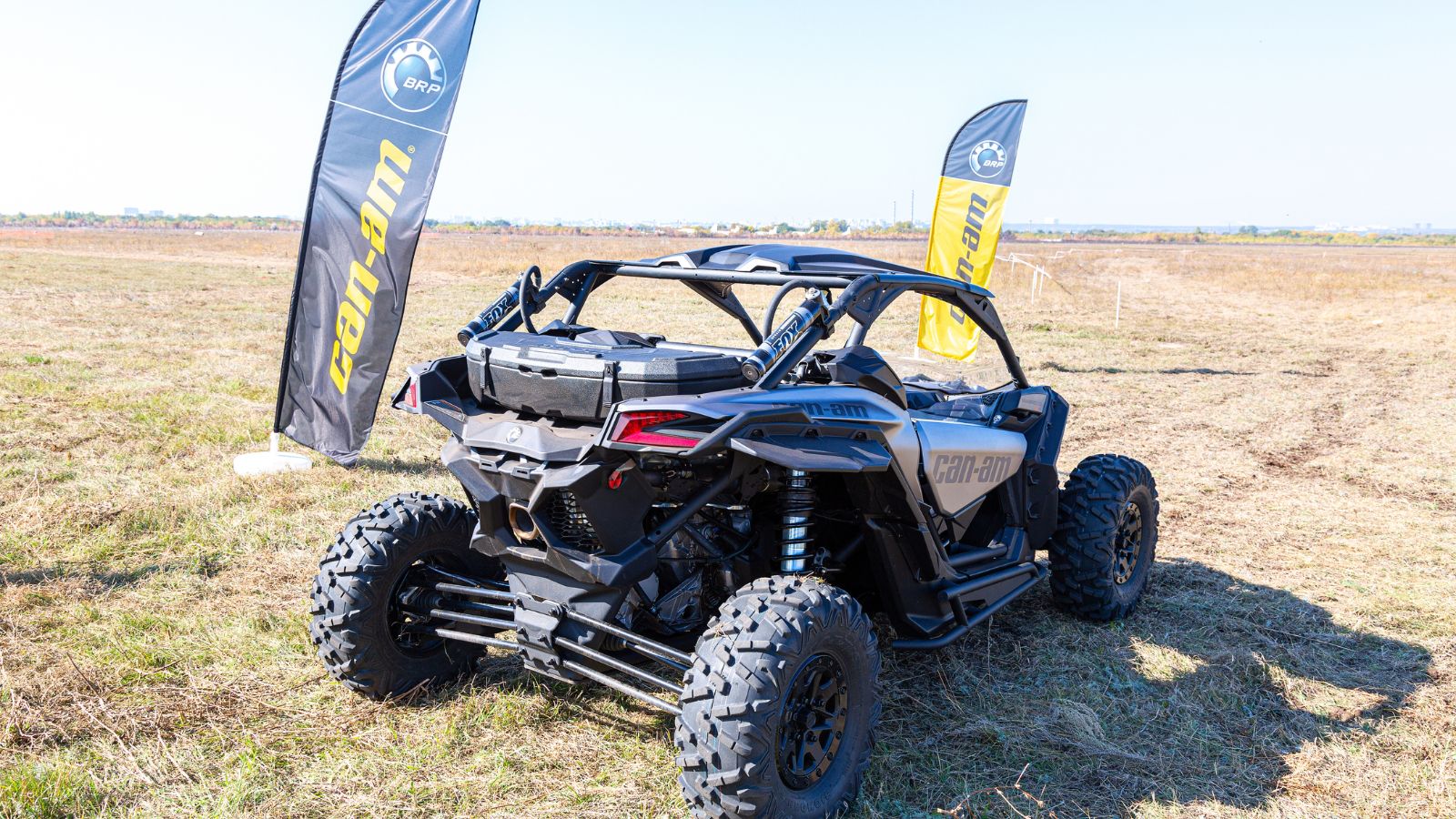
Quebec-based BRP is putting its next generation of powersports machinery under the spotlight tonight, with a global product reveal scheduled for August 17 at 6:30 p.m. ET. The company is promoting the event around its 2027 offerings from Can-Am Off-Road, Can-Am On-Road and Sea-Doo, making it an important marker for one of Canada’s biggest recreational-vehicle manufacturers.
The timing carries extra weight. Can-Am spent the previous model year rolling out everything from an electric ATV and redesigned utility side-by-side to new connectivity features, while BRP has been navigating volatile U.S. tariffs and a rapidly changing powersports market. Whatever arrives under the lights tonight will therefore be judged not simply on horsepower or styling, but on how BRP intends to keep its product momentum moving into 2027.
The 2027 Reveal Has an Official 6:30 P.M. Start
BRP’s own website is advertising its Global Product Reveal for August 17 at 6:30 p.m. Eastern Time, with Can-Am Off-Road, Can-Am On-Road and Sea-Doo prominently featured in the promotion. That matters because BRP traditionally uses its model-year unveilings to establish the direction of several product families at once. Rather than introducing every change through scattered announcements over months, the event gives dealers, customers and competitors a concentrated look at where the Quebec manufacturer is putting its engineering and marketing attention next.
What has not been officially established ahead of the presentation is just as important. BRP has not publicly detailed every 2027 Can-Am model, specification or price that will appear during the event. Until the presentation begins, assumptions about particular engine upgrades, entirely new vehicles or major platform replacements remain speculation. The confirmed story before showtime is simpler: a new model-year cycle is about to begin, and Can-Am sits prominently at its centre.
Last Year’s Can-Am Launch Set a Difficult Benchmark
BRP enters the 2027 unveiling after an unusually busy 2026 model-year introduction. The previous Can-Am off-road rollout brought the Outlander Electric, Outlander MAX 6×6 and Maverick R X rc, while also introducing what BRP described as the industry’s first semi-active suspension system on an ATV. Smart-Shox technology on selected Outlander models electronically adjusts compression and rebound using vehicle data, giving the machines different settings for comfort, sport, work and other riding conditions.
The previous rollout also pushed technology deeper into Can-Am’s performance side-by-sides. Selected Maverick X3 packages received a 10.25-inch touchscreen with integrated GPS, while BRP added an offline group-riding feature intended to help riders locate companions without relying on a cellular connection. Those changes established a useful benchmark for tonight. A normal model-year refresh built mainly around paint and trim would look relatively modest beside the engineering changes introduced a year earlier, raising expectations for meaningful additions somewhere in the 2027 range.
The Defender Shows How Important Working Vehicles Have Become
One of the clearest signals from BRP’s recent product strategy has been the attention devoted to utility customers. The company substantially reworked its Can-Am Defender for 2026, including a new HD11 generation offered across several configurations. BRP also added a 10.25-inch touchscreen as standard equipment on certain higher-end Defender packages and made it optional on others, bringing navigation, vehicle information and accessory controls into a machine frequently used on farms, ranches and worksites rather than simply recreational trails.
Even small improvements illustrated how carefully BRP has been refining the work-oriented side of the lineup. The redesigned Defender received headlights producing 45% more light than the previous version, according to the company, while its electrical system was upgraded to generate 1,700 watts—double the output of the prior generation. More than 200 accessories were offered for customization. Those numbers help explain why the utility segment will be worth watching tonight: for Can-Am, a new vehicle can be both recreational equipment and an everyday working tool.
Electrification Is Now Part of Can-Am’s Existing Business
Can-Am’s electric push is no longer limited to prototypes. BRP returned to two-wheel motorcycles with the battery-powered Pulse and Origin, initially unveiling the production models for the 2025 model year. Both use the company’s Rotax E-Power system and an 8.9-kWh battery. BRP rated the urban-focused Pulse for up to 160 kilometres of city range and the dual-sport Origin for up to 145 kilometres, while Level 2 charging can take their batteries from 20% to 80% in about 50 minutes.
The company expanded that strategy into off-road vehicles with the 2026 Outlander Electric. BRP rated the electric ATV at 47 horsepower, 53 pound-feet of torque and as much as 80 kilometres of range under optimal conditions. Its significance is broader than those figures. The Outlander Electric placed BRP’s proprietary electric technology into a vehicle aimed at farmers, hunters and outdoor users who may value quiet operation as much as emissions reduction. Tonight’s presentation will show how prominently electrification features in the next stage of Can-Am’s portfolio.
Connected Displays Are Becoming More Than an Equipment Upgrade
Another clue to Can-Am’s direction appeared in June, when BRP expanded its BRP GO! system with on-road navigation for compatible electric motorcycles and three-wheel vehicles. The feature works through the 10.25-inch touchscreen and supports both Android and iOS devices through a USB connection. Before the update, navigation displayed on compatible Can-Am road vehicles depended on an iPhone and Apple CarPlay, making the new system a practical expansion for riders using Android phones.
BRP GO! can provide turn-by-turn directions, route planning, ride statistics and group-riding functions. On the electric motorcycles, it can also display information such as battery level, estimated range and estimated charging time. Significantly, BRP made the feature available to compatible 2024 and 2025 machines rather than restricting it entirely to new vehicles. That illustrates a larger shift in powersports: screens and software increasingly influence how recently purchased machines age. Any connectivity developments announced for 2027 could therefore matter well beyond dashboard appearance.
Can-Am Is Trying to Build Riders as Well as Vehicles
BRP’s strategy is increasingly extending beyond the machines parked in dealership showrooms. In April, Can-Am launched its 3 Wheel Collective, a global platform intended to connect existing three-wheel riding groups, local communities and newcomers. The company said one in five Can-Am owners purchased after knowing somebody who already rode a three-wheeler, a striking indication of how much word-of-mouth and community participation can influence this unusual corner of the vehicle market.
A week later, Can-Am announced its Ride Days initiative across participating Canadian and U.S. markets. The program offered closed-course opportunities during May and June with certified instructors, supported by rider-education schools and the Motorcycle Safety Foundation. The aim was to give prospective riders a less intimidating first encounter with three-wheel vehicles. That work provides useful context for tonight’s reveal. A manufacturer can engineer a compelling new Spyder, Ryker or Canyon, but expanding the market also requires convincing people who have never considered a three-wheeler that they can comfortably operate one.
BRP’s Recent Design Wins Raise Expectations for What Comes Next
The 2027 vehicles arrive after BRP collected another round of international design recognition. In July, the company announced four Red Dot awards. Three of the recognized products carried Can-Am badges: the Outlander MAX 6×6, Outlander Electric and Defender HD11. The Sea-Doo Switch Fish received the competition’s higher “Best of the Best” distinction. BRP had also been named Red Dot’s Design Team of the Year in 2025, becoming the first Canadian team to receive that title, according to the company.
For Can-Am, those awards highlight a balancing act that is increasingly visible across the lineup. A Defender must remain practical enough for mud, tools and daily work while accommodating large displays and increasingly refined interiors. An electric ATV must visually distinguish new propulsion technology without becoming unfamiliar to traditional off-road customers. Three-wheelers face a different challenge: their unconventional architecture is itself part of their identity. Tonight’s 2027 products will offer another indication of how BRP’s designers reconcile those competing demands.
A New Quebec Logistics Hub Supports the Product Push
New machines generate attention, but BRP has also been investing in what happens after a vehicle leaves the factory. In July, the company opened what it described as its largest global distribution and logistics centre in Saint-Philippe, Quebec. The facility covers more than 950,000 square feet—roughly the area of 18 football fields—and serves as the central distribution hub for BRP parts, accessories and apparel destined for more than 2,050 dealers worldwide.
BRP says the centre can process more than 2.5 million orders annually and supplies a network reaching 110 countries, either directly or through 16 additional distribution centres. The parts-and-accessories business itself generated more than C$1 billion in annual revenue, with fiscal 2026 revenue in the category rising nearly 10%. That infrastructure is relevant whenever a new Can-Am appears. Buyers increasingly expect roofs, storage, windshields, electronics, cargo equipment and other accessories to be readily obtainable, making logistics and customization part of the commercial life of a vehicle long after reveal night ends.
Strong ORV Momentum Is Meeting a Much Tougher Tariff Environment
BRP approaches the new model year with encouraging sales indicators but a difficult trade backdrop. In its first quarter of fiscal 2027, covering the three months ended April 30, the company reported C$2.39 billion in revenue, up 29.5% from the same period a year earlier. BRP attributed much of that increase to higher off-road-vehicle and personal-watercraft shipments and a favourable ORV product mix. It also reported further North American market-share gains in off-road vehicles.
Tariffs complicate that picture considerably. BRP said revised U.S. Section 232 measures imposed a 25% tariff on the full value of imported snowmobiles and most of its off-road vehicles. By late May, Canadian Press reported that management expected the tariffs to cost roughly C$500 million to C$550 million during the financial year. BRP nevertheless raised its revenue outlook to approximately C$9.13 billion to C$9.38 billion while sharply reducing expected normalized earnings. New Can-Am products are therefore arriving into a market where demand and product momentum must coexist with unusually heavy cost pressure.
Tonight’s Vehicles Will Feed Directly Into BRP’s Next Financial Test
The product reveal also falls only weeks before investors receive their next detailed look at BRP’s performance. The company has scheduled its second-quarter fiscal 2027 results for September 3, with chief executive Denis Le Vot and chief financial officer Sébastien Martel due to discuss the numbers with analysts. BRP reported annual sales of about C$8.4 billion in fiscal 2026 and employed close to 17,000 people while selling products in more than 110 countries, giving tonight’s presentation significance well beyond the enthusiast community.
For now, the safest conclusion is also the most important one: the precise 2027 Can-Am story has yet to be revealed. Recent product cycles suggest several themes worth watching—utility capability, off-road performance, electrification, connectivity, accessories and rider accessibility—but none guarantees a particular announcement tonight. At 6:30 p.m. ET, BRP will finally replace those possibilities with actual machines. For a Quebec manufacturer facing rising trade costs while trying to extend recent off-road gains, the new lineup will help show where it believes the next growth opportunities lie.