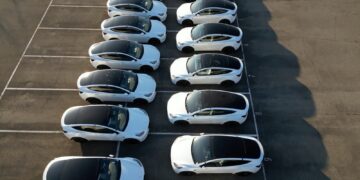





















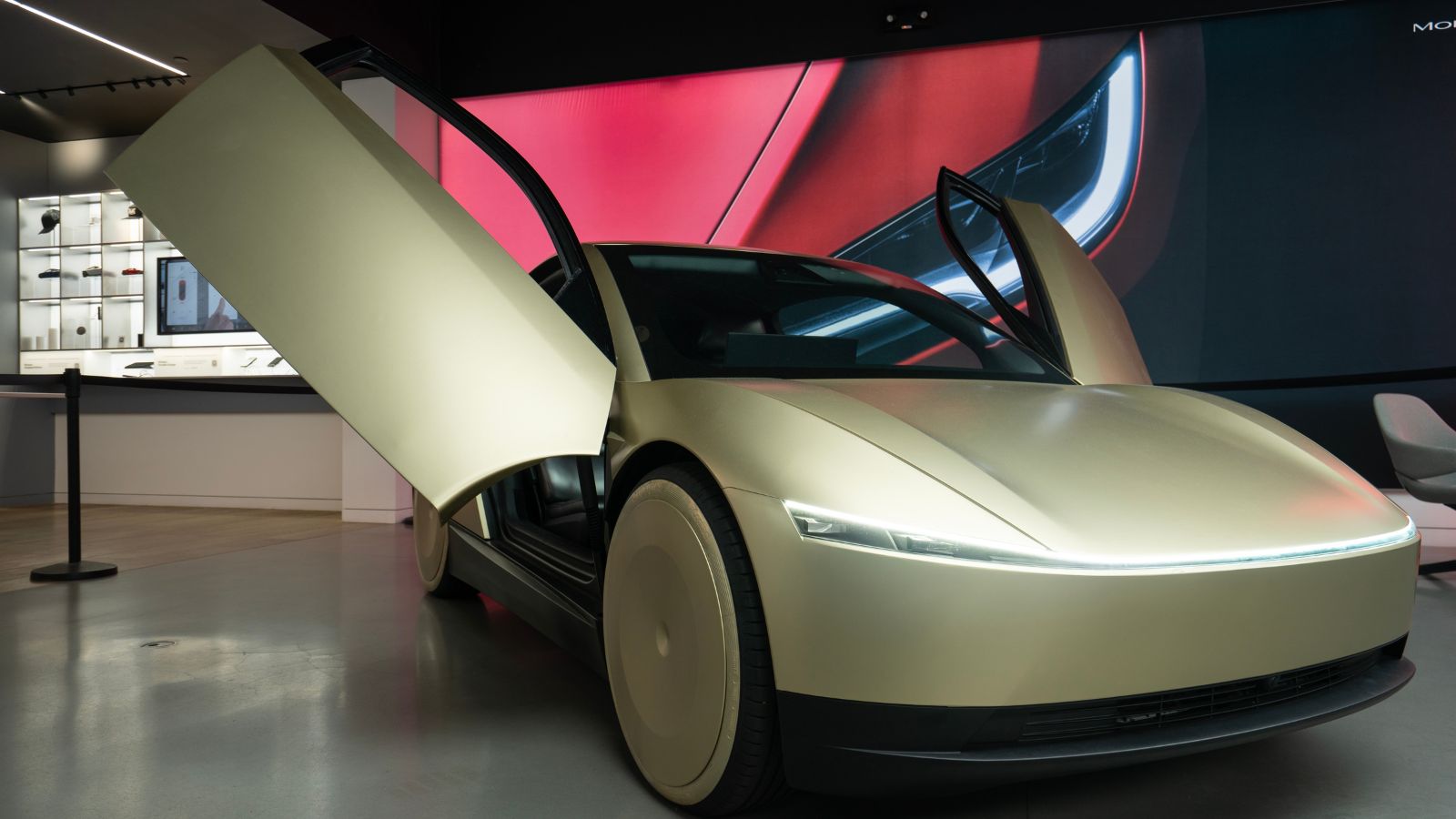
Tesla’s Cybercab was built around a simple premise: if a human never needs to drive, a steering wheel and pedals should not be necessary. Federal vehicle rules have not fully caught up with that premise.
The National Highway Traffic Safety Administration is now requiring Tesla to explain how it self-certified the two-seat autonomous vehicle as compliant with U.S. safety standards despite its lack of permanently installed conventional controls. The regulator has given Tesla until September 30 to answer detailed questions, including whether temporary human-driving equipment played any role in the certification process. The scrutiny comes only weeks after commercial Cybercab service began in Austin, turning what had been a largely theoretical regulatory problem into an immediate test of how America handles vehicles designed without a driver’s position.
The September 30 Deadline Raises the Stakes
NHTSA’s scrutiny began almost as soon as Cybercab entered commercial service. Tesla started deploying a small number of the vehicles in Austin on September 3, 2026. NHTSA opened Audit Query AQ26002 that day and publicly announced it on September 4, saying investigators would examine the processes and technical data behind Tesla’s certification. The regulator stressed that it was particularly interested in whether Tesla had concluded that some Federal Motor Vehicle Safety Standards simply do not apply to a vehicle designed to have no human driver.
The inquiry has since become considerably more detailed. NHTSA says Tesla must provide answers by September 30 about whether Cybercabs are capable of being driven by humans, whether occupants have any touchscreen controls capable of moving the vehicle, and whether temporary human-driver controls or other equipment formed part of Tesla’s certification basis. Regulators are also seeking information about maximum operating speeds, geographical boundaries, time-of-day restrictions and other limits. Those questions do not amount to a finding that Cybercab is illegal or unsafe, but they require Tesla to document precisely how it reached its compliance determination.
Cybercab Was Deliberately Designed Without a Driver’s Station
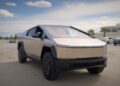
There is little ambiguity about the production Cybercab’s intended configuration. Tesla’s own rider documentation describes a two-seat interior that is not equipped with a steering wheel, accelerator pedal or brake pedal. NHTSA additionally identifies conventional mirrors among the equipment the deployed vehicles lack. Instead of entering the vehicle and seeing a familiar cockpit, passengers encounter two usable seating positions, a central touchscreen and controls focused on the ride rather than on driving it.
That design is fundamental to Tesla’s vision for the vehicle, rather than a cosmetic decision. The company describes Cybercab as fully autonomous and says it relies on its automated-driving technology to navigate roads without an onboard driver. A passenger can request that the vehicle pull over using the touchscreen, mobile app or an overhead Stop button, but those systems are not substitutes for a steering wheel or pedals. That distinction creates the regulatory challenge: much of the federal rulebook was written around vehicles in which a person physically operates steering, braking, visibility and other systems.
U.S. Automakers Normally Certify Their Own Vehicles
One easily misunderstood part of the dispute is the word “certified.” NHTSA generally does not give a new passenger vehicle pre-market approval in the way some jurisdictions use government type-approval systems. U.S. manufacturers instead certify that their own products comply with all applicable Federal Motor Vehicle Safety Standards. NHTSA then has authority to test vehicles, demand information and investigate whether that certification was justified.
Manufacturers also have flexibility in establishing a reasonable basis for certification. NHTSA has long explained that a company can rely on physical testing, engineering analysis, computer simulations, technical judgment or other valid methods rather than submitting every vehicle to a government approval test before sale. That flexibility places substantial responsibility on the manufacturer. If NHTSA later believes there may be a noncompliance, it can ask the company to demonstrate the basis for its certification. If an actual noncompliance is established, federal law provides mechanisms requiring notification and a remedy. Cybercab therefore was not “approved” by NHTSA before deployment; Tesla made the initial compliance determination itself, and the regulator is now auditing that determination.
Temporary Driver Controls Have Become the Most Important Question
The most intriguing part of NHTSA’s latest demand concerns equipment that passengers do not normally see. The agency specifically wants Tesla to state whether temporarily installed controls or other equipment intended for a human driver contributed to its basis for certifying compliance. It is also asking whether a Cybercab is technically capable of being driven by a person and whether any software interface available inside the vehicle could make it move under human direction.
That wording matters because certification is tied to how a vehicle satisfies particular standards. If temporary equipment was used during testing, engineering evaluations or another part of the certification process, regulators want to understand exactly what role it played and how that relates to the configuration now carrying passengers. The existence of the question does not establish that Tesla improperly relied on removable controls. NHTSA is asking Tesla whether it did. The distinction is important because the entire point of Cybercab’s commercial configuration is that passengers cannot simply take over when something goes wrong. Its safety and compliance case therefore has to work as a genuinely driverless vehicle, not merely as a conventional car with its controls removed afterward.
Federal Rules Are Changing, but the Old Ones Still Count
NHTSA itself recognizes that many federal standards were written for an earlier automotive era. The agency said in September that work had begun on eight rulemakings involving subjects including brake pedals, windshield wiping, lighting and rearview systems. In June, for example, NHTSA began a rulemaking that would eliminate the requirement for a manual brake pedal in vehicles designed to be driven exclusively by automated driving systems while retaining braking-performance requirements such as stopping-distance standards.
The timing is central to Tesla’s problem. Proposed rules do not replace existing requirements simply because regulators intend to modernize them. NHTSA explicitly said that current standards remain in force until the revisions are completed. The agency has also begun work on broader automated-vehicle safety standards, including a three-year, $5 million initiative with SAE Industry Technologies Consortia intended to help develop objective AV performance measures. The result is an awkward transitional period: regulators largely agree that cars without drivers require a different rulebook, while manufacturers deploying those cars today still have to operate within rules that have not finished changing.
Zoox Shows How a Different Regulatory Route Can Work
Tesla is not the first company to confront this problem. Amazon-owned Zoox also developed a purpose-built autonomous vehicle without conventional driving controls and initially self-certified it as complying with all applicable federal standards. NHTSA issued Zoox a Special Order in September 2022 and opened an Audit Query in March 2023. During that investigation, the agency inspected vehicles and later documented what it described as multiple apparent noncompliances with applicable standards.
Zoox ultimately moved to an exemption-based approach. NHTSA granted a demonstration exemption in 2025 and closed the original certification audit. In July 2026, the agency approved a commercial-deployment exemption allowing as many as 2,500 Zoox vehicles annually for two years, subject to federal oversight and operating conditions. That history does not automatically mean Tesla must use exactly the same process; the designs and compliance arguments are not necessarily identical. It does, however, illustrate an established alternative. Federal Part 555 authority allows limited numbers of vehicles that do not satisfy every conventional requirement to operate when the statutory conditions for an exemption are met.
Passengers Are Already Experiencing the Regulatory Experiment
The Cybercab debate is no longer about a prototype sitting on an exhibition floor. Tesla began carrying passengers in purpose-built Cybercabs in Austin on September 3. The company subsequently described more than 40 vehicles as deployed in limited areas of the city, while NHTSA characterized the initial commercial deployment as involving a small number. Tesla’s public rider materials reinforce how different the experience is from entering an ordinary taxi: both seats are passenger seats, and there is no driver position waiting to be occupied.
Tesla has instead built passenger controls around requesting assistance rather than taking control of the car. The touchscreen handles doors, seats, cabin temperature, media and support functions. An overhead Stop button can initiate a pull-over request, while onboard communications connect occupants with Robotaxi Support. Tesla’s emergency instructions also explain how passengers can request a stop or use mechanical door releases under specified circumstances. Those details humanize the regulatory dispute. The question is not merely whether an old rule mentions a pedal. It is how emergency responsibilities, vehicle control and compliance should work when everyone inside the vehicle is legally and practically a passenger.
NHTSA Has Significant Enforcement Powers if the Certification Fails
An Audit Query is not itself a recall, and as of September 16 NHTSA had not publicly announced a final finding that Cybercab violates a particular federal standard. The investigation gives the agency a way to examine Tesla’s technical reasoning before deciding what, if any, further action is appropriate. NHTSA’s longstanding certification guidance says that when a genuine noncompliance is established, manufacturers can be required to notify affected parties and provide a remedy without charge.
The information demand also carries legal weight. Under federal vehicle-safety law, NHTSA can use general or special orders to require companies to provide reports and answer specific questions. Such orders are backed by civil enforcement authority, including the possibility of Justice Department action to compel responses when required information is not supplied properly. That makes the September 30 deadline more than a request for clarification. Tesla will need to provide a sufficiently detailed account of how its engineering evidence, legal interpretations and vehicle configuration supported the certification it placed on Cybercab before commercial operations began.
The Outcome Could Help Define the Next Generation of Robotaxis
The significance of the Cybercab inquiry extends beyond Tesla because purpose-built autonomous vehicles challenge assumptions embedded throughout decades of vehicle regulation. Brake pedals, mirrors, windshield equipment, driver displays and steering-related requirements make intuitive sense when a human is performing the driving task. Their relevance becomes more complicated when the vehicle is designed never to hand control to a passenger. NHTSA is already rewriting parts of that regulatory structure, while also maintaining that manufacturers must obey the standards that remain legally effective today.
Tesla’s response will therefore need to answer two different questions at once: what Cybercab technically does, and why the company believes that configuration legally satisfies every standard that actually applies to it. NHTSA could ultimately accept Tesla’s reasoning, seek additional evidence, identify a noncompliance or push the company toward an exemption-based path. No such determination has yet been announced. For now, the most consequential document will be Tesla’s September 30 response, because it should reveal how the company believes a vehicle without a traditional driver’s station fits inside a safety system originally built around one.