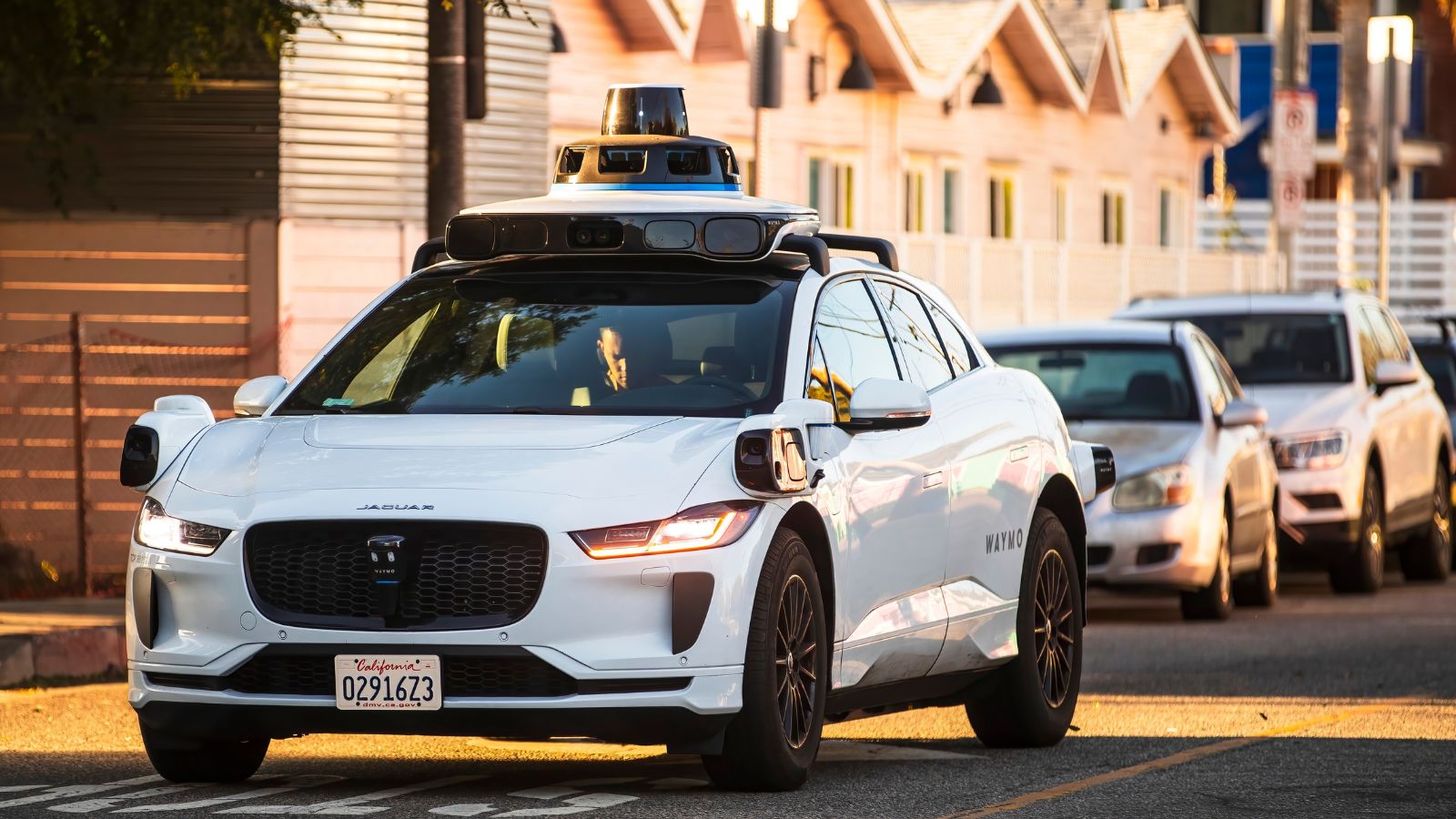
Toronto could be just two years away from a transportation milestone: ordering a taxi with no human driver behind the wheel.
On October 16, 2026, Alphabet-owned Waymo announced plans to bring its fully autonomous ride-hailing service to Canada’s largest city, targeting its first public passengers in 2028. The company will begin putting vehicles on Toronto streets in the coming days, initially with trained drivers conducting mapping and validation work.
The expansion also represents a significant opportunity for Toronto-based Element Fleet Management, which is extending its existing U.S. partnership with Waymo to support Canadian operations.
The companies promise local investment and hundreds of jobs over time. However, Ontario’s regulatory framework, Toronto’s challenging winter conditions and concerns about existing transportation jobs could determine how quickly the service becomes reality.
Toronto Becomes Waymo’s First Planned Canadian Robotaxi Market
Waymo’s October 16 announcement identifies Toronto as the company’s first planned Canadian market for fully autonomous ride-hailing. The company, which began in 2009 as Google’s self-driving car project and is now owned by Alphabet, has already established commercial robotaxi operations across multiple American cities. Its expansion into Toronto represents another step toward bringing that technology to international markets. Waymo co-CEO Tekedra Mawakana described the Canadian move as an important milestone, highlighting Toronto’s diverse population, growing economy and evolving transportation needs.
However, the company is not promising that driverless taxis will immediately begin collecting passengers. Its stated objective is to welcome the first riders in 2028, following an extended preparation and testing period. That distinction matters because introducing autonomous vehicles into a new jurisdiction involves considerably more than shipping cars across the border. Waymo must validate its technology under local conditions, establish operational facilities and navigate regulatory requirements. Toronto residents may soon recognize the company’s sensor-equipped vehicles on familiar streets, but those early appearances will represent groundwork for a service that remains at least two years away.
Waymo Vehicles Will Begin Mapping Toronto With Human Drivers
The first phase of Waymo’s Toronto operation will look considerably different from the company’s established American robotaxi services. Instead of immediately removing drivers, Waymo intends to deploy vehicles operated manually by trained specialists. Their initial assignment will involve creating detailed digital maps of Toronto’s road network and collecting information about local driving conditions. These maps help autonomous systems understand the location of intersections, traffic signals, road markings, curbs and other important features before operating independently.
Waymo’s approach combines this mapped information with real-time data gathered through the vehicle’s cameras, radar and lidar sensors. The system must identify changes that are not necessarily reflected in a stored map, such as construction barriers, pedestrians entering a crosswalk or temporary lane closures. Testing with trained specialists provides an opportunity to evaluate how the software responds before progressing toward fully driverless operation. CityNews reported that the company has received approval for its initial manual driving and testing activities. That is not equivalent to authorization for commercial driverless passenger service. The phased approach provides a period for identifying problems while keeping trained personnel directly involved.
Element Fleet Management Expands a Partnership That Began in San Diego
The Canadian connection is especially significant because Waymo’s operational partner is already based in Toronto. Element Fleet Management announced October 16 that it will provide end-to-end fleet management and intelligent mobility services for Waymo’s planned Canadian operation. The agreement expands a strategic relationship announced June 15, 2026, when Element began supporting Waymo’s autonomous mobility operations in San Diego. That earlier arrangement was designed to extend into additional markets as Waymo expanded its driverless transportation business.
Element operates through its intelligent mobility division, Element Mobility, which combines vehicle management, connected technology and operational coordination. Its role in Toronto will involve organizing the people, facilities and infrastructure required to keep Waymo’s vehicles available for service. Element chief executive Laura Dottori-Attanasio welcomed the opportunity to support Waymo’s entry into the company’s home market. The arrangement demonstrates how Canadian businesses can participate in autonomous transportation without necessarily developing the driving software themselves. In this case, Waymo remains responsible for its autonomous driving system, while Element provides the operational support required to maintain a functioning fleet.
Keeping Hundreds of Driverless Vehicles Running Requires More Than Software
Autonomous driving technology attracts attention because vehicles can navigate streets without someone holding the steering wheel. Yet running a commercial robotaxi network involves many responsibilities that have little to do with driving itself. Vehicles must be inspected, cleaned, charged and repaired. They also need places to park between assignments and systems that determine when maintenance is required. Element’s agreement covers fleet lifecycle management, vehicle readiness, charging infrastructure, energy management and connected operational intelligence.
Element brings considerable experience from conventional fleet operations. The company reports managing more than 1.5 million vehicles globally and says its fleet management capabilities identified more than $1.7 billion in potential client cost savings during the previous year. That figure represents identified opportunities, not necessarily realized savings. For Waymo, such capabilities could become increasingly important as the number of operating vehicles grows. A robotaxi with advanced software cannot complete another trip if its battery is depleted or a sensor requires attention. Efficient fleet management therefore affects vehicle availability, service reliability and operating costs. The Toronto agreement positions Element to apply its existing expertise to a transportation business with different operational demands.
Waymo Promises Hundreds of Canadian Roles Over Time
Waymo and Element say their Toronto expansion will support investment in hundreds of roles over time. The companies identified fleet maintenance, validation driving, customer service and operational support among the areas expected to benefit. Nicole Gavel, Waymo’s head of business development and strategic partnerships, emphasized that building a reliable autonomous service requires workers and facilities alongside the underlying technology. Although vehicles may eventually travel without human drivers, substantial work will still be required to maintain equipment and assist customers.
The employment commitment is encouraging, but it should be understood as a forward-looking plan rather than a confirmed count of immediate hires. The companies have not publicly provided a detailed recruitment schedule, final workforce allocation or completed facilities plan for Toronto. Waymo also pointed to existing Canadian relationships that strengthen its connection to the country. These include the Canada Pension Plan Investment Board, which it describes as a long-term investor, and automotive supplier Magna International, its manufacturing partner. Together, these relationships highlight Canadian participation in the financing, manufacturing and operation of autonomous mobility technology. The challenge will be turning those connections into sustained local economic activity.
Toronto’s Winter Weather Will Put Waymo’s Technology to the Test
Toronto presents conditions that autonomous vehicles must navigate carefully. Snow, slush, freezing rain and road salt can interfere with visibility, obscure lane markings and create surfaces with unpredictable traction. Streetcars, cyclists, pedestrians and construction zones add complexity throughout the year. Conditions can change substantially between a dry afternoon and an overnight snowfall. For a vehicle operating without a human driver, recognizing those changes and responding appropriately is essential to maintaining safe service.
Waymo has invested heavily in developing technology for difficult weather. Its sixth-generation autonomous driving system combines high-resolution cameras, lidar, imaging radar and onboard artificial intelligence to interpret the surrounding environment. The company has also developed sensor-cleaning and heating systems designed to address rain, ice and road grime. In October 2025, Waymo reported having accumulated tens of thousands of miles of testing in snowy environments, including Michigan’s Upper Peninsula and mountainous regions of the United States. Those experiences provide useful preparation, but they do not automatically establish that the system can operate safely in every Toronto winter condition. Local validation will determine when and where autonomous driving can be permitted.
Ontario’s Current Autonomous Vehicle Rules Expire Before the Planned Launch
One of the largest uncertainties surrounding Waymo’s Toronto expansion involves the regulatory framework. Ontario introduced its Automated Vehicle Pilot Program in 2016, initially allowing testing under controlled conditions. The province expanded the program in 2019 to permit driverless testing under additional safety requirements. Participating companies must obtain approval and comply with conditions covering vehicle safety, insurance, operational limits and interactions with emergency responders. The rules also require reporting certain incidents and providing information about testing activities.
However, Ontario Regulation 306/15 is currently scheduled to be revoked on October 13, 2027, before Waymo’s proposed commercial launch. The existing framework specifically addresses testing rather than providing a permanent authorization system for paid driverless taxi operations. Ontario would therefore need an appropriate regulatory path for the proposed service, whether through new rules, amendments or another lawful mechanism. Toronto also regulates conventional taxis and private transportation companies, including Uber and Lyft, through municipal licensing requirements. How those rules will apply to autonomous fleets remains an important question. Approval for preliminary mapping should not be mistaken for confirmation that the company already possesses every authorization required to carry paying passengers in 2028.
Waymo Reports 95% Fewer Serious-Injury Crashes, but Safety Questions Remain
Waymo’s strongest argument for wider deployment comes from its American safety record. In its October 16 Toronto announcement, the company said its vehicles had travelled more than 400 million kilometres in fully autonomous operation. Using comparisons with human drivers in its existing operating cities, Waymo reported 95% fewer crashes involving serious injuries or worse. Its September safety analysis, covering more than 270 million autonomous miles through June 2026, also reported an 82% reduction in crashes involving reported injuries compared with its human-driver benchmark.
Those results are substantial, but their interpretation requires care. The figures come from Waymo’s analysis and reflect the roads, operating conditions and comparison methods used in its established American service areas. They do not measure performance in Toronto, where local testing is still beginning. Autonomous systems also face real safety challenges. In December 2025, Waymo reported a U.S. software recall involving 3,067 automated driving systems after vehicles sometimes proceeded before stopped school buses had deactivated their warning signals. The company reported that the affected software had already been updated. Such incidents reinforce why regulatory oversight, transparent reporting and careful testing remain essential even when broader safety statistics are encouraging.
Accessibility Could Become an Important Part of Toronto’s Robotaxi Debate
Waymo is emphasizing accessibility as part of its Canadian expansion. The company announced engagement with organizations including BALANCE for Blind Adults, CNIB, Community Living Toronto, Connected Canadians and Epilepsy Ontario. Michelle McQuigge, chief executive of BALANCE for Blind Adults, welcomed Waymo’s early involvement with the sight-loss community, pointing to the importance of technology that can increase independence. For some passengers, a transportation service that does not depend on communicating directions to a human driver could offer meaningful convenience.
However, accessible transportation requires more than an easy-to-use smartphone application. Passengers may need wheelchair-accessible vehicles, assistance identifying the correct pickup location or dependable support when plans change. Toronto has already been examining ways to improve on-demand wheelchair-accessible vehicle services. In June 2026, its Accessibility Advisory Committee called for further work on accessible fleet availability, wait times and dispatch arrangements. Waymo has not announced a complete Toronto accessibility service plan, making future vehicle selection and customer support arrangements important details to watch. Its stated ambition is to complement the city’s existing transportation network, including public transit, rather than replace it. Whether that promise delivers meaningful improvements will depend on actual service coverage and accessibility.
Taxi Jobs, Pricing and Government Approval Will Shape the 2028 Outcome
Waymo’s arrival could create new transportation choices, but it also raises concerns for people whose income depends on driving. Toronto already has an established industry of taxi drivers and app-based ride-hailing workers. Autonomous vehicles could eventually compete for some of those trips, even while creating employment in maintenance, technology and fleet operations. In April 2026, reporting indicated that Mayor Olivia Chow’s office had expressed reservations about Waymo’s plans, saying the company would need to demonstrate that its operations would not harm local transportation jobs.
That debate will continue alongside questions about costs and availability. Waymo has not announced Toronto fares, the size of its eventual commercial fleet, the neighbourhoods it expects to serve first or a specific public opening date within 2028. A limited geographic rollout could look very different from a citywide service, particularly for residents who need dependable transportation beyond downtown Toronto. The company’s next milestones will include completing local mapping, validating autonomous performance, establishing facilities and securing the necessary regulatory approvals. For Toronto, the announcement represents a meaningful step toward driverless transportation, but not a guarantee of its arrival on schedule. The real test will be whether Waymo can deliver a service that is safe, accessible, economically sustainable and beneficial to the city.