
























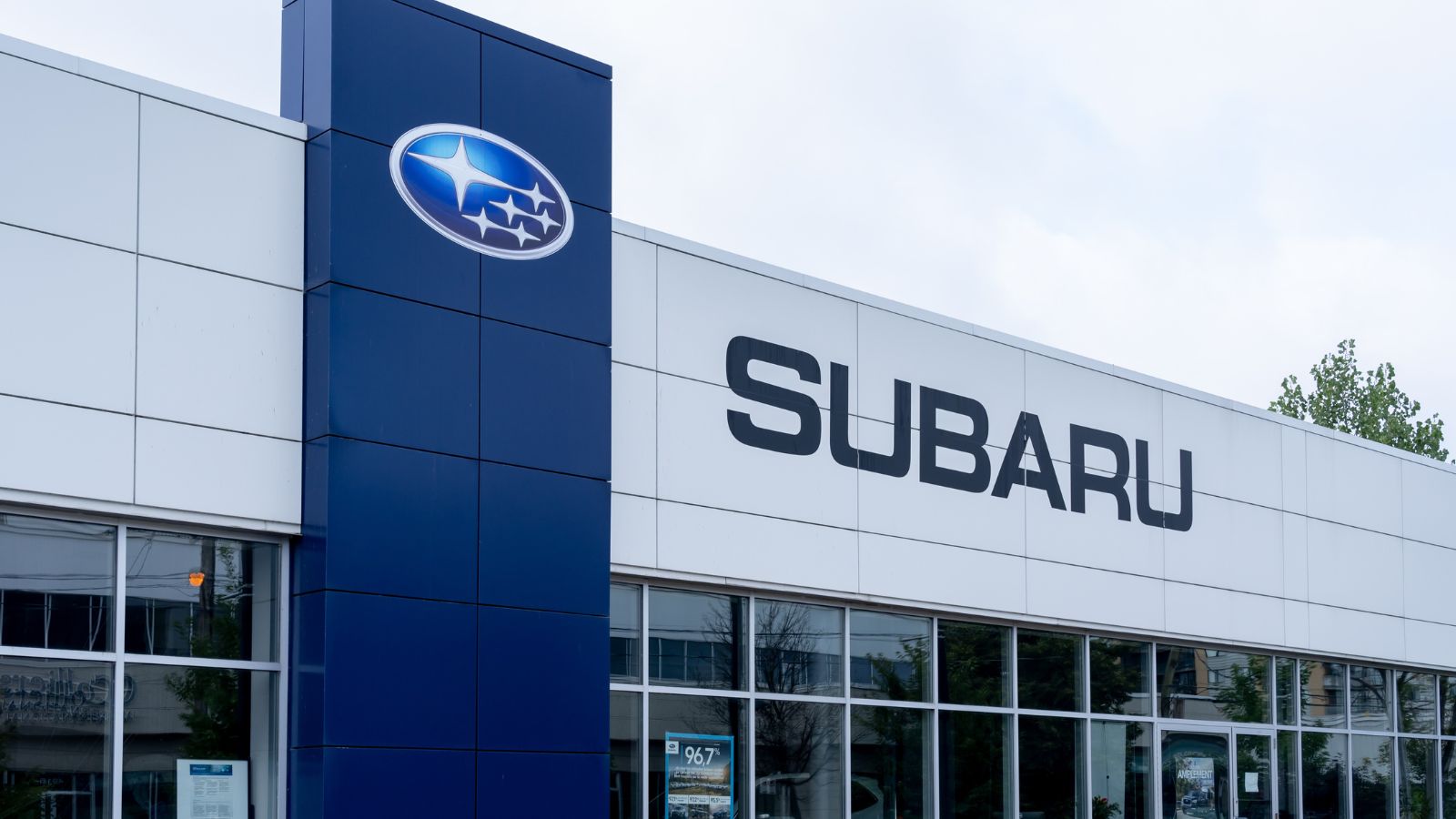
Subaru is cutting the Canadian starting price of its Solterra EV at a moment when electric-vehicle shoppers are interested, but cautious. The 2027 Solterra will start at $47,995, a $4,500 drop from the 2026 model, giving dealers a sharper affordability message as buyers weigh charging access, winter range, rebates, resale value and household budgets.
The move is not just a routine model-year adjustment. It lands in a Canadian EV market that has bounced between rebate-driven enthusiasm and sudden hesitation. For Subaru, the challenge is clear: make the Solterra feel less like a leap of faith and more like a practical all-weather SUV that happens to be electric.
A Price Cut Built for the New EV Reality
The headline number is simple: Subaru Canada has lowered the 2027 Solterra’s starting MSRP to $47,995, which is $4,500 below the 2026 model. That pushes the electric SUV below the psychologically important $50,000 mark before freight, fees, taxes and other costs. In a market where many buyers are comparing monthly payments first and brand loyalty second, that lower entry point gives Subaru dealers a more direct way to start the conversation.
It also marks the second straight value-focused move for the Solterra in Canada. Subaru had already priced the 2026 Solterra at $52,495, which was $4,000 less than the 2024 model while adding more power, more range and faster charging. The 2027 cut goes further by reorganizing the lineup into Touring, Limited and Premier trims, rather than relying on package add-ons. For shoppers, that makes the choice easier to understand. For dealers, it makes the sales pitch cleaner.
Why Dealers Needed a Stronger Affordability Pitch
Canadian EV shoppers are not rejecting electric vehicles outright, but many are harder to close than they were during the rebate-heavy rush of 2024. Statistics Canada reported 43,113 new zero-emission vehicle registrations in the first quarter of 2026, representing 10.8% of all new motor vehicle registrations. That was up from the first quarter of 2025, but overall new vehicle registrations were still down 6.9% year over year, showing that the broader market remains cautious.
That caution matters on the showroom floor. A family comparing a Solterra with a hybrid Forester, a gasoline Outback or a competing compact SUV is not only asking about emissions. They are asking whether the deal works after tax, whether charging will fit their routine, and whether the vehicle will still make sense in five winters. A $4,500 reduction does not erase every concern, but it gives sales staff something concrete to point to before the conversation drifts into doubts about infrastructure and long-term costs.
The Rebate Threshold Is Now Part of the Sales Strategy
Subaru’s pricing cut appears designed to work with Canada’s newer Electric Vehicle Affordability Program. The federal program offers incentives for qualifying electric vehicles with a final transaction value of $50,000 or less, with no such cap for Canadian-made EVs. Subaru says the 2027 Solterra Touring and Limited trims with single-tone paint are applicable under the program, which gives dealers another reason to emphasize price discipline.
That detail could be especially important because the program is built around the final transaction value, not just a headline MSRP. In practice, shoppers must pay close attention to trims, paint, packages, dealer fees and timing. The federal incentive starts at up to $5,000 for battery-electric and fuel-cell vehicles in 2026, then declines over time. A buyer who adds too many extras could weaken the affordability case. A dealer who keeps the build simple can make the Solterra look much more competitive.
Subaru Is Selling Capability, Not Just Electricity
The Solterra’s biggest advantage is not that it is the cheapest EV on the market. It is that Subaru can present it as an electric version of the brand’s familiar all-weather promise. The 2027 model keeps standard Symmetrical Full-Time All-Wheel Drive, 210 millimetres of ground clearance and 338 horsepower. Subaru also lists an estimated range of up to 446 kilometres in ideal conditions from a 77-kWh lithium-ion battery.
Those numbers matter because Canadian EV buyers often think beyond city commuting. They picture slushy school drop-offs, cottage highways, icy parking lots and ski weekends. The Solterra’s off-road-themed positioning gives Subaru a way to separate it from EVs that feel more urban or tech-first. Still, Subaru’s own fine print matters: range and charging results vary with weather, speed, charging habits, battery age and road conditions. In a Canadian winter, that honesty may be more useful than overpromising.
Charging Anxiety Remains the Real Obstacle
The price cut helps, but charging confidence remains a bigger emotional hurdle for many shoppers. J.D. Power’s 2026 Canada EV Consideration Study found that 34% of Canadian new-vehicle shoppers were very or somewhat likely to consider an EV, up from 28% in 2025. Yet among shoppers unlikely to consider one, the leading barriers were limited driving distance per charge, lack of charging availability and performance in extreme temperatures.
CAA’s research shows why those concerns stick. In a survey of more than 16,000 Canadian EV drivers, only 31% were completely satisfied with the availability of public DC fast charging locations, and 67% said lower battery range in extreme cold weather had been a problem. That does not mean EV ownership is failing. In the same research, 87% of EV owners said they were likely to buy another EV. It means the next wave of buyers needs more reassurance than early adopters did.
The Canadian EV Market Is Recovering, But Unevenly
Canada’s EV market has been unusually choppy. Transport Canada’s dashboard showed light-duty EV market share at 15.4% in 2024 before falling to 10.3% in 2025. The Canadian Energy Regulator described 2025 as a roller-coaster year, with ZEV sales dropping to roughly 7% to 8% for much of the year after federal and provincial incentive changes, before recovering later in the year.
That uneven pattern creates both risk and opportunity for Subaru. A weak EV market punishes vehicles that are expensive, confusing or hard to explain. But a recovering EV market rewards models that arrive with a clear monthly-payment story, practical range and credible winter features. Subaru does not need the Solterra to outsell every rival. It needs the vehicle to feel safe enough for cautious mainstream buyers who like the brand but have been waiting for EV ownership to feel less experimental.
Hybrids Are the Shadow Competitor
The Solterra is not only competing against other EVs. It is competing against hybrids, which many Canadians see as the easier middle ground. The Canadian Energy Regulator noted that while ZEV sales fell in 2025, non-plug-in hybrid sales grew strongly. EY Canada’s 2026 Mobility Consumer Index also found that hybrids remained the most preferred alternative powertrain among Canadian consumers, while battery-electric preference declined.
That is why Subaru’s $4,500 cut matters beyond the Solterra itself. Many buyers are not choosing between two EVs; they are choosing between changing their refuelling habits completely or buying a hybrid that feels familiar. A lower Solterra price narrows that gap. It gives Subaru a better chance to persuade buyers who like electric driving in theory but still worry about home-charger installation, public-charger wait times, winter trips and resale uncertainty.
What the Cut Says About Subaru’s EV Future
The Solterra price cut signals that Subaru is treating affordability as a core EV feature, not just a promotion. That is important because the company’s Canadian identity has long been built on trust, winter capability and practical ownership. A premium-priced EV with uncertain range confidence would sit awkwardly beside that image. A lower-priced, all-wheel-drive EV with simpler trims fits the brand more naturally.
The bigger question is whether the Solterra can shift from a niche compliance-style EV into a real consideration for Subaru households. The 2027 pricing gives dealers a stronger opening line, but the close will still depend on practical confidence: the test drive, the winter-performance explanation, the charging plan and the final transaction value. Subaru has cut the price. Now dealers have to cut through the nervousness.