

























A low monthly payment can create the comforting impression that a vehicle is affordable, even when the contract tells a very different story. The payment may have been reduced by stretching the loan, increasing the upfront contribution, hiding optional products, or postponing a major cost until later. Meanwhile, insurance, maintenance, depreciation, and financial risk continue beyond the figure printed in the advertisement.
These 20 reasons explain why the smallest installment is not always the strongest bargain. The real test is whether the vehicle price, borrowing terms, ownership costs, and long-term flexibility work together without draining savings or trapping the buyer in debt.
The Loan Term May Be Extremely Long

A long repayment period can make an expensive vehicle look comfortably affordable. Stretching a $30,000 loan at 7 percent from 48 months to 84 months drops the estimated payment from about $718 to $453. That monthly difference feels substantial, especially when a salesperson frames the discussion around fitting the car into an existing budget.
The trade-off appears in the final tally. The 48-month version produces roughly $4,483 in interest, while the 84-month version produces about $8,034, assuming every payment arrives on time. The buyer spends around $3,551 more to borrow the same principal and remains committed for three additional years. A lower payment therefore may represent delayed pain rather than genuine savings. Comparing the number of payments, total finance charge, total sale price, and payoff date exposes whether the “affordable” offer simply moves cost farther into the future without creating any real economic value whatsoever today.
A High APR Can Hide Behind the Payment
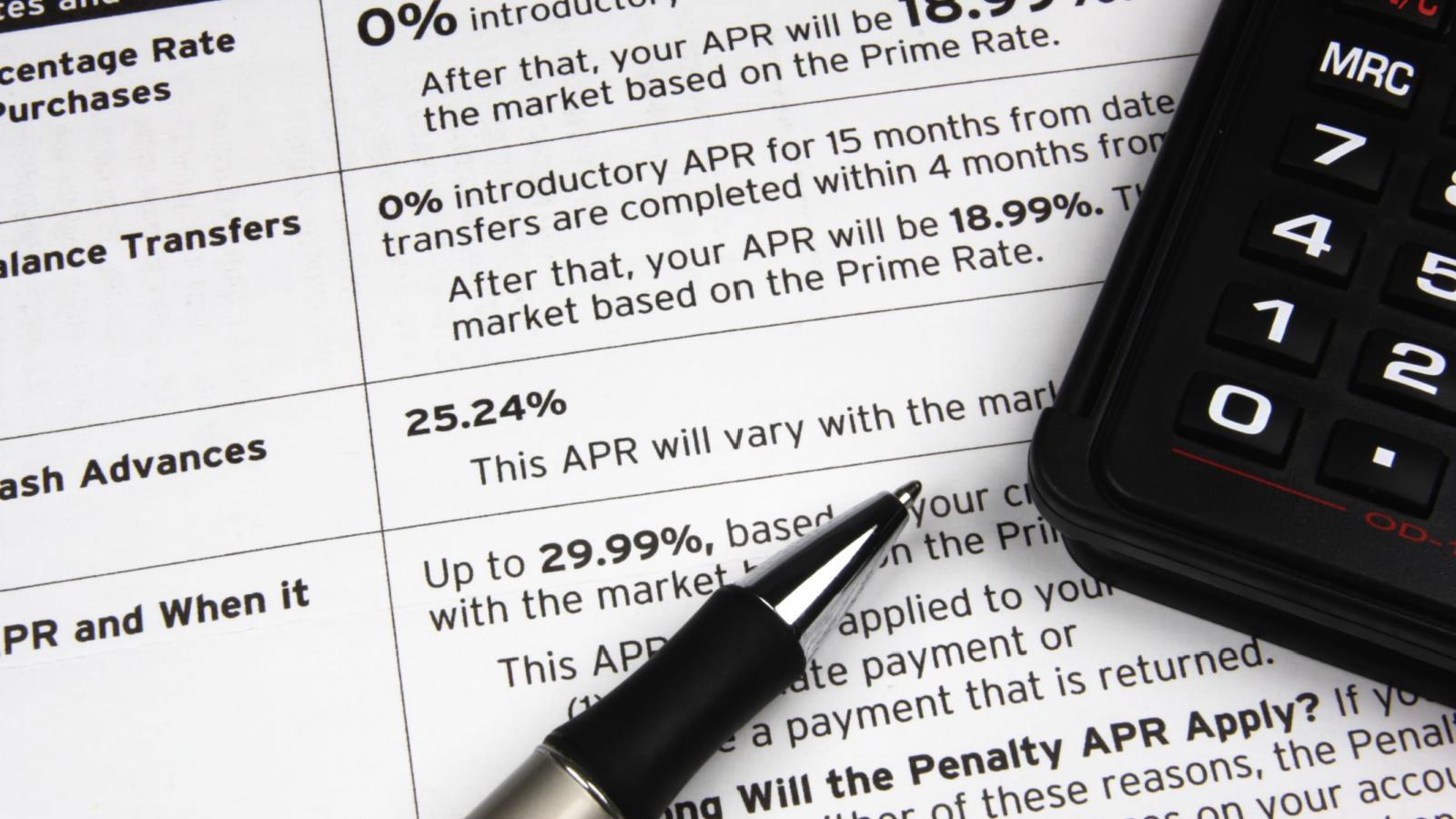
A modest payment can conceal an expensive annual percentage rate, particularly when the loan term is long enough to soften the monthly impact. On a $25,000, five-year loan, moving from 6 percent to 12 percent raises the estimated payment from about $483 to $556. The monthly gap is only around $73, which can seem manageable during a hurried negotiation.
Over the full term, however, estimated interest rises from roughly $3,999 to $8,367. That is more than $4,300 in additional borrowing cost without improving the vehicle itself. Dealer-arranged financing may also include a markup above the lender’s underlying “buy rate,” so the quoted rate is not automatically the best available. A preapproval from a bank or credit union creates a comparison point. The payment should never be evaluated without the APR, finance charge, and amount financed beside it, because those figures reveal what the credit actually costs.
The Vehicle Price May Be Higher Than Expected

Payment-first negotiating can quietly shift attention away from the vehicle’s actual price. A buyer who says, “Keep it near $500 a month,” gives the seller room to adjust the term, rate, down payment, or financed extras while leaving the headline payment almost unchanged. The result can be a more expensive car than the buyer originally intended to purchase.
Consider two offers with similar payments: a $26,000 loan for 60 months at 6 percent costs about $503 monthly, while a $30,000 loan stretched to 72 months at 6 percent costs about $497. The second payment is slightly lower, yet the buyer borrowed $4,000 more and stays in debt another year. This is why consumer agencies emphasize the out-the-door price and total sale price. Negotiating the vehicle price before discussing financing makes it harder for a low payment to camouflage a higher purchase price or expand the original budget.
Old Negative Equity May Be Rolled In

Trading a car with an unpaid balance can create a low-looking payment that carries old debt into the new deal. If a vehicle is worth $15,000 but its loan payoff is $18,000, the $3,000 shortfall does not disappear. It may be added to the next loan, taken from the down payment, or divided between both.
The CFPB’s 2024 auto-finance analysis found mean financed negative equity of $5,073 for new-vehicle transactions in its dataset. Borrowers financing negative equity also had higher loan-to-value ratios and remained underwater longer. A dealer may still produce an acceptable monthly figure by extending the term, but the buyer pays interest on yesterday’s car while driving today’s. The contract should show the trade allowance, payoff amount, down payment, and amount financed separately. Otherwise, a “fresh start” can become a larger loan secured by a vehicle worth less than the debt attached to it.
A Large Upfront Payment May Be Required
A low monthly payment may depend on a large amount paid before the first installment ever arrives. Cash down, a valuable trade-in, rebates, and security deposits can all make the recurring figure look smaller. The payment is not false, but it is incomplete when the upfront sacrifice is omitted from the comparison.
Suppose one offer requires $6,000 down and charges $425 monthly for 60 months. The visible payments total $25,500, but the buyer’s real outlay is already $31,500 before considering other ownership costs. Another offer at $510 monthly with only $1,000 down totals $31,600 over the same period. The first advertisement looks dramatically cheaper each month, yet the overall difference is only $100. Cash placed into the deal also becomes unavailable for emergencies. The proper comparison adds the down payment, trade-in value, rebates surrendered, all scheduled payments, and any final charges over the contract term.
Unwanted Add-Ons May Be Packed Into It

Optional products can be hidden inside a payment that still lands near the buyer’s stated target. Extended service contracts, GAP products, credit insurance, paint protection, theft devices, and maintenance plans may each add only a few dollars per month when spread across six or seven years. Together, they can increase the financed balance by thousands.
The Federal Trade Commission has described “payment packing,” a practice in which a dealership fills the gap between the payment needed for the agreed vehicle price and the higher payment a customer has said they can tolerate. In a 2024 case, the FTC said as many as 75 percent of surveyed buyers at the cited dealerships reported add-ons that were secret or presented as required. Every product should appear by name and price on the contract. A cheap-looking payment is a bad deal when it buys unwanted extras and charges interest on them for years.
Taxes and Fees May Be Financed

Taxes, registration, title charges, documentation fees, and other costs can be rolled into financing instead of paid at delivery. This reduces the cash needed upfront and may preserve an attractive monthly figure, especially when the lender also lengthens the term. The convenience has a cost: financed fees become debt and may accrue interest.
Imagine $3,000 in taxes and fees added to a 72-month loan at 8 percent. That addition raises the payment by roughly $53 and creates about $787 in interest over the term. The buyer ultimately spends close to $3,787 for charges that originally totaled $3,000. Some government fees are unavoidable, but their financing is not costless. An out-the-door price obtained before discussing credit shows the vehicle price plus required taxes and fees. Comparing that figure with the amount financed helps reveal whether the low payment was achieved by borrowing nearly every dollar due at signing.
A Balloon Payment May Be Waiting

Some contracts keep regular payments low because they do not fully repay the balance. The unpaid portion becomes a balloon payment: one unusually large amount due near the end. This structure can suit a buyer who expects a verified future cash payment, but it is risky when the final obligation receives less attention than the monthly advertisement.
A contract might require 47 payments of $399 and then a final payment of $10,000. The repeated installments total $18,753, yet the last payment increases the scheduled outlay to $28,753. A household that budgeted only for $399 may have to refinance the balloon, sell the car, or use savings when it arrives. Refinancing can add another round of interest and fees. The payment schedule should be read from beginning to end, with attention to any final payment, purchase option, residual amount, maturity balance, or refinancing assumptions before signing anything binding.
It May Be a Lease Rather Than a Purchase

Lease payments are often lower than finance payments because the customer is generally paying for expected depreciation, rent charges, taxes, and fees during a limited term rather than purchasing the entire vehicle. That distinction matters. A low lease payment does not normally build ownership unless the agreement includes a purchase option that the customer later exercises.
Most leases also restrict annual mileage, commonly to a range of 10,000 to 15,000 miles, and may charge for excess mileage or excessive wear. A driver exceeding a 12,000-mile allowance by 5,000 miles annually for three years would return the car 15,000 miles over the limit. At a hypothetical 25 cents per mile, that becomes $3,750 before wear or disposition charges. The correct comparison includes money due at signing, all lease payments, mileage expectations, return fees, insurance requirements, and the buyout price—not merely the monthly number alone.
Promotional Financing May Have Restrictions

Promotional financing can produce an excellent payment, but the advertised terms may apply only to selected vehicles, shorter terms, or highly qualified borrowers. The CFPB notes that zero-percent offers often require repayment over a relatively short period, such as 36 months. That can create a payment far higher than the advertisement’s most prominent figure suggests once the actual vehicle and term are selected.
Special financing may also compete with a cash rebate. Consider a $30,000 vehicle offering either $2,500 cash back with a regular loan or zero-percent financing without the rebate. The cheaper option depends on the market rate, term, and cash available; the zero-percent label alone does not settle the question. Buyers should price both paths using the same out-the-door amount and down payment. Eligibility rules, excluded models, required credit tiers, and surrendered incentives can quickly turn an attractive payment into a less valuable overall deal financially.
Paying the Loan Off Early May Cost Extra

A buyer may plan to make extra payments, refinance, or sell the vehicle early, assuming those choices will reduce interest. Contract terms can weaken that strategy. Some auto loans include a prepayment penalty, while uncommon precomputed-interest loans calculate the finance charge at the beginning and may provide less benefit from early payoff than a typical simple-interest loan.
For example, a borrower who receives a bonus after two years might expect to eliminate the remaining balance and avoid several years of interest. A penalty or unfavorable interest method can reduce those savings. The CFPB advises checking whether the loan uses simple or precomputed interest and whether early payoff triggers a fee. These details rarely appear in the headline monthly payment, yet they affect flexibility throughout the loan. A cheap installment is far less appealing when escaping the contract later becomes expensive, complicated, slow, or unexpectedly unrewarding for the borrower over time.
The Balance May Decline Slowly

Even with a fixed payment, the loan balance may fall more slowly than expected during the early years. In an amortizing auto loan, interest is calculated on the outstanding principal, so a larger share of early payments goes toward interest and a larger share of later payments goes toward principal. The payment stays level while its internal composition changes.
On a $30,000 loan at 7 percent for 72 months, the first month’s interest is about $175. From an estimated $511 payment, only roughly $336 reduces principal. After twelve timely payments, the borrower has paid more than $6,100, yet the balance remains well above $25,000. This can surprise someone trying to trade or sell early. Reviewing an amortization schedule shows how much equity each payment actually builds. The attractive monthly number may feel productive, but progress against the debt is initially slower than the stream of checks suggests.
Depreciation Can Outrun Repayment
Cars usually lose value while loans decline according to an amortization schedule. When depreciation outruns principal repayment, the borrower becomes underwater, owing more than the vehicle could sell for. A long term, small down payment, financed fees, or rolled-in negative equity increases the likelihood and duration of that gap.
Suppose a financed vehicle leaves the dealership with a loan balance of $34,000 but could be sold a year later for $28,000. If the remaining loan balance is $30,500, the owner has $2,500 in negative equity despite making every payment. A collision, job change, growing family, or relocation can then force a difficult choice: bring cash to the sale, retain an unsuitable vehicle, or carry the shortfall into another loan. A low payment is therefore risky when it delays positive equity. Comparing projected balances with conservative resale values reveals whether flexibility is sacrificed for a smaller payment.
The Debt May Outlast the Vehicle

A very long loan can remain active after the manufacturer’s warranty ends and after repair needs become more frequent. The borrower may then face a monthly payment and a major mechanical bill at the same time. Consumer guidance also warns that, with an older vehicle, the loan can outlast the useful life of the car itself.
Picture a seven-year loan on a used vehicle already five years old. Near the final payments, the car may be twelve years old, yet the lender still expects every installment regardless of transmission failure, corrosion, or accident damage. An extended service contract might cover selected repairs, but it is optional, has exclusions, and adds cost when financed. The safer comparison asks whether the vehicle is likely to remain dependable for the entire loan term, not merely whether today’s payment fits. Cheap monthly financing can become expensive when the debt survives the vehicle’s dependable years.
Insurance Can Erase the Apparent Savings

The loan payment is only one required monthly bill. Financed vehicles generally must carry insurance protecting the collateral, and the premium can be much higher than expected for a newer, more valuable, powerful, or theft-prone model. If required coverage lapses, the contract may permit the lender to buy force-placed insurance and pass the cost to the borrower.
Consider a payment of $420 paired with a $240 monthly insurance premium. The practical transportation commitment is already $660 before fuel, parking, or maintenance. A different vehicle with a $470 payment but $130 insurance could cost less each month overall. Insurance quotes should therefore be obtained for the exact model and driver before signing. Optional GAP or credit insurance deserves separate comparison as well. A payment that looks cheap in the finance office can be a bad deal when the insurance needed to keep the contract compliant steadily consumes the supposed monthly savings.
Operating Costs Are Not Included

Fuel, charging, maintenance, tires, repairs, registration, parking, and tolls usually sit outside the advertised loan payment. These expenses vary sharply by vehicle and driving pattern, so two cars with similar installments can create very different household costs. Government ownership-cost tools specifically combine financing with fuel, maintenance, insurance, licensing, and registration rather than treating the payment as the whole story.
A commuter driving 1,500 miles monthly in a vehicle averaging 20 miles per gallon uses about 75 gallons. At a hypothetical $3.50 per gallon, fuel alone is roughly $263 a month. A more efficient car averaging 35 miles per gallon uses about 43 gallons, or approximately $150. That $113 difference can outweigh a modest payment discount. Tires, premium fuel, specialized servicing, and annual fees can widen the gap further. The meaningful affordability figure is the total monthly cost of operating and maintaining the chosen vehicle under realistic everyday conditions.
The Advertised Vehicle May Not Be Available

The cheapest advertised payment may belong to a vehicle that is unavailable, minimally equipped, or subject to narrow qualifications. Consumer regulators have repeatedly challenged advertisements that attracted shoppers with low prices or payments and then shifted them toward different vehicles or more expensive terms. The number in the advertisement is meaningful only if the promised car and conditions actually exist.
A showroom may promote “from $299 per month,” yet the only qualifying unit could require a specific trim, large down payment, excellent credit, loyalty rebate, and short availability window. Adding common equipment or choosing the vehicle physically on the lot can change the price immediately. Before traveling, the shopper should request the stock number, out-the-door price, required cash, APR, term, and payment schedule in writing. A low monthly figure is a poor benchmark when it functions mainly as a doorway to a different, more expensive transaction than the advertisement promised.
The Financing May Not Be Final

Driving away does not always mean the financing is final. Under spot delivery or conditional financing, a dealer may let the customer take the vehicle before a lender has fully approved the contract. Days later, the buyer may be told to return and accept a higher rate, larger down payment, longer term, or higher monthly payment to keep the car.
The FTC illustrates this “yo-yo” pattern with a buyer called back after delivery and offered a costlier agreement. The pressure can be intense if the trade-in has already been moved or the buyer has started using the new vehicle for work. The original cheap payment was never secure. Before leaving, the contract should clearly state whether financing is final, identify the lender, and show every agreed term. Independent preapproval reduces the chance that a seemingly completed bargain will later be pulled back and replaced with a materially worse one afterward.
Default Can Leave Debt Without a Car

A payment can look affordable until one disrupted paycheck exposes how little margin the contract allows. Late fees may begin after the due date or grace period, missed payments can damage credit, and default can lead to repossession. Losing the vehicle does not necessarily erase the debt; the borrower may still owe repossession costs and a deficiency balance after sale.
Suppose a lender repossesses a car with $18,000 remaining, adds $1,000 in permitted costs, and sells it for $14,000. The borrower could still face a $5,000 balance without having the vehicle. Transportation loss can also interfere with employment, making recovery harder. A resilient deal leaves room for irregular expenses and temporary income shocks, not merely enough cash for an ordinary month. The cheapest payment becomes dangerous when a single delay triggers fees, credit harm, loss of mobility, collection pressure, and continuing debt after repossession finally ends.
It Can Crowd Out More Important Goals

A monthly payment can fit on paper while crowding out emergency savings, retirement contributions, debt reduction, or essential household spending. Approval shows that a lender accepted the credit risk under its standards; it does not prove the purchase supports the borrower’s broader goals. A budget must account for irregular expenses and preserve a financial cushion after every vehicle cost is included.
The Federal Reserve’s 2025 household survey found that 63 percent of U.S. adults could cover a hypothetical $400 emergency expense entirely with cash or its equivalent. That leaves a substantial share without the same flexibility. A car payment that consumes the last available dollars can turn a tire replacement, medical bill, or work interruption into new high-cost debt. The strongest deal is not necessarily the lowest installment or the most expensive vehicle approved. It is the arrangement that leaves room for emergencies, savings, and life beyond the driveway.
19 Used Cars Canadians Should Avoid in 2026 (Based on Owner Complaints)

Buying a used car in Canada can feel safe until repair bills start stacking up. Owner complaints tell a different story than glossy listings. Transmission failures, electrical problems, and weak winter reliability show up again and again in consumer reports. Many of these issues appear after warranties expire, when owners least expect them. Some vehicles look affordable upfront, but become expensive to keep on the road. Others struggle in cold weather, urban driving, or long highway commutes. Here are 19 used cars Canadians should avoid in 2026 (based on owner complaints).
19 Used Cars Canadians Should Avoid in 2026 (Based on Owner Complaints)