



















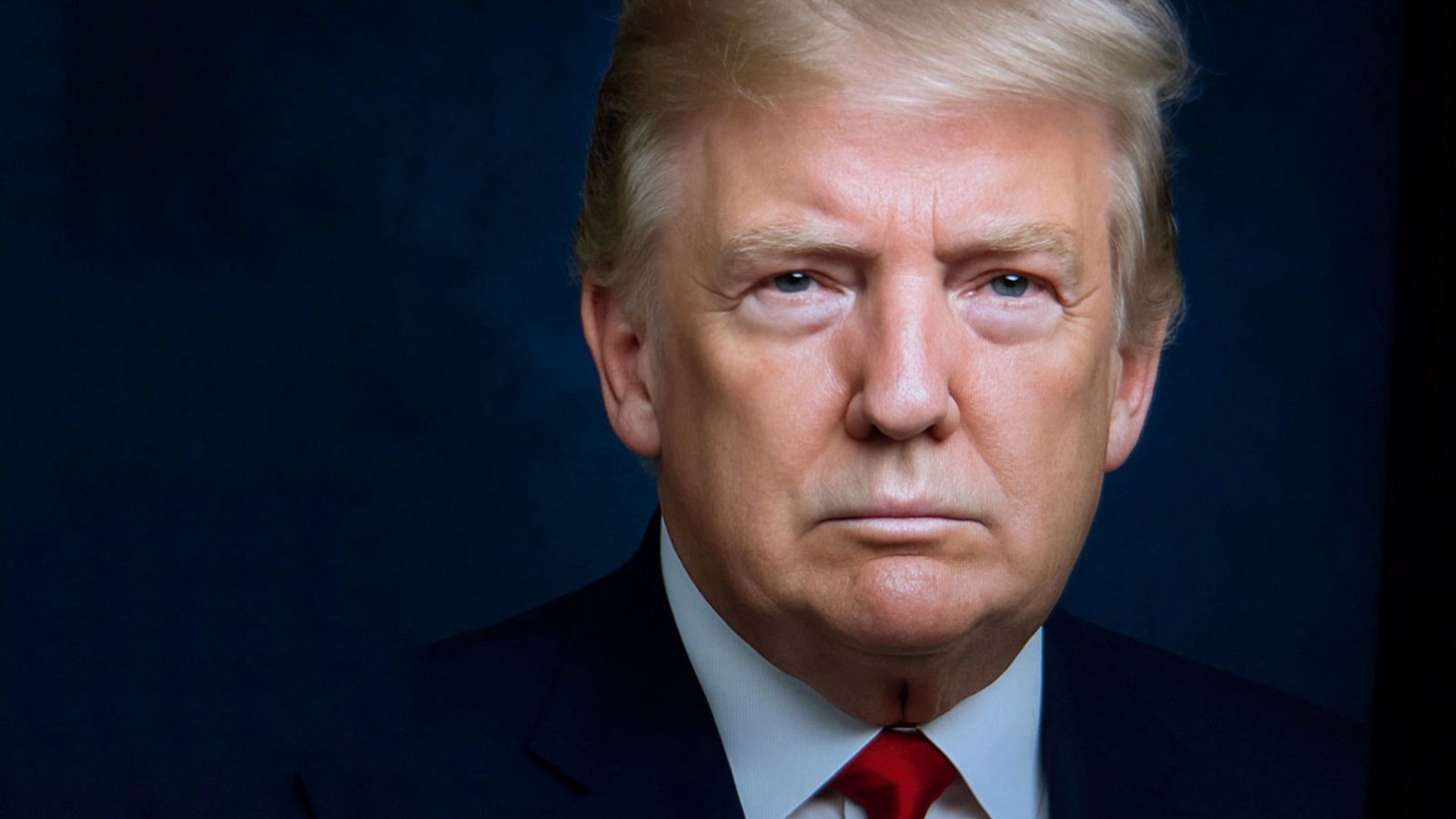
Donald Trump’s effort to dismantle U.S. clean-vehicle policy has run into another legal obstacle, just as automakers are trying to understand what the next generation of North American vehicle rules will actually require. A federal judge has temporarily blocked the Environmental Protection Agency from using an unusual regulatory route to place several California emissions waivers before Congress for possible repeal.
The decision does not reverse every clean-car rollback undertaken by Washington, and it does not automatically restore California’s separate 2035 zero-emission vehicle mandate. What it does is preserve another piece of California’s regulatory authority while courts examine whether the administration used the law correctly. For automakers already facing different U.S. federal, California and Canadian policies — plus an intensifying Canada-U.S. tariff fight — regulatory certainty remains elusive.
The Judge Stopped an Unusual Route Through Congress
U.S. District Judge Beryl Howell issued a preliminary injunction blocking the EPA’s attempt to reclassify four California Clean Air Act waiver decisions as rules that could be submitted to Congress under the Congressional Review Act. The distinction matters because the CRA provides an expedited process for Congress to overturn federal regulations, including the possibility of passage by a simple Senate majority. California argued that EPA waivers are administrative decisions granting permission, not regulations that Congress can simply erase through that process.
Howell ordered the EPA to take steps within its control to restore the situation that existed before the agency’s June actions. Her ruling sharply criticized the government’s reasoning, concluding that the EPA could not treat the waivers as rules for congressional purposes while disregarding the consequences that came with that characterization. Lawmakers had reportedly been preparing to act on the waivers, meaning the injunction changes the immediate political timetable even though the broader litigation is far from over.
California’s Special Authority Goes Back Decades
California occupies an unusual position in American environmental law. The Clean Air Act generally gives Washington responsibility for national vehicle-emissions standards, but it allows California to seek federal waivers permitting tougher state requirements because the state had vehicle-pollution controls before the modern federal system was established. According to California officials, administrations of both parties have granted more than 75 such waivers over roughly half a century.
The four waivers caught in the latest dispute include decisions tied to California’s greenhouse-gas standards for cars, its earlier Advanced Clean Cars program and regulations covering small off-road engines. One of the contested vehicle waivers dates back to 2009. That history is important because the Trump administration’s argument would change how decisions that had long been treated as waivers are categorized. California says doing that would create a new mechanism through which Congress could erase regulatory permissions that historically were handled through the Clean Air Act’s administrative and judicial processes.
The Ruling Does Not Simply Bring Back the 2035 Mandate
The latest court victory can easily be confused with California’s better-known Advanced Clean Cars II program, but the two fights are not identical. California adopted that program in 2022 with requirements beginning in the 2026 model year. Its original trajectory called for qualifying zero-emission vehicles and plug-in hybrids to reach 35% of new vehicle sales in 2026, 68% in 2030 and 100% in 2035. The Biden administration later granted the federal waiver needed for California to enforce those requirements.
Congress targeted that waiver separately in 2025, and Trump signed legislation overturning the approval after automakers including General Motors and Toyota pushed for relief. California challenged that action, and litigation remains unresolved. The Alliance for Automotive Innovation had argued that the mandated sales trajectory was substantially ahead of consumer demand and charging infrastructure. That means Howell’s September ruling is significant without being a blanket restoration of every California clean-car policy that the Trump administration and Congress have attacked.
Washington Has Already Rolled Back Federal Rules Much Further
California’s waiver battle is only one front in a sweeping shift in federal vehicle regulation. In February, the Trump EPA rescinded the 2009 greenhouse-gas Endangerment Finding that had provided the legal basis for federal greenhouse-gas limits on new motor vehicles. The agency simultaneously eliminated federal greenhouse-gas standards applying to light-, medium- and heavy-duty highway vehicles. EPA argues that the Clean Air Act does not authorize those standards for addressing global climate change and has promoted the move as a major reduction in regulatory costs.
The Transportation Department has also moved toward sharply weaker fuel-economy requirements. A recent NHTSA plan would put fleetwide fuel economy at roughly 34.5 miles per gallon in 2031 rather than the approximately 50.4 mpg target associated with the previous policy. NHTSA estimates weaker requirements could reduce vehicle costs by about $930, while also increasing fuel consumption by roughly 100 billion gallons and carbon emissions by about 5% through 2050. Those estimates remain politically and academically contested.
Economists Are Challenging the Cost Case for the Rollback
The economic debate surrounding weaker rules intensified in August when researchers from Yale, MIT, the University of Pennsylvania and other institutions published an analysis in Science challenging the assumptions behind EPA’s cost-benefit calculations. Their work examined how the government valued fuel savings, vehicle technology costs and changes in driving. According to the researchers, correcting several inconsistencies would erase the economic benefit claimed for eliminating federal greenhouse-gas standards.
Their calculation was dramatic: an EPA scenario showing roughly $790 billion in net benefits from repeal became an estimated $670 billion net cost after the researchers made their corrections. The authors also noted that the administration’s analysis excluded large climate and public-health benefits that earlier regulatory evaluations counted. EPA has defended its approach and its emphasis on affordability and consumer choice. The disagreement illustrates why vehicle regulation rarely reduces to a simple EV-versus-gasoline argument; assumptions about fuel prices, driving behaviour and technology costs can move projected benefits by hundreds of billions of dollars.
Automakers Wanted Relief but Still Need Predictable Rules
Major manufacturers have repeatedly argued that California’s aggressive electrification timetable moved faster than the market. The Alliance for Automotive Innovation, whose members include companies such as Ford, General Motors, Toyota, Honda, Hyundai, Volkswagen and Stellantis, supported the 2025 congressional action against California’s 2035 mandate. The organization has also argued for a coherent national vehicle standard rather than increasingly different requirements across jurisdictions.
That preference explains the industry’s complicated position today. Relaxing a difficult mandate can provide short-term compliance flexibility, but prolonged litigation can replace one problem with another: uncertainty about which standards will survive for vehicles being engineered several model years in advance. Manufacturers cannot redesign powertrains, factories and battery-sourcing plans every few months. The practical question is therefore becoming less about whether Washington regulates more or less and more about whether companies can rely on the rules long enough to plan billion-dollar product programs and assembly investments.
Canada Is Now Moving Away From Automatic U.S. Alignment
The regulatory split is becoming a distinctly North American problem because Canada is also rewriting its approach. Ottawa announced in February that it intends to repeal the Electric Vehicle Availability Standard and replace it with stronger, technology-neutral greenhouse-gas standards for model years 2027 through 2032. The government’s stated trajectory is designed to put Canada on a path toward roughly 75% EV sales in 2035 and 90% in 2040 rather than maintaining the existing requirement for 100% zero-emission sales by 2035.
A proposed regulatory package published in the Canada Gazette in August explicitly acknowledges that Canada’s vehicle-emissions rules have historically incorporated important elements of U.S. EPA regulations. Washington’s repeal of federal greenhouse-gas vehicle standards therefore created Canadian administrative problems as well as policy differences. Ottawa also noted that Canadian zero-emission vehicle sales fell from roughly 14% in 2024 to about 9% in 2025, before recovering to around 10% on average during the first four months of 2026.
The Same Factories Are Also Caught in a Tariff Fight
Regulatory uncertainty is arriving while North American production itself is under pressure. More than 90% of Canadian-made vehicles and about 60% of Canadian-made auto parts are exported to the United States, according to Ottawa. Canada produced more than 1.2 million passenger vehicles in 2025, while the broader auto industry supports hundreds of thousands of Canadian jobs. That dependence makes even modest changes in U.S. rules unusually consequential for Canadian assembly plants.
Tariffs add another layer. Toyota and Honda together account for more than three-quarters of Canadian vehicle production, and Reuters reported that Canadian-built models represent roughly 24% of Honda’s U.S. sales and 17% of Toyota’s. Trump has threatened a 50% tariff on Canadian vehicle imports beginning January 1, dramatically raising the cost of maintaining integrated production. Manufacturers must therefore consider emissions rules, EV demand, battery investment, trade policy and factory location at the same time. Howell’s injunction settles none of those questions permanently, but it ensures the clean-car fight will remain part of that already crowded calculation.