


























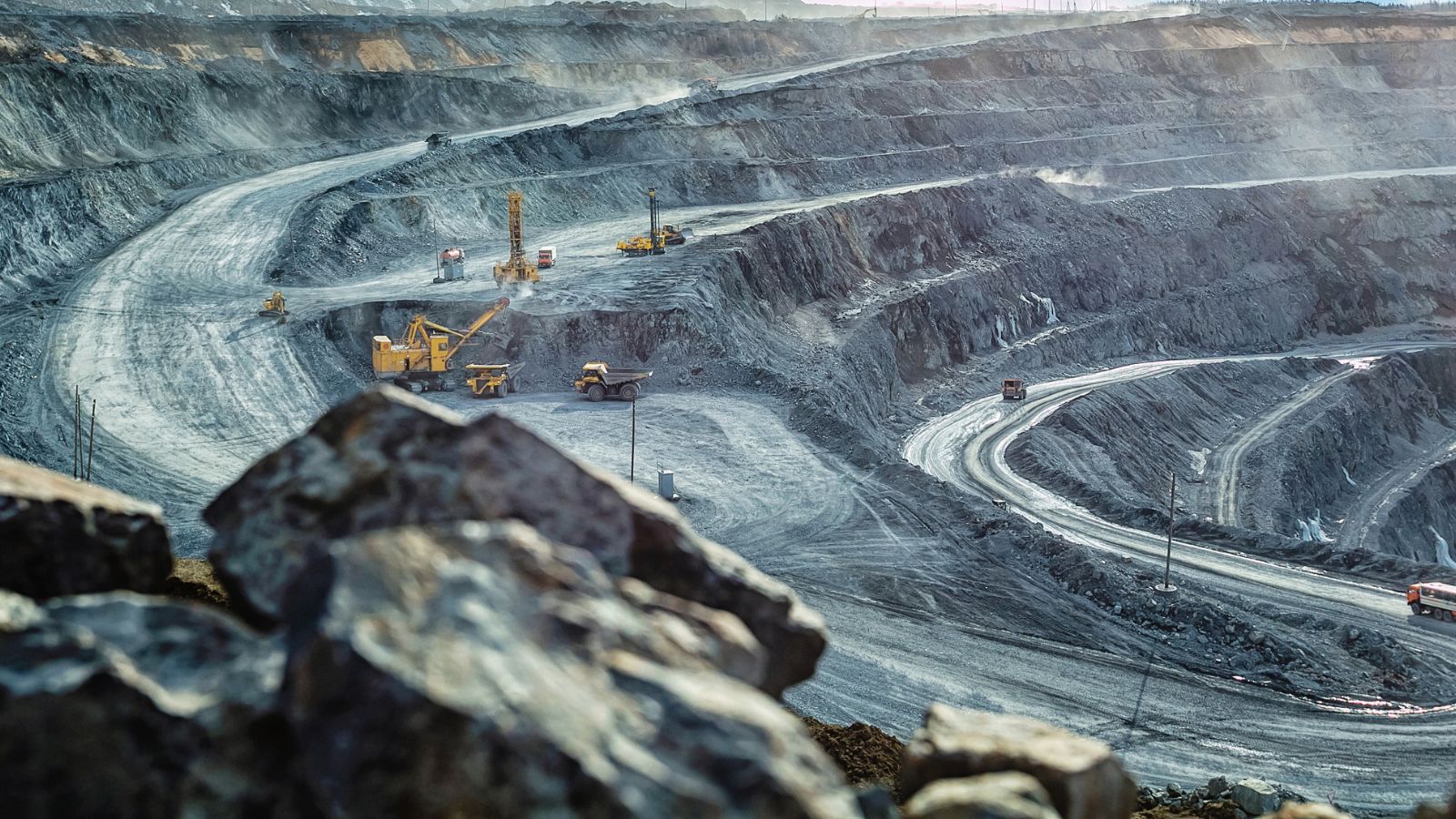
Canada Nickel Company is moving to strengthen its balance sheet just as its flagship Crawford Nickel Project enters a more demanding phase of development. The Ontario-focused developer announced plans on August 12 to raise C$15 million through a non-brokered private placement, less than two weeks after Crawford secured a major federal approval.
The financing is modest beside the billions of dollars ultimately required to build the mine, but its timing matters. Canada Nickel is now spending on engineering, remaining permits and project financing while managing existing debt and preparing for a construction decision targeted for 2027. Crawford, roughly 42 kilometres north of Timmins, is designed as a decades-long source of nickel and other critical minerals. The challenge has shifted from proving that a large mineral resource exists to demonstrating that an unusually large Canadian mining project can actually be financed and built.
The C$15 Million Financing Buys Development Runway
Canada Nickel intends to issue 10 million units at C$1.50 each, producing gross proceeds of C$15 million if the private placement closes as planned. Each unit contains one common share and half of a common-share purchase warrant. Two half-warrants combine into one full warrant, leaving the financing with five million potential warrants. Each full warrant would allow its holder to acquire another Canada Nickel share for C$2.25 during the 36 months after issuance. If every warrant were eventually exercised, they could generate an additional C$11.25 million for the company, although that would depend on market conditions and the share price.
For now, management has identified more immediate uses for the money. Net proceeds are expected to support permitting and engineering across Canada Nickel’s projects, repay outstanding debt and provide working capital for normal corporate needs. That combination illustrates where Crawford stands today: the geological story is well established, but advancing a multibillion-dollar mine requires steady spending long before production begins. The offering still requires definitive documentation and necessary approvals, including approval from the TSX Venture Exchange.
Federal Approval Removed One of Crawford’s Biggest Obstacles
The financing comes shortly after a milestone that materially changed Crawford’s regulatory position. On July 31, the federal government issued a positive Decision Statement for the project. Canada Nickel said Crawford became the first mining project to receive such a decision under Canada’s amended Impact Assessment Act framework introduced in 2019. That brought years of federal impact-assessment work to a close and cleared one of the largest regulatory hurdles facing the development.
Approval does not mean bulldozers can immediately move onto the site. The federal Decision Statement imposes legally binding conditions, including measures related to Indigenous communities, fish and fish habitat, migratory birds and other environmental effects. Canada Nickel must also continue securing remaining provincial and federal permits before construction. Management’s timeline has consequently become more specific: the company now says it is advancing Crawford toward a construction decision in 2027. The distinction matters because regulatory approval, financing approval and a final investment decision are separate milestones. Crawford has passed a major test, but substantial execution work remains.
Engineering Work Is Already Moving Beyond the Feasibility Stage
Canada Nickel has been spending money to turn Crawford from a technical study into a project that contractors could eventually build. In January, the company selected Ausenco Engineering Canada to lead detailed engineering for the process plant and supporting infrastructure. Ausenco had already played a central role in Crawford’s feasibility work. Moving into detailed engineering means progressively defining equipment, layouts, infrastructure and construction requirements at a level that can support procurement and eventual project execution.
Power infrastructure is advancing in parallel. In March, Canada Nickel signed agreements under Hydro One’s connection process so engineering could begin on connecting Crawford to Hydro One’s Porcupine Station. Electricity is particularly important to Crawford because its development plan envisions extensive electrification and trolley-assisted mining equipment rather than relying entirely on conventional diesel fleets. These activities do not guarantee construction, but they reduce the amount of design work left after a financing decision. For a project of Crawford’s scale, shortening that gap can matter: long-lead equipment, electrical infrastructure and plant engineering can become schedule bottlenecks once billions of dollars of construction capital are committed.
The Real Financing Requirement Is Measured in Billions
The C$15 million placement is therefore best understood as development capital, not Crawford’s construction financing. Canada Nickel’s March 2025 front-end engineering work estimated initial project capital at about US$2.05 billion, up roughly 5% from the 2023 feasibility estimate. Total capital over the project’s full life, including expansion and sustaining investment, was estimated at approximately US$5.72 billion. Those figures show why the company is simultaneously pursuing much larger debt, government-backed and tax-credit-related funding arrangements.
One important piece emerged in June, when Canada Nickel gave SB1 Markets an exclusive mandate to arrange up to US$600 million of debt intended to monetize investment tax credits expected from Crawford’s construction. The company has also disclosed a letter of interest from Export Development Canada for a loan of up to US$500 million and points to potential support from other financing sources. None of those figures should be treated as equivalent to cash already committed. Arranging a complete package at acceptable terms remains one of Crawford’s biggest hurdles, particularly when the construction requirement dwarfs Canada Nickel’s corporate balance sheet.
Existing Debt Shows Why Near-Term Liquidity Still Matters
The latest equity financing also arrives while Canada Nickel is carrying bridge financing used to keep development moving. On July 28, the company extended the repayment date on a US$32 million Auramet International loan from August 9 to November 9, 2026. The extension came with a US$856,288 fee and 5.5 million replacement warrants exercisable for one year at C$1.52, subject to TSXV approval. Canada Nickel said the revised deadline aligned with its expectations for completing other financing initiatives.
That backdrop gives the new C$15 million placement additional significance. Some proceeds can be directed toward outstanding indebtedness while the company works on longer-term project finance. Development-stage miners frequently face this mismatch: engineering, permitting teams and consultants need to be paid today, while large construction lenders usually require permits, technical certainty, commercial agreements and a detailed capital structure before committing billions. Canada Nickel has said it expects progress on several financing initiatives later this fall. How those arrangements develop will matter more to Crawford’s construction prospects than the C$15 million placement by itself.
Crawford’s Size Explains Why Governments Are Paying Attention
Crawford is unusual even by the standards of Canada’s mining industry. Its 2023 bankable feasibility study outlined approximately 1.715 billion tonnes of proven and probable reserves grading about 0.22% nickel. The study envisioned roughly 41 years of processing, with average annual nickel output of about 38,000 tonnes and peak production of roughly 48,000 tonnes annually during a 27-year period. Iron, chromium, cobalt and platinum-group metals would also contribute to the project’s production and economics.
Front-end engineering later improved the estimated after-tax net present value to approximately US$2.81 billion at an 8% discount rate, while the estimated internal rate of return increased to 17.6%. Those calculations remain forecasts rather than guaranteed results and depend on assumptions about commodity prices, costs, recoveries, construction and operations. Still, the sheer scale helps explain Crawford’s inclusion in federal and Ontario initiatives designed to accelerate major projects. Ontario has described the development as representing about C$5 billion of investment, while the project has been placed in the province’s One Project, One Process permitting framework and referred to Ottawa’s Major Projects Office.
Indigenous Investment Is Part of Crawford’s Development Model
Crawford’s financing story also includes an unusual source of capital. Taykwa Tagamou Nation completed a C$20 million convertible-note investment in Canada Nickel in 2025 after the partnership was initially announced in late 2024. Federal project information also identifies agreements involving Mattagami, Matachewan and Flying Post First Nations covering early business and employment opportunities. These arrangements move Indigenous participation beyond consultation alone and toward ownership, contracting and longer-term economic involvement.
The economic expectations surrounding Crawford are substantial, although the largest estimates should be understood in context. An independent economic analysis commissioned for Canada Nickel estimated that the project could contribute approximately C$70 billion to Canadian gross domestic product over its operating life and support roughly 185,000 person-years of employment. Ontario has separately projected approximately 1,300 direct jobs when the development is complete. Those outcomes depend on Crawford actually reaching construction and operating as planned. For communities around Timmins, that difference is tangible: engineering reports and permit announcements create anticipation, but sustained jobs, contracts and local spending only arrive once financing turns the proposed mine into a physical project.
A Difficult Nickel Market Makes Crawford’s Timing More Complicated
Crawford is advancing during a global nickel market that offers both strategic opportunity and uncomfortable economics. Indonesia has grown to account for roughly two-thirds of global nickel supply, creating an extraordinary concentration in one producing country. The International Energy Agency has highlighted increasing concentration across critical-mineral processing, with Indonesia responsible for most recent growth in refined nickel supply. That concentration strengthens the strategic argument for new Canadian production serving North American and allied supply chains.
At the same time, there is no immediate global shortage guaranteeing high prices for new producers. Nickel inventories have remained elevated, and Reuters reported in June that combined inventories on the London Metal Exchange and Shanghai Futures Exchange had reached their highest level since 2015. Earlier analyst forecasts also pointed to another global nickel surplus in 2026. Crawford therefore cannot depend simply on scarcity. Its investment case rests more heavily on projected low costs, scale, by-product revenues, Canadian jurisdiction, lower-carbon production ambitions and supply-chain diversification. That makes disciplined financing and construction execution especially important when commodity markets remain volatile.
The Next Test Is Turning Approval Into a Construction Decision
Canada Nickel has now crossed a threshold that many large Canadian mining projects never reach. Crawford has a feasibility study, completed front-end engineering, detailed engineering underway, a federal Decision Statement, provincial fast-track status and several prospective financing channels. The new C$15 million placement adds cash for the work needed to keep those processes moving. It does not, on its own, solve the central question of how the company will fund a development requiring more than US$2 billion of initial capital.
The next several months should therefore be judged less by individual financing headlines and more by whether Canada Nickel can assemble the pieces into a credible construction package. That means closing the latest placement, advancing larger debt and tax-credit facilities, handling near-term obligations, finishing engineering and obtaining remaining permits. Management is now pointing to a construction decision in 2027 rather than implying that construction is already secured. Crawford has moved much closer to being buildable, but the transition from approved mineral project to operating mine remains the most capital-intensive part of the journey.