


























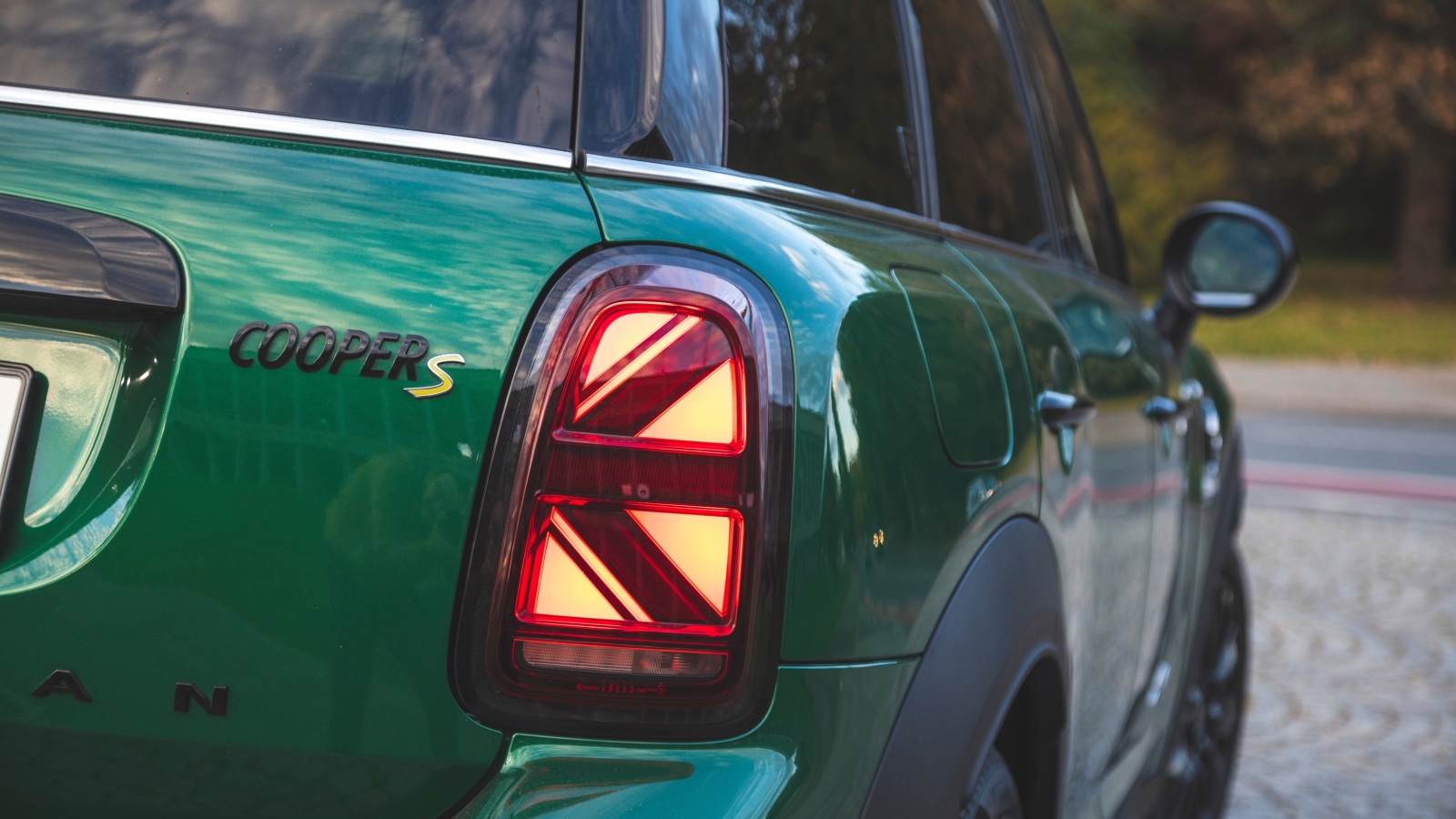
A $10 gap can look like a rounding error on a new vehicle, but in Canada’s latest EV incentive system it can carry real weight. MINI Canada has priced the 2027 Countryman SE ALL4 Elementary Edition at a base MSRP of $49,990, placing it just beneath the $50,000 transaction-value threshold used by the federal Electric Vehicle Affordability Program. Transport Canada already lists the trim as eligible for up to $5,000 in 2026.
That headline number, however, needs context. The federal program does not simply look at sticker price, and the Countryman’s advertised all-inclusive price is higher once freight and PDI are shown. The important question is which charges count, which do not, and how much room buyers actually have before an otherwise eligible configuration crosses the line.
The $49,990 Price Puts MINI in a Very Different Position
MINI’s new Elementary Edition is not a different powertrain so much as a lower-priced doorway into the electric Countryman range. The 2027 Countryman SE ALL4 Elementary Edition starts at $49,990 before freight, PDI, taxes and other applicable fees. The regular 2027 Countryman SE ALL4 starts at $59,990, creating a clean $10,000 difference in base MSRP for Canadian shoppers considering the same electric nameplate.
That price placement is difficult to ignore because Transport Canada’s EVAP program applies a $50,000 final-transaction-value ceiling to qualifying imported EVs. The Elementary Edition appears on the federal eligible-vehicle list with a maximum 2026 incentive of $5,000 for a purchase or a lease of 48 months or longer. In other words, MINI has brought an all-wheel-drive electric SUV from a premium brand into a part of the market where federal support can materially change the monthly-payment conversation for households comparing electric crossovers in Canada right now nationally.
The Federal Rule Is More Complicated Than an MSRP Cap
The most important technical detail is that Canada’s new EV program does not actually use a hard MSRP cap at the cash register. Transport Canada says MSRP is used to help build its public vehicle list, but a buyer’s eligibility is determined by the final transaction value. For non-Canadian-made vehicles, that value must be $50,000 or less at the qualifying transaction stage.
That distinction matters with a $49,990 starting price. Factory options, optional packages, accessories, certain dealer fees and add-ons can count toward the federal calculation. Manufacturer and dealer discounts also count, but in the opposite direction, reducing the qualifying value. Transport Canada even gives examples showing that a vehicle listed above $50,000 can qualify after a discount, while a model starting below the threshold can lose eligibility after expensive options are added. The Countryman’s ten-dollar gap is therefore a starting point, not a blanket promise for every configuration sold.
Why a $53,774 All-Inclusive Price Can Still Work
MINI advertises an all-inclusive price of $53,774 for the Elementary Edition, which at first glance seems to put the vehicle well beyond the federal ceiling. That does not automatically make it ineligible. Transport Canada specifically excludes freight and pre-delivery inspection from the EVAP final-transaction-value calculation, along with sales taxes, registration fees, financing costs and several other charges paid during a new-vehicle purchase.
The catch is that many extras are included in the calculation. Optional packages, paint charges, accessories, documentation or administrative fees, rustproofing, ceramic coatings and other vehicle-related add-ons can push the federal value upward. A single set of winter tires and Level 2 charging equipment are among the exclusions. For a shopper looking at a $49,990 base vehicle, the practical lesson is unusually simple: the bill of sale matters more than the marketing headline. A qualifying discount can create room, while counted extras can erase it quickly before approval.
MINI Has Kept Much of the Important Equipment
The Elementary Edition does not achieve its lower price by abandoning the Countryman SE ALL4’s defining mechanical layout. MINI says the model keeps ALL4 all-wheel drive and pairs it with the same electric-SUV fundamentals, while also retaining a panoramic glass sunroof and the brand’s 9.4-inch circular OLED centre display. Heated front seats, a heated steering wheel and wireless Apple CarPlay and Android Auto are also listed as equipment.
Its equipment sheet is especially notable because several items that often migrate into option packages remain standard here. MINI lists 19-inch black wheels, metallic paint choices, active blind-spot monitoring, rear cross-traffic warning, rear-collision prevention, front-collision warning with brake intervention, automatic park assistant and backup assistant. The company also includes three years of scheduled maintenance with unlimited kilometres. This makes the Elementary Edition less of a bare-bones compliance trim and more of a packaged version designed to sit near the federal affordability line.
The Lower Price Does Not Mean Low EV Performance
Performance is another area where the lower price does not turn the Countryman into a low-output commuter. MINI Canada rates the electric Countryman SE ALL4 at 308 horsepower, with two-motor all-wheel drive and a claimed 0-to-100-km/h time of 5.6 seconds. Canadian marketing material lists maximum driving range at up to 348 kilometres, depending on conditions and configuration in normal real-world use.
The underlying battery and charging hardware are familiar from the broader Countryman SE ALL4. BMW Group technical material for the model lists a 64.7-kWh usable lithium-ion battery and maximum DC fast-charging power of 130 kW. Those figures place the MINI in a different conversation from long-range EVs built primarily around 500-kilometre-plus highway numbers, but they also explain the vehicle’s emphasis: compact-SUV usability, strong acceleration and all-wheel-drive traction rather than maximum possible range. For many urban and suburban households, that balance may matter more than a headline battery figure alone.
A Fast Charge Takes About 30 Minutes
MINI says the Countryman SE ALL4 can charge from 10% to 80% in as little as 30 minutes on a suitable DC fast charger. At home, the company says an optimized wallbox can provide a full charge in about eight hours. BMW Group specifications for the platform list 9.6-kW Level 2 charging and a 130-kW DC peak, broadly matching those published times.
There is one ownership detail worth catching before delivery: charging hardware is not included as standard with the Elementary Edition. MINI says the Flexible Fast Charger and adapters can be purchased separately, partly on the assumption that some EV owners already have home equipment installed. Under EVAP rules, however, a Level 2 charger and charger adapters are excluded from the federal final-transaction-value calculation. That means a buyer can add qualifying home-charging equipment without automatically consuming the tiny ten-dollar space between the MINI’s base MSRP and the federal threshold.
German Production Passes Another Important EVAP Test
Price is only one federal eligibility test. EVAP also requires imported vehicles to be made in Canada or in a country that has a free-trade agreement with Canada. The electric Countryman is produced at BMW Group Plant Leipzig in Germany, where electric Countryman production began in 2024 alongside other BMW Group models at the site.
Germany falls under the Canada-European Union Comprehensive Economic and Trade Agreement, which has been provisionally in force since September 2017 and is identified by the federal government as a free-trade agreement covering Germany and other EU member states. That manufacturing origin therefore fits the trade-agreement side of EVAP’s rules. Transport Canada’s own eligible-vehicle list removes any practical ambiguity for this specific trim: the 2027 MINI Countryman SE ALL4 Elementary Edition is listed with the full $5,000 2026 battery-electric incentive, subject to the individual transaction meeting the program’s remaining conditions at purchase in Canada today nationwide.
Quebec Can Make the Numbers More Interesting
Federal support is not the only incentive available in every part of the country. Quebec’s Roulez vert program lists the 2027 all-electric MINI Countryman SE ALL4 as eligible and provides up to $2,000 for a qualifying new battery-electric vehicle registered in 2026. Quebec has also confirmed that its purchase incentives end for vehicles registered from January 1, 2027.
That creates a limited 2026 window in which an eligible Quebec transaction could potentially combine the federal incentive with provincial support. Transport Canada says EVAP can be stacked with provincial or territorial incentive programs, although each program applies its own rules and timing. Manitoba also offers up to $4,000 on new eligible EVs under $70,000, but its published eligible-model list should be checked for the model year and trim before assuming coverage. In practice, postal code and registration date can change the economics almost as much as the badge on the hood.
The Timing Comes as Canada’s EV Market Grows Again
MINI’s pricing move arrives as Canada’s EV market is growing again after a period of disruption around incentive changes. Statistics Canada reported 58,811 new zero-emission vehicle registrations in the second quarter of 2026, up 26.7% from a year earlier. ZEVs represented 10.7% of all new registrations in that quarter, while battery-electric registrations alone rose 37.4% year over year across Canada’s market.
More recent sales data point in the same direction. Statistics Canada recorded 18,920 new ZEV sales in July 2026, up 36.0% from July 2025 and equal to 10.7% of total new-vehicle sales. Against that backdrop, MINI’s $49,990 Countryman is a targeted attempt to make a premium-badged electric SUV visible inside an affordability program built around a strict transaction ceiling. The real test will be how many buyers can keep their final qualifying value under that line once real-world configurations and dealer paperwork enter the purchase picture today nationally now.