

























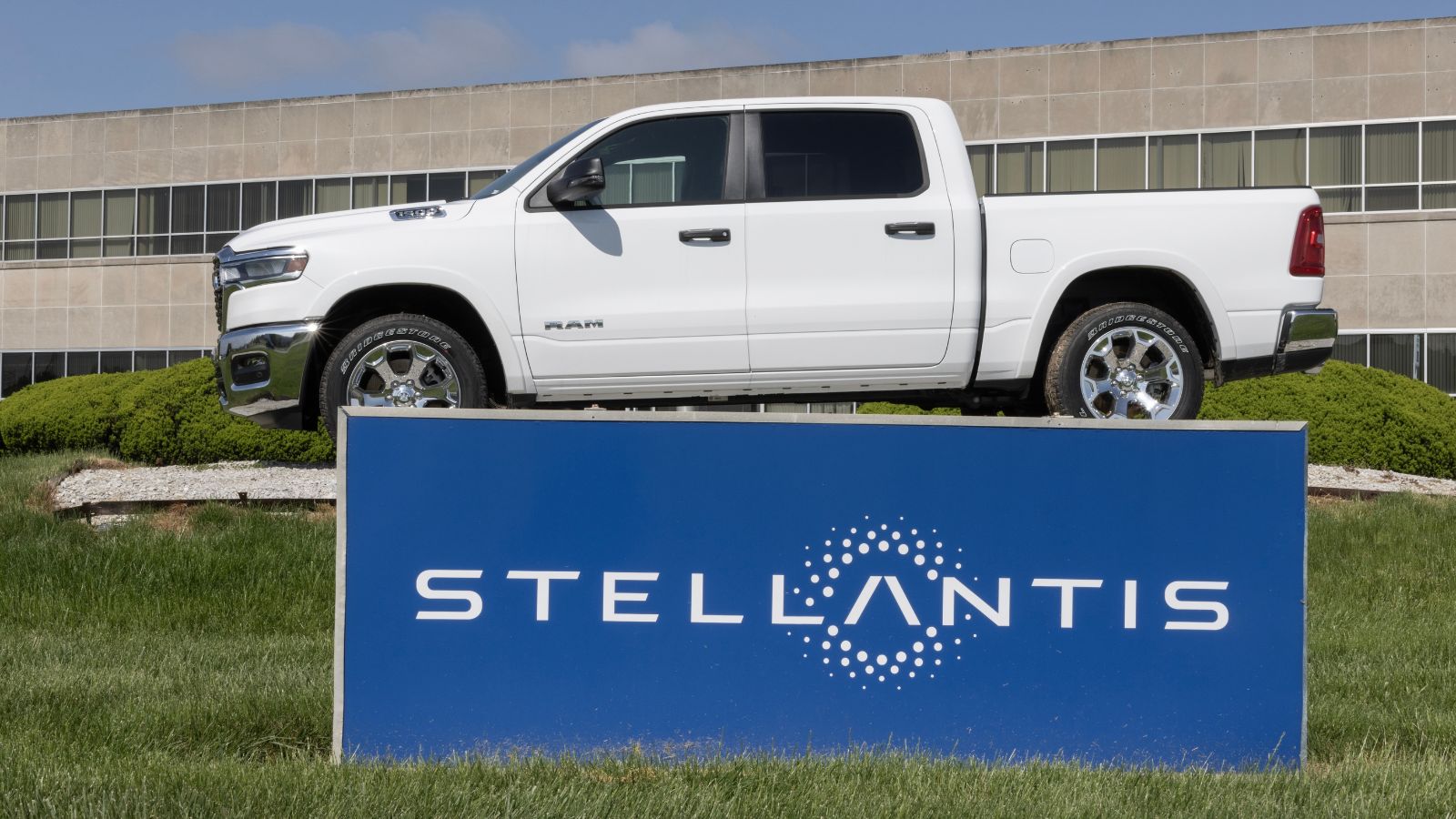
The fight over Stellantis’s idled Brampton assembly plant is no longer only about whether thousands of autoworkers will return to the production line. Brampton Mayor Patrick Brown is warning that the plant’s uncertain future could become part of a much larger shift in Canada’s automotive alliances, particularly if trade tensions continue pushing Canadian manufacturing away from its traditional U.S. partners.
Stellantis is exploring a sale of the sprawling facility to Canadian armoured-vehicle manufacturer Roshel, but Brown says Chinese automakers and other foreign companies have also expressed interest in manufacturing opportunities in Brampton. His warning is not that a Chinese takeover has been finalized. Rather, he argues that prolonged Canada-U.S. auto tariffs could create an industrial vacuum that manufacturers from China, Europe and elsewhere may eventually fill.
Brown Says the Auto Industry Could Be Entering a Very Different Era
Brown’s argument begins with a relatively simple concern: if established North American automakers decide Canadian production is no longer economical, the factories and skilled workforces do not simply disappear. They become assets other manufacturers may want. Speaking to The Detroit News, Brown warned that continued trade barriers could erode the longstanding dominance of General Motors, Ford and Stellantis-related brands in Canada. He said he would prefer to see American-based automakers continue producing vehicles in communities such as Brampton, but believes manufacturers from other countries could move into the space if those companies retreat. That is a forecast from the mayor rather than an established outcome, and Stellantis has not announced a sale of Brampton to any Chinese automaker.
There has nevertheless been tangible foreign interest. Brown said Leapmotor, the Chinese automaker partnered with Stellantis through Leapmotor International, has made inquiries, as has another Chinese company that he did not identify and an Italian automaker. BYD has also approached Brampton about bus manufacturing. Earlier reporting linked BYD’s interest to possible use of the Stellantis facility, although Brown more recently described that outreach as being about bus production rather than a firm proposal to purchase the plant. The important distinction is that inquiries are not transactions. No Chinese company has publicly announced a purchase agreement for Brampton, and Roshel currently has the most concrete proposal because it has signed a memorandum of understanding with Stellantis.
Roshel Is the Immediate Buyer in the Picture
The most advanced plan for the site involves Roshel, a Canadian manufacturer of armoured vehicles. Stellantis confirmed on September 11 that it had signed a memorandum of understanding outlining a possible sale of the Brampton plant. Stellantis said it considered several opportunities and views Roshel as a potential route to returning the property to productive use. Roshel chief executive Roman Shimonov has said his company wants to establish a defence-manufacturing centre in Brampton and is prepared to give laid-off Unifor workers first consideration for employment. The agreement remains preliminary, however. An MOU establishes a framework for negotiations; it is not the same thing as a completed property transaction.
That distinction matters because the debate is about more than whether the building remains occupied. Roshel has said its plans could generate significant employment, while Unifor argues that defence manufacturing cannot automatically replace the economic scale of a high-volume vehicle assembly operation. More than 2,200 Unifor Local 1285 members have been on layoff since Brampton stopped production, according to the union. Stellantis has maintained that it reviewed alternatives for restarting conventional vehicle manufacturing but could not identify a sustainable long-term business case under current market and trade conditions. That puts Ottawa and Ontario in the difficult position of weighing potential new manufacturing activity against efforts to preserve the plant specifically as a major automotive assembly operation.
Brampton’s Problems Expose Canada’s Dependence on the U.S. Market
The Brampton dispute is particularly consequential because Canadian vehicle manufacturing remains extraordinarily dependent on access to American buyers. Statistics Canada reported that more than 93% of Canadian motor-vehicle exports went to the United States in 2025. Its value-added analysis also estimated that U.S. demand supported 76.4% of jobs in automobile and light-duty motor-vehicle manufacturing in 2024. Those figures help explain why even relatively small changes in cross-border costs can have outsized consequences for assembly decisions. A Canadian factory designed to produce hundreds of thousands of vehicles cannot easily replace the U.S. market with domestic Canadian sales alone.
Stellantis originally planned to retool Brampton for the next-generation Jeep Compass. The plant stopped production in December 2023, and the company paused retooling in February 2025 before announcing later that year that future Compass production would move to Illinois. Stellantis has cited changing trade and market conditions in explaining the deterioration of the Brampton business case. Brown says company executives similarly told him tariffs had made Canadian production uneconomic. The precise commercial calculations behind Stellantis’s decision are not public, so Brown’s interpretation should not be treated as an independent financial finding. What is clear is that Stellantis now says none of the automotive-production alternatives it studied provided a sustainable long-term case for the site.
Canada Has Already Opened a Managed Door to Chinese EVs
Brown’s warning also comes at a moment when Canada’s policy toward Chinese automobiles has changed significantly. Canada imposed a 100% surtax on Chinese-made electric vehicles in October 2024, on top of the normal 6.1% most-favoured-nation tariff. That policy was altered in 2026 following a new Canada-China economic arrangement. Beginning March 1, Canada established an annual quota allowing 49,000 Chinese EVs to enter at the 6.1% MFN tariff without the previous 100% surtax. The initial quota represents less than 3% of the Canadian new-vehicle market, according to the federal government, and grows under the terms of the arrangement.
Ottawa has explicitly described the new policy as more than an import arrangement. The federal government says it expects the agreement to encourage Chinese joint-venture investment in Canadian vehicle and EV-supply-chain manufacturing, with trusted partners. Prime Minister Mark Carney said in January that significant Chinese investment was expected within three years, although that is a government policy objective and projection rather than a guaranteed investment commitment. That context makes interest in facilities such as Brampton less surprising. A Chinese manufacturer seeking Canadian production capacity could find an existing assembly site, skilled workers and established suppliers attractive. At the same time, any future Chinese investment would still face Canadian safety, investment, trade and potentially national-security requirements; the 49,000-vehicle import quota does not by itself authorize a Chinese company to acquire or operate a Canadian factory.
Governments Have Billions of Dollars in Auto Policy Riding on the Outcome
Brampton is also politically sensitive because governments previously supported Stellantis’s Canadian manufacturing plans with substantial public money. In 2022, Stellantis announced a $3.6-billion investment to modernize its Brampton and Windsor operations for electrified-vehicle production. The federal government committed up to $529 million through the Strategic Innovation Fund, while Ontario announced support of up to $513 million. Federal records later showed that $222.4 million had been disbursed under the federal contribution agreement by March 31, 2025, with further payments suspended after Stellantis moved the Jeep mandate to the United States. The government has said Stellantis made legally binding commitments involving its Canadian manufacturing footprint.
Industry Minister Mélanie Joly has therefore continued pressing Stellantis to return automotive production to Brampton. On September 18, she reiterated that the federal government could seek repayment of hundreds of millions of dollars if the company does not meet its commitments. Ottawa has previously said the company’s obligations included maintaining its Canadian footprint, although the details of commercial agreements are not fully public. Ontario Premier Doug Ford has likewise called for a new vehicle mandate at Brampton. Those positions create an additional complication for any sale: transferring the property to Roshel or another manufacturer would not automatically settle outstanding questions about Stellantis’s existing contractual obligations to governments.
The Workers Are at the Centre of a Much Larger Industrial Fight
For Brampton families, much of the geopolitical argument is secondary to a more immediate issue: whether auto jobs that disappeared nearly three years ago are coming back. Unifor says more than 2,200 members have remained on layoff since the plant shut down for retooling. The union also argues that losing assembly would affect hundreds of suppliers and thousands of additional jobs in the surrounding manufacturing network. Those broader employment estimates come from Unifor and should be understood as the union’s assessment, but Statistics Canada’s national figures support the broader point that auto assembly creates employment well beyond the factory itself. Canada’s automotive sector directly employed more than 125,000 people and supported more than 427,000 indirect jobs in 2024, according to federal briefing materials.
The plant’s future has consequently become central to Stellantis-Unifor bargaining. The union declared negotiations at an impasse after ten days of talks and has said strike action is possible if no satisfactory resolution emerges. Stellantis, for its part, says the Roshel proposal offers a credible way of returning the site to productive use and has encouraged union leaders to hear the prospective buyer’s plans. This creates two competing definitions of success: one centres on preserving large-scale auto assembly under Stellantis, while the other focuses on finding economically viable manufacturing activity and employment at a plant that has been idle since 2023. The eventual outcome may determine how Canadian governments approach similar disputes if North American trade tensions put other factories under pressure.
Brampton Could Become a Test of Canada’s New Auto Strategy
Brown’s warning ultimately reaches beyond one factory or one potential buyer. Canada spent decades building an automotive system tightly integrated with Michigan and the wider U.S. Midwest. Vehicle platforms, engines, transmissions, parts and finished automobiles regularly crossed the border as part of a continental production network. Statistics Canada’s export numbers show just how deep that dependence remains. If tariffs or other trade barriers persist, Canadian policymakers would have to decide whether to keep concentrating on restoring traditional North American integration, accelerate diversification toward European and Asian manufacturers, or attempt some combination of both.
That makes Brampton a useful test case rather than proof that Chinese automakers are about to replace Detroit companies in Canada. Roshel currently has the documented MOU. Stellantis says a conventional automotive restart is not commercially sustainable under present conditions. Unifor and Ottawa reject the idea that the search for an automotive future should end there. Brown, meanwhile, is warning that industrial capacity rarely remains unwanted forever: if established manufacturers leave, competitors may eventually arrive. Canada’s new China policy makes Chinese investment an explicit possibility, but whether that future takes shape in Brampton will depend on negotiations among Stellantis, governments, workers and potential investors that remain unresolved.