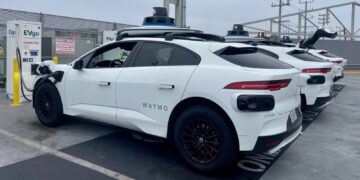

























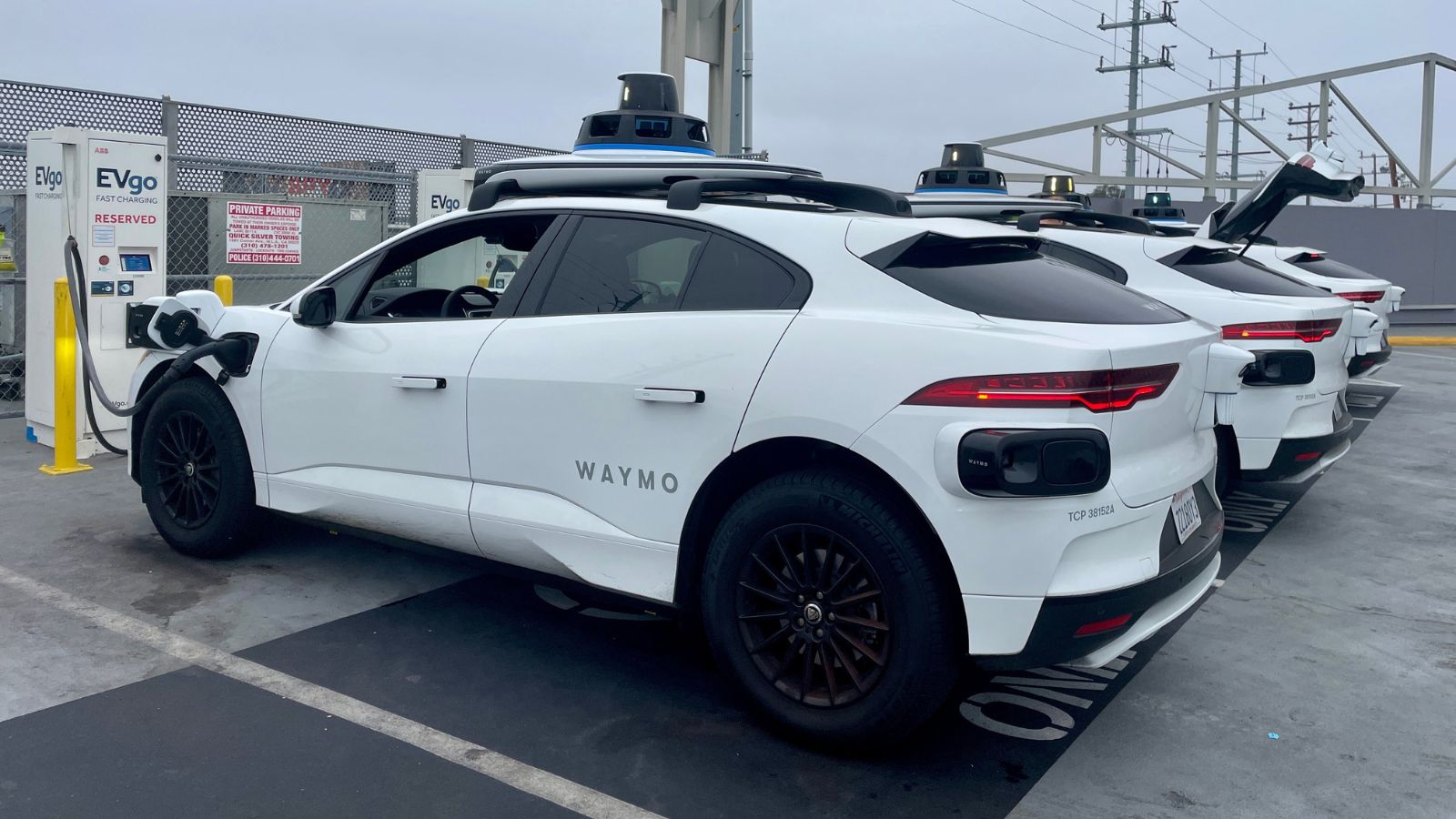
Singapore is about to become Waymo’s first Southeast Asian proving ground—and eventually its first commercial market in the region. Alphabet’s autonomous-driving unit plans to bring an initial fleet of all-electric Jaguar I-PACE vehicles to the city-state in the coming months, spend 2027 adapting its system to local roads and monsoon conditions, and open fully autonomous paid rides through the Waymo app in 2028, subject to regulatory approval. The choice is significant because Singapore already has one of the world’s most tightly managed transport systems and has spent more than a decade testing autonomous vehicles. For Waymo, this is not simply another city pin on a map; it is a controlled but demanding test of whether a system built at scale in the United States can travel well. For Singapore, it is a chance to expand mobility while confronting safety, regulation and driver-job questions before robotaxis become commonplace.
Singapore’s 2028 Launch Starts With a Long Runway
Waymo’s announcement sounds like a 2028 story, but the operational work begins much sooner. The company says its first all-electric Jaguar I-PACE vehicles will arrive in Singapore in the coming months as it establishes local operations. Those cars will not immediately begin picking up passengers with an empty driver’s seat. In 2027, trained autonomous specialists are expected to drive them manually while Waymo gathers local data and adapts the Waymo Driver to Singapore’s roads. Only after that readiness phase does the company intend to open fully autonomous commercial ride-hailing through its own app in 2028.
That timetable matters because several details that determine what the service will feel like remain open. Waymo has not publicly set the size of the launch fleet, fares, operating hours or a final island-wide service boundary. Singapore’s Land Transport Authority has also made clear that the rollout must satisfy local safety and regulatory requirements. In other words, the 2028 date is a target, not permission to skip the hard part. The next year and a half will be about proving that the technology, operations and rules can work together in a city where transport reliability is already a high bar.
Why Singapore Makes Sense as the Regional Starting Point
Singapore offers Waymo something larger markets cannot easily replicate: a compact, highly regulated city with sophisticated roads, dense development and a government that has spent years preparing for autonomous transport. Transport Minister Jeffrey Siow said Singapore has been working on driverless vehicles for more than a decade, including the creation of the CETRAN testing facility at Nanyang Technological University in 2015. The country first concentrated many autonomous deployments in controlled places such as the airport, port and industrial sites before moving more visibly onto public roads.
That history helps explain why Singapore can serve as a regional entry point even though it is not Southeast Asia’s biggest ride-hailing market. The government’s pitch to Waymo emphasized regulatory credibility, protection of data and intellectual property, and the ability to bring regulators, researchers, companies and workers into the same planning process. It also offers conditions that expose weaknesses quickly: tropical rain, busy mixed traffic, pedestrians, cyclists, dense curb activity and an extensive transit system that robotaxis must complement rather than overwhelm. For Waymo, success in Singapore would carry symbolic weight beyond the island because other governments in the region will be watching how safely and smoothly the deployment unfolds.
Jaguar I-PACE Will Be the First Familiar Face on Singapore Roads
The first Singapore vehicles will be familiar to anyone who has seen Waymo operating in the United States: all-electric Jaguar I-PACE crossovers fitted with the fifth-generation Waymo Driver. Waymo says that system combines cameras, lidar and radar with onboard computing to build a 360-degree picture of the road. The software then identifies where the vehicle is, what is around it, how other road users may move and what action the car should take. Singapore’s dedicated Waymo information page says future vehicle platforms may join the local fleet later, so the Jaguar is the opening act rather than necessarily the permanent shape of the service.
The I-PACE also gives Waymo a platform it has years of operating experience with. Jaguar and Waymo announced their partnership in 2018, and the model became a core vehicle in Waymo’s rider-only service. Its battery-electric drivetrain means no tailpipe emissions during operation, an important fit with Singapore’s broader push toward cleaner transport. Still, “all-electric” should not be confused with “zero environmental impact”; charging infrastructure, electricity generation, battery production and fleet utilization all matter. The practical advantage for the launch is simpler: Waymo is bringing a vehicle and sensor package it already knows well into a new regulatory and weather environment rather than attempting a simultaneous debut of an unfamiliar platform.
The Real Test Comes Before Anyone Hails a Driverless Ride
The most important part of the Singapore plan may be the year when the cars are not yet robotaxis. During 2027, autonomous specialists are expected to drive the Jaguars manually so Waymo can tune its system to local road geometry, driving patterns and monsoon weather. That is a deliberate localization step. A self-driving system that performs well on broad Phoenix roads or steep San Francisco streets still has to understand Singapore’s lane layouts, curb behavior, tropical downpours and the rhythms of dense urban traffic before regulators can be comfortable with driverless passenger service.
Testing and preparation will begin in western Singapore, starting around Labrador and HarbourFront. The transport ministry has said the early work will explore use cases including commutes, weekend trips and travel to industrial areas where transport choices can be thinner. That gives the project a practical human focus: not simply proving that an autonomous car can navigate a road, but finding out whether it can reliably serve the trips people actually struggle with. The phased approach also means residents should expect to see Waymo vehicles long before commercial rides begin. Those early sightings will be part mapping exercise, part operational rehearsal and part public familiarization with a new kind of road user.
Singapore’s Safety Rules Put Several Gates Before Commercial Service
Singapore’s regulatory system is one reason the 2028 target cannot be treated as automatic. The Land Transport Authority requires autonomous vehicles to clear safety assessments at the CETRAN AV Test Centre before they can be deployed on public roads. Existing rules also require operators to address insurance, operational procedures and data recording. For early public-road deployments, safety-operator and incident-response plans are reviewed, and driverless operation requires additional authorization. That structure is designed to move vehicles through increasingly demanding stages rather than from laboratory testing directly into unrestricted commercial service.
The legal framework is evolving alongside the technology. In May 2026, the Ministry of Transport opened a consultation on a more comprehensive autonomous-vehicle regime covering responsibility, licensing, insurance, victim compensation, cybersecurity, data and enforcement. Officials have acknowledged that road laws built around a human driver need clearer answers once software becomes the driver. For Waymo, technical readiness is therefore only one half of the launch equation. The other is proving that accountability remains clear when something goes wrong—who operates the vehicle, who maintains the system, who handles remote assistance, what data investigators can access and how injured parties are compensated. Singapore’s approach is to resolve those questions before large-scale deployment makes them urgent.
Waymo Is Entering a Market That Already Knows Autonomous Vehicles
Waymo is entering a city that already has autonomous passenger vehicles carrying real people. Singapore began public autonomous shuttle rides in Punggol in 2026, with services operated by Grab using WeRide technology and by ComfortDelGro using Pony.ai technology. By September, Transport Minister Jeffrey Siow said about 20,000 Singaporeans had taken rides on driverless vehicles there, while 99% of passengers surveyed said they would recommend the experience. Earlier Land Transport Authority data had already shown strong uptake and demand for more flexible, direct journeys instead of fixed routes.
That experience is shaping what comes next. Singapore plans to move beyond fixed-route Punggol shuttles toward more point-to-point service, including additional pick-up and drop-off locations and links such as Sengkang General Hospital. The government is also considering expansion into areas such as Tampines North and Tengah. As of the Waymo announcement, Singapore had only 16 passenger autonomous vehicles in operation, but officials expect the total to rise to several hundred within two years as existing operators expand and Waymo brings in its fleet. That makes the Waymo deal less a first experiment than a change of scale: the city is moving from tightly bounded demonstrations toward a broader network in which multiple autonomous-vehicle companies learn and operate under the same regulatory umbrella.
More Than 70,000 Drivers Put the Jobs Question Front and Centre
The biggest social question is not whether Singapore can add a few hundred robotaxis, but how quickly the technology changes livelihoods. The country has more than 70,000 taxi and private-hire car drivers, far more than the autonomous passenger fleet expected over the next two years. Government officials have repeatedly stressed that the transition will be gradual and that autonomous deployment should not outrun the ability to support workers. That matters because a driver’s concern is not an abstract debate about artificial intelligence; it is a monthly car rental, household bills and the value of years spent learning how to make a living on the road.
Singapore has already started building transition programs rather than waiting for displacement to become visible. A government package announced in July includes career-conversion pathways for jobs such as AV safety specialist, remote operator and fleet-management staff. Employers can receive up to 90% salary support during qualifying reskilling, while a separate training incentive due to begin in 2027 will pay eligible drivers S$20 per training hour for up to 80 hours. Waymo also plans to open a local office and has said it expects to create skilled operational jobs. None of that guarantees a painless transition, but it turns workforce planning into part of the deployment rather than an afterthought.
Robotaxis Are Being Positioned Around Transit, Not Against It
Singapore is not looking for robotaxis to replace the MRT or buses. Its public transport network already moves enormous volumes: in 2025, average daily ridership was about 3.84 million on public buses, 3.49 million on the MRT and 209,000 on the LRT. The government’s stated role for autonomous vehicles is narrower—adding point-to-point capacity, serving places or hours that are harder to cover, and improving first- and last-mile connections. A late shift in an industrial area or a short trip between a housing estate and a rail station is the kind of gap officials have repeatedly highlighted.
Waymo has a reason to lean into that positioning. In San Francisco, company data indicate that 36% of riders have used Waymo to connect with other forms of transit such as BART, Muni or Caltrain. That does not prove the same pattern will emerge in Singapore, but it offers a working model: autonomous ride-hailing as a feeder rather than a substitute for mass transit. Singapore’s dense rail-and-bus system makes that distinction especially important. A robotaxi that simply pulls riders away from efficient trains would add little public value; one that shortens awkward connections, serves low-demand periods and helps people complete trips without owning a car fits much more naturally into the city’s transport strategy.
The Safety Data Are Encouraging, but Singapore Still Has to Validate Them
Safety is the claim on which the entire Singapore expansion will ultimately stand or fall. Waymo’s latest published analysis, covering more than 220 million fully autonomous miles through March 2026 in five U.S. operating geographies, reported 94% fewer crashes causing serious or fatal injuries than comparable human-driver benchmarks. It also reported 82% fewer crashes involving any reported injury and 82% fewer crashes in which an airbag deployed. Those figures are produced by Waymo, but the company publishes underlying data and methods, and the comparisons are designed around the same areas and driving exposure rather than a simple national average.
Peer-reviewed work points in the same direction, with important caveats. A 2025 study in Traffic Injury Prevention examining 56.7 million rider-only Waymo miles found statistically significant lower crashed-vehicle rates than human benchmarks for injury, airbag-deployment and serious-injury outcomes, including a large reduction in injury-reported intersection crashes. The study authors were affiliated with Waymo, and U.S. results cannot be assumed to transfer perfectly to Singapore. Local rain, road design, traffic mix and operating rules are different. That is precisely why Singapore requires local testing and phased approval. The strongest case for the technology is not that it has “solved” safety, but that it has generated enough evidence to justify careful expansion and continued scrutiny.
Singapore Makes Waymo’s Global Expansion Much More Concrete
Singapore also shows how quickly Waymo is turning from a U.S.-focused robotaxi operator into an international mobility company. The firm says it now serves tens of millions of fully autonomous trips and more than half a million rides a week across 15 U.S. cities. It is preparing a fully unmanned commercial service in Tokyo for 2027 with Nihon Kotsu and GO, plans London service in 2026 subject to approvals, and is laying the groundwork for Munich toward the end of 2027. Singapore’s planned 2028 launch gives Waymo its first named commercial market in Southeast Asia and another major test of whether its technology can cross regulatory and cultural boundaries.
But Singapore is not empty territory waiting for an American entrant. Grab and WeRide already operate autonomous services in Punggol, while ComfortDelGro and Pony.ai have their own public-facing service. That means Waymo will enter a market where regulators and riders have already begun forming expectations about safety, convenience and pricing. Its advantage is the scale of its fully rider-only commercial experience in the United States; its challenge is proving that scale translates locally. If the Singapore rollout works, the bigger story will not be that robotaxis finally arrived in Southeast Asia. It will be that a city with mature public transport and strict regulation found a place for them without treating autonomy as either a novelty or a replacement for everything that already works.