



















• About
  • Contact
AutoIgloo
  • News & Trends
    Mazda CX-5 vs Acura RDX: How Close Can Mainstream Get to Luxury?

    Mazda Brings Google Gemini to Canadian CX-5 SUVs as AI Moves Into Everyday Driving

    Canadian Auto-Parts Factory Sales Jump 6.2% as Manufacturing Defies Expectations for a Drop

    Canadian Auto and Parts Wholesalers Help Push September Sales Up 0.5%, StatCan Reports

    BYD, CATL and Xiaomi Are in the Mix for Xi’s Washington Trip as Canada and U.S. Split on Chinese EV Access

    Toyota RAV4 Plug-In Hybrid vs Regular Hybrid: Which One Should Canadians Buy?

    17 Vehicles That Are Quietly Getting Crushed by Insurance Costs in Canada

    Honda CR-V Hybrid Review: The Family SUV That Plays It Safe

    18 Cars With Parts Prices So Wild They’re Becoming Hard to Own in Canada

    Is the New Toyota RAV4 Still the Safest Bet in Canada?

    Trump Claims Audi Is Closing Operations in Canada — But Audi Has No Canadian Factory to Close

    Trump Claims Audi Is Closing Operations in Canada — But Audi Has No Canadian Factory to Close

  • Car Reviews
    Mitsubishi Outlander Review: Is It Still the Underrated Family SUV?

    Mitsubishi Outlander Review: Is It Still the Underrated Family SUV?

    19 Cars With Windshields That Crack Constantly on Canadian Highways

    Subaru Forester vs Toyota RAV4: Which SUV Is Better for Canadian Winters?

    20 Cars Canadians Should Avoid If They Hate Expensive Windshield Replacements

    Hyundai Tucson vs Kia Sportage: Which Compact SUV Is the Better Everyday Buy?

    BYD, CATL and Xiaomi Are in the Mix for Xi’s Washington Trip as Canada and U.S. Split on Chinese EV Access

    Toyota RAV4 Plug-In Hybrid vs Regular Hybrid: Which One Should Canadians Buy?

    17 Vehicles That Are Quietly Getting Crushed by Insurance Costs in Canada

    Honda CR-V Hybrid Review: The Family SUV That Plays It Safe

    2026 Toyota RAV4 vs Honda CR-V: Which SUV Makes More Sense for Canadians?

    2026 Toyota RAV4 vs Honda CR-V: Which SUV Makes More Sense for Canadians?

  • Buying Guides
    Mitsubishi Outlander Review: Is It Still the Underrated Family SUV?

    Mitsubishi Outlander Review: Is It Still the Underrated Family SUV?

    16 Used SUVs That Suddenly Don’t Look Like Smart Buys in Canada

    Nissan Rogue vs Honda CR-V: Which SUV Feels Better After the Test Drive?

    19 Cars With Windshields That Crack Constantly on Canadian Highways

    Subaru Forester vs Toyota RAV4: Which SUV Is Better for Canadian Winters?

    Mazda CX-5 vs Mazda CX-50: Which One Feels More Premium for the Money?

    Mazda CX-5 vs Mazda CX-50: Which One Feels More Premium for the Money?

    17 Vehicles That Are Quietly Getting Crushed by Insurance Costs in Canada

    Honda CR-V Hybrid Review: The Family SUV That Plays It Safe

    18 Cars With Parts Prices So Wild They’re Becoming Hard to Own in Canada

    Is the New Toyota RAV4 Still the Safest Bet in Canada?

  • Comparisons
    19 Cars With Windshields That Crack Constantly on Canadian Highways

    Subaru Forester vs Toyota RAV4: Which SUV Is Better for Canadian Winters?

    21 Vehicles With the Best Real-World Fuel Economy in Canada (Not Just the Sticker)

    Toyota Corolla Cross vs Honda HR-V: Which Small SUV Is Less Compromised?

    20 Cars Canadians Should Avoid If They Hate Expensive Windshield Replacements

    Hyundai Tucson vs Kia Sportage: Which Compact SUV Is the Better Everyday Buy?

    BYD, CATL and Xiaomi Are in the Mix for Xi’s Washington Trip as Canada and U.S. Split on Chinese EV Access

    Toyota RAV4 Plug-In Hybrid vs Regular Hybrid: Which One Should Canadians Buy?

    Honda Asked Suppliers for 30% Parts Cost Cuts as $9.4-Billion Savings Drive Hits Global Supply Chain

    Why Some Buyers Are Choosing Older Hondas Over Newer SUVs

    25 EV Charging Mistakes Canadians Make in March (That Wreck Range)

    Why Some Canadians Are Choosing Hybrids Over Full EVs Again

  • EVs & Hybrids
    BYD, CATL and Xiaomi Are in the Mix for Xi’s Washington Trip as Canada and U.S. Split on Chinese EV Access

    Toyota RAV4 Plug-In Hybrid vs Regular Hybrid: Which One Should Canadians Buy?

    Geely Auto’s Core Profit Jumps 46% as Chinese EV Expansion Accelerates — With Canada Now Opening to Geely-Owned Lotus

    Geely Confirms Canadian Vehicle Sales for 2027 as Chinese Automakers Challenge Established Brands

    18 Cars That Will Feel Dated Fast as New Chinese EVs Arrive

    12 EVs Now Price Below $41,000 in Canada—Fiat 500e Falls Under $30,000 With Rebate

    The Used EV Question Canadians Should Ask Before Buying One

    The Used EV Question Canadians Should Ask Before Buying One

    Why Some EV Owners Are Getting Sticker Shock From Home Charging Setups

    Why Some EV Owners Are Getting Sticker Shock From Home Charging Setups

    20 Signs Your Car Battery Is About to Leave You Stranded

    Canadian Auto Jobs Become a Central Fault Line as Ottawa Reveals Why It Rejected U.S. Vehicle Terms

  • More
    • Pricing & Deals
    • Winter Driving
    • Ownership & Maintenance
No Result
View All Result
AutoIgloo
No Result
View All Result

Home » News & Trends

Canadian Auto and Parts Wholesalers Help Push September Sales Up 0.5%, StatCan Reports

Nate Brewer by Nate Brewer
October 26, 2026
Reading Time: 5 mins read
A A
Photo Credit: Shutterstock

Photo Credit: Shutterstock

465
SHARES
1.5k
VIEWS
Share on FacebookShare on Twitter

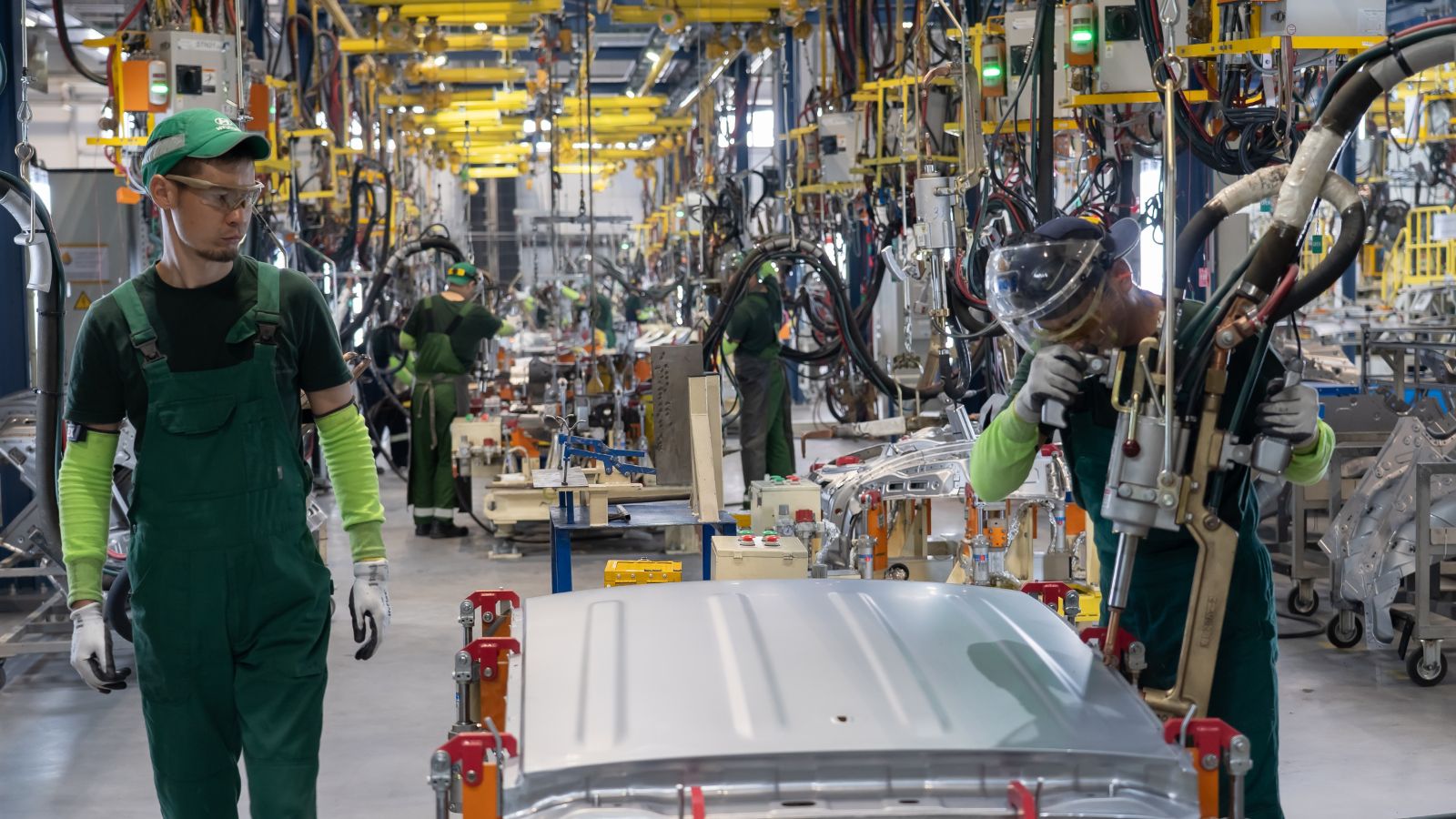
Canada’s wholesale economy showed a modest rebound in September, and the automotive supply chain was one of the main reasons. Statistics Canada’s advance indicator estimates wholesale sales rose 0.5% from August, with gains led by machinery, equipment and supplies as well as motor vehicles and parts. The result matters because it follows a notably weak August for automotive wholesalers, when sales in that subsector fell sharply after months of growth.

The September figure is still preliminary, but it suggests distributors were moving more vehicles and parts through the commercial pipeline as autumn began. That improvement also arrived alongside firmer consumer-side auto activity, giving the rebound more context than a single monthly headline might otherwise provide.

September Points to a Modest Wholesale Rebound

September’s 0.5% increase is not a dramatic surge, but it represents a clear change in direction after August’s 1.6% decline in wholesale sales. Statistics Canada said the advance was driven in part by motor vehicles and parts, alongside machinery, equipment and supplies. The wholesale measure excludes petroleum, petroleum products and other hydrocarbons as well as oilseed and grain, so the headline focuses on the rest of the merchant-wholesale economy.

That distinction matters. A half-point gain in a broad national indicator can look small, yet the composition of the increase says something about where business activity was improving. Automotive wholesalers sit between manufacturers, importers, dealers, fleets and repair networks. When vehicle and parts movement strengthens, it can reflect restocking, better dealership turnover or renewed commercial demand. September’s estimate therefore reads less like a broad economic boom and more like a targeted rebound in several large, economically important distribution categories.

Autos Reverse Part of August’s Sharp Pullback

The automotive contribution is especially notable because August had been rough for the same subsector. Sales at motor vehicle and motor vehicle parts and accessories wholesalers dropped 3.8% to $15.1 billion that month, ending a run of six consecutive monthly increases. Within the subsector, the motor vehicle industry group fell 4.6% to $12.1 billion, making autos the largest single drag on the national wholesale result.

That earlier decline gives September’s improvement a different meaning. Rather than extending an uninterrupted upswing, the latest estimate points to at least a partial recovery from a sudden setback. It also shows how quickly monthly wholesale data can turn when large-ticket goods are involved. A change in shipment schedules, dealer orders or inventory timing can move billions of dollars through the distribution system. For dealerships and parts distributors, the practical takeaway is that August’s weakness did not simply continue into September, even though detailed final data are still needed.

Ontario Shows How Much Autos Can Move the National Numbers

Ontario illustrates why movements in automotive wholesaling can have an outsized effect on the national picture. In August, wholesale sales in the province fell 1.6% to $47.8 billion after six consecutive monthly increases. Statistics Canada identified the motor vehicle and motor vehicle parts and accessories subsector as the main contributor to that decline, with Ontario’s auto-related wholesale sales down 3.7% to $10.5 billion.

September’s advance release does not provide the same provincial detail, so it would be premature to claim that Ontario specifically led the subsequent rebound. Still, the August figures underline how concentrated the auto distribution business is in Canada’s largest provincial economy. A shift in orders flowing through Ontario warehouses, import channels and dealer networks can materially influence the countrywide total. That is one reason the final September report will be important: it should reveal whether the recovery was broad across Canada or concentrated in a smaller number of provinces and industry groups.

Dealership Demand Provides Some Support for the Wholesale Recovery

The wholesale rebound arrived against a reasonably firm backdrop at the dealership level. Statistics Canada reported that retail sales at motor vehicle and parts dealers increased 1.2% in August. New-car dealers gained 1.5%, while automotive parts, accessories and tire retailers rose 1.4%. Separately, 174,611 new motor vehicles were sold in Canada in August, up 4.9% from a year earlier, with the dollar value of those sales increasing 8.8%.

September industry estimates point in the same general direction. DesRosiers Automotive Consultants estimated that roughly 168,000 new light vehicles were sold during the month, 3.4% more than in September 2025 and the fourth consecutive month of year-over-year gains. Retail and wholesale statistics measure different transactions and should not be treated as interchangeable. Even so, sustained vehicle demand at the consumer end gives distributors a logical reason to keep vehicles and replacement parts moving through warehouses, transportation networks and dealer supply chains.

Falling Auto Inventories Make September Worth Watching

Inventory data from August add another layer to the September story. Total wholesale inventories in the sectors covered by Statistics Canada were unchanged at $141.0 billion, but inventories held by motor vehicle and motor vehicle parts and accessories wholesalers fell 3.7% to $17.9 billion. Meanwhile, the overall wholesale inventory-to-sales ratio increased from 1.51 in July to 1.54 in August because sales declined while total inventories remained essentially flat.

For auto distributors, lower inventories after a weak sales month can create a different setup for the next period than a simple decline in demand might imply. If dealer orders stabilize while stocks have already been drawn down, wholesalers may eventually need to replenish them more aggressively. The September advance estimate does not show whether that was actually responsible for the increase, so it should not be presented as a confirmed cause. Still, the combination of lower automotive inventories in August and higher estimated wholesale activity in September is one of the more important details to examine when the complete figures are published.

Wholesalers Are the Often-Invisible Middle of the Auto Business

Wholesale trade is easy to overlook because consumers rarely interact with it directly, yet it is the middle layer that keeps products moving from manufacturers and importers to businesses that sell or use them. Statistics Canada describes wholesaling as an intermediate step in merchandise distribution. Wholesale merchants generally buy and sell products on their own account and can also provide logistics, inventory management, shipping, warranty handling, marketing support and product training.

In the automotive sector, that network involves much more than rows of new vehicles waiting to reach dealerships. It also includes new and used parts, accessories and other equipment moving toward dealerships, repair operations and commercial customers. Statistics Canada’s Monthly Wholesale Trade Survey samples approximately 8,000 companies each month and produces estimates covering sales and inventories. That breadth helps explain why the data matter: a national increase can capture thousands of individual business decisions taking place across warehouses, import channels and distribution operations long before many of those products reach their eventual customers.

Other September Indicators Also Point to Firmer Sales Activity

September’s wholesale estimate forms part of a group of early indicators pointing to modestly firmer goods activity. Statistics Canada’s advance manufacturing estimate suggests factory sales edged up 0.1% in September, with the largest gains coming from petroleum and coal products and aerospace products and parts. The agency’s advance retail indicator, published with the August retail report, separately suggests retail sales increased 0.7% in September after climbing 1.2% in August.

Those three indicators do not prove that the Canadian economy suddenly accelerated. They measure different kinds of transactions, the advance figures remain subject to revision, and current-dollar sales can move because of both quantities and prices. Taken together, however, they suggest September was not simply a month of retreat across Canada’s goods-producing and goods-distributing economy. For the auto industry in particular, improving wholesale activity alongside continued year-over-year vehicle-sales growth indicates that demand was still moving through several stages of the market despite an uneven economic environment.

The 0.5% Estimate Is Important — but It Is Not the Final Word

The biggest caution surrounding the September result is that the 0.5% wholesale increase is an advance estimate, not the completed monthly figure. Statistics Canada produces these early indicators while data collection is still underway. The September wholesale estimate was based on a weighted survey response rate of roughly 62%, meaning additional information will be incorporated before the regular monthly release is produced.

That does not make the early estimate unusable. Statistics Canada’s methodological review found that advance, preliminary and revised wholesale indicators have generally shown substantial coherence in both direction and magnitude. Individual months can nevertheless change as additional responses arrive, imputed values are improved and data undergo further validation. The complete wholesale trade results for September are scheduled for November 13. Those figures should provide the subsector, provincial, inventory and volume detail needed to establish exactly how large the automotive rebound was — and whether September marked the beginning of a stronger trend or simply a partial recovery from August’s decline.


Recommended.

19 Cars That Stop Feeling Affordable the Second Fuel Prices Rise

16 Vehicles That Feel Like a Smart Buy Until Real Life Gets Involved

May 15, 2026
16 Used-EV Surprises Canadians Don’t See Coming Until After They Buy

The EV Charging Habit That Can Annoy Everyone Around You

July 27, 2026

Trending.

Canada’s Auto Industry Says Tariff Fight Has Already Cost the Sector More Than $100 Billion

Trump’s 50% Canada Auto-Tariff Threat Is Now Forcing Automakers to Plan Around a January 1 Deadline

September 27, 2026
Canada’s Ballard Puts a 250,000-Mile Performance Guarantee Behind Hydrogen Buses

Canada’s Ballard Puts a 250,000-Mile Performance Guarantee Behind Hydrogen Buses

October 2, 2026
15 Vehicles Canadians May Want to Avoid Before May Long Weekend

Tesla Buyers in Canada Are Reporting Fresh Model Y Delivery Delays as Some Orders Slip Into October and November 2.

September 27, 2026
10 Reasons the Canadian Car Market Feels Different Heading Into Summer

Canadian Auto Sales Rise 3.4% for a Fourth Straight Month—but 2026 Still Trails Last Year

October 3, 2026
PBO Warns U.S. Tariff War Threatens Up to 185,000 Canadian Jobs, With Auto Manufacturing Among Hardest Hit

PBO Warns U.S. Tariff War Threatens Up to 185,000 Canadian Jobs, With Auto Manufacturing Among Hardest Hit

October 21, 2026
  • About
  • Contact
  • Privacy Policy
  • Disclaimer
  • Editorial Policies
  • Terms and Conditions
A Revir Media Group Website

2026 Autoigloo - © All rights reserved

No Result
View All Result
  • News & Trends
  • Car Reviews
  • Buying Guides
  • Comparisons
  • EVs & Hybrids
  • More
    • Pricing & Deals
    • Winter Driving
    • Ownership & Maintenance

2026 Autoigloo - © All rights reserved

This website uses cookies. By continuing to use this website you are giving consent to cookies being used. Visit our Privacy and Cookie Policy.




