






















A new race is forming in Canada’s electric-vehicle market, but it may not begin with the Chinese brand most people expect. BYD has become the global symbol of low-cost EV disruption, yet Canada’s first wave of newly viable China-built electric cars could arrive faster through brands that already have Canadian showrooms, service networks, approved models, and recognizable badges.
That puts Tesla, Volvo, and Polestar in an unusual position. All three have ties to Chinese EV production, but they also carry something many Chinese automakers still lack in Canada: existing buyer trust and a path to delivery. With Ottawa now allowing a limited annual quota of China-made EVs at a lower tariff, the next affordability shock may come from familiar names before BYD gets its full retail machine running.
Tesla Has the Fastest Route From Shanghai to a Canadian Driveway
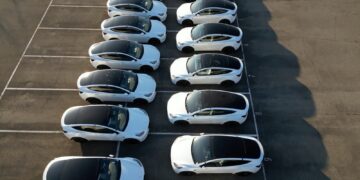
Tesla may be the clearest early winner because it has already used China as a supply base for Canada. Before the earlier tariff wall went up, Shanghai-built Teslas were already being shipped into the Canadian market, and industry reporting has pointed to Tesla’s Canadian sales infrastructure as a major advantage. That matters because the EV race is not only about building cars cheaply. It is also about getting them certified, shipped, stocked, delivered, financed, serviced, and understood by buyers who may still be nervous about resale value or repairs.
The difference can be seen in a simple dealership visit. A Canadian shopper does not need to learn what Tesla is, locate a new distributor, or wait for a dealer group to open a storefront. Tesla already has stores, service channels, online ordering, and a large installed customer base. Recent Canadian reporting also shows a China-built Model 3 Premium Rear-Wheel Drive arriving below the $40,000 mark before fees, a price point that suddenly makes Tesla look less like a premium-only EV brand and more like a mainstream affordability play. Even without federal rebate eligibility, a lower sticker price can do more to move hesitant buyers than a complicated incentive table.
Volvo’s EX30 Gives It a Familiar Face in the China-Built Conversation
Volvo’s advantage is different from Tesla’s. It is not about hype or charging-network dominance; it is about trust. The EX30 arrived as a small, stylish electric crossover with the kind of brand familiarity that can soften Canadian resistance to Chinese manufacturing. Many shoppers may not think of Volvo as part of a Chinese-made EV story, even though the company is controlled by Geely and has used Chinese production for key models. That makes Volvo a potential bridge between the old Canadian premium-car world and the new low-cost EV supply chain.
The tariff fight already forced Volvo to adjust. The EX30’s Canadian story has been shaped by timing, sourcing, and the need to keep prices from drifting too far upward. Reports indicate Volvo shifted Canadian EX30 supply away from China toward Belgium after the 100% tariff made China-built imports far harder to justify. Now that Canada has opened a lower-tariff quota for Chinese-made EVs, Volvo has reason to reassess. If it can use Chinese production again without triggering the old cost penalty, the brand could regain flexibility on price, trim availability, and delivery timing. For families comparing compact EVs, that could make the EX30 feel less like a niche European premium product and more like a realistic urban crossover.
Polestar Could Return to the Fight With a More Flexible Supply Map
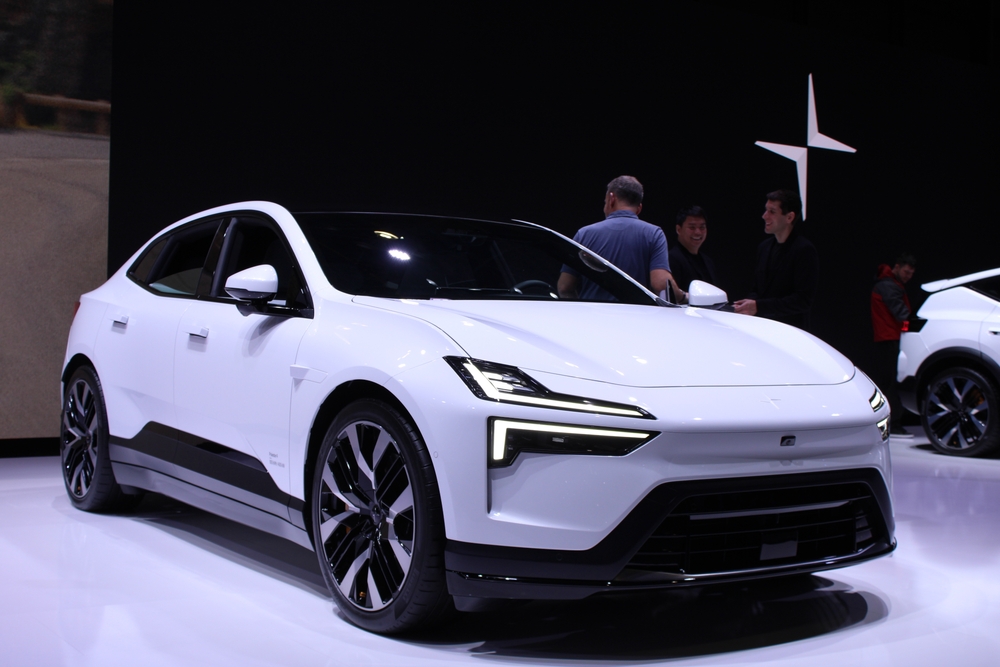
Polestar may be the most interesting case because tariffs have already reshaped its Canadian lineup. The Polestar 2, long associated with China-built production, became harder to sustain once Canada imposed the 100% surtax. Canadian shoppers who liked its minimalist cabin, Google-based interface, and sport-sedan feel saw the model become less visible as new imports dried up. That left Polestar leaning more heavily on newer, more expensive vehicles and on a supply strategy designed around avoiding tariff shocks.
The Polestar 4 shows how quickly the brand can adapt. Production for North American supply shifted to South Korea, giving Polestar a way around China-specific tariff exposure while keeping a Geely-linked EV in the Canadian conversation. But Canada’s lower-tariff Chinese EV quota changes the math again. If the company can use China-built production selectively while also relying on South Korea and the United States for other models, Polestar could have more flexibility than a traditional single-factory automaker. It is still a smaller brand with less mainstream awareness than Tesla or Volvo, but for EV shoppers looking beyond the usual badge, Polestar may be one of the first “Chinese-connected” names already sitting close to Canadian buyers.
BYD Is the Giant, But Canada Still Requires a Ground Game
BYD is the brand that makes the entire discussion feel urgent. Globally, it has become one of the most powerful forces in electrified vehicles, with scale, battery expertise, aggressive export ambitions, and a reputation for affordable models. That is why any Canadian opening for Chinese-built EVs immediately turns into a BYD conversation. A low-cost hatchback or compact crossover from BYD could put pressure on nearly every mainstream automaker selling small cars and small SUVs in Canada.
But Canada is not just an import spreadsheet. BYD still needs the local machinery that turns curiosity into deliveries: showrooms, trained staff, parts pipelines, financing partners, warranty confidence, bilingual marketing, safety compliance, and after-sales support in a country with harsh winters and long driving distances. Recent reports about BYD’s exact Canadian dealership plans and model timing have also been inconsistent, so the safest reading is that BYD is a serious future threat, not necessarily the first brand to benefit at scale. Tesla, Volvo, and Polestar can move sooner because they are already known quantities. In this race, the winner may not be the company with the cheapest EV in China. It may be the company that can land a China-built EV in a Canadian driveway first.
The Rebate Catch Could Decide Which Cars Actually Feel Cheap
Canada’s new EV affordability landscape is more complicated than a lower tariff. The federal Electric Vehicle Affordability Program offers up to $5,000 for eligible battery-electric and fuel-cell vehicles, but eligibility depends on more than price. The vehicle must be made in Canada or in a country that has a free-trade agreement with Canada, and most eligible transactions must stay at or below a $50,000 final transaction value. That means many China-built EVs can become cheaper because of the tariff quota, yet still miss the federal rebate.
That distinction could confuse shoppers. A buyer may see a China-built EV with an attractive sticker price and assume the usual rebate applies, only to discover that country-of-origin rules matter. For Tesla, Volvo, Polestar, and BYD, this changes the marketing challenge. The strongest offer may not be “rebate eligible.” It may be “priced low enough that the rebate no longer matters.” That is where China’s manufacturing scale becomes so disruptive. If an automaker can remove thousands from the sticker price before incentives, it can compete even when Ottawa’s rebate rules keep it off the preferred list.
Canada’s EV Market Is Ready for a Price Shock
The timing matters because Canada’s EV market has been uneven. After rapid growth, electric-vehicle adoption cooled when incentives changed, household budgets tightened, and some buyers became more cautious. Transport Canada’s dashboard shows the national light-duty EV market share slipping in 2025 from the previous year, while later months showed signs of recovery. That creates a market where many people still like the idea of an EV but hesitate at the monthly payment, charging worries, winter range concerns, or resale uncertainty.
Lower-cost China-built vehicles could meet that hesitation head-on. A commuter in Mississauga, Laval, Burnaby, or Calgary may not need a luxury EV with extreme performance. Many need a quiet, safe, efficient car with enough winter range, a manageable payment, and a service centre within reach. That is why established brands may have the edge at the start. Tesla can lean on familiarity and charging. Volvo can lean on safety and trust. Polestar can lean on design and performance. BYD can bring scale and price, but first it has to build the Canadian relationship. The rush is coming; the first wave may simply wear badges Canadians already know.