


























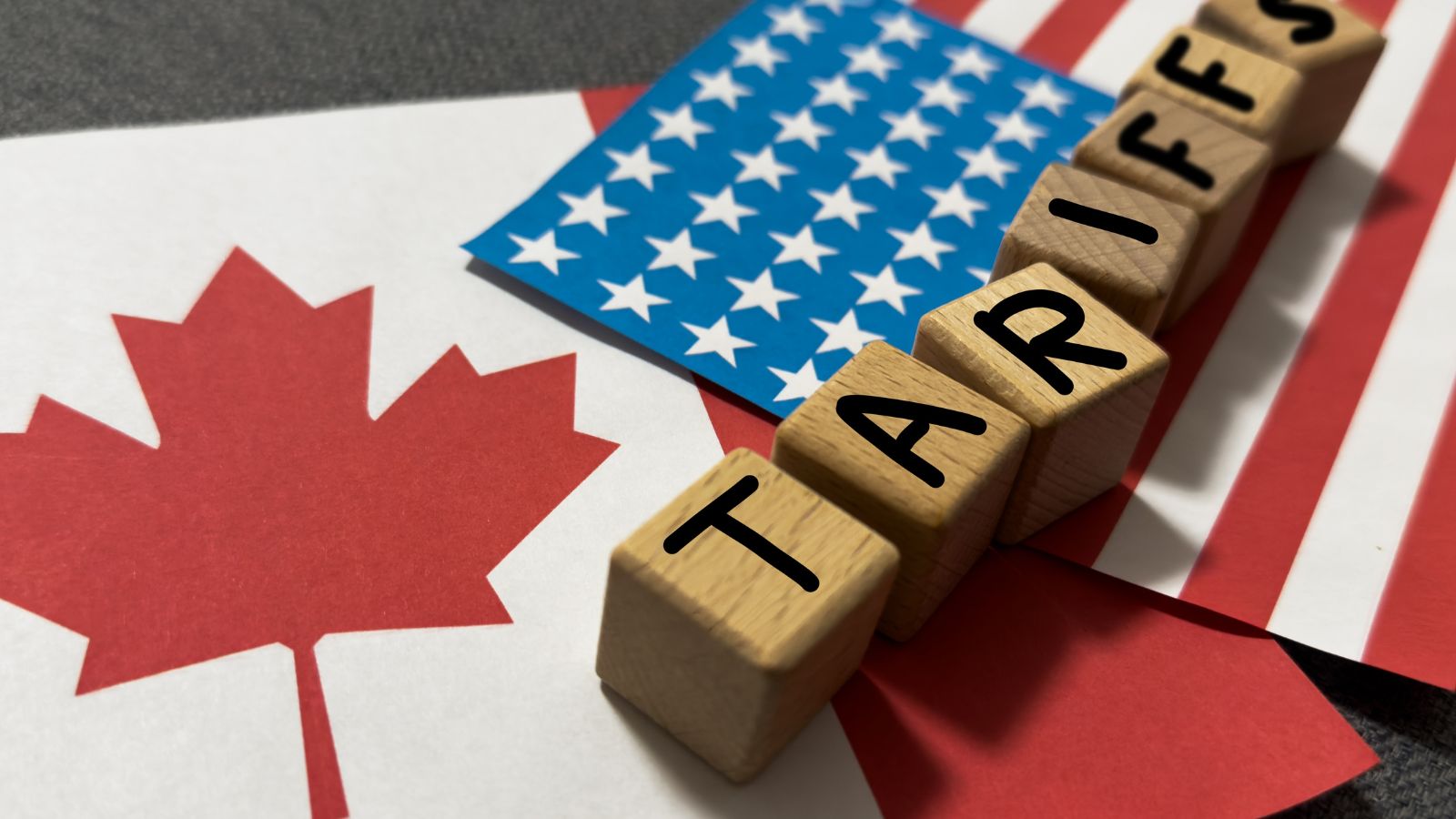
A trade agreement that appeared close enough for Donald Trump to declare victory only days earlier unraveled at the deadline, sending Canada and the United States into a sharper phase of their trade conflict. Just after midnight on August 22, Washington began applying new 50% tariffs to roughly C$28 billion, or about US$20 billion, of Canadian goods. Prime Minister Mark Carney responded by suspending negotiations, recalling Canadian negotiators and promising matching retaliation.
The immediate economic exposure is narrower than a blanket 50% tariff on everything Canada sells south of the border. Yet the breakdown matters far beyond the products directly targeted. It leaves existing tariffs on major Canadian industries unresolved, introduces new duties on goods that had benefited from preferential North American trade treatment, and raises a larger question about whether the two countries can still negotiate lasting economic rules.
A Three-Day Tariff Reprieve Turned Into a Breakdown
Only three days before the tariffs arrived, the situation looked dramatically different. Trump postponed the duties that had originally been scheduled for August 19, saying Canada and the United States had a deal that needed to be finalized. Carney was more cautious, saying substantial progress had been achieved but important work remained. The pause moved the effective deadline to the end of August 21 and gave negotiators a narrow window to settle the outstanding terms.
That optimism vanished late Friday. Carney said last-minute changes in Washington’s proposed terms were unfair and economically unacceptable, while U.S. Trade Representative Jamieson Greer offered the opposite account, saying Canada had backed away from commitments made earlier in the week. The competing explanations are significant: this was not simply a negotiation that ran out of time. Each side is publicly blaming the other for overturning an agreement that, only days earlier, seemed close enough for Trump to announce publicly.
The 50% Rate Does Not Apply to Everything Canada Exports
The headline number is enormous, but its scope needs context. The new 50% duty applies to roughly US$20 billion, or about C$28 billion, of Canadian goods rather than every Canadian shipment entering the United States. Reuters and the Associated Press estimate the affected products represent just over 5% of Canada’s annual exports to the American market.
The targeted categories nevertheless reach into remarkably familiar parts of the economy. Reporting and U.S. measures identify products including alcoholic beverages, dairy goods, cement, clothing, furniture, fishing equipment and hockey products, among other items covered by the tariff schedules. Even medical products such as tongue depressors have been cited as examples. That eclectic list means the impact will not be concentrated in a single industrial city. Smaller manufacturers and specialty exporters can face a 50% border charge even if their businesses have little connection to the steel, aluminum and automotive disputes that dominated earlier tariff battles.
Trump Reached Back to a Depression-Era Trade Law
The mechanism behind the tariffs is unusual. The Trump administration invoked Section 338 of the Tariff Act of 1930, a provision allowing the president to impose additional duties of as much as 50% when a foreign country is deemed to discriminate against U.S. commerce. Washington accused Canada of unfair treatment involving American alcohol, dairy products and motor vehicles, and USTR formally announced the Section 338 measures in July.
The legal route matters because Trump’s tariff strategy has repeatedly shifted among different statutory authorities. According to the Associated Press, Section 338 had never previously been used to impose tariffs in this manner. The administration’s proclamations established the maximum 50% rate and originally scheduled implementation for August 19 before Trump granted the three-day reprieve. For Canadian companies, the obscure origin of the power does not change the immediate calculation: unless the measures are subsequently reduced, suspended or terminated, affected U.S. importers now face an additional charge equal to half the customs value of covered goods.
Even CUSMA Preference Could Not Prevent This Round
One of the most consequential parts of the dispute is what happened to products that businesses had expected would benefit from continental free-trade rules. For much of the tariff conflict, qualifying for Canada-United States-Mexico Agreement treatment has been enormously valuable because many Canadian products meeting the agreement’s rules of origin could continue entering the United States without the broader tariffs applied elsewhere.
The latest Section 338 measures are different. Reuters reported that the targeted goods do not qualify for CUSMA preferential treatment against these new duties, exposing previously protected trade to the 50% charge. That does not mean CUSMA itself has suddenly disappeared. The agreement remains in force, and its scheduled review is not an automatic expiration. But the practical value of a trade agreement depends partly on whether companies can rely on its preferential access. When another statute is used to impose substantial duties on qualifying goods, businesses have to reassess how much certainty those continental rules actually provide.
Canada Is Preparing Dollar-for-Dollar Retaliation
Ottawa’s answer was immediate in principle, though the precise product details are still being developed. Carney said Canada would match the American tariffs “dollar for dollar” and promised additional assistance for businesses and workers. His government said those new measures would build on nearly C$25 billion in support already provided during the previous 18 months of trade disruption.
Canada is not starting from a blank page. Countertariffs on American steel, aluminum and vehicles remained in place after Ottawa removed many earlier retaliatory duties on other U.S. products in September 2025. Adding another round creates a familiar dilemma. Retaliation can impose political costs on American exporters and demonstrate that Canada will not absorb unilateral measures without responding, but tariffs are also collected from importers at home. Canadian businesses that depend on targeted U.S. inputs can therefore face higher costs. Ottawa’s product selection and any exemptions or remission programs will determine how widely those costs spread through the domestic economy.
Steel, Aluminum, Autos and Lumber Remain the Bigger Industrial Fight
The new tariffs arrived on top of an already complicated collection of American sectoral duties. Canadian government guidance shows U.S. tariffs on steel, aluminum and copper products ranging as high as 50%, while autos and trucks face 25% tariffs subject to rules concerning U.S. content. Softwood lumber also faces a separate 10% Section 232 tariff, alongside longstanding anti-dumping and countervailing duties.
Those industries were central to the agreement that collapsed. Reuters reported that a deal under discussion would have provided tariff reductions for steel, aluminum and automobiles, while softwood lumber remained another major Canadian demand. Instead, the sectoral measures survive and the new 50% tariffs have been added to the broader dispute. That distinction helps explain why the breakdown is more serious than the US$20 billion immediately affected. A Canadian hockey-equipment producer may face the new Section 338 rate, while an Ontario auto plant or Quebec aluminum producer continues dealing with an entirely different tariff regime that Ottawa had hoped this week’s negotiations would finally improve.
A 5% Export Hit Can Still Create Much Larger Uncertainty
Canada’s exposure to the United States remains enormous even after a year of deliberate diversification. Statistics Canada says the U.S. share of Canadian merchandise exports declined from 75.9% in 2024 to 71.7% in 2025. Canada and the United States still exchanged nearly C$3.5 billion in goods and services every day during 2025, according to Global Affairs Canada.
That scale turns tariff uncertainty into an investment problem even for companies whose products are not on the new list. A manufacturer considering a new Ontario production line has to think about whether today’s exemption could become tomorrow’s tariff category. An American buyer deciding whether to sign a multiyear contract faces the same uncertainty from the other direction. Supply chains cannot always be moved as quickly as tariff orders can be signed. The direct duty may therefore touch a relatively limited slice of Canadian exports, while delayed expansion plans, altered sourcing decisions and higher financing risk spread much further through the economy.
American Importers Will Feel the Cost Too
Tariffs are often described politically as money being charged to a foreign country, but the border mechanics are different. The duties are collected from the company importing the covered goods into the United States. Whether that importer absorbs the cost through lower margins, demands a price reduction from its Canadian supplier or raises prices for customers depends on the market and the product.
Recent economic research suggests a substantial portion can remain inside the country imposing the tariff. A 2026 National Bureau of Economic Research study examining both the 2018-19 and 2025 U.S. tariff waves found tariff pass-through to American import prices was close to 100%. Earlier Federal Reserve and academic studies similarly documented significant increases in tariff-inclusive import prices. The exact outcome for these Canadian products will vary, but a 50% duty gives U.S. distributors powerful incentives to raise prices, negotiate Canadian prices downward or switch suppliers. Any of those choices can hurt businesses on one or both sides of the border.
Canada’s Diversification Push Now Has More Urgency
The trade war has already begun changing Canada’s commercial geography. Statistics Canada reported Canadian merchandise exports to the United States fell 5.8% in 2025, while exports to countries outside the U.S. increased 17.2%. The American share of Canada’s merchandise exports consequently dropped more than four percentage points in a single year.
Carney is presenting that shift as part of a longer strategy rather than a temporary response. In announcing the failed negotiations, he pointed to Canada’s preferential trade access to roughly 1.5 billion consumers and argued that new infrastructure and foreign partnerships can reduce dependence on one market. Diversification is much easier for some commodities than others, however. Gold can be shipped globally with relative ease; tightly integrated vehicle production and some industrial supply chains are far harder to redirect. The latest tariffs therefore strengthen the political case for alternative markets while simultaneously demonstrating why decades of North American integration cannot simply be unwound overnight.
The Immediate Question Is Whether Either Side Finds an Off-Ramp
For now, negotiations have stopped rather than merely paused. Reuters reported that no additional talks were scheduled after the duties took effect, while Carney ordered Canada’s team back to Ottawa. That does not guarantee months of silence. Both economies have businesses with strong reasons to push governments toward another attempt, and the two sides had already identified possible areas of compromise before negotiations collapsed.
The larger problem is credibility. Trump announced that the countries had a deal on August 18; by August 21, each government was accusing the other of changing the bargain. That experience will shape whatever comes next. CUSMA remains in force until 2036, but its review has become entangled with disputes over sectoral tariffs, economic security and future North American integration. The next negotiation will consequently be about more than tariff percentages. Canadian companies will be looking for evidence that whatever is agreed can remain in place long enough to make investment decisions around it.