
























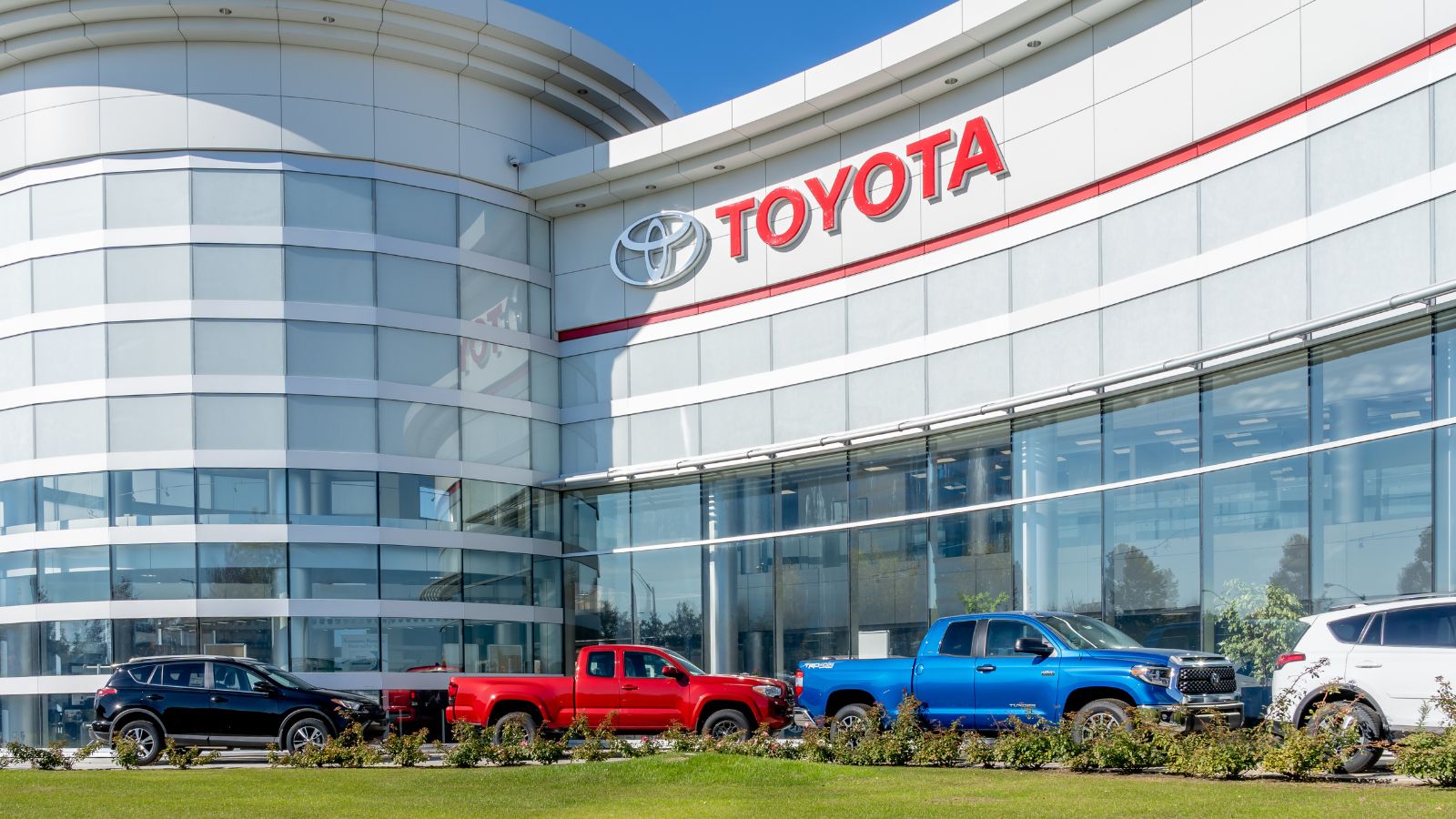
A Canadian automotive retailer is taking ownership of a dealership tied to the earliest days of Toyota in the United States. Edmonton-based Go Auto announced on September 1 that it has acquired Toyota of Hollywood in Los Angeles, expanding a U.S. operation that has grown considerably since the company first crossed the border in 2023.
The purchase gives Go Auto eight dealerships in the United States, including three in California, according to the company. Toyota of Hollywood carries unusual historical weight: Toyota and the dealership have long described the operation as the brand’s first U.S. dealership, dating its origins to 1957. The transaction therefore gives Go Auto more than another sales and service location—it gives the Canadian group control of a recognizable piece of Toyota’s American history.
Go Auto Adds a Landmark Los Angeles Dealership
Go Auto announced the Toyota of Hollywood acquisition on September 1, saying the deal expands its American network to eight dealerships and its California presence to three. The company’s latest announcement puts its broader North American network at 70 dealerships representing 26 automotive brands. Financial terms of the Toyota of Hollywood transaction were not included in the public announcement, leaving the purchase price and other financial details undisclosed.
Go Auto President Phil Abram emphasized the dealership’s history and the company’s relationship with Toyota rather than the economics of the transaction. He said the store reaches back to the beginning of Toyota’s U.S. story and thanked Toyota Motor Sales, U.S.A. for its support through the acquisition process. For customers arriving at the Hollywood location, the ownership change may initially look far less dramatic than the corporate transaction behind it: the dealership remains a Toyota franchise selling, financing and servicing vehicles in one of America’s most important automotive markets.
Toyota of Hollywood Is Connected to the Brand’s Humble U.S. Beginnings
Toyota’s current American scale makes its beginnings in California easy to underestimate. Toyota Motor Sales, U.S.A. was established in Hollywood in 1957, and the company recorded only 288 U.S. vehicle sales in 1958—287 Toyopet Crown sedans and a single Land Cruiser. Toyota itself has recalled starting with one Hollywood dealership before eventually building a nationwide manufacturing, distribution and retail network.
There is some historical nuance around the dealership’s “first” status. Toyota executives and Toyota of Hollywood have described it as the company’s first U.S. dealership, and a Los Angeles historical assessment found the claim is generally accepted and supported by documentary evidence. That same assessment noted that the designation has occasionally been disputed. Toyota’s own detailed corporate chronology also lists a directly operated Toyota of Hollywood company in 1958. The safest description, therefore, is that the Hollywood operation was among Toyota’s earliest—and is widely recognized as its first—American dealership.
Go Auto’s Move Into the United States Started in Washington
The Hollywood purchase is not Go Auto’s first American experiment. Its expansion outside Canada began in early 2023 when it acquired Mercedes-Benz of Bellingham and Toyota of Bellingham in Washington state. At the time, Go Auto described the purchases as its first acquisitions outside Canada and said it intended to establish a wider North American network. The two stores took the group to 59 dealerships and 27 new-vehicle brands at that stage of its growth.
That first move also established a Toyota relationship on the U.S. side of the border years before the Hollywood acquisition. Bellingham provided a comparatively natural starting point for a Canadian company: the Washington community sits close to British Columbia and the Canadian border. Los Angeles represents a different scale of ambition. Operating in Southern California places Go Auto in a huge, highly competitive retail environment where large dealer groups, sophisticated online sales operations and demanding consumers compete for the same vehicle shoppers.
California Became a Major Expansion Target Before the Toyota Deal
Go Auto established its California footprint in December 2025 with the purchase of Sunrise Ford Fontana and Sunrise Ford North Hollywood. The company called the two-store transaction a significant expansion into one of America’s most influential automotive markets. Those Ford locations followed another U.S. expansion earlier that month involving Hyundai and Kia dealerships in Renton and Tacoma, Washington, demonstrating how quickly the company was adding American operations.
Toyota of Hollywood now becomes Go Auto’s third California dealership. The geographic clustering is significant because operating several stores in the same broad market can create opportunities for shared recruiting, advertising, management expertise, used-vehicle sourcing and other functions, although Go Auto has not publicly detailed how it will integrate those activities. Southern California is also fundamentally different from many Canadian markets where the group built its reputation. Competition is intense, regulation is extensive and consumers have access to an unusually large number of franchised dealerships and vehicle choices.
The Acquisition Deepens an Existing Toyota Relationship
Toyota of Hollywood is especially notable because Go Auto was already increasing its exposure to the Japanese automaker. Toyota of Bellingham arrived with the company’s first U.S. acquisitions in 2023. In October 2025, Go Auto bought Calgary’s Heninger Toyota and renamed it Macleod Trail Toyota. At that point, the group said it operated five Toyota dealerships—four in Canada and one in the United States—within a 69-location North American network.
The Hollywood transaction therefore represents more than a move into another brand. Go Auto already understands Toyota retail operations and has worked with both Toyota Canada and Toyota’s American organization. Abram specifically highlighted the relationship in announcing the Los Angeles deal and thanked Toyota Motor Sales, U.S.A. for its support. Manufacturer approval is an important part of franchised dealership transactions, because an acquiring company is not simply purchasing buildings and inventory; it is taking responsibility for operating a business carrying an automaker’s name and serving its existing customer base.
Go Auto’s Headline Dealership Count Has Been Moving, Not Simply Rising
One detail in Go Auto’s recent announcements illustrates why dealership-group size can be more complicated than simply adding every acquisition together. When the company bought Heninger Toyota in October 2025, it reported 69 dealerships and 28 brands. After several acquisitions that December, Go Auto said its network had reached 74 dealerships representing 30 brands. Its September 2026 Toyota of Hollywood announcement, however, describes a 70-dealership network representing 26 brands.
That indicates the portfolio has changed between announcements, although the Hollywood release does not explain the difference or provide a store-by-store reconciliation. Dealership groups can buy, sell, consolidate, relocate or reclassify operations over time, so older totals should not automatically be added to newer acquisition announcements. What is clear from the latest disclosure is the American component: Go Auto says eight of its current dealerships are in the United States and three are in California. The Hollywood purchase therefore remains strategically meaningful even if the overall portfolio has evolved elsewhere.
Go Auto Is Entering California at a Complicated Time for Vehicle Retailing
California provides enormous sales potential, but the market has recently been softer. The California New Car Dealers Association reported 864,848 new light-vehicle registrations during the first half of 2026, down 7.7 percent from the same period in 2025. The association projected roughly 1.73 million registrations for the full year. Affordability pressures from vehicle prices, interest rates and household incomes were cited among the challenges facing buyers.
Toyota nevertheless enters this environment from a position of considerable strength. The brand finished 2025 as California’s best-selling automotive brand with a 17.8 percent market share, according to state dealer-association data. California is also unusually important for electrified vehicles. Hybrids captured a record 22.1 percent of the state’s new-vehicle market during the first half of 2026. Those conditions give a Toyota franchise exposure to a market where the manufacturer’s broad lineup of hybrid cars and utility vehicles aligns with a significant portion of consumer demand, even as overall registrations remain under pressure.
A Dealership Purchase Is About More Than Selling New Cars
The economic attraction of a large franchised dealership extends well beyond the new-car showroom. National Automobile Dealers Association data show that America’s 16,990 franchised light-vehicle dealers sold 16.2 million new light vehicles in 2025 and generated more than $1.3 trillion in total dealership sales. Just as importantly, those dealerships wrote more than 276 million repair orders, with service and parts departments generating more than $164 billion in sales.
That recurring service business helps explain why established franchises can be strategically valuable. A dealership can maintain relationships with owners for years after the initial purchase through scheduled maintenance, repairs, warranty work, replacement parts, trade-ins and subsequent vehicle purchases. Toyota of Hollywood also arrives with decades of local history rather than requiring Go Auto to establish a new store from scratch. For a Canadian group attempting to build lasting scale in the United States, acquiring an operating franchise gives it an existing workforce, customer base and manufacturer relationship from the moment ownership changes.
The Hollywood Deal Looks Like Another Step, Not an Endpoint
Go Auto has repeatedly described its American acquisitions as part of a wider North American growth strategy. The company entered the United States through Washington in 2023, added more Washington dealerships in 2025, moved into California with two Ford stores later that year and has now purchased one of Toyota’s most historically recognizable American retail operations. Its U.S. footprint remains much smaller than its Canadian network, but the direction of travel is clear.
Toyota of Hollywood also gives the expansion a higher-profile asset than its dealership count alone might suggest. The business is linked to the period when Toyota was an uncertain newcomer selling only a few hundred vehicles in America. Nearly seven decades later, a Canadian dealer group is taking responsibility for that location as part of its own attempt to grow south of the border. The next questions will concern execution: whether Go Auto adds more American dealerships, how closely its U.S. operations are integrated and whether California becomes a larger pillar of the company’s long-term network.