




















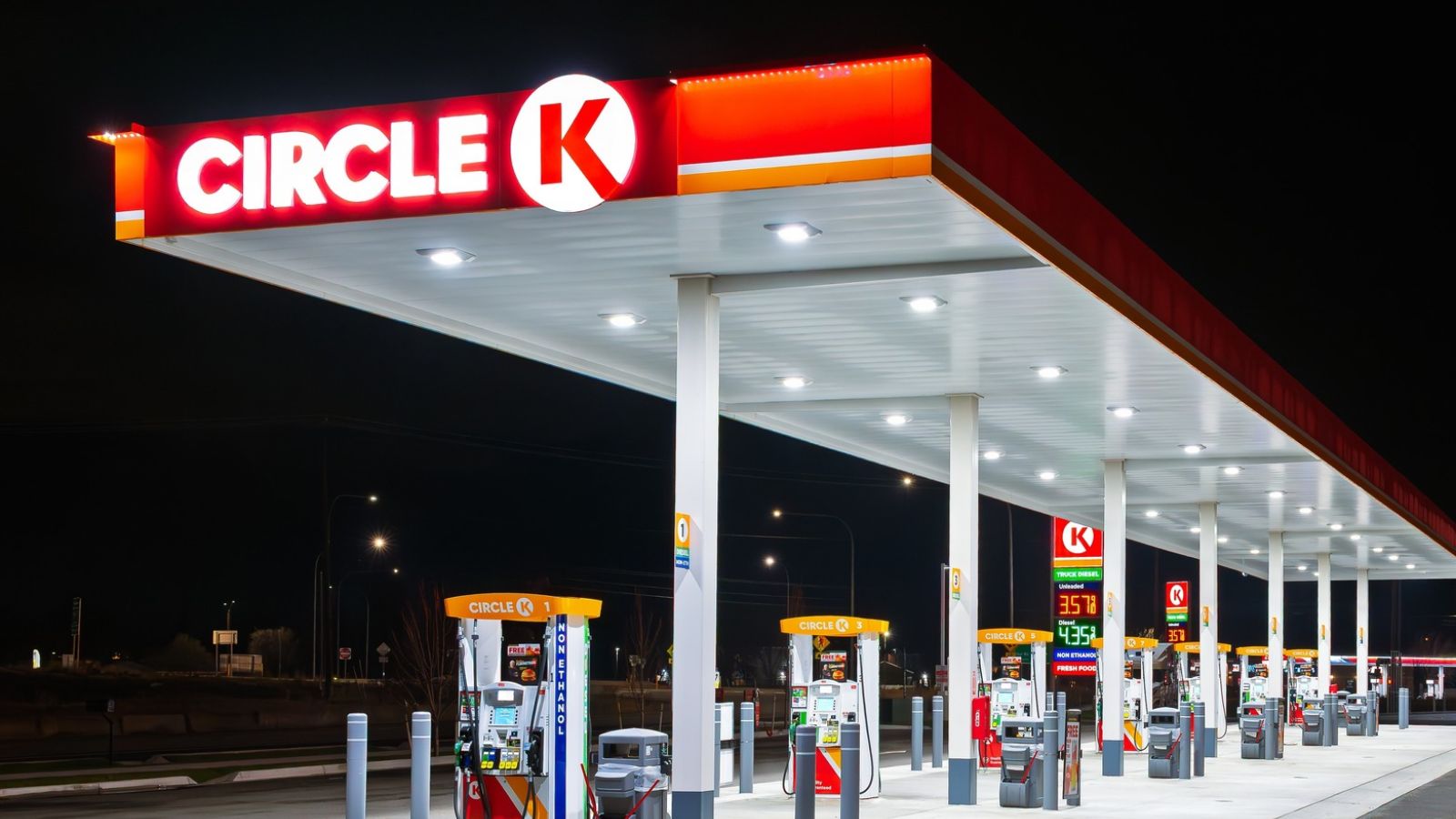
Alimentation Couche-Tard, the Quebec-based owner of Circle K, is reportedly pursuing another major convenience-store takeover, this time with an offer of between US$7.5 billion and US$8 billion for Cumberland Farms, the business formerly known as EG Group.
The approach could reshape a large part of the North American fuel-and-convenience market and complicate Cumberland Farms’ plans for a U.S. stock-market listing. One detail requires clarification, however: the widely reported 3,200-plus locations are spread across the United States and Europe, rather than all being American stations. The proposal also comes as Couche-Tard is already working through another multibillion-dollar acquisition, making the potential transaction as much a story about financial capacity and regulatory risk as it is about adding more gas stations.
The Reported Offer Puts Cumberland’s IPO Plan on the Spot
The Times reported that Couche-Tard has proposed paying between US$7.5 billion and US$8 billion for Cumberland Farms, with Reuters subsequently confirming the details of that report. The proposed price would fall below the roughly US$9-billion valuation Cumberland Farms has reportedly been targeting through a planned U.S. initial public offering. Neither company had publicly confirmed an agreed transaction when Reuters reported the approach, making this a takeover proposal rather than a completed or definitive deal.
That distinction matters because Cumberland Farms has another path available. The company filed registration documents with the U.S. Securities and Exchange Commission in July and applied to list on Nasdaq under the ticker CMBY. The Times also reported that Couche-Tard had approached the business at a substantially higher valuation in 2022, illustrating how much Cumberland’s portfolio and financial position have changed following major asset disposals. For its owners, the decision now potentially comes down to whether an immediate sale provides better certainty than waiting for public markets to support a higher valuation.
The 3,200-Location Figure Needs an Important Qualifier
Cumberland Farms is certainly a huge convenience and fuel retailer, but the 3,200 figure should not be interpreted as 3,200 American gas stations. Its SEC filing reported 3,242 sites as of March 31, 2026, including 1,463 in the United States and 1,779 in Europe. By June 30, its total network had grown to more than 3,300 sites. The company separately reported operating 3,195 fueling stations across the United States and Europe at the end of June, including 1,451 U.S. fueling locations.
Those American stores stretch far beyond the traditional Cumberland Farms footprint familiar to consumers in the Northeast. The U.S. operation incorporates regional banners including Turkey Hill, Kwik Shop, Fastrac, Loaf ‘N Jug, Quik Stop, Sprint and Tom Thumb. Cumberland has also been gradually consolidating those names under its flagship brand. As of July, more than 100 U.S. locations had already been rebranded, while management has outlined plans to convert roughly 600 to 700 additional American stores during the next five years. In practical terms, Couche-Tard would be buying both a large physical network and a retail platform already undergoing a major transformation.
Why Cumberland Fits Couche-Tard’s U.S. Strategy
Couche-Tard already operates one of the largest convenience-store systems on the planet. Its current network includes roughly 17,200 stores across 27 countries and territories, with 7,260 locations in the United States alone. Most American locations operate as Circle K, although the company still uses brands such as Holiday in certain markets. Cumberland would therefore add another substantial U.S. network to a company that already has enormous purchasing, fuel-sourcing and distribution scale.
The appeal goes beyond placing more dots on a map. Cumberland has strong regional brands in areas where customer habits have been built over decades, and its stores provide another opportunity for Couche-Tard to apply the operating model it has used repeatedly in previous acquisitions. Circle K itself became part of Couche-Tard through a 2003 acquisition, while later purchases such as CST Brands, Holiday Stationstores and GetGo expanded the company across major American markets. Cumberland could offer similar opportunities in fuel procurement, loyalty programs, prepared food and merchandising. At the same time, extensive overlap between the two companies means the strategic benefits would have to be balanced against potentially significant antitrust concessions.
The Target Comes With Revenue, Debt and a Turnaround Story
Cumberland Farms is not a small distressed chain being picked up for its real estate. The company currently reports approximately US$16 billion in annual revenue. Its SEC filings show adjusted EBITDA of US$693 million for 2025, while adjusted EBITDA reached US$352 million during the first six months of 2026. Second-quarter adjusted EBITDA alone was US$215 million, up from the comparable period a year earlier. Fuel remained particularly important, producing US$657 million of gross profit during the first half of 2026.
But the balance sheet helps explain why an IPO or sale is so important. Cumberland reported approximately US$5.82 billion of debt as of June 30, against roughly US$1.01 billion in cash. Management has been aggressively shrinking that burden. Since 2023, the broader group has sold large businesses in the United Kingdom, Italy, Australia and France and directed substantial proceeds toward debt repayment. That history means a buyer would not simply inherit thousands of stores. It would acquire a company that has spent several years reshaping itself, reducing leverage and concentrating resources on what management views as its strongest American and European markets.
Couche-Tard Has Financial Muscle, but Another Megadeal Is Already Underway
Couche-Tard has the earnings power to contemplate transactions few convenience-store companies could realistically pursue. For its first quarter of fiscal 2027, the Laval-based company reported US$21.7 billion in revenue and US$828.5 million in net earnings attributable to shareholders. At July 19, it held approximately US$3.2 billion in cash and cash equivalents, while net interest-bearing debt stood at about US$12.2 billion. Its reported leverage ratio was 1.77 times adjusted EBITDA, down from 1.99 times at the end of the previous fiscal year.
The complication is Żabka. In July, Couche-Tard announced a roughly US$8.6-billion offer for the Polish convenience-store giant, which operates more than 13,000 locations across Poland and Romania. Couche-Tard said that deal would be funded with committed debt facilities and estimated its leverage could reach approximately three times adjusted EBITDA at closing before declining later. The Żabka transaction remains subject to the takeover process and regulatory requirements. Adding an additional US$7.5-billion to US$8-billion Cumberland transaction would therefore raise obvious questions about sequencing, financing, asset sales and how quickly management wants to stretch the balance sheet.
Regulators Would Examine the Deal Market by Market
A takeover agreement would only begin the regulatory process. Couche-Tard already knows how closely American authorities can scrutinize fuel-station acquisitions. Its US$1.57-billion purchase of 270 GetGo locations from Giant Eagle received Federal Trade Commission clearance only after Couche-Tard agreed to divest 35 fuel stations. The FTC said the original transaction would have eliminated meaningful head-to-head competition in local markets across Indiana, Ohio and Pennsylvania.
An even earlier deal provides another warning. When Couche-Tard acquired CST Brands in 2017 for approximately US$4.4 billion, the FTC required divestitures involving fuel stations in as many as 71 local markets. Retail fuel competition is unusually local: regulators look at nearby stations, commuting routes, traffic patterns and which operators actively monitor one another’s prices. Cumberland’s large U.S. footprint therefore makes national store-count comparisons only part of the picture. Regulators would likely scrutinize individual communities where Circle K and Cumberland-owned stations sit close together. That could ultimately require dozens—or potentially more—locations to be sold before a transaction of this scale could close.
Convenience Retail Is Becoming Much More Than Selling Gasoline
The economic rationale for buying a convenience-store network becomes clearer when the industry is viewed beyond the pumps. The United States had 151,975 convenience stores at the end of 2025, according to NACS, and 122,620 of them sold motor fuel. Convenience stores handle an estimated 80% of the fuel purchased by American consumers. Altogether, the industry generated approximately US$817.5 billion in sales during 2025, illustrating why ownership of thousands of well-positioned roadside properties remains valuable.
The more interesting shift is happening inside the stores. U.S. convenience retailers generated US$341.2 billion in foodservice and merchandise sales during 2025. Foodservice alone represented 28.5% of in-store sales but an even larger 38.9% of in-store gross-profit dollars. Cumberland and Couche-Tard are both investing heavily in prepared food, coffee, loyalty programs and digital offers for precisely that reason. A commuter stopping for fuel may also leave with coffee, breakfast and snacks, while an EV customer potentially spends even longer on the property. The value of the network increasingly depends on turning those visits into higher-margin retail transactions.
A Sale Is Far From Certain, and the IPO Option Remains Alive
The biggest mistake would be treating the reported US$8-billion proposal as a finished deal. Reuters reported that Couche-Tard and Cumberland Farms had not immediately commented on the takeover report. Cumberland was also said to remain committed to a U.S. listing, although its IPO has been delayed and the Financial Times reported earlier in October that a flotation was unlikely before 2027. Infrastructure investor Stonepeak has also reportedly shown takeover interest, giving Cumberland’s owners more than one potential alternative.
There are signs the IPO preparations remain serious. Cumberland filed its public registration statement with the SEC and later disclosed a US$500-million convertible-preferred investment agreement involving funds managed by Apollo Global Management. Ownership also creates another layer to negotiations: private-equity firm TDR Capital owns 50% of the business, while brothers Mohsin and Zuber Issa each own 25%, according to The Times. For Couche-Tard, Cumberland represents a rare chance to absorb another enormous convenience-and-fuel platform. For Cumberland’s owners, however, an US$8-billion bid must be measured against the possibility that public markets—or another bidder—eventually place a higher value on the company.