






















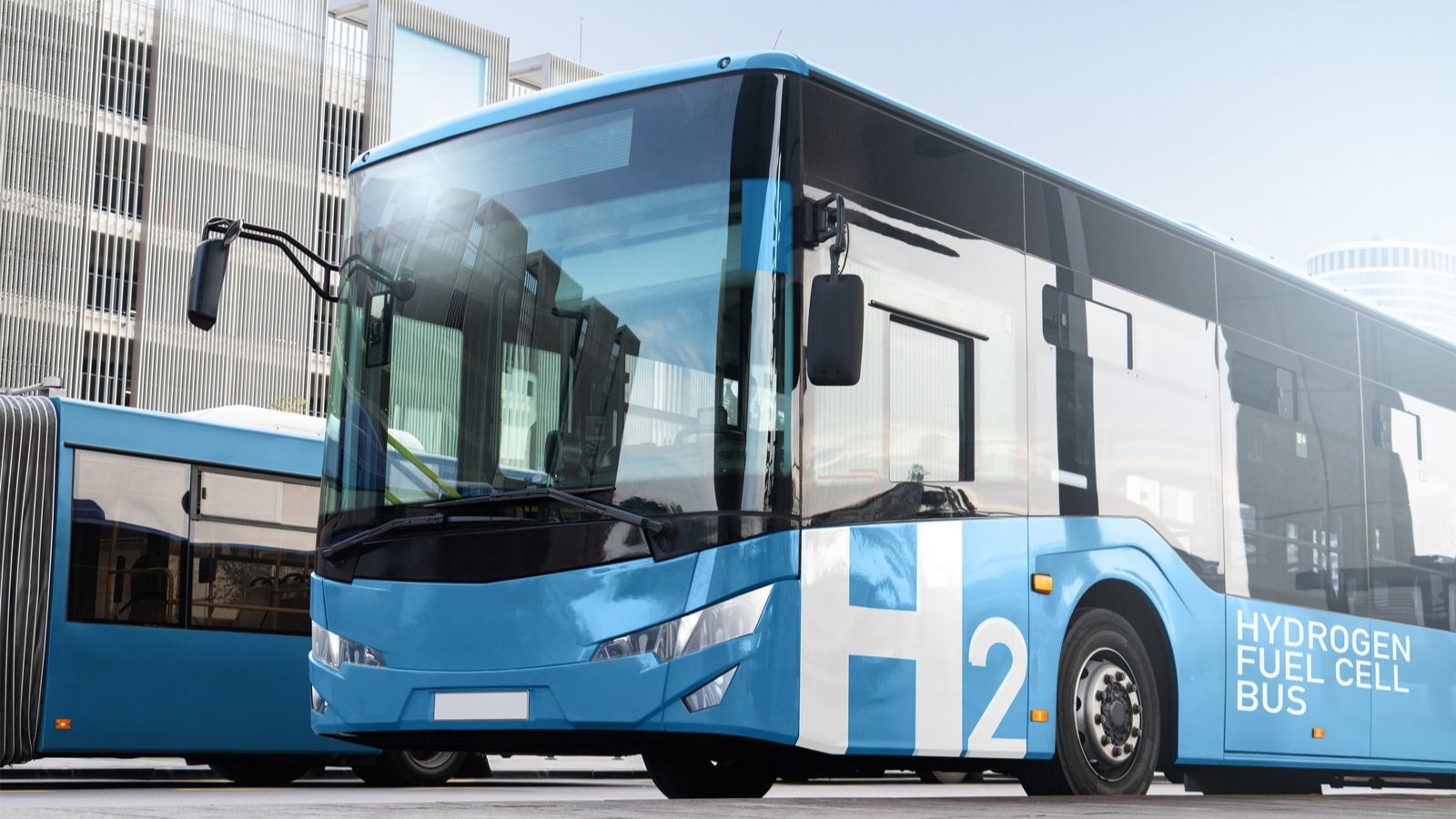
Ballard Power Systems is putting a concrete number behind one of the biggest questions facing hydrogen transit fleets: how well will the fuel-cell system hold up after years of daily service? The Metro Vancouver fuel-cell company, headquartered in Burnaby, has introduced a lifecycle support program that includes a power-output performance guarantee covering its FCmove-HD+ fuel-cell module for up to 250,000 miles of fuel-cell operation.
The guarantee is part of Ballard Fleet360, a broader North American service package unveiled around APTA TRANSform & EXPO 2026. Rather than focusing solely on selling the hardware inside hydrogen buses, Ballard is tying its technology to monitoring, parts availability, technical assistance, training and refurbishment planning. For transit agencies weighing unfamiliar zero-emission technology against decades of diesel experience, that shift could be almost as important as the mileage figure itself.
A 250,000-Mile Promise Aimed at a Persistent Transit Question
The headline feature of Fleet360 is FCcare+, which Ballard says provides a fuel-cell-module performance guarantee for power output through as much as 250,000 miles of fuel-cell operation. That wording matters. The commitment applies to the fuel-cell module and its power performance rather than serving as a bumper-to-bumper warranty for an entire transit bus. Ballard also says the precise guarantees and service commitments depend on the package and agreement selected by the customer.
Still, putting a mileage figure on fuel-cell performance represents a meaningful commercial step. Transit agencies build budgets years in advance and need some idea of when expensive components could require repair, refurbishment or replacement. An agency ordering dozens of buses cannot treat every fuel-cell stack as an experiment. A defined performance commitment gives maintenance departments another number to incorporate into lifecycle planning while transferring some technology-performance risk back toward the supplier that designed the module.
Fleet360 Is Much More Than an Extended Warranty
Ballard has built Fleet360 around several layers of support instead of relying on the performance guarantee alone. Its FCcare package combines parts coverage with defined commitments surrounding service response, spare-parts delivery and issue resolution. FCcare+ adds the 250,000-mile module-performance guarantee. Technician education through Ballard Academy and the company’s Core+ refurbishment offering can be added alongside those packages.
That combination reflects how transit fleets actually operate. A bus sitting in a depot because a diagnostic problem cannot be identified quickly is not much more useful than a bus waiting for a major mechanical repair. Ballard says its Vancouver-area Remote Operations Centre can coordinate triage, diagnostics and engineering escalation, while an expanded field-service network and parts inventory in Bend, Oregon, support North American fleets. The broader idea is to make fuel-cell ownership resemble an established fleet-maintenance program rather than leaving individual agencies to develop every specialized capability from scratch.
FCpulse Brings Fuel-Cell Health Into the Maintenance Shop
One of the less visible pieces of Fleet360 may eventually be among its most important. Ballard’s FCpulse platform gives fleet maintenance teams information about fuel-cell health, performance and service-part trends. Its state-of-health dashboard is designed to flag modules that may deserve attention, allowing a shop to prioritize inspections and prepare technicians and parts before a problem becomes more disruptive.
The platform also includes data-visualization tools and periodic performance reporting intended to support longer-term service planning. That matters because fuel-cell degradation is different from an obvious mechanical failure such as a broken suspension component. A module can continue operating while its performance gradually changes. Turning that behaviour into usable maintenance information gives operators an opportunity to schedule work rather than simply reacting to breakdowns. For a transit system running morning and afternoon peaks every weekday, the difference between planned maintenance and an unexpected road call can affect vehicles, drivers and passengers far beyond a single repair bay.
New Flyer Gives Ballard a Much Larger North American Pipeline
Fleet360 is arriving as Ballard’s relationship with major bus manufacturer New Flyer expands. In March 2026, the companies announced an agreement covering 500 FCmove-HD+ fuel-cell engines representing 50 megawatts of capacity. Deliveries were scheduled to begin in 2026 for New Flyer’s Xcelsior CHARGE FC hydrogen fuel-cell buses operating across the United States and Canada. Ballard described it as New Flyer’s largest single commitment since their partnership began.
That makes lifecycle support more than an abstract sales feature. Hundreds of additional modules potentially entering service create a much larger installed base that eventually needs diagnostics, spare parts, trained technicians and stack servicing. New Flyer already markets its hydrogen model as a long-range zero-emission bus, with configurations capable of travelling up to roughly 370 miles on one fueling. A larger fleet population also gives Ballard more operational data, making the service side of the business increasingly important as vehicles accumulate mileage.
The Mileage Figure Fits the Way Transit Agencies Think About Bus Life
Heavy-duty transit buses are unusually long-lived commercial vehicles. U.S. government benchmarks have historically treated a full-size transit bus as an asset expected to remain in service for roughly 12 years or 500,000 miles. Fuel-cell powerplants, meanwhile, have traditionally been evaluated partly by operating hours, with DOE and Federal Transit Administration work establishing a 25,000-hour ultimate durability target for fuel-cell propulsion systems.
Real-world programs have shown that those levels are achievable. National Renewable Energy Laboratory evaluations of AC Transit buses in California documented fuel-cell systems passing the 25,000-hour target, with some accumulating substantially more service. Against that history, Ballard’s 250,000-mile guarantee is interesting because it expresses durability in a language fleet managers immediately understand. It is also approximately half of that longstanding 500,000-mile full-bus benchmark, a point that echoes the traditional expectation that major propulsion equipment may receive significant mid-life attention during a bus’s service career.
Hydrogen’s Operating Case Is Still Built Around Range and Refueling
Fuel-cell buses are electric vehicles, but instead of depending solely on electricity stored in a large battery, they use onboard hydrogen to generate electricity through a fuel cell while working with a battery-electric drivetrain. The result can provide zero harmful tailpipe pollutants, with water and heat produced at the fuel cell, while allowing operators to carry substantial energy onboard without relying entirely on lengthy plug-in charging.
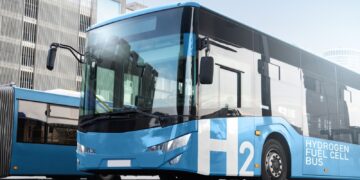
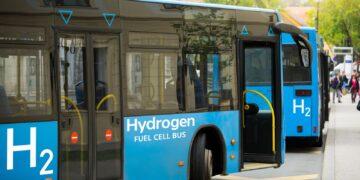
New Flyer’s Ballard-powered Xcelsior CHARGE FC demonstrates the operational argument. The manufacturer lists up to 370 miles of range, depending on configuration and duty cycle, while a 40-foot model can be refueled in roughly six to 10 minutes under appropriate conditions. Larger configurations can take longer. Those characteristics can appeal to agencies running lengthy routes or operating buses for many hours with limited depot downtime. They do not make hydrogen automatically preferable to battery-electric buses, but they help explain why some transit systems continue evaluating both technologies rather than treating zero-emission transit as a one-technology market.
Ballard Is Backing the Guarantee With a Large Real-World Data Set
Ballard is not entering transit from a standing start. The company says its fuel-cell technology has accumulated more than 300 million kilometres of real-world operation across heavy-duty applications. In announcing Fleet360, Ballard said more than 3,000 of its fuel-cell engines were on the road and nearly 330 Ballard-powered fuel-cell buses had been deployed in North America, including more than 225 in California and more than 30 in Nevada.
Those figures are company-reported, so they should be understood as Ballard’s own fleet statistics rather than an independent audit. Independent government testing nevertheless provides important evidence that modern transit fuel cells can survive demanding duty cycles. DOE and NREL programs have documented individual fuel-cell powerplants exceeding established durability targets after years of passenger service. Fleet360 effectively turns that accumulated operating history into a commercial proposition: Ballard is now willing to attach a defined mileage-based performance commitment to eligible new FCmove-HD+ sales.
The Harder Problem May Still Be Hydrogen Rather Than the Fuel Cell
A stronger fuel-cell warranty cannot solve every challenge facing hydrogen transit. Hydrogen must still be produced, transported or generated near the depot, stored safely and dispensed through specialized fueling equipment. NREL’s transportation analysis continues to describe hydrogen prices as highly uncertain because production, delivery, station utilization and dispensing costs can vary widely. Transit agencies also need trained employees and infrastructure capable of supporting an entirely different energy system from diesel.
The environmental calculation depends on hydrogen production as well. A fuel-cell vehicle has no harmful tailpipe pollution from the fuel cell itself, but upstream greenhouse-gas emissions vary according to how the hydrogen is made and delivered. Renewable-powered electrolysis can produce a very different lifecycle emissions profile from hydrogen derived from fossil fuels. That distinction means the success of hydrogen buses ultimately depends on more than vehicle durability. Reliable modules, affordable fuel, dependable supply and appropriately scaled infrastructure all have to work together for the economics to make sense.
Fleet360 Fits Ballard’s Broader Move Beyond Selling Fuel Cells
The service launch also comes during a wider transformation at Ballard. In its second-quarter 2026 results, the company reported US$20.6 million in quarterly revenue, including US$9.7 million from its bus business, and an order backlog of US$156.6 million. Management specifically pointed to a greater contribution from higher-margin service revenue as one factor supporting improvements in the company’s financial performance.
Ballard has also expanded beyond fuel-cell manufacturing through its acquisition of UK-based GeoPura, completed in August 2026. The transaction added hydrogen production, distribution, logistics and energy-as-a-service capabilities to Ballard’s existing fuel-cell operations. Fleet360 follows a similar philosophy on the transportation side: sell more than a box of electrochemical hardware. For transit operators, the immediate attraction is the promise of predictable performance and better lifecycle support. For Ballard, the bigger opportunity is remaining involved with each fuel-cell module long after the bus leaves the factory.