

























The definitive agreement valued REVS at an enterprise value of as much as US$4.75 million, subject to customary adjustments for items including working capital, indebtedness and transaction expenses. Hypercharge structured the consideration in several pieces rather than paying the entire amount immediately. Approximately US$3 million of the purchase price was allocated to Hypercharge shares issued at closing, while another US$500,000 was to be paid in cash.
The remaining potential US$1.25 million is performance-based. Under the agreement, that deferred consideration can be paid in Hypercharge shares across three annual tranches if REVS reaches specified gross-profit targets. Those milestones were set at US$850,000 in the first year, US$1.2 million in the second and US$2 million in the third. This gives Hypercharge some protection if the acquired business fails to grow as anticipated, while allowing REVS stakeholders to receive additional value if those operating targets are reached. It also spreads part of the acquisition cost over several years rather than concentrating everything at closing.
More than 1,200 U.S. charging ports come with REVS
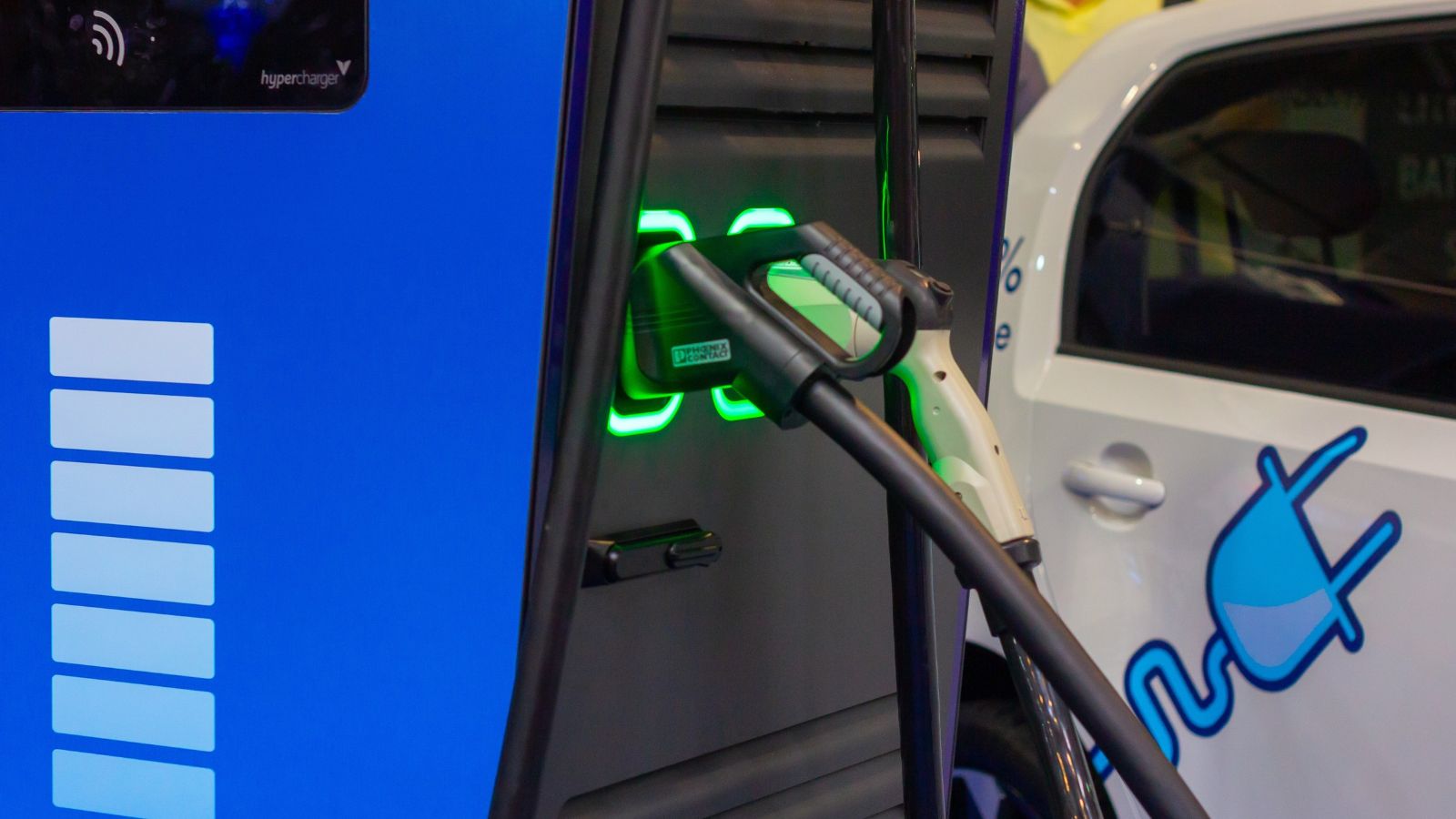
The physical charging footprint is one of the most tangible parts of the transaction. Hypercharge said REVS operates more than 500 company-owned Level 2 charging ports in the United States and supports approximately 700 additional customer-owned ports. Combined, that gives the acquired operation involvement with more than 1,200 charging ports and pushes Hypercharge’s broader North American footprint beyond 10,000 sold or owned ports.
The distinction between owned and customer-owned equipment is important. Selling charging hardware can provide immediate revenue, but an operator that retains ownership or provides ongoing network services can continue collecting charging, software, maintenance or subscription revenue after installation. REVS focuses particularly on multifamily residential properties, condominiums, hospitality locations and commercial real estate. Those settings fit naturally with Level 2 charging because vehicles frequently remain parked for several hours. Rather than competing solely for drivers making brief highway stops, operators in this market can build recurring relationships with landlords, property managers and commercial owners.
REVS adds more than C$1 million in annual charging and service revenue
Hypercharge said REVS currently produces more than C$1 million in annual charging and services revenue, with a gross margin above 45%. Those figures help explain why the business attracted Hypercharge despite its relatively modest size. The acquisition is not simply about adding chargers to a map; it adds a stream of recurring operating revenue that is broadly consistent with the Canadian company’s changing business strategy.
That strategy has become increasingly visible in Hypercharge’s financial reporting. Instead of prioritizing large one-time equipment deliveries at the expense of profitability, management has been emphasizing Level 2 installations, network subscriptions, charging activity and related services. REVS already operates in that model. Its commercial-property focus also means installations can involve long relationships with building owners instead of single equipment transactions. Hypercharge has said that REVS customers are expected to continue receiving service during the integration, while the two companies work to combine operations. Whether the anticipated margins and recurring revenue persist after integration will ultimately be demonstrated in future financial results.
The acquisition fits Hypercharge’s push toward higher-margin revenue
Hypercharge’s most recent quarterly results show why recurring revenue has become such an important theme. For the three months ended June 30, 2026, the company reported C$1.42 million in total revenue, down 58% from approximately C$3.4 million a year earlier. However, the comparison was affected by a larger concentration of lower-margin DC fast-charging equipment deliveries in the prior-year period. Hypercharge’s gross margin increased from 25% to 44%.
Subscription and service revenue moved in the opposite direction from overall sales. It rose 68% year over year to C$520,074. Hypercharge also reported a C$3.49-million sales backlog at June 30, up approximately 68% from C$2.07 million three months earlier. The company remained loss-making, recording a comprehensive quarterly loss of C$876,583 compared with C$402,877 a year earlier. REVS therefore arrives at a time when Hypercharge is attempting to improve the quality and predictability of revenue even as it still works toward sustainable profitability.
REVS follows another major charging acquisition in Québec
The U.S. takeover is not an isolated deal. Hypercharge completed the acquisition of charging-network operator Eddie from AXSO effective May 1, 2026, significantly increasing its Canadian network. Eddie added more than 2,700 charging ports and expanded Hypercharge’s presence in Québec. By June 30, Hypercharge reported a network footprint exceeding 9,400 ports, including more than 6,700 delivered by Hypercharge itself and more than 2,700 added through Eddie.
Adding REVS several months later gives the acquisition strategy a distinctly cross-border character. Eddie increased scale in one of Canada’s most important EV markets, while REVS provides an established U.S. operating platform. Hypercharge has indicated that it intends to continue examining acquisition opportunities that can expand geographic reach, recurring revenue and its owned-and-operated infrastructure. The rapid succession of deals also creates a challenge: buying networks is only the first step. Hypercharge now has to integrate separate customer bases, software systems, charging assets and operating teams without allowing costs to rise faster than recurring revenue.
A U.S. operating company gives Hypercharge a different kind of foothold
Hypercharge already had charging infrastructure in several U.S. states before acquiring REVS, but management describes the transaction as establishing its first dedicated U.S. operating platform. That is a meaningful difference. Instead of servicing American customers primarily through a Canadian organization, the company gains local operations, employees, customer relationships and commercial experience through an established Texas-based business.
REVS founder and chief executive David Aaronson is also expected to play a role in that expansion. Hypercharge said Aaronson would become president of Hypercharge Networks Inc., its U.S. subsidiary, in connection with the closing. Management has argued that maintaining operations inside the United States can provide more flexibility when developing supplier relationships, working with customers and navigating changing trade and tariff conditions. Those expected benefits remain forward-looking, however. The immediate facts are that Hypercharge now owns the REVS business and has gained an operating base from which it can pursue further U.S. growth rather than building an organization entirely from scratch.
Level 2 charging remains important as U.S. infrastructure expands
REVS’s concentration on Level 2 charging places Hypercharge in a different part of the infrastructure market from companies focused almost entirely on high-speed highway chargers. U.S. Department of Energy resources identify Level 2 charging as particularly relevant for homes, workplaces and multifamily properties, where vehicles can remain parked long enough for lower-powered charging to be practical. Multifamily properties also present challenges involving electrical capacity, assigned parking, billing and charger access, creating demand for companies capable of handling both installation and ongoing operations.
The larger U.S. charging market continues to expand. The International Energy Agency estimated that the United States finished 2025 with more than 160,000 slower public charging points and nearly 70,000 fast and ultra-fast points. The IEA also reported that America added a record number of public charging points during 2025, although its public network remained relatively small compared with the country’s EV population. That leaves significant room for different charging models, including the property-based approach being pursued by REVS and Hypercharge.
The biggest test now comes after the takeover
Completing the transaction eliminates the uncertainty over whether Hypercharge would actually acquire REVS, but it does not eliminate the operating risks. The acquisition agreement itself identifies integration, customer retention, personnel retention, foreign-exchange movements, tariffs, changes in government incentives and potential shareholder dilution among the factors that could affect results. The deferred portion of the purchase price also depends directly on REVS achieving progressively larger gross-profit milestones, meaning future payments will provide a measurable indicator of the acquired operation’s performance.
For shareholders and customers, the next phase will therefore be less about the headline number of 18 million shares and more about what Hypercharge can produce with the assets it bought. REVS gives the Vancouver company more than 500 owned chargers, roughly 700 additional customer-owned ports, more than C$1 million in annual charging and service revenue and an operating organization inside the world’s second-largest EV market. Hypercharge has acquired the platform it wanted. Turning that platform into sustained growth, higher recurring revenue and eventually stronger bottom-line results is now the more consequential challenge.