





















Canada’s automotive market is undergoing a significant transformation, and Toyota’s latest sales figures reveal just how quickly electrified vehicles are becoming mainstream.
Toyota Canada reported a remarkable 70.2% year-over-year increase in electrified vehicle sales for October 2026, with hybrids, plug-in hybrids, and fully electric vehicles accounting for 67.6% of all Toyota and Lexus sales during the month.
The surge reflects more than enthusiasm for electric vehicles. Canadian-built hybrid SUVs, family minivans, and luxury models are helping reshape the company’s sales mix, offering drivers different ways to reduce fuel consumption without necessarily relying on charging infrastructure.
With record-breaking results across several popular nameplates, Toyota’s October performance illustrates how electrification is changing the vehicles Canadians purchase and the choices manufacturers are bringing to dealerships.
Toyota Canada Sets a New October Record With 17,735 Electrified Vehicles
Toyota Canada Inc. recorded 17,735 electrified vehicle sales in October 2026, representing a substantial 70.2% increase compared with the same month in 2025. Those vehicles accounted for 67.6% of the company’s 26,219 total sales, meaning roughly two out of every three new Toyota and Lexus vehicles sold during October featured some form of electric propulsion. The result established an October record for the company’s electrified lineup and demonstrated how central these vehicles have become to its Canadian business. The increase was particularly notable because electrified sales grew considerably faster than Toyota Canada’s overall vehicle sales.
The figures also reveal an important distinction between sales growth and market share. The 70.2% increase measures how much Toyota Canada’s electrified sales expanded from the previous October, while the 67.6% share shows their contribution to the company’s current sales volume. Approximately 8,500 vehicles sold during October were not classified as electrified. For Canadian shoppers, the growing selection means electric motors are increasingly found in familiar sedans, SUVs, and family vehicles rather than being limited to specialized electric models.
Electrified Does Not Mean Every Vehicle Runs Entirely on Electricity
One of the most important details behind Toyota’s record-breaking performance is how the company defines an electrified vehicle. The category includes conventional hybrid-electric vehicles, plug-in hybrid-electric vehicles, and battery-electric vehicles. Conventional hybrids combine gasoline engines with electric motors and recharge their batteries through the vehicle’s operation rather than an external charging cable. Plug-in hybrids use larger rechargeable batteries and can travel on electricity alone for part of their journeys. Fully electric vehicles operate without gasoline engines and produce no tailpipe emissions. All three technologies contribute to Toyota Canada’s reported electrified sales totals.
This distinction matters because the 67.6% figure should not be confused with the percentage of Canadians purchasing fully electric vehicles. Statistics Canada’s definition of zero-emission vehicles includes battery-electric and plug-in hybrid models but excludes conventional hybrids. For a household without a private driveway or convenient charging access, a regular hybrid can offer lower fuel consumption without requiring a charging routine. Someone with reliable home charging may find a plug-in hybrid or fully electric vehicle more suitable. Toyota’s results reflect demand across these different approaches, although its October announcement does not disclose the precise sales breakdown between the three technologies.
The Canadian-Built RAV4 Hybrid Plays a Leading Role in Toyota’s Sales Surge
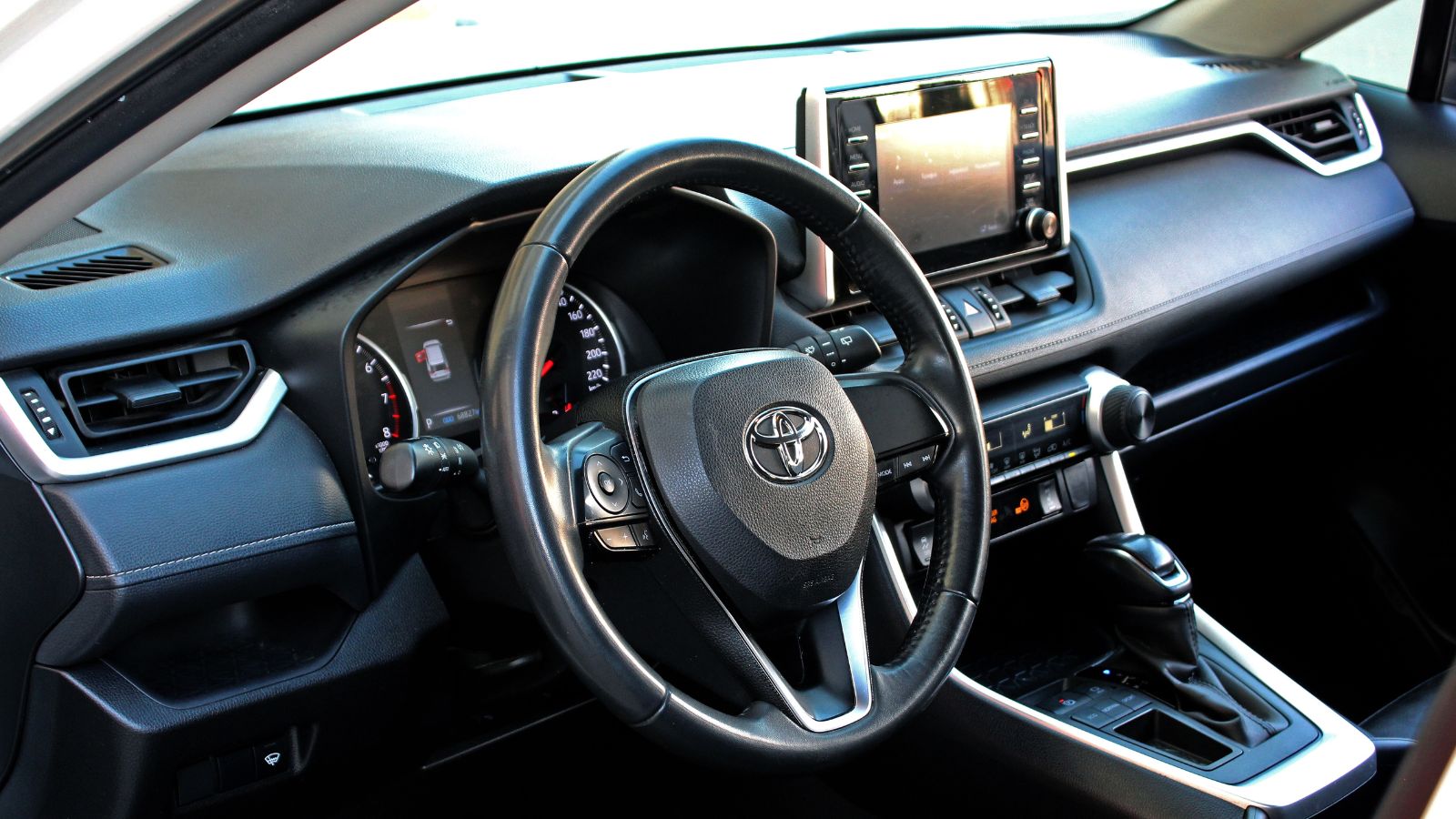
The Toyota RAV4 Hybrid emerged as one of the most significant contributors to October’s impressive results. Toyota reported 6,195 sales of the Canadian-assembled hybrid SUV, representing its strongest month ever and extending its consecutive monthly sales-record streak to seven. That single model accounted for approximately 35% of Toyota Canada’s total electrified vehicle sales during October. The result demonstrates the considerable influence of a familiar compact SUV on the company’s broader electrification strategy, particularly as shoppers increasingly encounter hybrid powertrains in mainstream vehicle categories.
The redesigned 2026 RAV4 also represents an important shift in Toyota’s product lineup. Unlike previous generations that offered conventional gasoline-only versions, the sixth-generation model is available with hybrid and plug-in hybrid powertrains. This means Canadians considering Toyota’s popular compact SUV are choosing between different forms of electrification rather than selecting a traditional gasoline-only alternative. For drivers replacing an older RAV4, the transition can be relatively straightforward because the conventional hybrid operates much like a regular gasoline vehicle. The October sales figures suggest that this familiar ownership experience, combined with the RAV4’s established position in the market, is an important part of Toyota’s success.
Toyota’s Electrification Success Has Important Connections to Canadian Manufacturing
Toyota’s electrification strategy also carries significant implications for Canada’s automotive manufacturing sector. Toyota Motor Manufacturing Canada began producing the redesigned sixth-generation RAV4 in January 2026, continuing a manufacturing relationship that dates back to 2009 for the popular SUV. The company’s Ontario operations in Cambridge and Woodstock employ more than 8,500 people and manufacture several important vehicles, including the RAV4 Hybrid and electrified versions of the Lexus NX and RX. Toyota has invested more than $1.1 billion in the redesigned RAV4 program, bringing its reported cumulative investment in Canadian manufacturing to more than $12 billion.
The connection between electrified vehicle sales and domestic production is particularly relevant for communities that depend on automotive manufacturing. Toyota’s Canadian facilities assembled more than 535,000 vehicles in 2025, according to the company’s production announcement. Not every vehicle manufactured in Ontario is sold in Canada, since the operations also supply the wider North American market. Nevertheless, growing demand for Canadian-assembled hybrid vehicles demonstrates how electrification can support an established manufacturing industry rather than simply replacing traditional automotive jobs. For workers, parts suppliers, and surrounding businesses, the production of newer electrified models represents an important part of the industry’s continuing transition.
Battery-Electric and Plug-In Hybrid Models Are Also Recording Strong Growth
Although conventional hybrids are central to Toyota’s electrification strategy, the company’s battery-electric and plug-in hybrid vehicles also delivered substantial gains in October. Sales of the fully electric Toyota bZ increased 224.2% compared with October 2025, establishing an October sales record for the model. Meanwhile, sales of the RAV4 Plug-in Hybrid rose 121.6% year over year. These increases demonstrate that Toyota’s electrified growth extends beyond vehicles that rely primarily on gasoline engines, even though the company’s monthly release does not provide separate unit totals for each electric powertrain category.
Toyota has also been improving its electric vehicle offerings. The 2027 bZ, introduced to Canadian dealerships in 2026, offers up to 468 kilometres of manufacturer-estimated range in its XLE all-wheel-drive configuration. It also features a North American Charging System port that expands access to compatible fast-charging networks. For someone with home charging, those improvements can make an electric SUV more practical for daily commuting and longer trips. However, a percentage increase of more than 200% does not necessarily mean an electric model is outselling popular hybrids. Without individual sales volumes, the relative size of Toyota’s battery-electric business remains difficult to determine from October’s results alone.
Family Vehicles Help Push Hybrids Further Into the Mainstream
Toyota’s October performance was not limited to compact crossovers and electric SUVs. The Grand Highlander Hybrid achieved an October sales record, with deliveries increasing 148.8% year over year. The Toyota Sienna Hybrid also recorded its strongest October, with sales rising 16.7%. These results highlight the growing importance of electrified powertrains in vehicle categories where families often prioritize seating capacity, cargo space, and everyday convenience. Rather than asking households to sacrifice familiar vehicle features, Toyota has incorporated hybrid technology into models designed around the practical demands of family transportation.
The Sienna provides a particularly clear example because the 2026 model is offered exclusively with a hybrid powertrain. It accommodates seven or eight passengers, depending on configuration, and offers front-wheel drive or all-wheel drive. Toyota rates the front-wheel-drive Sienna at a combined 6.6 litres per 100 kilometres, although actual consumption varies with driving conditions. For a family managing school runs, groceries, and weekend trips, fuel efficiency can influence the total cost of vehicle ownership. The Grand Highlander takes a similar approach in the larger SUV category, offering hybrid options alongside conventional gasoline models. October’s results suggest that electrification is gaining traction in practical household vehicles, not simply among dedicated electric-car enthusiasts.
Lexus Posts a 30.2% Sales Increase as Electrified Luxury SUVs Gain Momentum
Toyota’s luxury division also delivered an impressive October performance. Lexus sold 3,131 vehicles in Canada, representing a 30.2% increase from October 2025 and establishing a new October sales record. Electrified models accounted for 53.3% of Lexus sales, meaning more than half of its vehicles sold during the month featured hybrid, plug-in hybrid, or battery-electric technology. Although that proportion was below Toyota’s mainstream division, it demonstrates the importance of electrification across different price segments. Lexus customers increasingly have electrified versions of familiar luxury SUVs available alongside their conventional gasoline counterparts.
Several Lexus models posted particularly strong results. Sales of the RX Hybrid increased 57.4% year over year, while the UX Hybrid recorded 31.4% growth. Plug-in hybrid models performed strongly as well, with the NX 450h+ increasing 108.2% and the RX 450h+ rising 106.8%. Both achieved October records. The TX Hybrid also recorded a 32.8% sales increase. These results illustrate how Lexus is expanding electrified choices across compact, midsize, and larger luxury vehicles. For buyers considering a premium SUV, the decision increasingly involves selecting the powertrain that best suits their driving habits rather than choosing between established luxury brands and entirely separate electric-only manufacturers.
Toyota’s Mainstream Division Reaches a Record 23,088 October Sales
Toyota’s mainstream division recorded 23,088 vehicle sales in Canada during October 2026, an increase of 13.8% compared with October 2025. The result established a new October record for the Toyota brand and contributed to Toyota Canada Inc.’s combined 15.6% sales increase across Toyota and Lexus. Electrified vehicles represented 68.7% of Toyota Division sales, slightly higher than the 67.6% share reported for the two brands combined. The figures demonstrate how deeply hybrid and electric powertrains have become integrated into Toyota’s mainstream vehicle business, accounting for a substantial majority of the division’s monthly sales.
The changing sales mix also reflects the breadth of Toyota’s product portfolio. Electrified powertrains are available across numerous vehicle categories, allowing customers to consider fuel efficiency alongside the familiar characteristics of their preferred models. Toyota’s 4Runner family also established an October sales record, demonstrating that demand extends across different vehicle types. An important consideration is that rising electrified sales can reflect both changing consumer preferences and decisions by manufacturers to offer more vehicles with hybrid technology as standard. Toyota’s October results do not establish exactly how much each factor contributed, but they clearly show that electrification has become central to the company’s Canadian sales performance.
Toyota’s October Results Extend a Record-Breaking Year for Electrified Vehicles
October’s performance was part of a much larger trend developing throughout 2026. Toyota Canada reported 130,369 electrified vehicle sales during the first nine months of the year, surpassing its previous full-year record of 123,879 vehicles set in 2025. The company accomplished that milestone before the final quarter had even begun. Adding October’s 17,735 electrified sales brings the calculated January-to-October total to 148,104 vehicles. The achievement is particularly significant because it demonstrates that the October increase was not an isolated development but an extension of sustained growth across Toyota and Lexus.
The third quarter had already provided considerable momentum. Toyota Canada recorded 40,019 electrified vehicle sales during July, August, and September, representing 65.7% of its total third-quarter volume. September alone generated 15,077 electrified sales, an increase of 49.8% from September 2025. These results suggest that electrification has become an established feature of Toyota’s Canadian sales mix rather than a temporary monthly spike. Still, future growth cannot be guaranteed. Vehicle availability, pricing, model introductions, and broader economic conditions can influence purchasing patterns. The company’s strong performance through October provides evidence of sustained commercial success, but it does not establish that year-over-year increases of this magnitude will continue indefinitely.
Toyota’s Electrified Sales Surge Outpaces Growth Across Canada’s Auto Market
Toyota’s impressive October results become even more notable when compared with the broader Canadian automotive market. According to DesRosiers Automotive Consultants, Canadian new light-vehicle sales reached an estimated 162,000 units in October 2026, an increase of just 1.8% from the previous year. The industry recorded its fifth consecutive month of year-over-year growth despite economic pressures and continuing trade uncertainty. Toyota Canada’s overall 15.6% sales increase was considerably stronger than the national market’s growth rate, suggesting the company’s performance reflected more than a general recovery in vehicle demand.
National electric vehicle statistics also provide an important perspective. Statistics Canada reported that zero-emission vehicles accounted for 13.0% of Canadian new motor vehicle sales in August 2026, representing 22,716 vehicles and a 55.1% increase from August 2025. That figure includes battery-electric and plug-in hybrid vehicles but excludes conventional hybrids, making it fundamentally different from Toyota’s broader electrified sales percentage. The two results also cover different months. For Canadian consumers, Toyota’s success illustrates the growing importance of hybrid and electric options, but it should not be interpreted as evidence that the entire national market has reached the same level of electrification. What October’s results establish is that Toyota has made electrified vehicles a dominant part of its own Canadian business, with familiar hybrid models helping lead that transformation.