















Washington is moving from tariffs and technology restrictions toward something more permanent: a federal law designed to keep Chinese connected vehicles out of the American market.
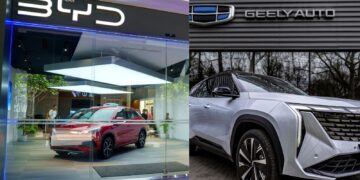
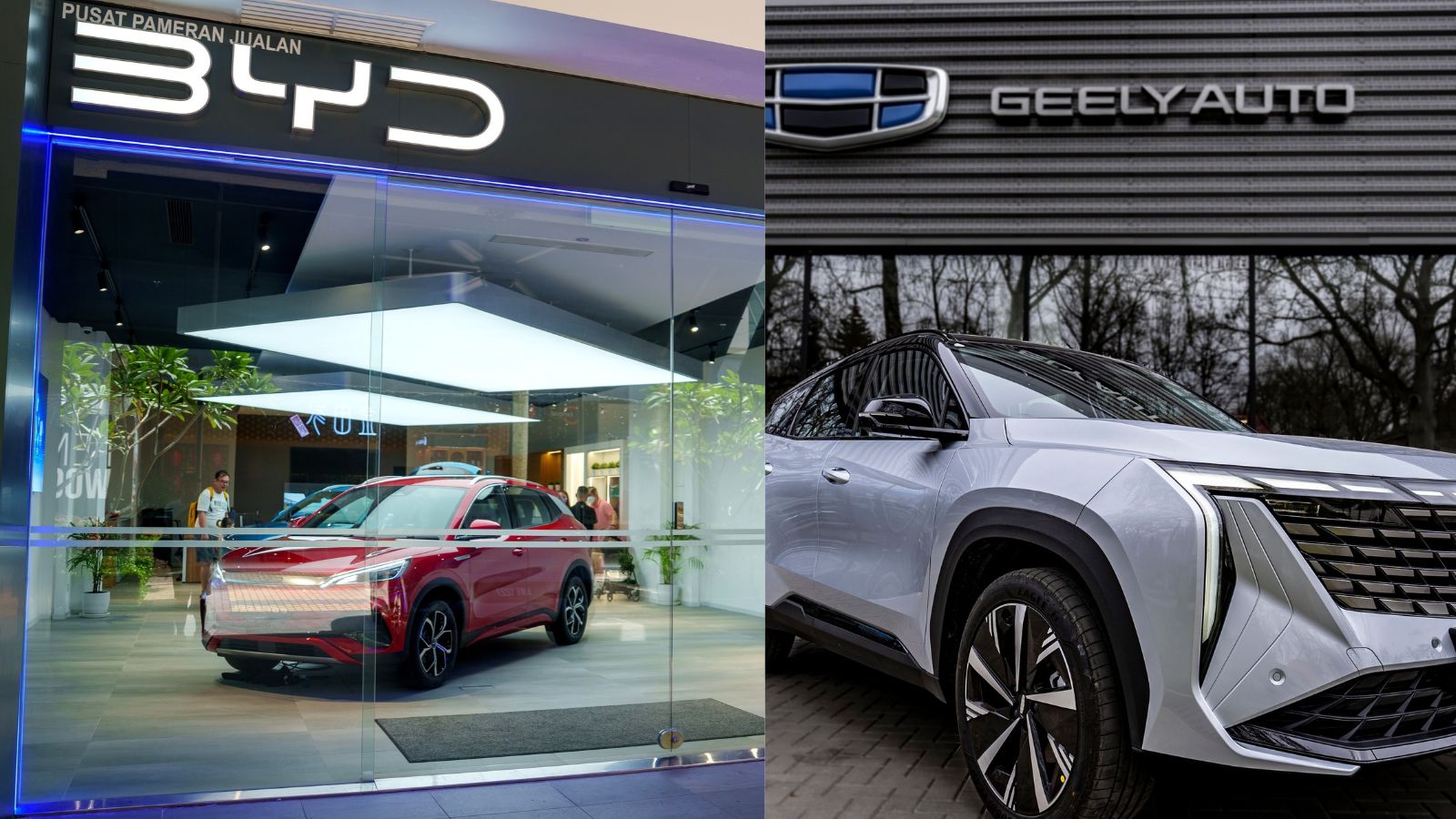
Republican and Democratic lawmakers are negotiating legislation they hope to send to President Donald Trump before the end of 2026, with Chinese automotive giants BYD and Geely among the companies facing exclusion. However, the proposal has also raised concerns about unintended consequences for established manufacturers with Chinese investors, including Mercedes-Benz.
The debate reaches beyond affordable electric vehicles. It involves national security, American manufacturing jobs, international investment, and the future of competition in one of the world’s most valuable automotive markets. With lawmakers working through last-minute disagreements, the outcome could determine whether Chinese automakers remain largely excluded from the United States for years to come.
A Last-Minute Deal Is Taking Shape in Washington
According to a November 19 report by Bloomberg, lawmakers from both parties are nearing an agreement intended to formally block Chinese connected vehicles from the United States. They hope to deliver legislation to Trump before the end of 2026, when the current congressional term is approaching its conclusion. On November 18, Republican Senator Bernie Moreno briefed automotive industry representatives on proposed revisions, including protections for certain established manufacturers. People familiar with the negotiations described broad industry support, although the final language remains unsettled.
The distinction between a proposed ban and an enacted law is important. BYD and Geely do not currently operate mainstream passenger-car dealership networks in the United States, so the legislation would primarily prevent future market entry rather than remove a large number of vehicles already on American roads. Turning existing restrictions into federal law would also make them more difficult for future administrations to reverse. The immediate challenge is finding a legal framework that blocks Chinese manufacturers without unintentionally excluding companies that already employ American workers.
Republican and Democratic Lawmakers Are Joining Forces
The legislative effort has attracted support from politicians who frequently disagree on other major economic issues. Republican Senator Bernie Moreno of Ohio and Democratic Senator Elissa Slotkin of Michigan introduced the Connected Vehicle Security Act of 2026 in April. The Senate Commerce Committee advanced an amended version in July, and the measure was formally reported to the Senate in September. A companion proposal was introduced in the House by Michigan Representatives John Moolenaar, a Republican, and Debbie Dingell, a Democrat.
Their common ground reflects the automotive industry’s importance to states such as Michigan and Ohio, where manufacturing employment remains a significant economic concern. However, bipartisan sponsorship has not eliminated disagreements. Republican Senator Rand Paul previously objected to the bill because its ownership provisions could harm Mercedes-Benz, delaying an effort to secure accelerated Senate approval. Supporters subsequently worked on revisions intended to address that concern. The episode demonstrates how quickly a proposal focused on Chinese competition can become a dispute over investment, corporate ownership, and American jobs.
The Proposed Ban Would Go Beyond Chinese-Made Vehicles
The Senate committee’s version of the legislation would prohibit the importation, manufacture, sale, and certain commercial resales of connected vehicles associated with designated foreign adversaries. China is the principal focus of the political debate, but the proposed framework also identifies Russia, Iran, and North Korea. Crucially, its restrictions would extend beyond where a vehicle is assembled. A manufacturer could potentially face exclusion even if it built its vehicles in the United States or another country.
The draft defines certain manufacturers as foreign entities of concern when covered foreign interests hold more than 15% of relevant ownership or control, including qualifying combinations of investors. It separately addresses connected-vehicle software beginning with the 2027 model year and specified connectivity hardware from 2030. The proposed rules include an authorization process and transitional protections for certain existing operations. They also distinguish ordinary consumer-owned used vehicles from commercial resale activity. These details matter because the legislation is not simply a blanket prohibition on every automobile containing a Chinese-made component.
Chinese Cars Already Face Major U.S. Restrictions
Washington has spent several years building barriers against Chinese automotive imports. In September 2024, the United States finalized a 100% Section 301 tariff on Chinese electric vehicles, dramatically increasing the cost of importing them. That tariff is an additional duty, not a legal prohibition by itself. However, it makes competing on price considerably more difficult for manufacturers whose principal advantage is delivering affordable vehicles with advanced technology.
A separate national-security framework creates an even stronger obstacle. In January 2025, the Commerce Department finalized regulations targeting connected-vehicle hardware, software, and manufacturers linked to China or Russia. The rule took effect in March 2025, with major vehicle and software restrictions applying from the 2027 model year and hardware restrictions generally arriving with the 2030 model year. These measures can affect vehicles assembled outside China, including potentially those produced in the United States. The proposed legislation would reinforce this existing regulatory framework and reduce the possibility of its basic restrictions being reversed through ordinary executive-branch decisions.
BYD and Geely Have Become Major Global Competitors
The scale of China’s automotive industry helps explain Washington’s concern. BYD reported 490,168 new-energy vehicle sales in October 2026, including battery-electric vehicles and plug-in hybrids, with 170,194 units exported. Geely Automobile reported 310,183 total vehicle sales during the same month, including 107,153 exports. These figures demonstrate how Chinese manufacturers have developed significant production capacity while expanding their international sales networks.
Their progress is particularly visible in Europe. According to automotive research firm Inovev, cited by Reuters, Chinese brands approximately doubled their share of European new-car sales to 6% in 2025. Competitive pricing has been a major attraction, with some Chinese models costing thousands of euros less than comparable European vehicles. For households searching for an affordable electric SUV or family car, that difference can be meaningful. American lawmakers are therefore confronting more than a hypothetical threat. The companies they want to exclude are already competing aggressively with established brands in major international markets.
Mercedes-Benz Has Become the Biggest Complication
One of the most unexpected consequences of the proposed restrictions involves Mercedes-Benz, a German luxury automaker with extensive American operations. According to its shareholder disclosures, Chinese state-owned BAIC Group holds 9.98% of Mercedes-Benz, while Geely founder Li Shufu controls another 9.69% through an investment company. Together, those stakes represent 19.67% of the manufacturer’s share capital, exceeding the 15% ownership threshold included in the Senate committee’s proposal.
That has placed Mercedes-Benz in an uncomfortable position. On November 17, the bipartisan leadership of the House Select Committee on China requested detailed information about the company’s Chinese shareholders and technology partnerships, setting a December 1 deadline for documents and responses. Mercedes-Benz has maintained that its shareholders do not control its management. Meanwhile, the company’s Alabama manufacturing operations employ approximately 5,800 people, with plans for $4 billion in investment at the Tuscaloosa plant by 2030. Lawmakers are discussing possible protections for passive investors, illustrating how a measure aimed at Chinese automakers could also affect substantial American manufacturing operations.
Volvo and Polestar Show How Complicated Chinese Ownership Can Be
Geely’s international portfolio creates another challenge because Chinese ownership does not always mean a vehicle is manufactured in China. Volvo Cars, the Swedish automaker majority-owned by Geely Holding, received a specific authorization from the U.S. Commerce Department in May 2026 allowing it to continue importing and selling connected vehicles. Volvo’s American operations include a manufacturing facility in Charleston, South Carolina, where the company reported more than $1.3 billion in investment and over 2,000 jobs.
Polestar, another Swedish automotive brand linked to Geely, experienced a very different result. In June 2026, U.S. regulators declined its request for authorization to sell vehicles from the 2027 model year onward. The company said it expected to continue selling eligible existing inventory while maintaining service and warranty support for American customers. The decision also affected Polestar’s American ambitions despite production of the Polestar 3 in South Carolina. These contrasting outcomes demonstrate why lawmakers must carefully define ownership, operational control, and exemptions rather than relying exclusively on a manufacturer’s country of origin.
Connected-Vehicle Security Is Central to the Debate
Modern vehicles collect and process far more information than traditional automobiles. Navigation systems handle location data, connected applications communicate with external servers, and software updates can change how important vehicle functions operate. The U.S. Commerce Department has argued that technology controlled by companies subject to Chinese or Russian jurisdiction could create opportunities for unauthorized data access or remote interference. Congress’s proposed legislation attempts to address those risks before connected-vehicle technology becomes even more widespread.
However, a potential security vulnerability is not the same as proof that every affected automaker has misused customer information. The policy is primarily preventive, reflecting government concerns about who could ultimately access vehicle data and software systems. That distinction is important because the restrictions would affect manufacturers according to ownership, technological relationships, and other legal criteria. Compliance could involve examining software suppliers, telecommunications components, corporate investors, and authorization requirements. For drivers, the issue begins with everyday conveniences such as navigation and remote vehicle controls, but lawmakers are considering consequences that could determine which entire automotive brands remain available in the country.
Trump’s Own Comments Have Complicated the Debate
The proposed restrictions also create an unusual political situation for President Trump. During a September 11 interview on Fox News, Trump indicated that he would be comfortable with Chinese automakers establishing factories in the United States if they employed American workers. He distinguished that possibility from Chinese manufacturers producing vehicles in Mexico and exporting them into the American market. His comments suggested an interest in attracting manufacturing investment rather than rejecting every form of Chinese automotive involvement.
That position does not necessarily align with the legislation being considered in Congress. Under the Senate committee’s proposal, establishing an American factory would not automatically eliminate restrictions tied to Chinese ownership or control. In fact, the authorization provisions could make it difficult for a new Chinese manufacturer without an established American production history to qualify for an exception. This creates a potential disagreement over whether American employment and domestic production should outweigh national-security concerns. Trump has not publicly committed to signing the exact legislation currently under negotiation, making his eventual response an important unanswered question.
Major Automakers Are Pressuring Washington to Act
American and international automakers operating in the United States have become influential supporters of stronger restrictions. In September, six automotive industry organizations urged Trump to maintain policies preventing Chinese manufacturers from selling, importing, or producing passenger vehicles in the country. The coalition represented companies including General Motors, Ford, Toyota, Volkswagen, Hyundai, Stellantis, and Tesla, alongside suppliers and dealerships. Industry representatives argued that heavily subsidized Chinese competition could undermine existing American manufacturing investments.
Their concerns extend beyond vehicle sales. Automakers have invested substantial sums in factories, engineering facilities, dealer networks, and supplier relationships. A new competitor offering lower-priced vehicles could force established manufacturers to reconsider pricing, production, and future investments. However, restricting potential competitors also limits consumer choice and removes a source of pricing pressure. The employment consequences are similarly contested: industry groups warn that Chinese investment could displace existing jobs, while supporters of foreign investment point to the possibility of new facilities and hiring. Those competing economic arguments remain central to the debate, alongside the government’s security concerns.
Canada and Europe Are Taking Different Approaches
The proposed American ban would create a striking contrast with Canada’s evolving relationship with Chinese electric vehicles. In January 2026, Canada agreed to establish an initial annual quota of 49,000 Chinese-made electric vehicles eligible for a 6.1% tariff rate. In a November 16 update, the Canadian government reported that 16,211 vehicles had been imported under the arrangement since March, with approximately half carrying an import price below C$35,000. Import prices are not the same as dealership retail prices, but the figures demonstrate Canada’s decision to allow managed market access.
Europe has taken another approach, combining trade restrictions with continuing negotiations. In October, China and the European Union reached an understanding intended to moderate Chinese hybrid and plug-in hybrid exports, although important implementation details remained unresolved. The result is an increasingly divided international market. A Chinese-made vehicle could qualify for import into Canada or reach European buyers while remaining effectively excluded from the United States. Canadian import permission would not automatically make the same vehicle eligible for American sale, creating additional complications for manufacturers developing North American distribution strategies.
Congress Faces a Critical Deadline Before 2027
Despite growing political support, several important steps remain before the proposed restrictions can become federal law. The Connected Vehicle Security Act has advanced through the Senate Commerce Committee, but it has not completed passage through Congress. Negotiators must still resolve concerns involving Chinese ownership, passive investment, existing manufacturers, and potential exemptions. Any final legislation would require approval by both congressional chambers before being presented to Trump. Supporters are seeking action before the current Congress ends and the next one begins in January 2027.
The negotiations will determine how broadly the restrictions operate and which companies can continue selling vehicles in the United States. If lawmakers fail to reach an agreement before the congressional term ends, the proposal would need to be pursued again in the next Congress. Existing Commerce Department restrictions would remain a major obstacle to Chinese automotive entry in the meantime. For BYD and Geely, the immediate question is whether their American ambitions will face another regulatory barrier or a much more durable legal prohibition. For U.S. consumers and manufacturers, the decision could influence the competitive landscape for years.