
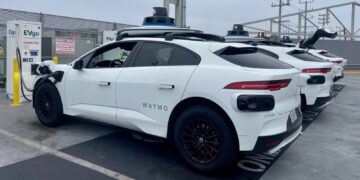

























China’s electric-vehicle industry is confronting one of the clearest examples yet of technology colliding with basic emergency safety. Regulators have launched a record recall covering roughly 4.3 million vehicles over concerns that emergency mechanical door releases can be difficult to identify or operate after a serious crash, with Tesla responsible for nearly three million affected vehicles. The timing carries added significance for Canada. Ottawa has already replaced its former 100% surtax on Chinese-made EVs with a controlled import quota carrying the normal 6.1% tariff, and thousands of quota permits have already been used. The two developments are separate—China’s recall does not automatically become a Canadian recall—but together they illustrate the challenge facing regulators as sophisticated, lower-cost and increasingly software-defined vehicles cross more borders.
China’s Recall Is Unprecedented in Scale
China’s coordinated action covers approximately 4.3 million vehicles, making it the largest automotive recall round in the country’s history. Tesla represents by far the biggest share. Its Chinese subsidiaries filed plans covering 2,975,910 Model 3, Model Y, Model S and Model X vehicles produced over several years. Other manufacturers caught in the wider regulatory sweep include Xiaomi, Leapmotor, Xpeng, Geely-controlled Zeekr and Chery. The filings were disclosed by China’s State Administration for Market Regulation on August 21, turning what had often been discussed as a Tesla-specific design controversy into an industry-wide safety issue affecting some of China’s most important electric-vehicle brands.
The terminology can be misleading, however. Regulators are not simply saying millions of exterior handles are breaking during ordinary use. For Tesla and several other manufacturers, the concern centres on emergency mechanical releases inside the vehicle that can blend into surrounding interior trim and may not be immediately recognizable. That becomes potentially serious if a major collision disables the car’s low-voltage electrical system and the normal electronic opening mechanism is unavailable. In such a moment, an emergency release is useful only if an occupant can find and operate it quickly. China’s remedy therefore includes clearer markings and, for some vehicles, software changes intended to improve post-crash window operation.
The Safety Problem Hides Behind a Minimalist Design
Electronic door controls have become part of the clean, minimalist cabin design associated with modern EVs. Tesla helped popularize the approach: occupants normally press an electronic button to open a door, while a separate mechanical mechanism serves as the backup. Other manufacturers adopted variations of the same philosophy, pairing flush exterior handles with electronically controlled latches and comparatively discreet emergency releases. Under normal conditions, the arrangement can feel seamless. A severe collision is different. If low-voltage power disappears, the backup system suddenly becomes the primary escape route, and regulators are increasingly asking whether those controls are sufficiently obvious to someone who may be injured, disoriented or unfamiliar with the vehicle.
The concern is not confined to China. In September 2025, the U.S. National Highway Traffic Safety Administration opened a preliminary investigation involving an estimated 174,290 model-year 2021 Tesla Model Y vehicles after nine reports that exterior electronic door handles became inoperative. Four reports involved people breaking windows to regain access after they could not reopen a vehicle, according to the agency. That investigation addresses a different failure scenario from China’s new recall, but the underlying question is similar: when electronics stop behaving normally, can people intuitively get into or out of the vehicle? The answer is becoming increasingly important as conventional mechanical controls disappear from modern cabins.
Tesla Carries Most of the Recall Burden
Tesla’s portion of the Chinese recall spans an unusually large slice of its fleet. The regulator lists 973,156 locally produced Model 3 vehicles and 1,956,713 locally produced Model Y vehicles, along with 35,590 imported Model 3s, 8,328 Model X vehicles and 2,123 Model S vehicles. Combined, that produces the 2,975,910-vehicle total. Production dates stretch from 2018 through April 2026 depending on model, showing that the concern is tied to a long-running design approach rather than a narrow manufacturing batch. For owners, the sheer headline number is striking because it approaches three million vehicles under one safety campaign.
Yet this is not a three-million-car hardware replacement program. Tesla’s planned response includes free warning labels that make emergency mechanical releases easier to recognize, together with an over-the-air update to the window-control software that adds a post-accident window-lowering strategy. Vehicles already carrying the required markings do not need another label. Tesla separately filed another Chinese recall involving roughly 2.74 million locally built Model 3 and Model Y vehicles over driver-attention monitoring while assisted steering is active. That second action should not be added to the door-release total when describing the scale of the door-related recall, even though both announcements arrived together and both can largely be addressed through software.
Chinese Rivals Are Caught in the Same Regulatory Sweep
Tesla may dominate the numbers, but the other filings show why the event matters beyond one company. Xiaomi filed a recall covering 390,435 SU7 vehicles, while Leapmotor’s action covers 371,200 C01 and C11 vehicles. Xpeng reported more than 264,000 affected G6, P7+ and X9 vehicles, and Geely’s Zeekr division is recalling 92,658 examples of its 007 and X models. Chery’s filing covers tens of thousands of iCAR 03 and Fengyun X3 vehicles. Different manufacturers have slightly different fixes, ranging from new labels and redesigned covers to software changes affecting unlocking or window behaviour.
That breadth changes the industry conversation. The problem is no longer easily dismissed as an unusual feature designed by a single company. Several automakers arrived at cabins in which emergency mechanical controls can be visually understated, reflecting years of competition to make interiors cleaner and increasingly digital. China’s regulator has effectively concluded that emergency operation must be standardized more clearly than styling departments have allowed. For automakers, the immediate cost of labels and software may be manageable compared with replacing millions of door assemblies. The longer-term impact could be larger, because upcoming vehicle programs may have to reconsider the balance between aerodynamic styling, electronically controlled access and unmistakable mechanical backup systems.
China Is Rewriting the Rules for Hidden Handles
The recall comes after China already decided to tighten the underlying design standards. New Chinese requirements taking effect from January 1, 2027 are designed to eliminate fully hidden door handles and require mechanical opening capability inside and outside vehicle doors. Existing approved models receive a longer transition period, extending into 2029. China became the first major auto market to move this aggressively against a feature that had become strongly associated with next-generation EV styling. Flush handles can reduce aerodynamic drag and create a cleaner exterior surface, but regulators have concluded that those advantages cannot come at the expense of obvious emergency access.
Pressure had been building internationally before the latest recall. The U.S. investigation into Model Y door operation brought the issue into formal regulatory scrutiny in North America, while Tesla itself disclosed in 2025 that it was examining a redesign that would bring its electronic and manual release mechanisms closer together. Tesla design chief Franz von Holzhausen said the objective was to make operation more intuitive during a panic situation. China’s new requirements now give automakers a hard regulatory deadline rather than simply an incentive to reconsider the design. Because many global vehicles share architecture across markets, changes originally driven by Chinese rules could eventually influence vehicles sold well beyond China.
Canada’s China-EV Policy Has Already Changed
While China tightens safety oversight at home, Canada is simultaneously allowing more Chinese-built EVs into its market under a trade arrangement announced in January. Beginning March 1, Ottawa repealed the 100% surtax it had imposed on Chinese EVs in 2024 and introduced a country-specific annual quota of 49,000 vehicles. Eligible imports inside that quota face Canada’s normal 6.1% most-favoured-nation tariff. For the first six months, ending August 31, Global Affairs Canada made 24,500 vehicles available on a first-come, first-served basis, with shipment-specific import permits required before commercial vehicles can enter the country.
The system is already being used rather than merely existing on paper. A Global Affairs Canada quota report executed August 14 showed 12,813 vehicles had been counted against the first 24,500-vehicle allocation, leaving 11,687 available at that point. The annual quota is scheduled to grow by 6.5% each year. Beginning in the second year, part of the available space will also be reserved for lower-priced vehicles, with the affordable share ultimately reaching 50% by the fifth year. Ottawa says the initial 49,000-unit limit represents less than 3% of Canada’s new-vehicle market, making the opening meaningful but deliberately controlled rather than unlimited.
The Quota Is About Where a Vehicle Is Built, Not Just Its Badge
Canada’s new rules are frequently described as opening the market to Chinese brands, but the legal framework is based on vehicle origin. It covers qualifying EVs originating in the People’s Republic of China, which is broader than simply listing companies headquartered there. That distinction matters in an industry where multinational automakers operate enormous Chinese factories and export vehicles around the world. Tesla, for example, produces Model 3 and Model Y vehicles at its Shanghai plant. Whether any particular manufacturer uses Canada’s available quota depends on its Canadian import plans and permits; the existence of the quota itself should not be read as evidence that every China-based factory is shipping vehicles here.
Nor does a lower tariff bypass Canadian vehicle-safety requirements. Global Affairs Canada administers the quota, CBSA enforces the import-permit requirement at the border, and Transport Canada separately oversees vehicle compliance. New vehicles offered for sale in Canada must meet applicable Canada Motor Vehicle Safety Standards. Foreign manufacturers participating in commercial pre-clearance processes must demonstrate their ability to certify compliant vehicles and issue notices of defect when required. Ottawa’s China agreement also explicitly anticipated work on timely vehicle certification. Trade policy can determine how many vehicles may enter and what tariff they pay; it does not replace the safety framework governing what can legally be sold.
What Canadian Buyers Should Take From the Timing
A vehicle being recalled in China does not by itself mean an identically branded vehicle in Canada has been recalled. Safety campaigns are administered under national regulatory systems, production specifications can vary by market, and manufacturers must issue Canadian notices when a safety defect or non-compliance requiring action exists here. Transport Canada maintains a national recall database and accepts defect complaints from owners. The practical lesson from the Chinese action is broader: occupants of vehicles using electronic releases should know where the mechanical backup is located before an emergency occurs. That is particularly relevant in vehicles where rear releases are less obvious than the normal electronic controls.
For Canada, the bigger significance is that increased EV competition and increased regulatory scrutiny are arriving simultaneously. The federal quota can make Chinese-built models more commercially viable, and Ottawa expects greater competition eventually to produce more affordable choices. At the same time, China’s unprecedented recall demonstrates that rapid EV innovation can create design conventions that regulators later decide need correction. Canadian safety standards remain an independent gatekeeper, but regulators, automakers and consumers now have a large real-world case study showing why emergency controls must remain intuitive even when almost everything else in a vehicle becomes electronic. A cheaper or more sophisticated EV still has to perform the simplest task of all: letting people get out.