























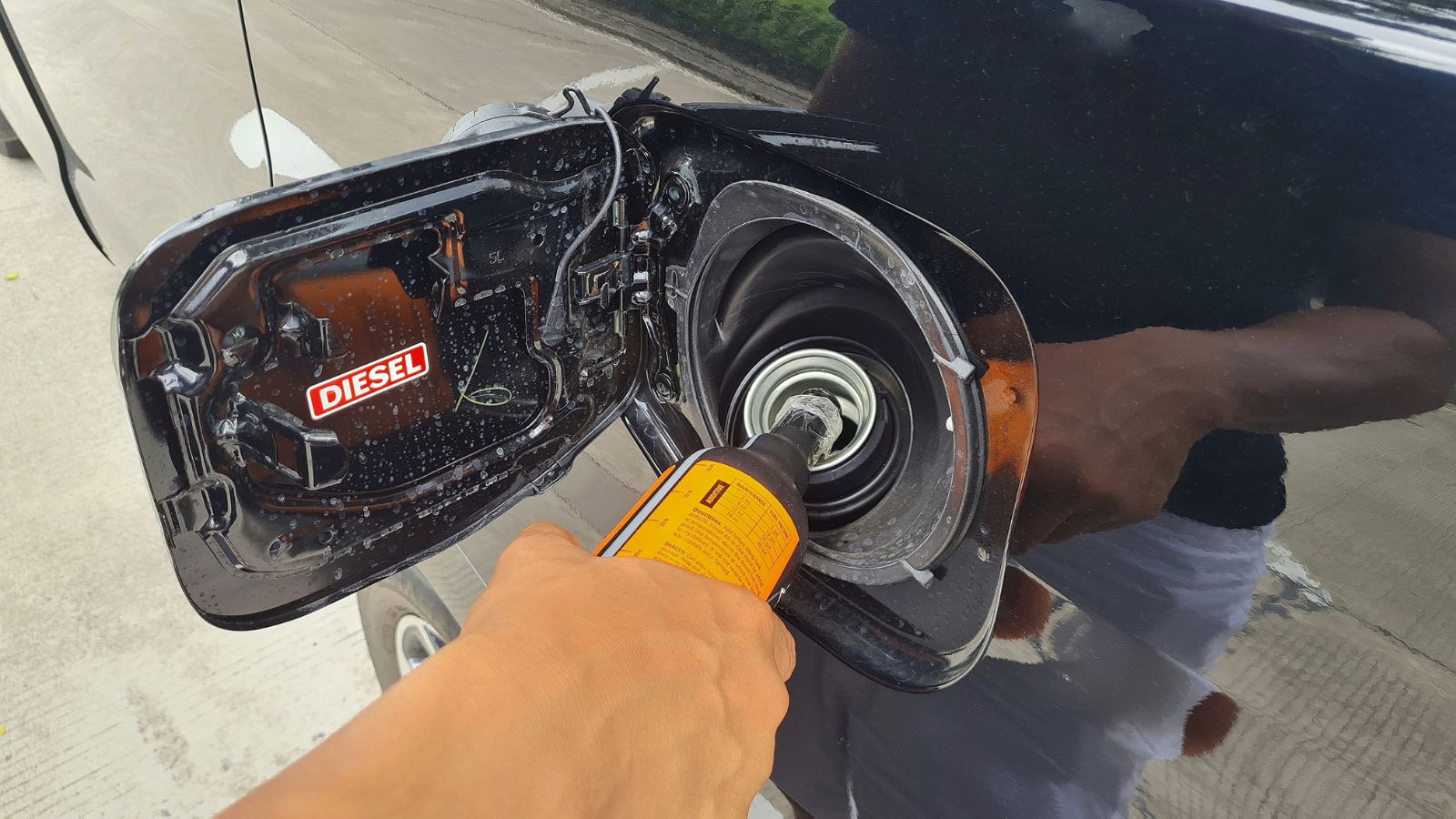
Nova Scotia drivers received some welcome relief at the pumps on Friday, November 20, 2026, as diesel prices dropped by 11.9 cents per litre overnight. However, the substantial reduction still leaves diesel among the most expensive everyday operating costs for truck owners, commercial operators, and businesses that depend on fuel.
The Nova Scotia Energy Board lowered the minimum self-service diesel price in Halifax and surrounding areas from 245.3 cents to 233.4 cents per litre, bringing a 60-litre fill-up down by $7.14.
While the decline represents meaningful savings, diesel remains considerably more expensive than regular gasoline. The latest adjustment highlights the complicated relationship between international fuel markets, provincial pricing regulations, and the financial pressures facing Nova Scotia motorists.
A Significant Overnight Drop Brings Immediate Savings
The latest reduction marks one of the more noticeable weekly diesel price declines in Nova Scotia this November. According to the Nova Scotia Energy Board’s November 20 pricing breakdown, the minimum price dropped from 245.3 cents to 233.4 cents per litre, a decrease of approximately 4.9%. The reduction took effect during the province’s regular Friday price adjustment, providing immediate relief to motorists filling their tanks. At the minimum regulated price, purchasing 100 litres of diesel now costs $233.40, compared with $245.30 previously.
For drivers who depend on diesel vehicles for commuting, business operations, or long-distance travel, those savings can accumulate. A commercial operator purchasing 100 litres each week would spend $11.90 less per fill-up at the new minimum price, assuming the same quantity of fuel. However, the lower price does not erase the broader affordability challenge. Even after the reduction, filling a large diesel tank remains a substantial expense, particularly for drivers whose work requires frequent stops at fuel stations.
Diesel Remains Nearly 50% More Expensive Than Regular Gasoline
Despite the overnight reduction, the price difference between diesel and gasoline remains striking. As of November 20, the minimum price for regular self-service gasoline in Nova Scotia’s Zone 1 stood at 156.0 cents per litre, compared with 233.4 cents for diesel. That represents a difference of 77.4 cents per litre, meaning diesel costs approximately 49.6% more at the regulated minimum prices. For a 60-litre purchase, the difference amounts to $46.44, although gasoline and diesel are not interchangeable fuels.
Several factors help explain the disparity. Diesel is closely connected to commercial transportation, industrial production, agriculture, and heating-related fuel markets. The Bank of Canada reported in October 2026 that refinery disruptions, limited spare capacity, and elevated refining margins had placed particularly strong pressure on diesel prices. Consequently, a decline in diesel’s weekly benchmark price does not necessarily eliminate the larger price premium. For Nova Scotia households operating diesel-powered vehicles, that distinction remains important when calculating monthly transportation expenses.
Falling International Diesel Prices Helped Drive the Reduction
The latest decline was influenced by changes in the market price of refined diesel, which plays a central role in Nova Scotia’s regulated pricing system. The Energy Board calculates its benchmark using trading information from the New York Mercantile Exchange, converted into Canadian dollars. For the November 20 adjustment, the diesel benchmark declined from 161.87 cents to 157.35 cents per litre, a reduction of 4.52 cents. The board’s breakdown shows that a decline in the underlying commodity-price component was partly offset by the currency-conversion component.
This distinction helps explain why movements in international oil prices do not translate directly into equivalent changes at local pumps. Nova Scotia’s formula considers refined diesel rather than crude oil alone, reflecting the market value of the fuel that suppliers actually purchase. Exchange-rate movements can also increase or reduce the savings associated with declining commodity prices. In this instance, several additional adjustments contributed to the final 11.9-cent decrease, demonstrating that local pump prices depend on more than a single international market indicator.
Winter Diesel Blending Accounts for Part of the Savings
One of the less obvious contributors to the November 20 price reduction was a substantial adjustment to the cost allowance for winter diesel blending. The Energy Board’s weekly breakdown shows that the blending allowance declined from 8.54 cents to 4.40 cents per litre, a decrease of 4.14 cents. That adjustment accounted for a meaningful portion of the overall reduction. Winter blending is particularly relevant in Atlantic Canada, where diesel must remain usable when temperatures fall and fuel-system problems become more likely.
Diesel can develop wax crystals in cold conditions, potentially restricting fuel flow through filters and other components. To address this, suppliers use winter formulations that may incorporate kerosene or other additives. The Energy Board explains that both the amount of additive required and its market cost can influence the blending allowance. For drivers, the latest adjustment is a reminder that diesel prices reflect operational requirements beyond ordinary fuel production. Although the blending allowance became smaller this week, suitable cold-weather fuel remains essential for dependable vehicle operation throughout the winter.
Taxes and Regulatory Charges Keep Pump Prices Elevated
A substantial portion of Nova Scotia’s diesel price comes from taxes, mandated adjustments, and distribution-related costs. The November 20 Energy Board breakdown includes a provincial motive fuel tax of 15.4 cents per litre and a Clean Fuel Adjustor of 10.54 cents. At the minimum regulated price, the harmonized sales tax contributes another 28.66 cents per litre. Nova Scotia’s HST rate has been 14% since April 2025, and it continues to apply to diesel purchases even as the underlying fuel price fluctuates.
Federal fuel taxation has also changed during 2026. The federal government temporarily suspended the four-cent-per-litre diesel excise tax beginning April 20 and subsequently extended that relief through January 31, 2027. Accordingly, the Energy Board’s current pricing calculation lists the federal excise tax as zero. The combined figures illustrate why falling wholesale diesel costs do not necessarily translate into equally large reductions at the pump. Even when market prices decline, provincial taxes, retail margins, and other pricing components remain part of the final amount paid by consumers.
Drivers Across Nova Scotia Pay Different Diesel Prices
Although the $2.33 figure captures attention, it does not represent the exact price at every fuel station in Nova Scotia. The province operates six regulated pricing zones, with transportation and distribution costs contributing to regional differences. Under the November 20 schedule, the minimum self-service diesel price in Zone 1, which includes Halifax, was 233.4 cents per litre. Zone 2 started at 234.0 cents, while Zones 4 and 5 had minimum prices of 234.5 cents. Zone 6, covering most of Cape Breton, had the highest minimum at 235.3 cents per litre.
The differences appear relatively modest on individual purchases, but they matter to businesses operating vehicles across provincial regions. A 100-litre purchase at the Zone 6 minimum costs $1.90 more than the same purchase at the Zone 1 minimum. Retailers also have some flexibility within regulated self-service price ranges. In Zone 1, for example, the November 20 maximum was 236.4 cents per litre, while Zone 6’s maximum reached 238.3 cents. Consequently, the price displayed at individual stations may differ from the widely reported provincial benchmark.
Atlantic Canada Faces Similar Diesel Price Pressures
Nova Scotia is not alone in confronting elevated diesel costs. Neighbouring Atlantic provinces reported comparable pump prices on November 20, suggesting that high diesel prices remain a regional affordability concern. Prince Edward Island’s Island Regulatory and Appeals Commission established a self-service diesel price range of 233.1 to 234.3 cents per litre, placing its minimum just 0.3 cents below Nova Scotia’s Zone 1 minimum. Meanwhile, New Brunswick’s Energy and Utilities Board listed a maximum self-service diesel price of 241.4 cents per litre, five cents higher than Nova Scotia’s Zone 1 maximum.
These comparisons help put the overnight price drop into perspective. Although provincial pricing systems differ, diesel remains expensive across the region, particularly for transportation businesses serving multiple Atlantic provinces. A five-cent difference adds $10 to a 200-litre purchase, potentially influencing where commercial drivers choose to refuel. However, regulated maximums and minimums should not be mistaken for actual transaction prices at every station. Taxes, retail margins, transportation costs, and provincial regulations can produce different outcomes even when the underlying fuel markets experience similar movements.
Trucking and Fishing Businesses Have More at Stake
For commercial operators, diesel prices influence far more than the cost of filling a vehicle. Trucking companies must account for fuel when setting delivery rates, evaluating routes, and managing operating budgets. Statistics Canada reported that truck transportation prices increased 9.5% year over year in the second quarter of 2026, amid rising global energy costs. Lower diesel prices can ease some of that pressure, although reductions in transportation charges may not happen immediately. Businesses must also consider labour, insurance, maintenance, and existing freight agreements.
Nova Scotia’s fishing industry faces similar exposure to fuel-price volatility. The provincial government reported that seafood exports were worth approximately $2.2 billion in 2025 and that the sector supported about 19,000 jobs. Fuel is an important expense for fishing vessels, processing operations, and distribution networks. For perspective, an 11.9-cent reduction saves $59.50 on a hypothetical 500-litre purchase. Commercial marine fuel prices may differ from regulated road-diesel prices, however, so the exact savings for fishing operators depend on their purchasing arrangements. Nevertheless, the broader direction of diesel costs remains important to businesses operating on tight margins.
November’s Price Declines Follow a Volatile Autumn
The November 20 diesel reduction is part of a broader downward movement after particularly expensive conditions earlier in the autumn. Nova Scotia Energy Board records show that the Zone 1 minimum diesel price stood at 266.5 cents per litre on October 30. It subsequently fell to 253.5 cents on November 4, reached 248.2 cents by November 7, and declined to 245.3 cents on November 13. The latest reduction brings the minimum to 233.4 cents. Altogether, that represents a decline of 33.1 cents per litre since October 30, equivalent to approximately 12.4%.
The figures demonstrate how dramatically fuel expenses can change over a relatively short period. A 100-litre purchase at the current minimum costs $33.10 less than it did at the October 30 minimum. However, the speed of the decline also underscores the uncertainty facing motorists and business operators. The Energy Board invoked its special pricing mechanism earlier in November in response to significant market movements. Such changes can provide unexpected savings, but they also illustrate why a temporary downward trend should not be confused with a guarantee of continued price reductions.
What Drivers Can Expect From the Next Price Adjustment
Nova Scotia’s next regularly scheduled fuel-price adjustment is expected on Friday, November 27, 2026, although an earlier change remains possible. The Energy Board normally recalculates petroleum prices every Friday but can invoke its interrupter mechanism when international markets experience sufficiently large movements. The board typically considers an interruption when the Canadian-dollar market price of refined gasoline or diesel changes by at least six cents per litre relative to its benchmark for more than one day. Consequently, the latest diesel reduction does not guarantee another decline next week.
The broader economic outlook also suggests that fuel-price uncertainty could persist. In its October 2026 Monetary Policy Report, the Bank of Canada projected that elevated refinery margins would remain a concern through the end of the year, with normalization occurring gradually. For Nova Scotia drivers, the November 20 reduction is therefore best understood as immediate relief rather than confirmation that diesel prices have returned to historically affordable levels. With a 60-litre purchase still costing $140.04 at the Zone 1 minimum, fuel budgeting remains important. The next meaningful development will depend on refined diesel markets, exchange rates, and the Energy Board’s updated calculations.