






















• About
  • Contact
AutoIgloo
  • News & Trends
    Stellantis Launches Up to $7,500 in Canadian Jeep Discounts as Tariff Fight Squeezes Auto Market

    Stellantis Explores China-Built Jeep Imports for Canada as 2,200 Brampton Jobs Hang in the Balance

    Nearly $20B in U.S. EV Projects Cancelled as Trump Policy Shift Reshapes Auto Investment, Reuters Finds

    Quebec Claims 53% of Canada’s EV Rebates While Ontario Gets 21%—As National Claims Fall 14%

    ⁠Toyota Confirms 10 Million-Car Software Plan as Ontario-Built RAV4 Leads New Technology Shift

    ⁠Toyota Stands by Ontario Auto Plants as U.S. Rivals Cut Back—85% of Its Output Heads for Export

    80% of Canadians Want Automakers to Prioritize Affordability Over New Technology, CarGurus Survey Finds

    Ottawa Puts $18.5 Million Into Quebec Vehicle Maker to Maintain 1,265 Jobs Amid U.S. Tariffs

    Cancelled U.S. EV Projects Had Promised 27,000 Jobs as North America’s Auto Investment Map Gets Rewritten

    Mexico Limits Auto-Parts Tariff Break to 11 Established Carmakers as Canada Faces Its Own Trade Fight

    Singapore Gives Waymo a 2028 Robotaxi Path as Canada’s Driverless-Car Rules Lag Behind Deployment

    U.S. Robotaxi Giant Waymo Targets Toronto for 2028 Launch as Canadian Fleet Partner Expands Deal

  • Car Reviews
    Honda Asked Suppliers for 30% Parts Cost Cuts as $9.4-Billion Savings Drive Hits Global Supply Chain

    Why Some Buyers Are Choosing Older Hondas Over Newer SUVs

    18 Things That Can Make a Car Unsafe for Winter Road Trips

    Why Some Drivers Are Avoiding Vehicles With Complex Infotainment Systems

    21 Cars Canadians Are Starting to Regret Buying

    Why Some Drivers Regret Buying Big Wheels and Low-Profile Tires

    17 Vehicles That Are Quietly Getting Crushed by Insurance Costs in Canada

    Why So Many Drivers Are Nervous About Chinese-Made EV Batteries

    20 Used SUVs Canadians Should Think Twice About Buying

    20 Used SUVs Canadians Should Think Twice About Buying

    15 Vehicles That Are Starting to Feel Like a Bad Deal Around May Long Weekend

    15 Vehicles That Are Starting to Feel Like a Bad Deal Around May Long Weekend

  • Buying Guides
    18 Things That Can Make a Car Harder to Park Than Expected

    Why Some Buyers Regret Choosing the Sport Package

    The Traffic Stop Mistake That Can Turn a Warning Into a Ticket

    20 Things Canadians Should Check Before Buying a Vehicle With a Loan Still Owing

    The Dealership Fee That Buyers Should Always Ask About

    The Dealership Fee That Buyers Should Always Ask About

    23 Features That Are Making New Cars Harder (and Pricier) to Repair in Canada

    Why Some Canadians Are Avoiding Cars With Expensive Windshields

    18 Red Flags a Used Vehicle May Be a Money Pit

    The Car Buying Mistake That Makes Negotiating Almost Impossible

    Why Some Canadians Are Regretting Buying Vehicles With No Spare Tire

    Why Some Canadians Are Regretting Buying Vehicles With No Spare Tire

  • Comparisons
    Honda Asked Suppliers for 30% Parts Cost Cuts as $9.4-Billion Savings Drive Hits Global Supply Chain

    Why Some Buyers Are Choosing Older Hondas Over Newer SUVs

    25 EV Charging Mistakes Canadians Make in March (That Wreck Range)

    Why Some Canadians Are Choosing Hybrids Over Full EVs Again

    21 Used Car Features That Can Become Expensive Problems Later

    Why Some Canadians Are Choosing Front-Wheel Drive Over All-Wheel Drive

    Canada’s Auto Fight Gets Uglier as BYD Threatens to Sue Trump Administration

    Tesla Vs. BYD: Are Chinese EV’s Actually Better for Canadians?

    17 Vehicles That Are Quietly Getting Crushed by Insurance Costs in Canada

    Why So Many Drivers Are Nervous About Chinese-Made EV Batteries

    20 Used SUVs Canadians Should Think Twice About Buying

    20 Used SUVs Canadians Should Think Twice About Buying

  • EVs & Hybrids
    Geely Auto’s Core Profit Jumps 46% as Chinese EV Expansion Accelerates — With Canada Now Opening to Geely-Owned Lotus

    Geely Confirms Canadian Vehicle Sales for 2027 as Chinese Automakers Challenge Established Brands

    18 Cars That Will Feel Dated Fast as New Chinese EVs Arrive

    12 EVs Now Price Below $41,000 in Canada—Fiat 500e Falls Under $30,000 With Rebate

    The Used EV Question Canadians Should Ask Before Buying One

    The Used EV Question Canadians Should Ask Before Buying One

    Why Some EV Owners Are Getting Sticker Shock From Home Charging Setups

    Why Some EV Owners Are Getting Sticker Shock From Home Charging Setups

    20 Signs Your Car Battery Is About to Leave You Stranded

    Canadian Auto Jobs Become a Central Fault Line as Ottawa Reveals Why It Rejected U.S. Vehicle Terms

    25 EV Charging Mistakes Canadians Make in March (That Wreck Range)

    Why Some Canadians Are Choosing Hybrids Over Full EVs Again

  • More
    • Pricing & Deals
    • Winter Driving
    • Ownership & Maintenance
No Result
View All Result
AutoIgloo
  • News & Trends
    Stellantis Launches Up to $7,500 in Canadian Jeep Discounts as Tariff Fight Squeezes Auto Market

    Stellantis Explores China-Built Jeep Imports for Canada as 2,200 Brampton Jobs Hang in the Balance

    Nearly $20B in U.S. EV Projects Cancelled as Trump Policy Shift Reshapes Auto Investment, Reuters Finds

    Quebec Claims 53% of Canada’s EV Rebates While Ontario Gets 21%—As National Claims Fall 14%

    ⁠Toyota Confirms 10 Million-Car Software Plan as Ontario-Built RAV4 Leads New Technology Shift

    ⁠Toyota Stands by Ontario Auto Plants as U.S. Rivals Cut Back—85% of Its Output Heads for Export

    80% of Canadians Want Automakers to Prioritize Affordability Over New Technology, CarGurus Survey Finds

    Ottawa Puts $18.5 Million Into Quebec Vehicle Maker to Maintain 1,265 Jobs Amid U.S. Tariffs

    Cancelled U.S. EV Projects Had Promised 27,000 Jobs as North America’s Auto Investment Map Gets Rewritten

    Mexico Limits Auto-Parts Tariff Break to 11 Established Carmakers as Canada Faces Its Own Trade Fight

    Singapore Gives Waymo a 2028 Robotaxi Path as Canada’s Driverless-Car Rules Lag Behind Deployment

    U.S. Robotaxi Giant Waymo Targets Toronto for 2028 Launch as Canadian Fleet Partner Expands Deal

  • Car Reviews
    Honda Asked Suppliers for 30% Parts Cost Cuts as $9.4-Billion Savings Drive Hits Global Supply Chain

    Why Some Buyers Are Choosing Older Hondas Over Newer SUVs

    18 Things That Can Make a Car Unsafe for Winter Road Trips

    Why Some Drivers Are Avoiding Vehicles With Complex Infotainment Systems

    21 Cars Canadians Are Starting to Regret Buying

    Why Some Drivers Regret Buying Big Wheels and Low-Profile Tires

    17 Vehicles That Are Quietly Getting Crushed by Insurance Costs in Canada

    Why So Many Drivers Are Nervous About Chinese-Made EV Batteries

    20 Used SUVs Canadians Should Think Twice About Buying

    20 Used SUVs Canadians Should Think Twice About Buying

    15 Vehicles That Are Starting to Feel Like a Bad Deal Around May Long Weekend

    15 Vehicles That Are Starting to Feel Like a Bad Deal Around May Long Weekend

  • Buying Guides
    18 Things That Can Make a Car Harder to Park Than Expected

    Why Some Buyers Regret Choosing the Sport Package

    The Traffic Stop Mistake That Can Turn a Warning Into a Ticket

    20 Things Canadians Should Check Before Buying a Vehicle With a Loan Still Owing

    The Dealership Fee That Buyers Should Always Ask About

    The Dealership Fee That Buyers Should Always Ask About

    23 Features That Are Making New Cars Harder (and Pricier) to Repair in Canada

    Why Some Canadians Are Avoiding Cars With Expensive Windshields

    18 Red Flags a Used Vehicle May Be a Money Pit

    The Car Buying Mistake That Makes Negotiating Almost Impossible

    Why Some Canadians Are Regretting Buying Vehicles With No Spare Tire

    Why Some Canadians Are Regretting Buying Vehicles With No Spare Tire

  • Comparisons
    Honda Asked Suppliers for 30% Parts Cost Cuts as $9.4-Billion Savings Drive Hits Global Supply Chain

    Why Some Buyers Are Choosing Older Hondas Over Newer SUVs

    25 EV Charging Mistakes Canadians Make in March (That Wreck Range)

    Why Some Canadians Are Choosing Hybrids Over Full EVs Again

    21 Used Car Features That Can Become Expensive Problems Later

    Why Some Canadians Are Choosing Front-Wheel Drive Over All-Wheel Drive

    Canada’s Auto Fight Gets Uglier as BYD Threatens to Sue Trump Administration

    Tesla Vs. BYD: Are Chinese EV’s Actually Better for Canadians?

    17 Vehicles That Are Quietly Getting Crushed by Insurance Costs in Canada

    Why So Many Drivers Are Nervous About Chinese-Made EV Batteries

    20 Used SUVs Canadians Should Think Twice About Buying

    20 Used SUVs Canadians Should Think Twice About Buying

  • EVs & Hybrids
    Geely Auto’s Core Profit Jumps 46% as Chinese EV Expansion Accelerates — With Canada Now Opening to Geely-Owned Lotus

    Geely Confirms Canadian Vehicle Sales for 2027 as Chinese Automakers Challenge Established Brands

    18 Cars That Will Feel Dated Fast as New Chinese EVs Arrive

    12 EVs Now Price Below $41,000 in Canada—Fiat 500e Falls Under $30,000 With Rebate

    The Used EV Question Canadians Should Ask Before Buying One

    The Used EV Question Canadians Should Ask Before Buying One

    Why Some EV Owners Are Getting Sticker Shock From Home Charging Setups

    Why Some EV Owners Are Getting Sticker Shock From Home Charging Setups

    20 Signs Your Car Battery Is About to Leave You Stranded

    Canadian Auto Jobs Become a Central Fault Line as Ottawa Reveals Why It Rejected U.S. Vehicle Terms

    25 EV Charging Mistakes Canadians Make in March (That Wreck Range)

    Why Some Canadians Are Choosing Hybrids Over Full EVs Again

  • More
    • Pricing & Deals
    • Winter Driving
    • Ownership & Maintenance
No Result
View All Result
AutoIgloo
No Result
View All Result

Home » News & Trends

Software Trouble Delays F1 Race as Hybrid Cars Lose Power on Wet Track

Nate Brewer by Nate Brewer
October 4, 2026
Reading Time: 6 mins read
A A
Photo Credit: Shutterstock

Photo Credit: Shutterstock

466
SHARES
1.5k
VIEWS
Share on FacebookShare on Twitter

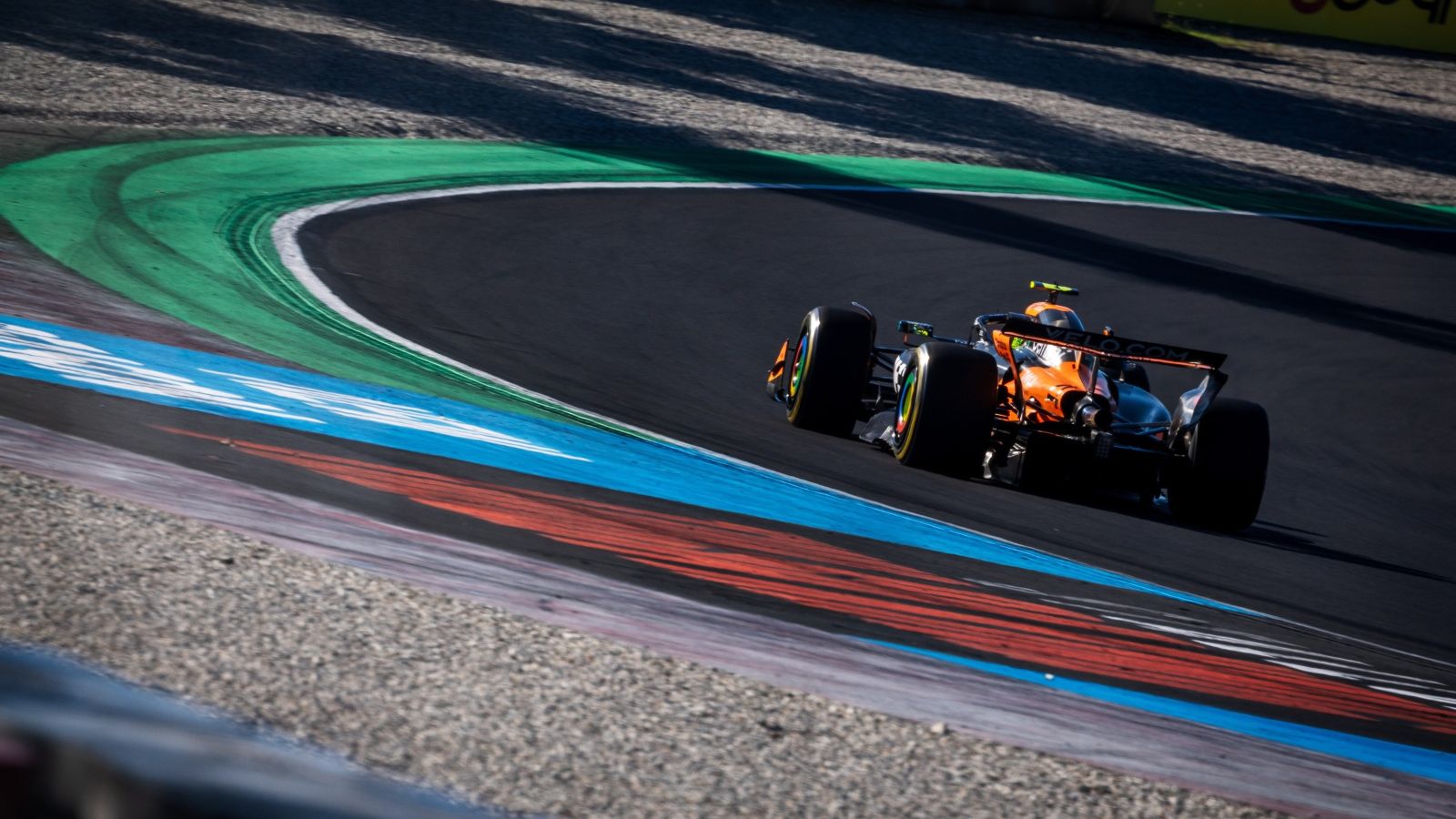
Formula 1’s 2026 Bahrain Grand Prix in Malaysia became an unexpected test of the sport’s new hybrid era before the race had properly begun. Heavy rain at Sepang first forced officials to postpone the start. Then, when the field finally headed out behind the Safety Car, several cars suddenly struggled to accelerate, with some slowing almost to a standstill. The FIA traced the problem to a software bug triggered by an unusual combination of very low engine speed, poor grip, wet-weather energy-management settings and the circuit’s sector configuration. A hurried software update eventually allowed racing to begin more than 90 minutes after the scheduled start. The episode was more than a strange wet-weather delay: it exposed how deeply power delivery, safety procedures and software have become intertwined in Formula 1’s new generation of cars.

Rain Turned One Delay Into Two

The first interruption was familiar for Sepang. A heavy downpour soaked the circuit before the scheduled 3 p.m. local start, leaving standing water and poor visibility. The Medical Car assessed conditions while marshals cleared water, and officials announced that the formation lap would begin at 3:40 p.m., 40 minutes later than planned. Every car headed away on intermediate tires behind the Safety Car as conditions remained slippery.

Then the afternoon changed completely. Isack Hadjar ran through the gravel while trying to generate tire temperature, before Max Verstappen and Lewis Hamilton reported power problems. Hamilton eventually slowed to a halt and more cars developed similar symptoms. Race Control suspended the starting procedure and brought the field back to the pits. The FIA recorded another 53-minute delay before the second start sequence, meaning the race began more than 90 minutes after its original time. Rain caused the first delay; software extended it.

The Cars Were Not Simply Spinning Their Tires

From the cockpit, this did not feel like ordinary wheelspin. Verstappen reported that he could not accelerate properly, while Hamilton told Ferrari that he was pressing the throttle without receiving the expected response. Hamilton’s car eventually stopped on the start-finish straight before recovering. Similar trouble appeared elsewhere, making it unlikely that one team had suffered an isolated mechanical failure or simply chosen the wrong setup for the wet conditions.

The fault also affected cars inconsistently. FIA single-seater director Nikolas Tombazis explained that not every driver reached the same low speed in the affected parts of Sepang. As Verstappen slowed near the front, the pack compressed and some cars braked more sharply. Cars that entered the critical low-speed condition could trigger the software problem, while others avoided it. That helped create the misleading impression that certain manufacturers were more vulnerable, even though the FIA found no manufacturer-specific reason for the pattern.

The FIA Found an Unprecedented Combination of Conditions

The FIA’s explanation was unusually specific. It identified an “unprecedented combination” of low engine speed, low grip, wet-weather energy-management settings and Sepang’s sector configuration. In certain minisectors, cars travelling extremely slowly entered a software state that prevented power from being redeployed normally. To drivers, the result felt like a throttle pedal that had stopped working, even though the underlying problem involved control logic rather than a conventional broken engine.

That distinction matters. The FIA did not find that rainwater had damaged batteries, electric motors or combustion engines across several teams. Instead, multiple conditions combined to expose a software edge case. One question remained unresolved immediately after the race: why the combustion-engine side also failed to deliver the response drivers expected when electrical deployment was restricted. Reporting from the FIA briefing said officials had no formal answer yet, although an early theory involved throttle demand being directed toward MGU-K energy recovery.

Why the 2026 Hybrid Rules Put Software at the Center

Electrical power is much more important under Formula 1’s 2026 rules. The MGU-K’s maximum capability rose from 120 kilowatts in the previous generation to 350 kilowatts, while the MGU-H disappeared. Mercedes describes the new architecture as approaching a 50:50 split between combustion and electrical output. The FIA also adjusted deployment rules during the season, allowing up to 350 kilowatts in key acceleration zones while limiting deployment elsewhere.

Software therefore sits at the heart of power delivery. FIA technical rules require the power unit and other major vehicle systems to be controlled through the FIA Standard ECU using FIA-approved software. Wet running uses reduced electrical deployment to make the cars more manageable on low-grip surfaces. That complexity is not inherently weak; sophisticated energy management is essential to these hybrids. Sepang exposed the consequence of an edge case: when control logic behaves unexpectedly, the driver can feel it immediately through the accelerator.

An Emergency Software Patch Got the Field Moving

Once engineers identified the trigger, the FIA applied a targeted workaround. Its technical department removed the energy-limit constraint in the minisectors where the low-speed condition caused trouble, then distributed updated software to every competitor. Teams still had to load the new version, resolve implementation questions and confirm that the update had been installed correctly. Tombazis estimated that this overall process consumed roughly 20 to 25 minutes of the second delay.

The uncomfortable detail was that this was an emergency patch, not a conventional software release. Tombazis acknowledged that the revised code could not receive normal validation because officials had minutes rather than days. The priority was preventing the known failure from recurring without compromising safety or sporting fairness. The cars completed the race without a repeat of that specific formation-lap problem, but the workaround did not remove the need for deeper testing before Formula 1 encounters similar wet conditions again.

Testing Had Covered the Software, but Not This Edge Case

The software had been tested before Sepang, but not in the conditions that exposed the bug. Tombazis said Formula 1 had experienced very little wet running with the 2026 cars, while earlier tests did not reproduce a field bunching up at extremely low speed behind the Safety Car with wet-weather deployment restrictions active. The missing scenario was narrow, but it became critical when several variables aligned during the formation laps.

That makes the episode a lesson in scenario design rather than simple mileage. A car can complete many laps without exploring every transition between braking, energy recovery, crawling speed and renewed acceleration. Yet slow Safety Car running is hardly unimaginable during a wet Grand Prix. Tombazis conceded that more testing probably would have uncovered the fault. Future validation can now include near-stops, abrupt bunching and repeated transitions between restricted and normal deployment, turning Sepang’s surprise into a reproducible engineering test.

Restoring the Grid Became a Question of Fairness

The aborted formation sequence created a sporting problem and a technical one. Cars returned to the pit lane scrambled because some had slowed, stopped or completed different numbers of formation laps. Using that accidental order for the restart would have punished competitors for a shared software problem rather than for anything they had done during genuine racing. Officials therefore faced a situation outside the normal start procedure.

The FIA restored the original grid, putting pole-sitter Verstappen back ahead of Hamilton, Kimi Antonelli and Charles Leclerc. Tombazis explained that some cars had completed one formation lap while others had completed two, and the regulations did not fully address that combination. Officials relied on fairness, reasoning that drivers should not be sent to the back for a fault outside their control. The decision exposed another challenge of standardized electronics: one shared problem can create sporting consequences across many unrelated teams at once.

Drivers Were More Troubled by the Loss of Control Than the Delay

The strongest reactions focused on what drivers felt through the car. Sergio Perez compared the sensation to a rental kart that stopped giving power. Oliver Bearman said his throttle pedal seemed disconnected while the engine sat at idle, calling it frightening because the behavior was outside his control. Lando Norris criticized the electronic complexity involved, while Fernando Alonso argued that Formula 1 had become increasingly difficult for spectators to understand.

Verstappen offered a memorable description, likening the slow-moving field to a “Lego race” as cars crawled together on the straight. The joke captured the spectacle, but the engineering concern was serious. Drivers can adapt to reduced grip when the relationship between pedal input and vehicle response remains predictable. Losing that predictability is different. Sepang does not prove hybrid racing unreliable; it shows that software governing power delivery must be validated for awkward, low-speed conditions as carefully as for maximum-performance running.

The Race Still Produced a Dramatic Result Once It Started

Once racing began, tire strategy replaced software as the story. The FIA recorded nine drivers starting on intermediates while the remainder gambled on slicks as Sepang dried. Verstappen, Antonelli and George Russell were among the intermediate runners, while Hamilton and Leclerc lost ground on slicks before recovering. Verstappen eventually returned to the front and won after 55 laps, finishing 2.307 seconds ahead of Antonelli and 4.919 seconds ahead of Hamilton.

It was Verstappen’s first victory of the season and the first Formula 1 win for Red Bull Ford Powertrains. Russell’s late retirement looked superficially similar to the earlier trouble but should be treated separately. Mercedes reported a suspected power-unit issue five laps from the finish, costing the team a likely double podium. Neither Mercedes nor the FIA linked that retirement to the formation-lap software bug. Similar symptoms can have different causes, and the available evidence supports keeping the incidents distinct.

The Review Now Has to Go Beyond One Bug Fix

The FIA has committed to a review with teams and power-unit manufacturers. Engineers now need to understand why the software entered the problematic loop, why the combustion-engine response disappeared, and whether combinations of speed, energy recovery and restricted deployment could create similar behavior. It must explain why cars bunching at very low speed behind a Safety Car fell outside the tested envelope.

Tombazis indicated that this specific failure can be prevented from recurring, while acknowledging that no complex software system can be guaranteed free of future bugs. That is the distinction. Formula 1 deliberately gave electrical energy a much larger role in 2026, making electronic control inseparable from performance. The answer is neither to dismiss Sepang as an unavoidable glitch nor treat one failure as proof the hybrid concept is broken. The standard has to be higher: difficult conditions should make the software more predictable, not the accelerator less trustworthy.

Recommended.

21 Driving Habits That Could Get Canadians Fined Without Realizing It

Why More Canadians Are Keeping Their Old Cars Longer Than Ever

June 29, 2026
U.S. Opens Probe Into Nearly 1,000 Tesla Cybercabs After Steering Wheel-Free Rollout

U.S. Opens Probe Into Nearly 1,000 Tesla Cybercabs After Steering Wheel-Free Rollout

September 4, 2026

Trending.

Chinese EV Price Pressure Gets a New Benchmark as Voyah Opens $63,420 Luxury MPV Orders

Europe’s EV Share Jumps to 30.5% as Electric-Car Sales Blow Past Forecasts

September 17, 2026
GM Readies New Gas and Duramax Engines for Silverado HD and Sierra HD Ahead of November Production

GM’s New V8s Put Canadian Auto Jobs Back in Focus at St. Catharines Plant

September 19, 2026
Canada’s Auto Industry Says Tariff Fight Has Already Cost the Sector More Than $100 Billion

Trump’s 50% Canada Auto-Tariff Threat Is Now Forcing Automakers to Plan Around a January 1 Deadline

September 27, 2026
Canada’s Ballard Puts a 250,000-Mile Performance Guarantee Behind Hydrogen Buses

Canada’s Ballard Puts a 250,000-Mile Performance Guarantee Behind Hydrogen Buses

October 2, 2026
Volvo Starts Scoring How Drivers Brake and Corner for Insurance Discounts — Canada Is Left Out of First Rolloutv

Volvo Plans 13 New Models by 2030 as EV and Hybrid Battle Intensifies

September 17, 2026
  • About
  • Contact
  • Privacy Policy
  • Disclaimer
  • Editorial Policies
  • Terms and Conditions
A Revir Media Group Website

2026 Autoigloo - © All rights reserved

No Result
View All Result
  • News & Trends
  • Car Reviews
  • Buying Guides
  • Comparisons
  • EVs & Hybrids
  • More
    • Pricing & Deals
    • Winter Driving
    • Ownership & Maintenance

2026 Autoigloo - © All rights reserved

This website uses cookies. By continuing to use this website you are giving consent to cookies being used. Visit our Privacy and Cookie Policy.


