


























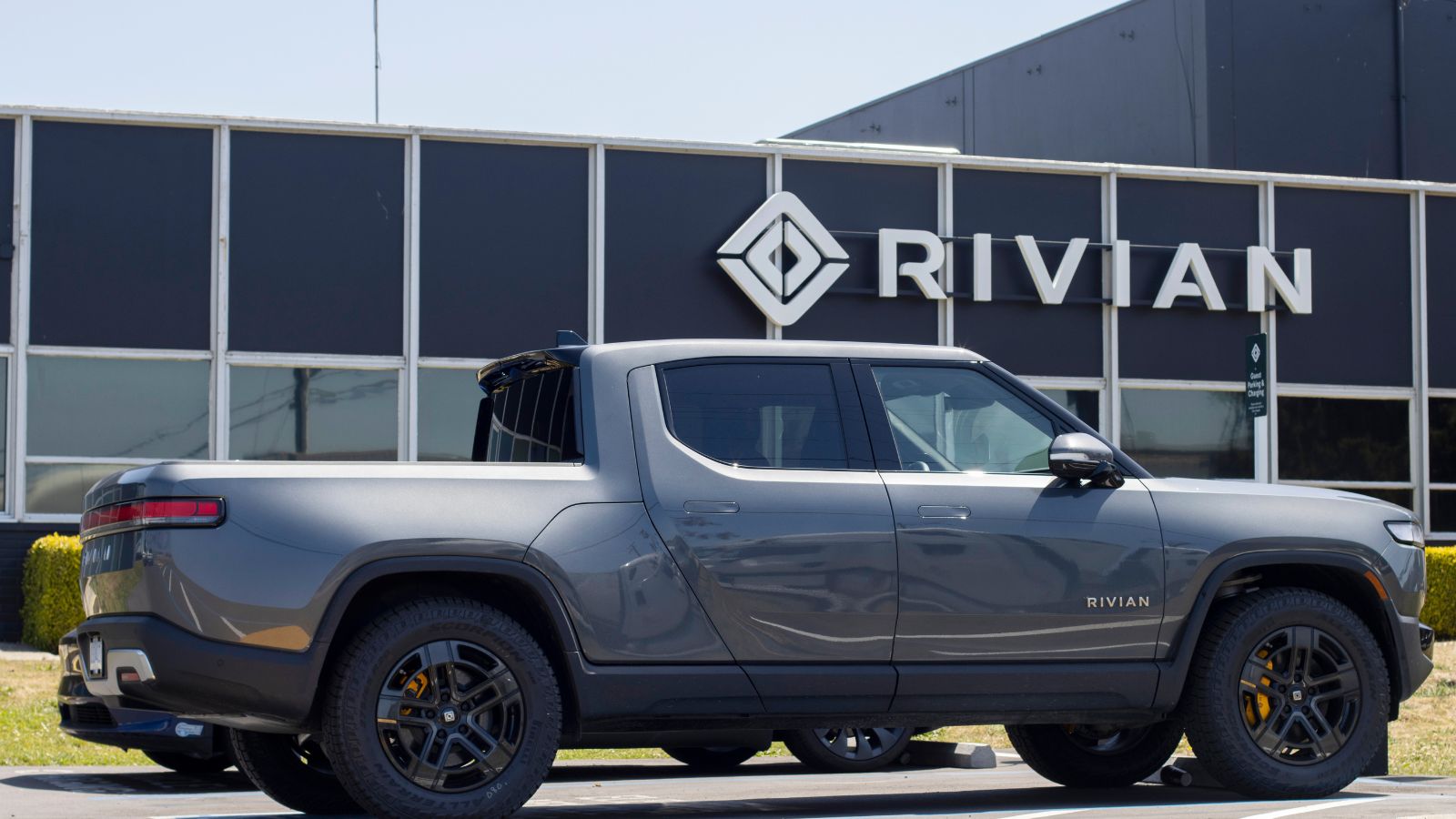
Rivian has finally addressed one of the most persistent requests surrounding its three-row electric SUV. For 2027, the R1S can be ordered with second-row captain’s chairs, creating a six-seat configuration with a walk-through aisle to the third row. The change is especially notable for Canadian shoppers because Rivian’s Canada-specific comparison page now lists captain’s chairs as an available option across the R1S range.
The seating update arrives alongside revised trim names, refreshed interiors and a new exterior colour, but it could be the cabin change that matters most to families. It gives buyers a choice the R1S previously lacked: keeping the traditional seven-seat bench or trading one passenger position for easier access, greater separation and a more premium second-row experience.
Captain’s Chairs Finally Reach the R1S
Rivian’s biggest 2027 R1S cabin change is also the one customers had been asking for most often: second-row captain’s chairs. The new setup replaces the three-person bench with two individual seats, turning the R1S from a seven-passenger SUV into a six-seater. Rivian says the captain’s-chair layout was its most requested interior feature to date, which helps explain why the change is being treated as more than a minor model-year adjustment.
For families, the appeal is easy to understand. A pair of separate second-row seats can make a large three-row SUV feel less like a crowded people-mover and more like a premium long-distance vehicle. It also creates a clear aisle to the third row, which can matter on school runs, airport trips, hockey weekends or any other outing where passengers are constantly moving between rows. The option does not change what the R1S is mechanically, but it changes how the cabin can be used.
Canada’s Rivian Site Now Shows the Option
The Canada-specific Rivian comparison page now lists captain’s chairs as an optional upgrade for the R1S Premium, Performance and Quad. That is an important detail for Canadian shoppers because Rivian’s global launch material quotes U.S.-market pricing and explicitly warns that prices can vary by market. The Canadian page currently displays starting prices of C$155,107 for Premium, C$185,107 for Performance and C$206,107 for Quad, before applicable taxes and other location-dependent charges.
The Canadian site is not perfectly synchronized in every field. Its comparison table still describes the R1S broadly as having seven-seat capacity even while its upgrades section lists captain’s chairs as optional. That apparent mismatch is best understood as a static specification field sitting beside a newly added configuration choice, rather than evidence that the six-seat version is unavailable. Rivian’s own 2027 announcement clearly describes the captain’s-chair R1S as a six-seat configuration, and the Canadian comparison page confirms the seating option has reached the local product menu.
The Centre Pass-Through Is the Practical Win
The most meaningful part of the new seating layout may be the space between the two captain’s chairs. Rivian designed the six-seat R1S around a centre pass-through, allowing passengers to reach the third row without folding or sliding a second-row seat out of the way. In the previous bench-seat arrangement, third-row access required more interaction with the second row, something that can become awkward when the vehicle is carrying children, bags or bulky winter clothing.
That detail matters more in daily life than it might sound on a specification sheet. A parent can leave a child seat installed in the second row while another passenger moves through the middle aisle. On a road trip, a third-row passenger can get in or out without forcing everyone else to reorganize. Rivian also says the open channel can accommodate long items such as skis or surfboards while all six seating positions remain usable. For Canadian buyers, the ski example is especially relevant to how many families actually use a three-row SUV.
The New Seats Keep Family-Friendly Hardware
Rivian did not turn the captain’s chairs into purely decorative luxury seats. Each one is heated, folds flat and retains full child-seat tie-downs, according to the company. Individual armrests can stow flush into the seat when they are not needed, and a push-to-release cupholder folds down from the inner edge. Those details suggest Rivian was trying to preserve the functional character of the R1S rather than simply copying the look of a traditional luxury SUV.
The child-seat compatibility is particularly important because captain’s chairs often appeal most to households carrying young passengers. Rivian’s design means a family can install a child restraint on either second-row chair and still retain the centre aisle for access to the rear. Folding the seats flat also preserves much of the R1S’s cargo flexibility when passenger duty ends. The result is a layout that attempts to balance comfort, family use and gear carrying instead of forcing buyers to choose one priority at the expense of the others.
The Seven-Seat Bench Is Not Going Away
The arrival of captain’s chairs does not eliminate the traditional second-row bench. Rivian says seven-seat seating remains available on both interior choices for the R1S Premium and with the Black Mountain Signature interior on Performance and Quad versions. That means the 2027 update is adding a second cabin philosophy rather than replacing the original one. Buyers who regularly need seven seats can still keep the three-person middle row.
That choice matters because captain’s chairs involve a real trade-off. They improve walk-through access and give second-row passengers more individual space, but they permanently remove one seating position. For a family that occasionally carries grandparents, teammates or an extra child, the difference between six and seven can be decisive. The bench can also be useful when the third row is folded for cargo but three people still need to sit in the second row. Rivian’s decision to offer both layouts acknowledges that better third-row access is not automatically better for every household.
Canadian Buyers Should Watch the Option Bundles
One caution is that the captain’s chairs are not priced as a simple stand-alone option in every configuration. Rivian’s U.S. ordering structure links some seating choices to interior themes and the Sound + Vision package. In U.S. pricing, the captain’s-chair configuration can range from a relatively modest add-on on higher trims to several thousand dollars more when required packages or premium interiors are included. Those figures should not be copied directly into a Canadian budget because Rivian’s launch release says its quoted prices are for U.S.-market vehicles.
For Canadians, the safest approach is to use the Canadian configurator price rather than convert a U.S. option price at the exchange rate. The Canada comparison page confirms the chairs are optional across all three trims, but localized package pricing can depend on the exact build. That distinction is important on a vehicle already starting well above C$150,000 on Rivian’s Canadian comparison page. A seating preference can quickly become part of a much larger interior and equipment decision.
The Trim Names Are Simpler for 2027
Rivian is using the 2027 model year to simplify the way the R1S lineup is named. The former Dual-Motor version becomes Premium, the Tri-Motor version becomes Performance, and Quad remains the halo model. The change is largely about presentation rather than a major mechanical reset. Premium still uses dual-motor all-wheel drive, Performance still uses three motors, and Quad still uses four motors with independent control at each wheel.
The new naming also brings the R1 family closer to the structure Rivian is using for the smaller R2. For buyers, that may make the showroom hierarchy easier to understand: Premium emphasizes range and everyday capability, Performance adds substantially more power, and Quad sits at the top. The captain’s-chair option cuts across all three trims, so buyers no longer have to climb to the most expensive powertrain just to get the more open six-seat cabin. That separation between seating choice and drivetrain is one of the more consumer-friendly parts of the update.
Performance Still Ranges From Quick to Extreme
The 2027 seating change does not come with a downgrade in the R1S’s performance credentials. Rivian rates the Premium at 533 horsepower and 610 lb-ft of torque, with an optional power upgrade increasing output to 665 horsepower and 829 lb-ft. The Performance trim uses three motors to produce 850 horsepower and 1,103 lb-ft, while the Quad reaches 1,025 horsepower and 1,198 lb-ft. Canadian specifications list 0–100 km/h times as quick as 4.6 seconds for Premium, 3.1 seconds for Performance and 2.7 seconds for Quad.
Those figures show how unusual the R1S remains among family-oriented three-row vehicles. Even the least powerful version delivers serious performance, while the upper trims combine six- or seven-seat practicality with acceleration normally associated with dedicated performance vehicles. The captain’s chairs therefore do not signal a softer mechanical direction. Rivian is adding more passenger comfort while keeping the R1S’s high-output identity intact.
Long-Range Versions Still Stretch Past 600 Kilometres
Range remains another major part of the R1S pitch. On Rivian’s Canadian comparison page, the Premium is shown with an EPA-estimated 529 kilometres using the Large battery, while the Max battery upgrade is listed at 660 kilometres. Performance is listed at 597 kilometres and Quad at 602 kilometres. Rivian’s U.S. launch material similarly quotes up to 410 miles for the R1S Premium Long Range, 371 miles for Performance and 374 miles for Quad.
The important point is that the captain’s-chair announcement does not come with a stated range penalty. Rivian says the core powertrain and capability story carries over, while the seating change is focused on cabin flexibility. Real-world range will still vary with temperature, wheels, tires, HVAC use, speed and accessories, factors Rivian specifically notes in its range disclosures. That caveat is especially relevant in Canada, where cold-weather driving can increase energy consumption. The new seats make the R1S more family-friendly without changing the basic long-distance EV proposition.
The 2027 Update Pushes the R1S Further Upmarket
Captain’s chairs arrive as part of a broader effort to sharpen the R1 as Rivian’s flagship line. The 2027 models gain revised interior names, a new Esker Silver exterior colour and a simplified trim hierarchy. Performance and Quad offer Signature cabins such as Black Mountain Signature, Ocean Coast Signature and Slate Sky Signature, while Premium uses Black Mountain and Ocean Coast themes. Rivian has also aligned some of the naming and design language with the newer R2 family.
For Canadian buyers, the larger message is that the R1S is becoming more explicitly premium rather than chasing the broadest possible price range. The Canadian comparison page places even the Premium well into six-figure territory, and the new captain’s chairs add the sort of second-row comfort expected in expensive three-row SUVs. The change will not matter to every buyer, but it removes a conspicuous omission for households that wanted an R1S yet preferred individual middle-row seats. Sometimes a small interior decision can meaningfully expand a vehicle’s appeal.