


























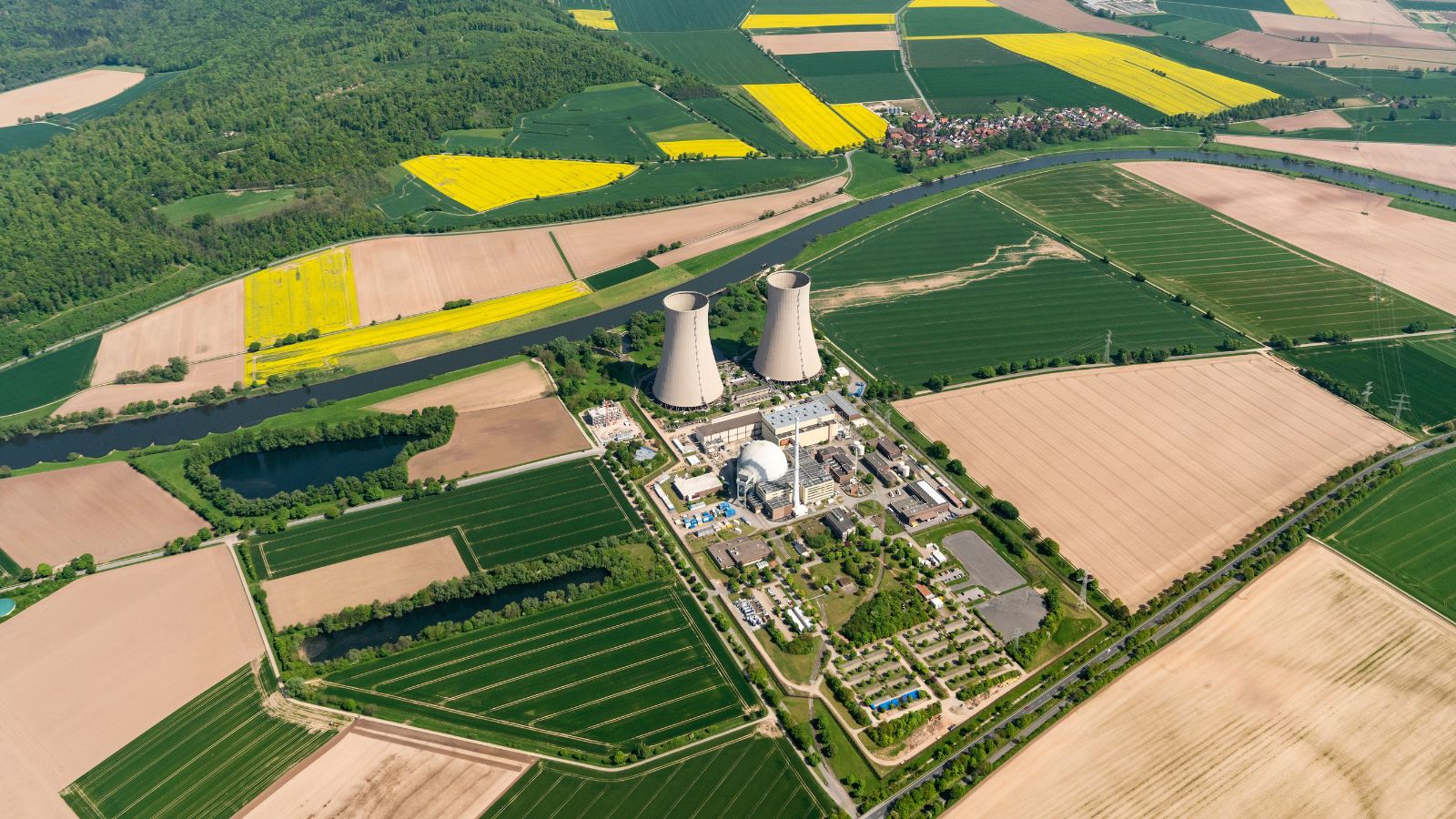
Ontario’s ambition to build what could become the world’s largest nuclear generating station has landed in a community where the nuclear age is already written into the soil.
At Wesleyville in Port Hope, Ontario Power Generation is studying a station capable of producing up to 10,000 megawatts. Yet elsewhere in the same municipality, crews are still dealing with historic low-level radioactive waste left by decades of radium and uranium refining. The federal cleanup’s budget has grown to $2.6 billion, with work expected to continue into the next decade. That collision of past and future has turned Port Hope into a test of something larger than energy policy: whether a community shaped by one nuclear legacy can be persuaded to host another nuclear project on an unprecedented scale.
A 10,000-Megawatt Project Would Reset the Global Scale
The Wesleyville proposal is enormous even by nuclear-industry standards. OPG’s early planning allows for as much as 10,000 megawatts of generating capacity, roughly enough electricity to serve the equivalent of 10 million homes under the province’s comparison. Ontario has openly promoted that upper-end scenario as the world’s largest nuclear generating station. For context, Japan’s seven-unit Kashiwazaki-Kariwa station has about 7,965 megawatts of net capacity, while Ontario’s existing Bruce station is one of the largest operating nuclear complexes.
There is an important qualifier behind those impressive numbers: Wesleyville remains a proposal, not a plant under construction. The federal Impact Assessment Agency formally began an impact assessment in July 2026, and OPG still has years of environmental studies, Indigenous engagement, engineering decisions and licensing ahead. Even the reactor technology has not been finalized. The 10,000-megawatt figure therefore describes the maximum scale being assessed, rather than a final design that has already been selected or approved.
Wesleyville Has Infrastructure That Few Greenfield Sites Can Match
Ontario did not choose an untouched corner of the province at random. OPG’s Wesleyville property covers roughly 1,300 acres on the Lake Ontario shoreline and has been associated with electricity generation plans for more than half a century. Ontario Hydro began developing an oil-fired generating station there during the 1970s before the project was abandoned. The property remained under the control of Ontario Hydro and later OPG, preserving an unusual combination of industrial zoning and strategic infrastructure.
Those characteristics matter when evaluating a project that could require decades of construction and vast amounts of supporting equipment. Wesleyville sits near transmission infrastructure, railways, major roads and Lake Ontario, which could provide cooling water depending on the eventual reactor and cooling system selected. Provincial officials point to those advantages as reasons the site could accommodate a very large station. Reusing land already designated for power generation could also avoid some challenges involved in finding an entirely new nuclear site, although it does not eliminate environmental, regulatory or community concerns.
Port Hope’s Radioactive Legacy Predates Nuclear Power Generation
The radioactive waste now being cleaned up around Port Hope did not come from a nuclear generating station. Its origin lies in radium and uranium processing that began in the 1930s and continued for decades under Eldorado Nuclear Limited, a federal Crown corporation, and its private-sector predecessors. Federal records trace the historic waste to processing activities carried out between 1933 and 1988. Materials containing uranium, radium, arsenic and other contaminants eventually ended up at industrial sites, municipal locations and private properties.
That distinction is central to understanding the current debate. A modern power reactor would operate under a regulatory system vastly different from the industrial practices of the early twentieth century, but residents do not experience history as an engineering footnote. The contamination became physically embedded in the community. Canada ultimately accepted responsibility for its long-term management, leading to the Port Hope Area Initiative. Across Port Hope and neighbouring Clarington, the initiative was designed to address roughly 1.7 million cubic metres of historic low-level radioactive waste, making it one of Canada’s largest remediation undertakings.
The $2.6-Billion Cleanup Is Still Part of Daily Life
The cleanup is far from an abstract historical program. The federal government originally committed $1.28 billion to the Port Hope Area Initiative in 2012. By 2022, the commitment had increased to $2.6 billion to carry the work through completion and long-term monitoring. In Port Hope alone, thousands of properties have been radiologically examined, and more than 1,200 residential properties and road allowances were identified as containing historic waste according to a 2026 project update.
Progress has been substantial. Canadian Nuclear Laboratories reported in June 2026 that 16 of Port Hope’s 19 major cleanup sites had been completed. Work remained at sites including the harbour and other areas, while private-property remediation was continuing. Harbour cleanup was still visibly winding down in August. The project’s current schedule extends private-property work into 2031, with final closure and capping activities expected around 2031 or 2032. For affected households, remediation can mean excavation, soil removal, landscaping restoration and lengthy coordination with cleanup crews—a tangible reminder of decisions made generations earlier.
Scientific Findings and Community Memory Do Not Always Produce the Same Answer
Port Hope’s history has generated decades of health research, and the regulatory findings are more nuanced than the town’s reputation might suggest. Canadian Nuclear Safety Commission reviews have concluded that measured environmental exposures associated with Port Hope’s nuclear industries have been below levels known to cause adverse health effects. A study of cancer incidence between 1992 and 2007 found overall cancer rates similar to Ontario and Canadian comparison populations and did not find statistically significant differences in childhood cancer, leukemia or most other radiation-sensitive cancers.
Those findings do not automatically erase community anxiety. One study identified elevated lung-cancer incidence among women, although regulators have pointed to broader health factors when interpreting local disease patterns. More importantly, public trust is not built from epidemiological statistics alone. Residents have watched radioactive soil excavated from yards, streets and public spaces and have lived through repeated testing and remediation. Critics of Wesleyville therefore argue that cumulative history must influence how a new project is evaluated. Regulators may distinguish historical contamination from future reactor operations technically; residents can reasonably view both through the lens of lived experience.
Lake Ontario Will Be at the Centre of the Environmental Review
Wesleyville’s waterfront location is an advantage for power generation and one of the project’s most sensitive environmental features. Large nuclear stations require substantial cooling systems, and OPG has not yet locked in a final cooling configuration. The impact-assessment process must therefore examine potential effects on Lake Ontario, wetlands, creeks, aquatic ecosystems, fish habitat and other environmental components surrounding the site.
Federal consultations have already revealed where some of the scrutiny will concentrate. Participants raised concerns about cooling-water temperatures, possible contamination, freshwater ecosystems, wildlife habitat, construction traffic and pressure on municipal infrastructure. Lake Ontario Waterkeeper has also argued that the scale and technological uncertainty of the project warrant especially detailed examination because millions of people rely on the lake as a drinking-water source. These concerns do not mean regulators have concluded the project would create unacceptable effects. They illustrate why the assessment exists. OPG must now produce an Impact Statement addressing requirements established jointly through the federal impact-assessment and nuclear-safety regulatory processes before major decisions can be made.
The Economic Promise Is Huge, but It Remains a Forecast
For Port Hope, the economic case being presented is almost as striking as the generating capacity. Analysis cited by Ontario and OPG estimates that an 8,000-to-10,000-megawatt Wesleyville development could contribute about $235 billion to Ontario’s GDP over a roughly 95-year project life. The same modelling projects support for about 10,500 jobs across Ontario, including approximately 1,700 jobs in Port Hope during significant phases of development, potentially lifting local employment by 15 to 20 per cent.
At the municipal level, OPG says the project could ultimately contribute $65.7 billion to Port Hope’s GDP over its life and generate roughly $10.5 million annually in municipal tax revenue. OPG has already provided $4.5 million in growth-readiness funding to help the municipality participate in assessment and planning work. Those numbers help explain why local officials see more than an electricity project: a station could reshape housing, business investment, skilled trades and the local tax base for generations. However, these are economic-model estimates based on a conceptual project. They should not be confused with guaranteed benefits or a disclosed construction budget.
Ontario Says It Needs Much More Electricity
The province’s push for new nuclear power is rooted in expectations that electricity consumption will climb sharply over the coming decades. Ontario’s Independent Electricity System Operator now forecasts about 65 per cent growth in electricity demand by 2050 under its 2026 reference scenario. Economic expansion, population growth and electrification remain major drivers, while data centres are emerging as a particularly important new load. The IESO estimates data centres could account for 8.6 per cent of provincial electricity demand by 2050.
There is considerable uncertainty around that forecast. The IESO now publishes high- and low-demand scenarios because electric-vehicle adoption, industrial investment, trade conditions and data-centre development can change quickly. Energy-efficiency programs are also expected to cut what demand otherwise would have been by about eight per cent in 2050. That uncertainty matters when contemplating infrastructure meant to operate for many decades. Ontario views nuclear power as dependable, low-carbon generation capable of supporting industrial growth. Critics counter that the province must carefully compare such investments with efficiency, storage, renewables, hydroelectricity and other resources before committing to projects of unprecedented size.
Port Hope’s Support Is Real, but It Is Not Unconditional Community Consent
Municipal leaders have taken meaningful steps toward Wesleyville. Port Hope council unanimously supported continued discussions about new generation at the site in December 2024, and the municipality signed a memorandum of understanding with OPG in February 2026. The agreement covers planning cooperation, community engagement, sustainability and economic-development preparation. Mayor Olena Hankivsky has described the arrangement as a way to prepare the municipality for possible long-term growth rather than treating the project as a finished decision.
At the same time, organized opposition is part of the public record. The Port Hope Community Health Concerns Committee has urged regulators to reject the project, pointing to the municipality’s historical contamination, unresolved questions about waste, project cost and reactor technology. Other submissions have raised concerns about Lake Ontario, housing, traffic, alternatives to nuclear generation and long-term spent-fuel management. Indigenous participation is equally fundamental. OPG has been engaging with the Michi Saagiig Anishinaabeg Nations of the Williams Treaties First Nations, while the federal assessment must consider potential impacts on constitutionally protected Indigenous rights. The debate is therefore much broader than a municipal endorsement.
Port Hope Could Be Debating Wesleyville for Another 15 Years
Nothing resembling a 10,000-megawatt nuclear station will appear on the Wesleyville shoreline soon. OPG’s roadmap places impact assessment and regulatory work through the latter part of the 2020s, followed by possible applications for construction licensing in the early 2030s. Site preparation and construction, if approvals are granted, could stretch from the 2030s into the 2040s. OPG currently envisions units potentially entering service in the early-to-mid 2040s. Port Hope itself estimates that reaching the first grid connection could take approximately 15 years.
That long runway may ultimately be the most important feature of the debate. By the time Wesleyville could produce electricity, much of Port Hope’s historic-waste remediation should be finished. But the social legacy will last longer than the excavation equipment. Ontario will have to demonstrate not merely that a new nuclear station can meet modern regulatory standards, but that its scale, cost, environmental effects and benefits justify another century-long relationship between Port Hope and the nuclear sector. In this community, the future will inevitably be judged against what happened before.