



















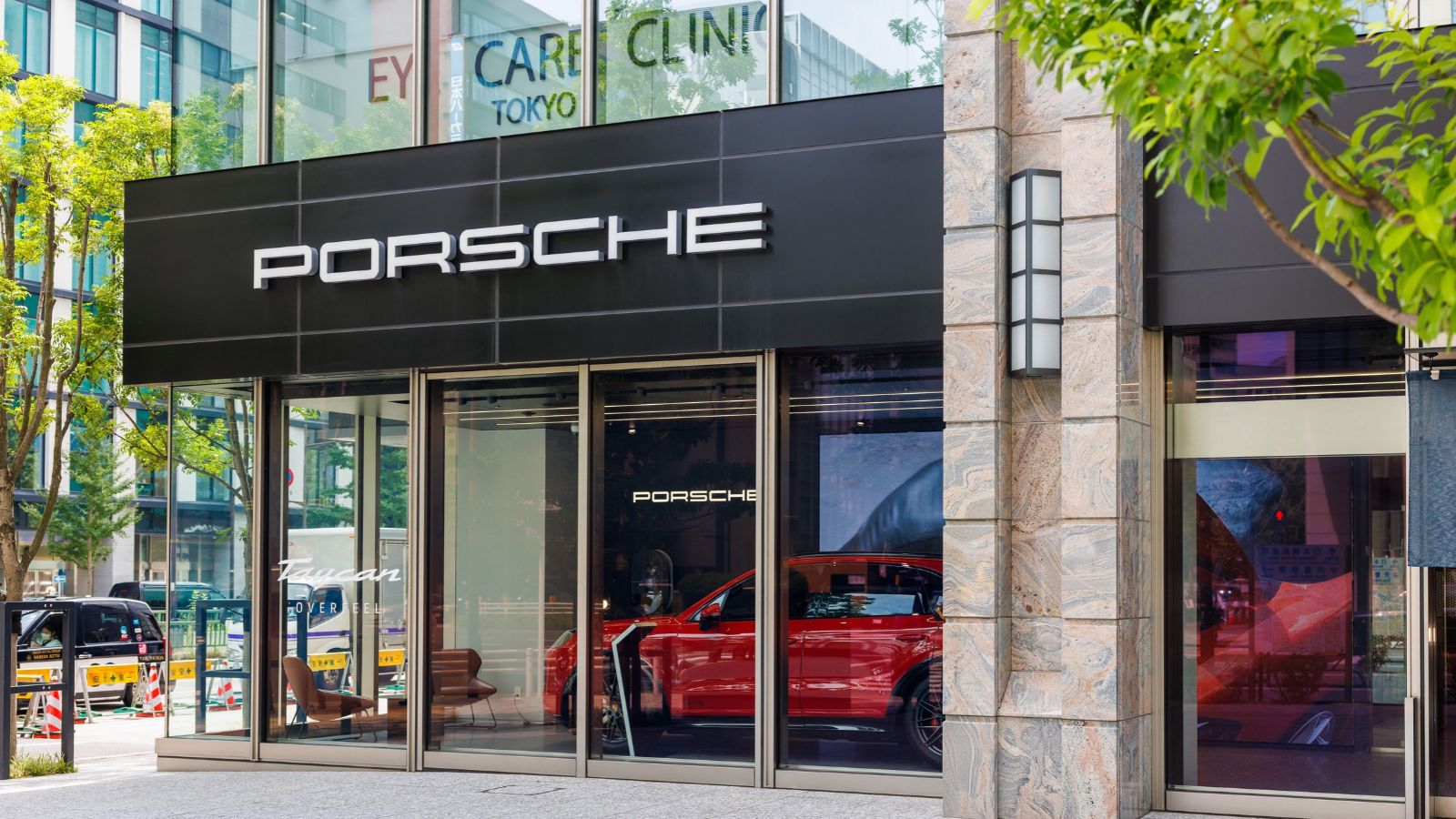
Porsche is staging a dramatic financial comeback after one of the most difficult periods in its modern history. The German luxury automaker reported €1.74 billion in operating profit for the first nine months of 2026, compared with just €40 million during the same period last year.
The recovery comes after billions of euros in restructuring costs tied to a major rethink of Porsche’s electric-vehicle ambitions. Under new chief executive Michael Leiters, the company is shifting toward higher-margin sports cars, greater exclusivity and tighter spending.
However, the stronger earnings tell only part of the story. Global vehicle deliveries are falling, competition in China remains intense, and American tariffs continue to create financial pressure. Porsche’s challenge is no longer simply restoring profitability. It is proving that a smaller, more focused business can remain successful in a rapidly changing automotive industry.
A Remarkable Profit Recovery With an Important Catch
Porsche’s financial results, released on October 27, 2026, represent a striking improvement from the previous year. Operating profit reached €1.74 billion between January and September, compared with €40 million during the corresponding nine months of 2025. Its operating return on sales climbed from just 0.2% to 6.9%. That means Porsche is once again generating meaningful operating earnings from its automotive business after an exceptionally difficult period.
However, the recovery did not come from selling more vehicles. Revenue actually declined by 5.9%, falling from €26.86 billion to €25.28 billion. Worldwide deliveries also dropped 16%, suggesting that Porsche is still struggling with weaker demand in several important markets.
The distinction matters because much of the improvement reflects lower restructuring expenses rather than a sudden surge in customer spending. Porsche also benefited from stronger pricing and a more profitable product mix. The results demonstrate that the business has become more financially resilient, but they do not establish that demand has fully recovered.
The €2.7 Billion Bill Behind Last Year’s Collapse
The biggest reason for Porsche’s extraordinary profit comparison lies in its 2025 financial accounts. During the first nine months of that year, the company recorded approximately €2.7 billion in restructuring costs associated with changing its product strategy, battery operations and organization. In the equivalent period of 2026, those expenses had fallen to around €500 million. The €2.2 billion reduction is larger than the increase in reported operating profit, illustrating how much of the turnaround reflects unusually heavy costs in the comparison year.
Those charges stemmed from difficult decisions made before Leiters took over. Porsche postponed development of a future electric-vehicle platform and extended the planned availability of combustion-engine and hybrid models. The changes required write-downs of development spending, adjustments to asset values and provisions for existing commitments.
For the full year of 2025, Porsche’s operating profit collapsed to €413 million from €5.64 billion in 2024. Its operating margin fell to 1.1%, compared with 14.1% the previous year. The improvement in 2026 is therefore both a significant financial recovery and the aftermath of a costly accounting reset.
Porsche Has Not Abandoned Electric Cars, but Its Priorities Have Changed
Porsche’s strategic reversal does not mean electric vehicles are disappearing from its product lineup. Instead, the company is moving away from an aggressive electrification timetable that proved difficult to reconcile with changing customer demand. In September 2025, Porsche announced that certain battery-electric models would arrive later than previously anticipated, while existing combustion-engine and plug-in-hybrid vehicles would remain available longer. Development of a new electric platform planned for the 2030s was also rescheduled.
The new direction gives Porsche more flexibility to respond to different markets. The manufacturer continues selling battery-powered vehicles, including the Taycan and Macan Electric, while expanding the availability of combustion and hybrid alternatives.
Electric vehicles accounted for 21.7% of deliveries during the first nine months of 2026, compared with 23.1% a year earlier. Porsche attributed the higher previous-year share partly to the rapid expansion of electric Macan deliveries in 2025. The company continues investing in battery technology but now emphasizes a balanced approach involving three powertrain types. That flexibility could protect sales, although developing multiple technologies also creates costs and complexity.
The Porsche 911 Emerges as the Bright Spot in a Difficult Year
While several Porsche models are experiencing significant declines, the legendary 911 is moving in the opposite direction. Deliveries of the sports car increased 12% during the first nine months of 2026, reaching 42,217 vehicles. It was the only major model line to register year-over-year growth. Demand for high-performance and exclusive versions, particularly GTS, Turbo and GT models, remained strong.
That performance provides important support for Porsche’s revised business strategy. The 911 is closely associated with the company’s identity, and its more expensive derivatives can command attractive prices. Strong demand for these vehicles supports the argument that exclusivity and performance remain important advantages even when overall automotive demand weakens.
Other models present a more complicated picture. The Cayenne remained Porsche’s best-selling model line, with 59,586 deliveries, down 2%. Macan deliveries fell 21% to 51,025, while the Panamera declined 35% and the electric Taycan dropped 31%.
The contrast highlights the opportunity Porsche is pursuing. Rather than concentrating entirely on increasing total vehicle sales, the company wants to sell a more profitable mix of products to customers willing to pay for distinctive engineering, performance and personalization.
China’s Luxury-Car Market Becomes Porsche’s Biggest Challenge
China was once one of the most dependable growth engines for German luxury automakers, but Porsche’s latest figures show how dramatically conditions have changed. Deliveries in the country fell 33% to 21,493 vehicles during the first nine months of 2026, compared with 32,195 during the corresponding period last year. The decline was substantially steeper than Porsche’s global delivery downturn of 16%, reflecting difficult conditions in China’s luxury-vehicle market and increasingly sophisticated competition from domestic manufacturers.
The company is also reducing its physical presence in China. Porsche previously operated approximately 150 dealerships in the country, with that number falling to around 114 by the end of 2025. Management has established a goal of reducing the network to approximately 80 outlets by the end of 2026.
This does not mean Porsche is abandoning China. Instead, it is concentrating resources on markets and customers where its brand can command premium prices. The approach may protect profitability, but it also carries risks. Chinese automakers are improving their technology, luxury features and performance, making it increasingly difficult for established European brands to depend on reputation alone.
American Tariffs Continue to Pressure Porsche’s Earnings
North America remains Porsche’s largest regional market, with 56,088 vehicles delivered during the first nine months of 2026. However, that figure represents a 13% decline compared with the 64,446 vehicles delivered during the equivalent period last year. The region remains commercially important, particularly for Porsche’s more exclusive models, but American trade policies have made selling European-manufactured vehicles more expensive.
Porsche reported approximately €200 million in tariff-related cash-flow charges during the third quarter of 2026. The company had already experienced approximately €700 million in tariff-related expenses across the full year of 2025.
Manufacturing vehicles in the United States might appear to offer a solution, particularly as Volkswagen Group’s Audi announced plans for a $4 billion production facility in Georgia. However, Porsche finance chief Jochen Breckner indicated that shifting Porsche production would introduce considerable operational complexity and require additional supplier investments.
For a manufacturer operating at lower volumes than mass-market competitors, building an American factory could create costs that outweigh potential tariff savings. Porsche therefore remains exposed to trade restrictions, making geopolitical developments an important factor in its longer-term profitability.
Porsche’s New Strategy Puts Exclusivity Ahead of Sales Volume
Michael Leiters’ turnaround strategy centers on a simple principle: selling more vehicles is not necessarily the best way to generate higher profits. Porsche is increasingly prioritizing exclusive models, additional customization and stronger earnings per vehicle rather than pursuing market share through volume growth. The approach is formalized in its new strategy, known as Sportwagenschmiede ’35, which was presented to investors in October 2026.
Among the changes, Porsche plans to reduce its range of model variants by approximately 20%, while increasing average sales per remaining variant by around 30% over the medium term. Fewer derivatives should help simplify engineering, manufacturing and inventory management.
The company also wants to increase the average selling price of its top-of-the-range models by approximately 20% over the medium term. Through its Sonderwunsch personalization program, Porsche aims to increase sales from highly customized vehicles sixfold.
For customers, this could mean more opportunities to specify exclusive finishes, materials and performance features. For Porsche, the financial objective is clear: create additional value from each sale while reducing the complexity and expense of operating an extensive product portfolio.
Stronger Cash Flow Comes With an Important One-Time Boost
Porsche’s operating-profit recovery was accompanied by a substantial improvement in automotive cash flow. Net cash flow from the automotive business reached €2.50 billion during the first nine months of 2026, compared with €1.34 billion a year earlier. The automotive net cash-flow margin increased from 5.6% to 11.3%, while net liquidity reached €8.23 billion at the end of September.
However, a significant portion of that improvement came from a transaction that will not be repeated regularly. Porsche completed the sale of its stakes in Bugatti Rimac and the Rimac Group in September, generating approximately €984 million in cash proceeds. The transaction also produced a €593 million gain recognized in Porsche’s financial result, rather than its operating profit.
The sale fits Porsche’s broader effort to concentrate resources on its core automotive operations. The company has also agreed to sell its MHP consulting subsidiary to Tata Consultancy Services, although that transaction remains subject to closing conditions.
These developments strengthen Porsche’s financial flexibility, but they require careful interpretation. Selling investments can improve liquidity without creating recurring income from vehicle manufacturing. Future results will need to demonstrate that Porsche can continue generating strong cash flow through sustainable operating performance.
Thousands of Jobs Are Caught Up in Porsche’s Restructuring
The financial turnaround carries substantial consequences for Porsche’s workforce. The company is pursuing plans to eliminate approximately 9,000 positions by 2035 as part of its broader restructuring. In July 2026, management and employee representatives agreed on an additional reduction of approximately 5,000 jobs, primarily through natural attrition, retirement arrangements and voluntary departures.
The agreement also includes employment and site protection extending through 2035, ruling out compulsory redundancies under the negotiated arrangements. Porsche has committed to investing a cumulative €2.1 billion in its Zuffenhausen manufacturing facilities and Weissach development operations over that period.
Alongside workforce reductions, Porsche wants to cut management positions by 40% over the medium term and reduce production personnel costs by as much as 30%. It also aims to lower its operating break-even point to fewer than 200,000 vehicles annually, compared with 279,449 vehicles delivered during 2025.
For engineers, production employees and their families, the changes involve more than corporate efficiency targets. They represent a fundamental adjustment to the company’s size and future operations. Porsche’s challenge is reducing costs while preserving the specialized skills and manufacturing quality that support its luxury reputation.
Upcoming Electric and Hybrid Models Will Test the New Direction
Porsche’s revised strategy includes several significant product launches, although many of their financial benefits are not expected immediately. The upcoming electric 718 Boxster and Cayman are expected to contribute to sales during their first full year of production in 2028. The timing matters because production of the previous 718 generation ended in October 2025, contributing to a 79% decline in deliveries for that model line during the first nine months of 2026.
Porsche also plans to introduce a new SUV in 2028, positioned alongside the electric Macan and available with combustion-engine and plug-in-hybrid powertrains. The company expects that model to make a noticeable contribution to sales and profitability in 2029.
Meanwhile, the electric Cayenne is already expanding Porsche’s battery-powered portfolio, with 7,002 examples delivered since customer deliveries began in the summer of 2026.
Looking further ahead, Porsche is exploring a new mid-engined super sports car platform and a potential luxury SUV positioned above the Cayenne. These projects reflect the company’s intention to pursue higher-margin products while maintaining technological diversity.
The challenge will be introducing desirable new vehicles without recreating the excessive development costs that contributed to Porsche’s earlier financial difficulties.
Porsche’s Profit-Margin Targets Reveal How Much Work Remains
Despite the stronger nine-month results, Porsche is maintaining a relatively cautious forecast for the full year of 2026. Management expects revenue between €35 billion and €36 billion, with an operating return on sales between 5.5% and 7.5%. Its automotive EBITDA margin is expected to reach 15% to 17%, while battery-electric vehicles are projected to account for 24% to 26% of deliveries.
Those targets represent considerable improvement from 2025, but they remain below the profitability levels Porsche previously enjoyed. Under its new strategy, the company is targeting an operating margin of 10% to 15% over the medium term, followed by a longer-term ambition of 15%. Reaching those levels will require sustained improvements in pricing, product mix and operating efficiency.
Porsche’s recovery from €40 million to €1.74 billion in operating profit demonstrates that its restructuring is beginning to produce measurable financial results. However, the comparison also reflects the disappearance of unusually large charges from the previous year.
The more meaningful test will come when Porsche must sustain profitability without relying on favorable comparisons or asset disposals. Strong demand for the 911, disciplined spending and greater exclusivity offer a credible path forward, but China, American tariffs and changing vehicle preferences remain significant obstacles.
Porsche has made substantial progress in stabilizing its business. Whether that recovery becomes a lasting turnaround will depend on its ability to convert a leaner operating structure into consistently higher earnings.