






















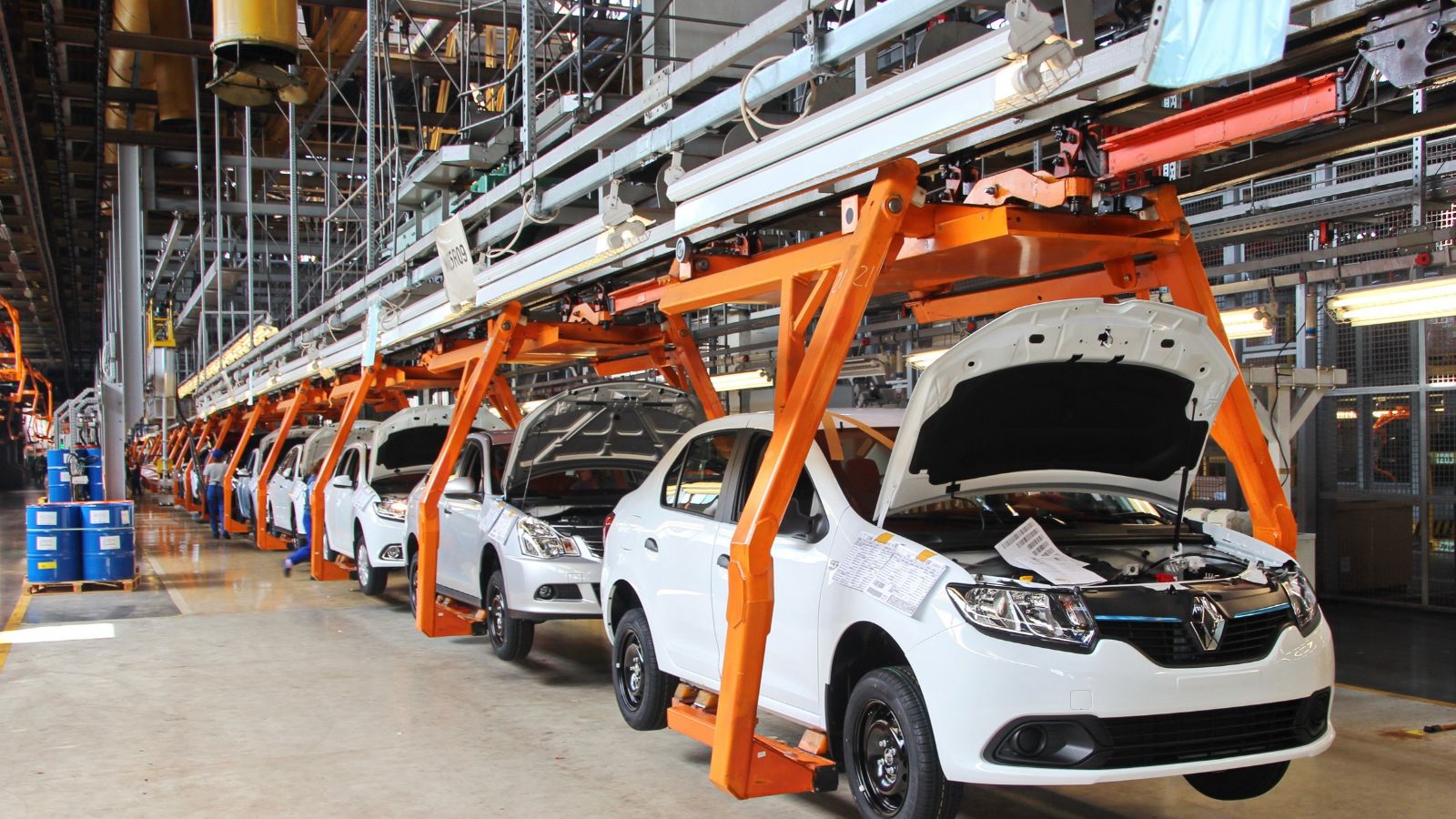
Car factories once moved east in search of lower costs. Now, changing trade barriers are encouraging Chinese automakers to establish production facilities closer to European customers.
Chinese automotive giant Great Wall Motor announced on October 27, 2026, that it will manufacture its Ora 5 compact SUV in Bulgaria beginning in early 2027, using a facility capable of producing up to 50,000 vehicles annually.
The announcement comes as European Union tariffs make China-built electric vehicles more expensive to import, pushing manufacturers to reconsider where their cars are assembled.
For Great Wall, the decision represents more than another overseas expansion. It marks a return to a Bulgarian factory that previously assembled its vehicles, offering the company a second opportunity to establish a lasting European manufacturing presence.
Great Wall Confirms Bulgaria Production Deal With 50,000-Vehicle Capacity
Great Wall Motor’s October 27 announcement establishes a manufacturing agreement with a Bulgarian partner to begin producing the Ora 5 compact SUV during the first quarter of 2027. The facility is designed to manufacture as many as 50,000 vehicles annually. However, the Chinese automaker has not disclosed the financial terms of the agreement. That production figure represents planned capacity rather than an immediate output commitment, an important distinction for understanding the project’s actual scale during its early stages.
The initial production target is considerably more modest. Bulgarian Automotive Industry, the local manufacturing partner and Great Wall distributor, previously outlined plans to assemble approximately 10,000 Ora 5 vehicles in 2027. That would represent just one-fifth of the facility’s stated annual capacity, leaving substantial room for expansion. For local suppliers, dealership operators and prospective employees, the immediate priority will be establishing reliable production rather than reaching maximum capacity. The company will also need to translate its manufacturing investment into sustained European demand, particularly in a competitive market where established brands already have extensive distribution networks.
A Second Chance for a Factory With a Complicated History
Although the announcement sounds like a brand-new manufacturing investment, the site in Bahovitsa, near the Bulgarian city of Lovech, has a longer history with Great Wall. The Chinese automaker and Bulgarian partner Litex Motors opened an assembly operation there in February 2012. Their original plans envisioned annual production of 50,000 vehicles, beginning with the Voleex C10 passenger car and eventually including models such as the Steed pickup and Haval H6 SUV. Even then, Bulgaria was being positioned as a gateway into the European automotive market.
That first attempt never reached its intended scale. Production stopped in 2016, and Litex Motors subsequently entered insolvency proceedings. The industrial property covers approximately 500,000 square metres, providing a foundation for the renewed manufacturing operation. Existing facilities and local experience could make reopening easier than developing an entirely new plant. However, the history also highlights the risks. The same 50,000-vehicle capacity discussed more than a decade ago will mean little unless Great Wall can secure orders, sustain production and build a customer base capable of supporting the investment.
The Ora 5 Brings More Than One Powertrain Into Focus
The vehicle at the centre of the agreement is the Ora 5, a compact SUV designed to strengthen Great Wall’s European lineup. The company has presented battery-electric, conventional hybrid and gasoline versions of the model, recognizing that European consumers have different budgets, driving habits and access to charging infrastructure. Someone living in an apartment without reliable charging may approach the purchase differently from a family that can charge an electric vehicle overnight. Offering several powertrains allows Great Wall to compete for customers who are interested in electrification but are not necessarily ready to switch completely.
However, a distinction remains between the versions being marketed and those that will actually leave the Bulgarian production line. During the September announcement, local representatives indicated that manufacturing would begin with the electric Ora 5, with larger plug-in hybrid models potentially following. Great Wall’s October 27 announcement did not specify the precise powertrain configuration to be produced. That detail matters because the tariff advantages, manufacturing requirements and potential customer markets can differ substantially depending on the vehicle’s technology.
EU Tariffs Change the Economics of Building Cars
The European Union’s decision to impose additional tariffs on Chinese-made electric vehicles is one of the most important forces reshaping automotive investment. Definitive countervailing duties took effect on October 30, 2024, after European investigators examined subsidies benefiting manufacturers in China. Great Wall’s battery-electric vehicles imported from China face an additional 20.7% duty on top of the EU’s standard 10% passenger-car import tariff. Combined, those rates amount to 30.7% of the relevant customs value, before other expenses. For a manufacturer competing on price, that represents a significant obstacle.
Producing vehicles within the European Union could improve Great Wall’s competitive position, but the benefits are not automatic. EU customs rules consider where substantial manufacturing takes place when determining a product’s origin. Simply completing limited final assembly may not be sufficient to change that classification, while imported components can carry their own costs. The additional countervailing duties also target battery-electric vehicles rather than conventional gasoline and hybrid cars. Consequently, Great Wall’s strategy involves more than relocating production: it must balance local manufacturing, component sourcing and different vehicle technologies.
Why Bulgaria Can Attract an Automaker Under Pressure
Bulgaria combines European Union membership with comparatively affordable labour and an existing automotive manufacturing site. According to Eurostat, average hourly labour costs in Bulgaria were approximately €12 in 2025, compared with an EU average of €34.90. These are economy-wide averages, not wages specific to automotive factories, but they illustrate the country’s cost advantage. Bulgaria has belonged to the European Union since 2007 and adopted the euro on January 1, 2026, further integrating its economy with the region’s common market.
For Great Wall, those advantages could make a Bulgarian production base less expensive than establishing operations in some of Europe’s traditional automotive centres. Nevertheless, assembling a competitive vehicle requires considerably more than affordable employees and available factory space. Workers need training, components must arrive on schedule, and quality standards must remain consistent across thousands of vehicles. Established automotive hubs in Germany, Spain and Central Europe already possess extensive supplier networks that take years to develop. Bulgaria’s appeal therefore depends on whether lower operating costs and existing infrastructure can compensate for the investment needed to rebuild an efficient manufacturing operation.
Great Wall Has a Mountain to Climb in European Sales
Great Wall’s ambitions are substantial, but its recent European sales reveal the scale of the challenge. Reuters reported that the company’s deliveries in Europe declined by almost 30% in 2025 to approximately 3,500 vehicles. At the same time, Chinese competitors including BYD, Chery and Leapmotor have been expanding their presence. For Great Wall, a new manufacturing agreement offers an opportunity to strengthen its position, but production capacity does not automatically translate into demand. Customers also consider dealership coverage, financing, servicing and long-term reliability when choosing an unfamiliar automotive brand.
The company’s broader targets are far more ambitious than its recent sales figures. Great Wall has outlined plans to manufacture 300,000 vehicles annually in Europe by 2029 and capture between 3% and 5% of the regional market by 2030. A Bulgarian facility capable of producing 50,000 vehicles would represent roughly one-sixth of that proposed manufacturing target. Great Wall also maintains European research and development capabilities in Munich to help adapt its products to local requirements. Meeting its objectives will depend on converting those investments into sustained demand, rather than simply announcing additional vehicles and factories.
Chinese Rivals Are Racing to Build Closer to Europe
Great Wall’s Bulgaria decision reflects a wider movement among Chinese automakers seeking manufacturing operations closer to European buyers. BYD has been preparing its vehicle plant in Szeged, Hungary, for production in late 2026. Chery has pursued manufacturing in Barcelona through a partnership with Spanish automaker EBRO, although plans for Chery-branded production have encountered delays. Meanwhile, Xpeng has used Magna’s contract-manufacturing facilities in Graz, Austria, to assemble electric vehicles. These companies are pursuing different approaches, but each recognizes the increasing importance of having a production presence within Europe.
Tariffs help explain the shift, yet they are not the only consideration. Building vehicles closer to their intended markets can reduce shipping distances, improve responsiveness and support stronger relationships with suppliers and dealers. European consumers also expect dependable service networks, available replacement parts and vehicles suited to local conditions. Those expectations are particularly important for newer brands competing against established manufacturers such as Volkswagen and Renault. Great Wall’s Bulgarian project may be smaller than some competing investments, but its commercial success will ultimately depend on how effectively the company combines manufacturing, distribution and customer support.
Europe’s Car Buyers Still Want Different Technologies
Great Wall’s decision to offer several powertrain options reflects a European market in which electric vehicles are growing rapidly, but have not replaced other technologies. Data from the European Automobile Manufacturers’ Association show that battery-electric vehicles accounted for 22.7% of new EU car registrations during the first nine months of 2026, up from 16.1% during the comparable period in 2025. Non-plug-in hybrids represented 36.3%, while plug-in hybrids captured another 10.1%. Petrol and diesel vehicles together accounted for 28.2%, illustrating how varied consumer preferences remain.
Those differences matter when manufacturers decide which models to assemble locally. A city commuter with dependable charging access may find the all-electric Ora 5 attractive, while a household regularly travelling long distances could prefer a hybrid. Pricing, fuel costs and charging availability can change the calculation from one country to another. Great Wall has also outlined plans to introduce at least ten new or derivative models in Europe over the next two years. That expansion could help the company reach a broader audience, provided its manufacturing and distribution networks can keep pace with changing customer demand.
Local Jobs and Suppliers Could Be the Real Dividend
For communities around Lovech, the factory’s significance extends beyond the arrival of another international automotive brand. Reopening the Bahovitsa site could create opportunities for production workers, engineers, logistics specialists and local businesses. Bulgarian reporting in September indicated that the operator had begun recruiting employees for manufacturing-related positions. Local coverage also described discussions with approximately 60 potential Bulgarian suppliers. These preparations suggest efforts to build a local operating network, although they do not establish how many permanent jobs the restarted factory will ultimately create.
The amount of work performed locally will determine how widely the economic benefits are shared. Great Wall’s earlier Bulgarian operation relied heavily on components and vehicle kits imported from China, and the renewed project is also expected to begin with substantial imported content. Over time, greater involvement by Bulgarian suppliers could support additional employment and technical expertise. Such development, however, requires investment, quality certification and dependable production volumes. For local families, the most meaningful achievement would not be a headline about factory capacity, but steady wages, reliable contracts and a manufacturing operation capable of remaining open through changing market conditions.
The First Cars, Not the Announcement, Will Define Success
The immediate milestone for Great Wall is the planned start of production in the first quarter of 2027. Before vehicles can reach European showrooms, the manufacturing operation must demonstrate that it can build cars consistently and satisfy applicable European safety, environmental and vehicle-approval requirements. Important questions remain, including which Ora 5 powertrain will be assembled, how much of each vehicle will be sourced locally and which European markets will receive the finished products. The absence of disclosed financial terms also makes it difficult to evaluate the project’s expected investment returns.
If production begins successfully, the revived Bahovitsa plant could provide Great Wall with a stronger European foothold while returning automotive manufacturing activity to a site that previously struggled. If demand falls short, the company risks repeating the earlier experience of a facility operating far below its intended capacity. The wider industry implications are significant regardless of the outcome. Tariffs, industrial policy and local market access are increasingly shaping where automakers choose to build vehicles. Yet factories ultimately depend on customers. Great Wall’s long-term success in Bulgaria will be measured by the number of vehicles it can sell profitably, not simply the number it has the capacity to produce.