





















• About
  • Contact
AutoIgloo
  • News & Trends
    Canada-U.S. Auto Tariff Talks Go Down to the Wire With 50% Duties Three Days Away

    U.S. and Canada Negotiate Auto Tariff Relief as Trump’s 50% Deadline Approaches

    Tesla Falls Outside Top 10 in EV Innovation Ranking as Geely, Volkswagen and BYD Lead

    Tesla Quietly Raises Canadian Model 3 Range to 584 km—But Buyers Still Can’t Order It

    Jeep Taps China’s Momenta for New Driver-Assist Tech on Mass-Produced Models — Canada Rollout Unconfirmed

    Jeep Gives Gladiator Buyers Factory 35-Inch Tires for the First Time, Ending a Popular Aftermarket Upgrade

    Tesla Stops Taking Orders for Its $39,490 Model 3 in Canada While 33,069 Chinese EV Import Permits Remain Unused

    Tesla Confirms Cybercab Electronics Are Coming to Model 3 Production This Year

    Brampton Trucking Company Signs Preliminary Deal for 500 Driverless Trucks as Automation Expands

    Brampton Trucking Company Signs Preliminary Deal for 500 Driverless Trucks as Automation Expands

    China’s Car Sales Forecast to Plunge 22% as Chinese Automakers Expand Toward Canada

    China’s Car Sales Forecast to Plunge 22% as Chinese Automakers Expand Toward Canada

  • Car Reviews
    Mitsubishi Outlander Review: Is It Still the Underrated Family SUV?

    Mitsubishi Outlander Review: Is It Still the Underrated Family SUV?

    19 Cars With Windshields That Crack Constantly on Canadian Highways

    Subaru Forester vs Toyota RAV4: Which SUV Is Better for Canadian Winters?

    20 Cars Canadians Should Avoid If They Hate Expensive Windshield Replacements

    Hyundai Tucson vs Kia Sportage: Which Compact SUV Is the Better Everyday Buy?

    BYD, CATL and Xiaomi Are in the Mix for Xi’s Washington Trip as Canada and U.S. Split on Chinese EV Access

    Toyota RAV4 Plug-In Hybrid vs Regular Hybrid: Which One Should Canadians Buy?

    17 Vehicles That Are Quietly Getting Crushed by Insurance Costs in Canada

    Honda CR-V Hybrid Review: The Family SUV That Plays It Safe

    2026 Toyota RAV4 vs Honda CR-V: Which SUV Makes More Sense for Canadians?

    2026 Toyota RAV4 vs Honda CR-V: Which SUV Makes More Sense for Canadians?

  • Buying Guides
    Mitsubishi Outlander Review: Is It Still the Underrated Family SUV?

    Mitsubishi Outlander Review: Is It Still the Underrated Family SUV?

    16 Used SUVs That Suddenly Don’t Look Like Smart Buys in Canada

    Nissan Rogue vs Honda CR-V: Which SUV Feels Better After the Test Drive?

    19 Cars With Windshields That Crack Constantly on Canadian Highways

    Subaru Forester vs Toyota RAV4: Which SUV Is Better for Canadian Winters?

    Mazda CX-5 vs Mazda CX-50: Which One Feels More Premium for the Money?

    Mazda CX-5 vs Mazda CX-50: Which One Feels More Premium for the Money?

    17 Vehicles That Are Quietly Getting Crushed by Insurance Costs in Canada

    Honda CR-V Hybrid Review: The Family SUV That Plays It Safe

    18 Cars With Parts Prices So Wild They’re Becoming Hard to Own in Canada

    Is the New Toyota RAV4 Still the Safest Bet in Canada?

  • Comparisons
    19 Cars With Windshields That Crack Constantly on Canadian Highways

    Subaru Forester vs Toyota RAV4: Which SUV Is Better for Canadian Winters?

    21 Vehicles With the Best Real-World Fuel Economy in Canada (Not Just the Sticker)

    Toyota Corolla Cross vs Honda HR-V: Which Small SUV Is Less Compromised?

    20 Cars Canadians Should Avoid If They Hate Expensive Windshield Replacements

    Hyundai Tucson vs Kia Sportage: Which Compact SUV Is the Better Everyday Buy?

    BYD, CATL and Xiaomi Are in the Mix for Xi’s Washington Trip as Canada and U.S. Split on Chinese EV Access

    Toyota RAV4 Plug-In Hybrid vs Regular Hybrid: Which One Should Canadians Buy?

    Honda Asked Suppliers for 30% Parts Cost Cuts as $9.4-Billion Savings Drive Hits Global Supply Chain

    Why Some Buyers Are Choosing Older Hondas Over Newer SUVs

    25 EV Charging Mistakes Canadians Make in March (That Wreck Range)

    Why Some Canadians Are Choosing Hybrids Over Full EVs Again

  • EVs & Hybrids
    BYD, CATL and Xiaomi Are in the Mix for Xi’s Washington Trip as Canada and U.S. Split on Chinese EV Access

    Toyota RAV4 Plug-In Hybrid vs Regular Hybrid: Which One Should Canadians Buy?

    Geely Auto’s Core Profit Jumps 46% as Chinese EV Expansion Accelerates — With Canada Now Opening to Geely-Owned Lotus

    Geely Confirms Canadian Vehicle Sales for 2027 as Chinese Automakers Challenge Established Brands

    18 Cars That Will Feel Dated Fast as New Chinese EVs Arrive

    12 EVs Now Price Below $41,000 in Canada—Fiat 500e Falls Under $30,000 With Rebate

    The Used EV Question Canadians Should Ask Before Buying One

    The Used EV Question Canadians Should Ask Before Buying One

    Why Some EV Owners Are Getting Sticker Shock From Home Charging Setups

    Why Some EV Owners Are Getting Sticker Shock From Home Charging Setups

    20 Signs Your Car Battery Is About to Leave You Stranded

    Canadian Auto Jobs Become a Central Fault Line as Ottawa Reveals Why It Rejected U.S. Vehicle Terms

  • More
    • Pricing & Deals
    • Winter Driving
    • Ownership & Maintenance
No Result
View All Result
AutoIgloo
No Result
View All Result

Home » News & Trends

U.S. and Canada Negotiate Auto Tariff Relief as Trump’s 50% Deadline Approaches

Nate Brewer by Nate Brewer
October 27, 2026
Reading Time: 5 mins read
A A
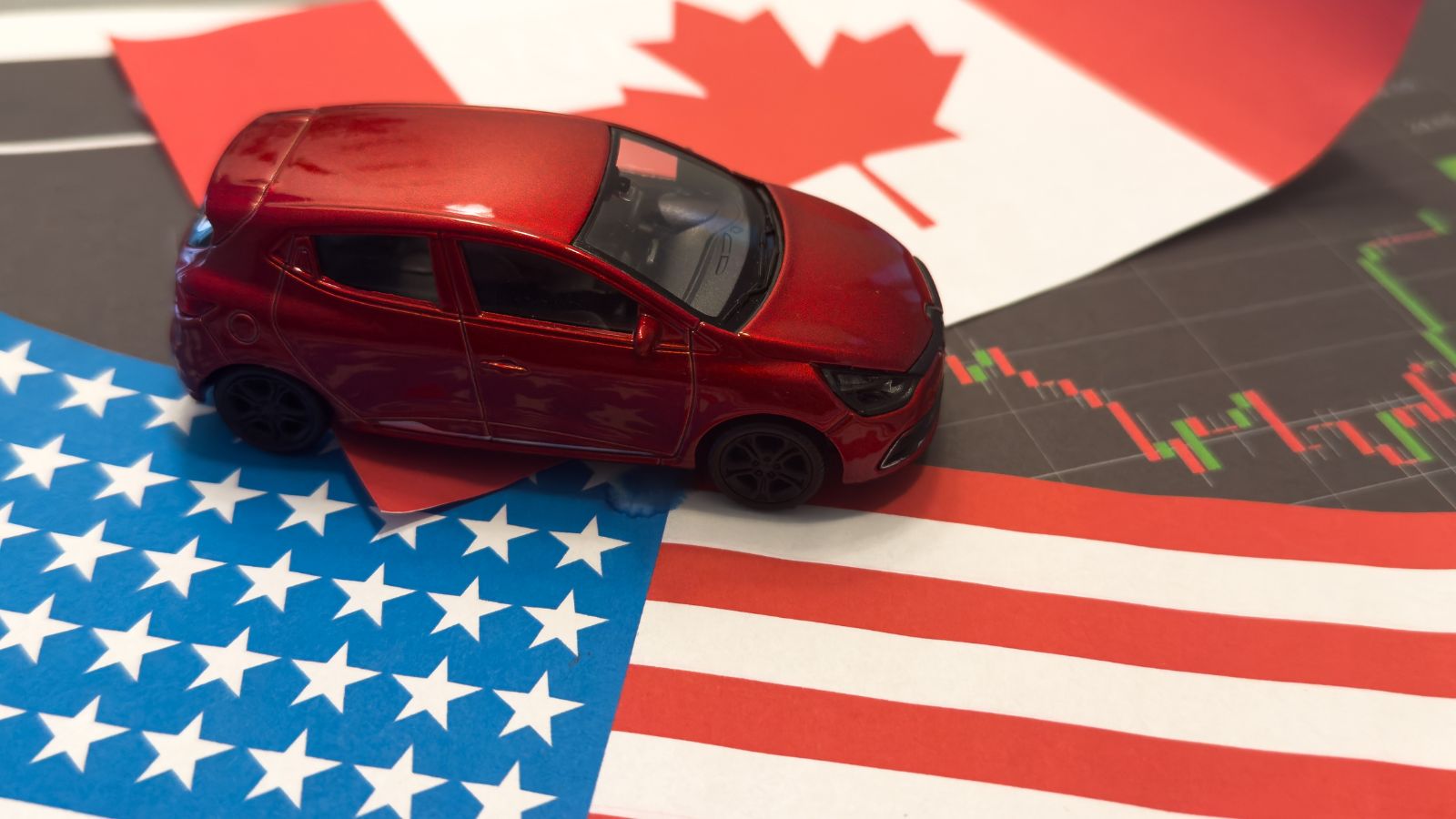
Photo Credit: Shutterstock

Photo Credit: Shutterstock

465
SHARES
1.5k
VIEWS
Share on FacebookShare on Twitter

North America’s auto industry was built around a border that often functions more like a seam than a wall. Vehicles assembled in Ontario can contain substantial U.S.-made content, while parts move back and forth through tightly synchronized supply chains before a finished model reaches a dealership. That system is now at the centre of another high-stakes trade negotiation.

As of October 27, Washington and Ottawa are discussing relief from U.S. Section 232 tariffs on Canadian autos and steel. The current U.S. auto tariff is 25% on covered Canadian content, but President Donald Trump has threatened to raise tariffs on Canadian cars, trucks and parts to 50% beginning January 1, 2027. With that date approaching and U.S. midterm elections days away, both governments have a strong reason to test whether a narrower deal can be reached before tariff pressure intensifies.

Talks Are Back, but the Target May Be Narrow

U.S. and Canadian officials have moved back into active negotiations, with Reuters reporting that discussions are focused on easing Section 232 duties affecting Canadian steel and automobiles. Commerce Secretary Howard Lutnick and Canadian trade minister Dominic LeBlanc have remained in regular contact, while the U.S. Trade Representative’s office and Canadian officials are also discussing the broader trade architecture.

The tone is more constructive than it was after talks broke down in August, but there is still no signed agreement. White House economic adviser Kevin Hassett said negotiations were gathering momentum and suggested a deal was close. Prime Minister Mark Carney was more restrained, describing only a “slight intensification” in talks and saying progress reflected Washington moving closer to Canada’s position. Reuters also reported that any near-term agreement could be narrower than earlier proposals, an important caution for automakers looking for certainty across multiple vehicle categories in North America this year.

January 1 Is the Real Auto-Tariff Flashpoint

The most important date for automakers is January 1, 2027. Trump has threatened to raise U.S. tariffs on Canadian cars, trucks and automotive parts to 50% on that date. That would be a major escalation from the current 25% Section 232 tariff applied to covered Canadian vehicle content. The distinction matters: the 50% figure is a threatened future rate, not the tariff presently collected on Canadian autos.

The timing also gives the threat a negotiating function. When Trump announced the proposed increase in August, Reuters reported that auto executives viewed it partly as leverage to restart stalled talks. A January start date leaves a window after the November 3 U.S. midterms for bargaining, but manufacturers make production, sourcing and investment decisions months or years ahead. Even without the higher tariff taking effect, uncertainty over whether it will can influence where companies allocate new models, shifts and capital across North America.

How the Current 25% Auto Tariff Actually Works

The current tariff regime is more complicated than a simple 25% charge on every Canadian vehicle. Under the U.S. Section 232 rules, automobiles face a 25% tariff, but CUSMA-compliant vehicles can have the duty applied only to their non-U.S. content. CUSMA-compliant auto parts are currently exempt from the 25% auto-parts tariff, while non-compliant products can face the full duty.

Canada has its own countermeasures. Since April 2025, Ottawa has imposed 25% tariffs on non-CUSMA-compliant U.S.-made vehicles and on the non-Canadian, non-Mexican content of qualifying U.S. vehicles. Canada also operates a remission framework allowing automakers producing in Canada to import a limited number of U.S.-made vehicles tariff-free if they maintain production and investment commitments. The result is a highly conditional system in which a vehicle’s effective tariff exposure depends on origin, content calculations and whether it qualifies for preferential treatment under CUSMA, adding paperwork and risk for manufacturers and importers today.

Why the August Deal Fell Apart

The last serious attempt at a sectoral compromise shows what relief might look like—and why reaching it is difficult. Reuters reported that an August proposal would have reduced U.S. tariffs on Canadian cars and light-duty trucks from 25% to 15%, while lowering steel and aluminum tariffs from 50% to 25%. Canada had also signalled willingness to remove remaining retaliatory tariffs if Washington substantially reduced its own measures.

The talks collapsed in part over medium- and heavy-duty vehicles. Canadian officials said relief for those trucks was essential, while U.S. officials resisted extending the lower rate to that category. The accounts of the breakdown differ: Carney said Canada was asked to accept too little, while U.S. Trade Representative Jamieson Greer disputed Canada’s description and said the truck exclusion had been clear. That disagreement matters because heavy-duty pickups and commercial vehicles support high-value assembly work, including planned investment at GM’s Oshawa operation.

An Auto Supply Chain Built Across the Border

Canada’s vulnerability comes from how deeply its auto industry is tied to the U.S. market. The federal government says more than 90% of Canadian-made vehicles and roughly 60% of Canadian-made auto parts are exported to the United States. The sector supports more than 500,000 Canadian jobs, including about 125,000 direct jobs, and produced more than 1.2 million passenger vehicles in 2025.

The dependence runs both ways. Canadian government data has estimated that roughly half the value of vehicles imported into the United States from Canada comes from U.S.-made parts. In 2025, Canadian automotive manufacturers exported about C$67.8 billion in vehicles and parts to the United States and imported roughly C$73.0 billion from it. That two-way flow helps explain why tariffs can ricochet through the same supply chain: a measure aimed at Canadian assembly can also reduce demand for American engines, electronics, metals and components supplied from U.S. factories and communities.

Factory Decisions Are Turning Tariffs Into a Jobs Story

For workers, the tariff fight is increasingly connected to decisions about shifts, future models and plant investment. Statistics Canada estimated that U.S. final demand supported about 27,000 jobs in Canadian automobile and light-duty vehicle manufacturing in 2024, representing 76.4% of the industry’s payroll employment and output. In the first quarter of 2026, just over half of Canadian manufacturing businesses reported that U.S. tariffs were having a negative impact.

Plant-level examples show why causation must be handled carefully. GM ended a temporary third shift at Oshawa in early 2026, affecting about 500 jobs, but the company said the change was driven by demand and other factors rather than tariffs. Months later, a new labour agreement included C$144 million for next-generation heavy-duty GMC Sierra production at Oshawa. The contrasting moves illustrate the broader issue: trade policy is one factor among several shaping where automakers place products, investment and employment over time nationwide.

The Midterms Have Added a Second Clock

The November 3 U.S. midterm elections have added a political clock to the economic one. Reuters reported that some Republican candidates in border states have been pressing the administration to ease trade tensions with Canada, and one source said a limited steel-and-auto agreement could potentially be reached before election day. That possibility gives negotiators an incentive to produce visible progress quickly.

There are also signs that Washington is willing to adjust parts of its Canada tariff regime selectively. The Trump administration recently removed or modified some 50% duties affecting Canadian agricultural and forestry products, while leaving the broader dispute intact. Carney has avoided declaring victory, stressing that no deal exists until terms are acceptable to Canada. That caution is important. Political pressure can accelerate talks, but it can also favour a narrow announcement that solves the most urgent problems while leaving automakers exposed to other tariffs and future rule changes.

What Relief Could Change—and What Would Still Be Unresolved

A workable auto deal would most immediately reduce tariff costs and give manufacturers a clearer basis for production planning. The August proposal’s reported 15% rate for Canadian cars and light-duty trucks provides one benchmark, but officials have not confirmed that the same number is on the table now. Reuters says current discussions could focus narrowly on Section 232 steel and auto duties rather than resolve every U.S.-Canada trade dispute.

Even a successful sectoral agreement would leave a negotiation unfinished. Canada still maintains auto countertariffs, the United States uses other tariff authorities affecting Canadian goods, and both governments continue discussing the structure of their trading relationship. CUSMA remains fully in force until 2036, according to Global Affairs Canada, while its joint-review process continues. For the auto industry, the immediate test is whether both governments can turn renewed talks into durable relief before the threatened 50% rate becomes the next operating assumption.


Recommended.

27 Tire Swap Mistakes Canadians Make Every Year (And How to Avoid Them)

27 Tire Swap Mistakes Canadians Make Every Year (And How to Avoid Them)

April 6, 2026
19 Vehicles That Could Get Hit With New Anti-Theft Rules (Immobilizers, Software, and Surprises)

19 Vehicles That Could Get Hit With New Anti-Theft Rules (Immobilizers, Software, and Surprises)

March 18, 2026

Trending.

Canada’s Ballard Puts a 250,000-Mile Performance Guarantee Behind Hydrogen Buses

Canada’s Ballard Puts a 250,000-Mile Performance Guarantee Behind Hydrogen Buses

October 2, 2026
Canada’s Auto Industry Says Tariff Fight Has Already Cost the Sector More Than $100 Billion

Trump’s 50% Canada Auto-Tariff Threat Is Now Forcing Automakers to Plan Around a January 1 Deadline

September 27, 2026
10 Reasons the Canadian Car Market Feels Different Heading Into Summer

Canadian Auto Sales Rise 3.4% for a Fourth Straight Month—but 2026 Still Trails Last Year

October 3, 2026
PBO Warns U.S. Tariff War Threatens Up to 185,000 Canadian Jobs, With Auto Manufacturing Among Hardest Hit

PBO Warns U.S. Tariff War Threatens Up to 185,000 Canadian Jobs, With Auto Manufacturing Among Hardest Hit

October 21, 2026
16 Cars That Could Be Hit Hardest by Canada’s New Price Pressures

Ford Says F-150 Production Is Back—but Parts Shortage Will Still Hit Third-Quarter Shipments

October 1, 2026
  • About
  • Contact
  • Privacy Policy
  • Disclaimer
  • Editorial Policies
  • Terms and Conditions
A Revir Media Group Website

2026 Autoigloo - © All rights reserved

No Result
View All Result
  • News & Trends
  • Car Reviews
  • Buying Guides
  • Comparisons
  • EVs & Hybrids
  • More
    • Pricing & Deals
    • Winter Driving
    • Ownership & Maintenance

2026 Autoigloo - © All rights reserved

This website uses cookies. By continuing to use this website you are giving consent to cookies being used. Visit our Privacy and Cookie Policy.