


























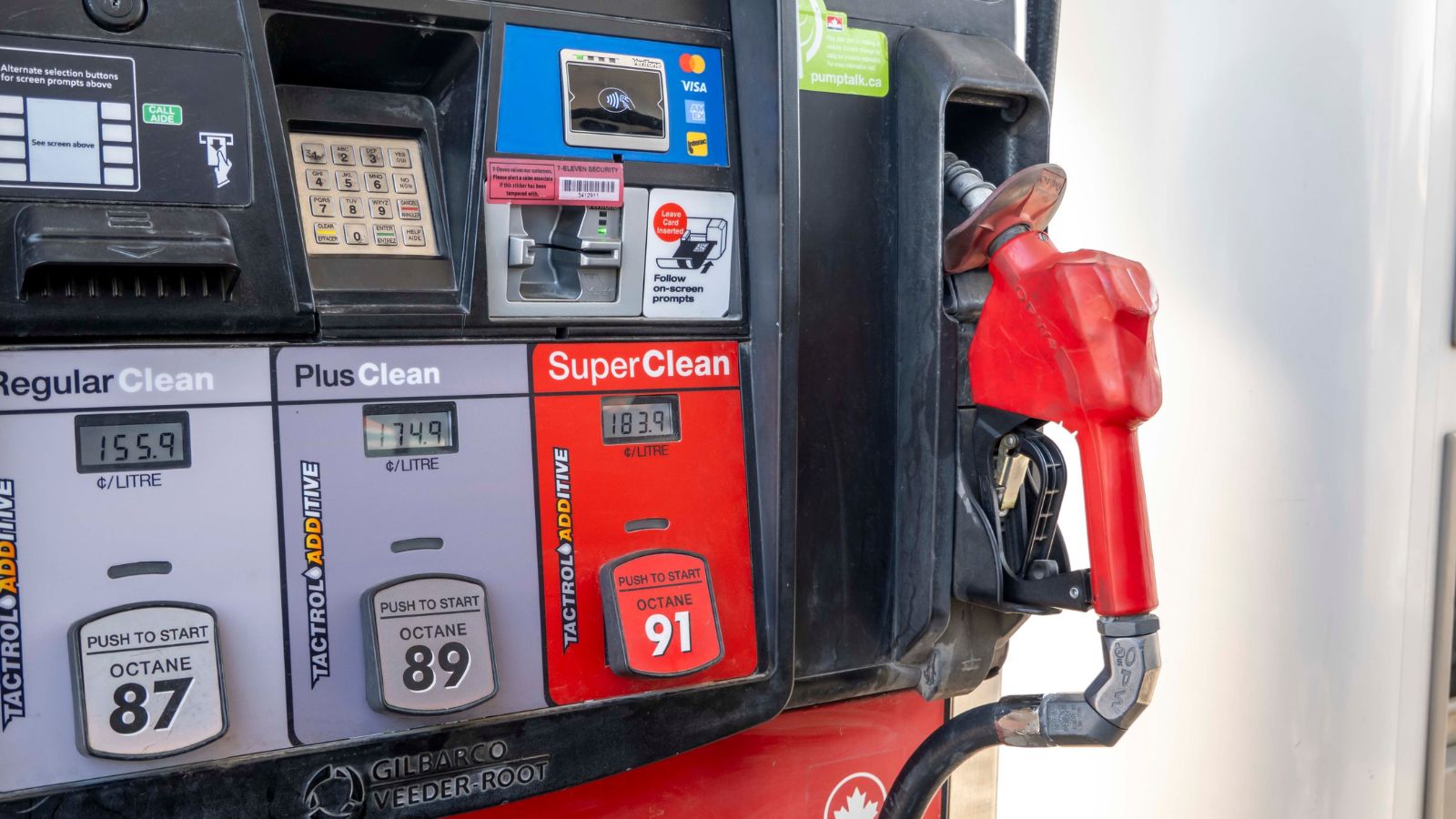
A largely invisible part of Canada’s gasoline business is getting new rules after federal competition officials raised concerns about how much fuel retailers could learn about their rivals.
On September 24, 2026, the Competition Bureau announced a legally binding consent agreement with Kalibrate Canada over its Kalibrate Market Intelligence service. The Bureau concluded that the service gave participating retailers access to detailed, commercially sensitive information about competing gas stations, creating conditions that could make aggressive competition less likely and coordination easier. Kalibrate will now have to restrict retailer-specific information, aggregate data and delay its distribution. The case does not establish that the system caused a particular increase in gasoline prices, but it offers an unusually detailed look at how competition authorities are thinking about data, algorithms and market transparency in an industry where fractions of a cent can add up quickly.
The Agreement Changes What Fuel Retailers Can See
The biggest change is not that gasoline-market data will disappear. It is that the information supplied to retailers will have to become much less useful for tracking the performance of an identifiable competitor in near real time. Under the agreement, Kalibrate cannot provide one fuel retailer with confidential or competitively sensitive information concerning another individual retailer. Aggregated market information can continue to be distributed, but it must be constructed so that the results of a particular retailer cannot effectively be worked backward from the data.
The restrictions go further than simply removing a station name from a spreadsheet. Kalibrate has also agreed not to include gasoline pricing information or non-public information identifying people who control or influence prices at individual stations. The timing of reports is changing as well. Market Intelligence data cannot cover periods shorter than one month, and reports cannot be distributed until at least 10 business days after the reporting period ends. That delay is important because yesterday’s highly detailed sales information can potentially be much more strategically useful to a competitor than an older, broad industry average.
The Dataset Was Large Enough to Matter Nationally
Kalibrate Market Intelligence, or KMI, was not a small research service following a handful of stations. Before the consent agreement, the Competition Bureau says it covered more than 7,000 retail fuel stations across Canada and represented the majority of the country’s retail motor-fuel sales volume. Participating retailers could receive information about competing stations that included fuel sales volumes, spot prices and station characteristics. The Bureau also identified station-level, grade-specific sales volumes among the types of commercially sensitive information available through the system.
That scale helps explain why regulators were interested in the service itself rather than merely the conduct of a few subscribers. Kalibrate operates a long-established Canadian fuel-data business incorporating the historical database associated with Kent Group, and KMI is also known as Kent Data. Kalibrate has separately described its Canadian database as covering roughly two-thirds of gasoline stations in previous reporting periods. For an individual operator, knowing general gasoline demand across Ontario is one thing. Knowing how much fuel a particular nearby competitor sold, broken down in unusually specific ways, can provide a much clearer picture of whether that competitor’s pricing or marketing strategy is working.
Too Much Transparency Between Competitors Can Change How They Compete
Transparency is usually presented as a benefit to markets, and often it is. Consumers benefit when they can compare prices, while businesses legitimately use industry averages to measure performance and identify broader trends. Competition authorities draw an important distinction, however, between information that helps a market function and information that removes too much uncertainty about what individual competitors are doing. The Competition Bureau says concerns grow when information is current, detailed, firm-specific and unavailable through normal observation.
That concern is well established in competition economics. A 2026 OECD review noted that information exchanges can improve efficiency but may also make coordinated conduct easier, particularly when competitors obtain sensitive information about prices, costs or future business activity. Economic research on gasoline markets has similarly examined how access to rival information can change pricing incentives. The Bureau’s concern with KMI was therefore not simply that retailers had “data.” It was that retailers could potentially observe enough non-public information about identifiable rivals to understand their performance, monitor responses to commercial decisions and detect changes in competitive behaviour. In economic terms, reducing uncertainty can sometimes remove one of the forces that pushes competitors to fight harder for customers.
The Investigation Actually Started With Algorithmic Pricing
The case took a notable turn before reaching the settlement announced in September 2026. The Competition Bureau says its investigation began in February 2024 with a focus on Kalibrate Fuel Pricing, or KPR, a separate software platform that helps retailers make pricing decisions. KPR includes analytical tools, automated pricing functions and algorithm-generated recommendations. In July 2024, the Federal Court granted an order requiring Kalibrate to produce records and written information as the Bureau investigated its data, pricing and consulting services.
After reviewing the information it obtained, however, the Bureau reached an important conclusion about KPR: it did not uncover evidence that the pricing platform used confidential information from one retailer to generate pricing recommendations for competing Canadian retailers. The investigation instead shifted toward KMI and the information being distributed through the market-intelligence product. That distinction matters as algorithmic pricing attracts greater scrutiny around the world. The Canadian enforcement action was not ultimately based on a finding that Kalibrate’s pricing algorithm was secretly combining competitors’ confidential data. The Bureau’s concern became the separate mechanism through which participating retailers could receive detailed information about one another.
This Is Not a Finding That Gas Stations Were Illegally Fixing Prices
The agreement should not be confused with a criminal price-fixing prosecution. Canadian competition officials have repeatedly explained that neighbouring gas stations charging the same price is not, by itself, evidence of an illegal agreement. Retailers can independently watch publicly displayed roadside prices and respond to them. Proving criminal price-fixing requires evidence that competitors actually agreed to fix prices, allocate markets, restrict supply or engage in another prohibited arrangement. The Kalibrate matter instead proceeded through the Competition Act’s civil abuse-of-dominance framework.
There is another important qualification. The Bureau explicitly states that the conclusions in its Kalibrate position statement have not been tested as findings of fact or law before a court or the Competition Tribunal, and the statement itself does not constitute a judicial finding of unlawful conduct. Kalibrate has also disputed the suggestion that its product was being used to inflate pump prices. Chief executive Charles Wetzel told the Financial Post that the affected tool was intended to help retailers understand and plan fuel volumes rather than set gasoline prices, and he disagreed that it would have the pricing effect regulators feared. Kalibrate nevertheless entered into the binding agreement and accepted the changes to the product.
The Case Tests Canada’s Newer Abuse-of-Dominance Rules
The legal route used by the Competition Bureau is significant beyond the gasoline sector. Amendments that became law in December 2023 changed Canada’s abuse-of-dominance rules. Under the previous structure, authorities generally had to establish dominance, a practice of anti-competitive acts and a substantial anti-competitive effect to obtain an order under section 79. The amendments restructured that test so a prohibition order can be available when a dominant company engages in a practice of anti-competitive acts or when its conduct substantially harms competition, subject to the requirements in the legislation.
In the Kalibrate settlement, the Bureau concluded for the purpose of the agreement that Kalibrate held a dominant position in the market for collecting and distributing granular, station-level retail motor-fuel data among Canadian fuel retailers. It also concluded that operating KMI in the manner identified amounted to a practice of anti-competitive acts under section 79(1)(a). The Bureau had not reached a conclusion under the separate effects branch, section 79(1)(b), when the settlement was signed. Federal officials say this is the first case resolved through a consent agreement using the restructured abuse-of-dominance provisions. Once registered with the Competition Tribunal, a consent agreement is legally binding and has the force and effect of a Tribunal order.
The Deal Does Not Mean Pump Prices Will Suddenly Drop
For motorists, the obvious question is whether the changes will produce noticeably cheaper gasoline. There is no reliable basis for promising an immediate decline. Retail gasoline prices are influenced by crude-oil costs, refining conditions, transportation expenses, wholesale prices, taxes, inventory levels, seasonal demand and local competition. A refinery outage or international oil-price shock can easily overwhelm changes occurring at the retail-competition level. The Bureau’s remedy is therefore better understood as an attempt to protect the competitive process rather than a mechanism for setting a particular pump price.
That does not make small competitive effects unimportant. The Competition Bureau estimates that an increase of only one-tenth of one cent per litre in the average Canadian retail gasoline price over a full year translates into more than $40 million in additional direct costs to consumers. At an individual fill-up, one-tenth of a cent is nearly invisible. Across billions of litres, it becomes economically meaningful. Local rivalry also matters because stations often respond rapidly to nearby competitors. The objective of the agreement is to preserve more of the uncertainty that encourages each retailer to make its own decisions and compete independently rather than having unusually detailed visibility into a rival’s commercial performance.
The Bigger Warning Extends Far Beyond Gas Stations
Perhaps the most important part of the Bureau’s announcement is its warning to businesses outside the fuel industry. Regulators specifically pointed to data-sharing arrangements, benchmarking services, market-intelligence products, trade associations and other third-party intermediaries. The concern is not that benchmarking itself is unlawful. Aggregated and sufficiently historical information can help companies understand an industry without exposing the confidential position of an identifiable competitor. Problems become more likely as information becomes more current, granular and specific to individual businesses.
That message closely matches the direction of international competition policy. The OECD’s 2026 examination of information sharing noted growing attention on platforms, data intermediaries and algorithmic systems because technology can make competitor information more frequent, precise and immediately actionable than older forms of industry reporting. The Kalibrate settlement provides a practical Canadian example of how authorities may respond: the information does not necessarily have to be eliminated, but its detail, timing and ability to identify individual firms can be restricted. For businesses increasingly built around analytics, the lesson is significant. Better data may improve decision-making, but when rival companies can see too clearly into one another’s operations, the same information can become a competition-law problem.