



















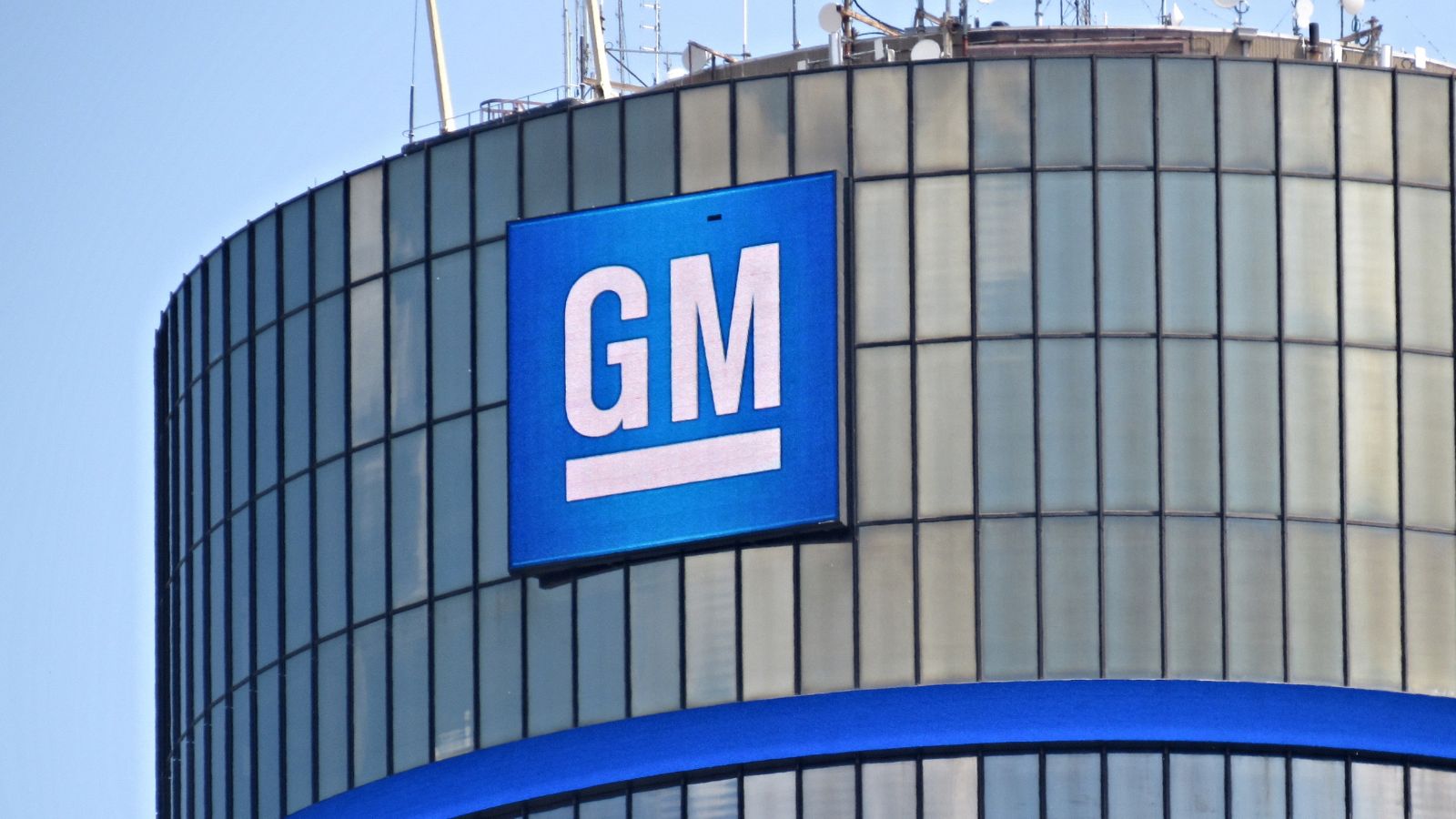
General Motors CEO Mary Barra is heading into one of Washington’s most closely watched diplomatic events with an unusually complicated automotive backdrop. Barra is expected to attend President Donald Trump’s September 24 state dinner for Chinese President Xi Jinping, just days after major auto-industry groups urged the White House to keep Chinese automakers out of the U.S. market.
Across the border, Canada has already taken a different path. Ottawa replaced its 100% surtax on qualifying Chinese electric vehicles with a controlled import quota that initially allows 49,000 vehicles a year at a 6.1% tariff. The result is a striking North American split: Detroit is pushing Washington to preserve barriers against Chinese automakers while Canada is testing what it describes as managed market access.
Barra’s Dinner Invitation Puts the Auto Fight in the Room
Barra is expected to join a high-profile collection of American business leaders at the White House state dinner for Xi, according to Reuters, which cited two people familiar with the plans. The September 24 gathering comes during Xi’s official visit to Washington and alongside broader U.S.-China discussions covering trade, technology, critical minerals and geopolitical issues. Barra’s presence is especially notable because automobiles have become one of the most sensitive commercial questions between the two countries. China has developed the world’s largest electric-vehicle industry, while direct access to the American passenger-vehicle market remains heavily constrained by tariffs and national-security rules covering connected vehicles.
There is no indication that Barra is attending as an automotive negotiator or that the dinner itself will determine U.S. vehicle policy. State dinners routinely bring corporate executives into the same room as political leaders without giving those executives formal negotiating authority. Still, the timing is difficult to ignore. Only days before the gathering, automakers, dealers and other industry groups were publicly pressing the administration not to weaken restrictions on Chinese vehicle companies. The dinner therefore puts the head of America’s largest automaker near the centre of a debate that has shifted from a distant competitive threat to an immediate trade-policy question.
Detroit Wants Washington to Keep the U.S. Door Shut
The American auto industry has been unusually direct ahead of the Trump-Xi meetings. Six automotive trade groups representing automakers, suppliers, dealers and other businesses urged the administration to maintain restrictions that make it extraordinarily difficult for Chinese manufacturers to sell vehicles in the United States. Companies represented through those organizations include General Motors, Ford, Tesla, Toyota and Volkswagen. The industry’s argument combines economic competition with national-security concerns, particularly the enormous amount of information collected and transmitted by modern connected vehicles.
The political picture is less straightforward. Trump said in September that he would be comfortable with Chinese automakers opening factories in the United States, provided they built vehicles and created jobs domestically. That position differs from the broad exclusion preferred by many auto-industry groups and lawmakers. More than two dozen Democratic lawmakers separately urged Trump to preserve restrictions ahead of the Xi visit. Republican China hawks have also pushed for a hard line toward Beijing on technology and trade. Chinese vehicles have consequently become one of the unusual areas where opposition reaches across parts of the automotive industry and both parties, even while disagreements remain over exactly how restrictive U.S. policy should be.
Barra Has Already Warned Canada About Opening the Market
Barra has not been quiet about Canada’s decision. Earlier in 2026, she described Ottawa’s move to admit a limited volume of Chinese-made EVs at the normal 6.1% tariff as a “slippery slope.” Her concern reflected a broader argument from North American manufacturers and unions: once Chinese brands establish distribution networks, consumer recognition and a regulatory foothold, their presence may become progressively harder for established automakers to contain. Canada maintains that its quota is deliberately limited and represents less than 3% of its new-vehicle market.
The complication for GM is that China is also an important part of its own business. GM and its Chinese joint ventures delivered nearly 1.9 million vehicles in China during 2025, a 2.3% increase from the previous year. Nearly one million were new-energy vehicles, which include battery-electric and plug-in models. In the second quarter of 2026 alone, GM reported more than 357,000 deliveries in China. GM is therefore competing against Chinese automakers in North America while simultaneously relying on partnerships, local products and Chinese customers inside China. Barra’s dinner appearance captures that difficult reality better than almost any corporate talking point could.
Canada’s 49,000-Vehicle Quota Is Already Operating
Canada’s opening is neither unlimited free trade nor merely a proposal waiting for implementation. The first quota year began on March 1, 2026, and runs through February 28, 2027. A maximum of 49,000 qualifying electric vehicles originating in China can enter under permits while paying Canada’s 6.1% most-favoured-nation tariff. The previous 100% surtax imposed on Chinese EVs was repealed as part of the arrangement. The initial year was divided into two periods of 24,500 vehicles, with unused capacity from the first six months carried into the second period.
Government utilization data show the system is already moving real vehicles. As of September 18, Canada reported 15,763 units of the 49,000-vehicle quota as utilized, leaving 33,237 available for the remainder of the first quota year. Most of the first-period activity came during June, July and August rather than immediately after the March launch. The numbers matter because they show that Canada’s policy is no longer an abstract future threat being debated by automakers. Import permits are being used, vehicles are entering the system and the Canadian market has become a live test of controlled access for China-made EVs in North America.
The Quota Is Designed to Become Larger—and More Affordable
The 49,000-unit ceiling is only the starting point under the Canada-China arrangement. The quota is scheduled to increase by 6.5% annually. Ottawa has also built an affordability requirement into the framework. Beginning in the second year, 10% of the quota is to be reserved for vehicles with a free-on-board value of C$35,000 or less, with that share rising until affordable vehicles account for 50% of the quota in year five. The federal government argues this structure can expand lower-cost EV choices without permitting uncontrolled import growth.
That is precisely where supporters and critics interpret the same policy differently. Ottawa describes the quota as predictable, managed access that can increase competition and potentially attract Chinese investment into Canadian manufacturing and battery supply chains. Unifor has taken the opposite view, warning that the decision threatens Canadian auto employment and parts production by giving Chinese manufacturers a foothold in the market. Dealers have also sought clarity about which brands and manufacturers will ultimately use the allocation. The debate is therefore not simply about 49,000 vehicles. It is about whether controlled imports become a bridge to Canadian production or the first stage of a much larger competitive shift.
Ottawa’s Decision Was Part of a Much Bigger Trade Bargain
Canada did not change its Chinese EV policy in isolation. The quota emerged from Prime Minister Mark Carney’s January 2026 visit to Beijing and a wider effort to reduce trade barriers between the two countries. Under the preliminary arrangement, China lowered the combined tariff applying to Canadian canola seed to roughly 15%, down from 84%, while several other Canadian agricultural and seafood products received relief from additional Chinese trade measures. Ottawa, in turn, replaced its 100% Chinese-EV surtax with the controlled quota and extended certain relief involving Chinese steel and aluminum products.
The federal government has also tied the vehicle arrangement to a longer-term industrial objective. Ottawa says it expects greater Chinese joint-venture investment with trusted partners to support Canadian auto manufacturing and the EV supply chain. That outcome is an expectation rather than a guaranteed investment commitment, which is an important distinction. Critics argue that imported vehicles could arrive much faster than new factories or component plants. Supporters see the arrangement as leverage for attracting capital and improving affordability. Either way, Canada effectively folded automobiles into a wider negotiation involving agriculture, market access and its effort to diversify trade beyond the United States.
Canada Is Not Automatically a Back Door Into the United States
The Canadian quota does not mean a China-made EV can simply enter Canada and then move tariff-free into an American showroom. CUSMA contains detailed automotive rules of origin, including a 75% North American regional-value-content requirement for passenger vehicles and light trucks seeking preferential treatment. A vehicle manufactured primarily in China would not become North American simply because it was first imported into Canada. U.S. tariffs and domestic regulatory restrictions would also continue to apply independently of Canada’s import policy.
More importantly, Washington has created another barrier that goes beyond ordinary tariffs. U.S. Commerce Department rules restrict the sale or import of connected vehicles containing certain software and hardware with a sufficient Chinese or Russian nexus. Software-related restrictions and restrictions on sales by covered Chinese or Russian manufacturers apply beginning with model-year 2027 vehicles, while specified hardware restrictions phase in later. Those rules make the U.S. situation fundamentally different from Canada’s quota system. Detroit’s concern is therefore less about 49,000 Chinese vehicles literally crossing from Canadian dealerships into the United States and more about what a successful Chinese automotive presence next door could mean for investment, suppliers, consumer expectations and future policy.
Chinese Automakers Are No Longer a Hypothetical Competitive Threat
The urgency surrounding the Trump-Xi meetings reflects what automakers are seeing outside North America. Chinese manufacturers have expanded rapidly across Europe, Britain and numerous emerging markets. Reuters reported earlier in 2026 that Chinese automakers had reached roughly 6.4% of the European Union market and about 15% in the United Kingdom, while their share exceeded 40% in Israel. Hyundai Motor CEO José Muñoz has warned that Chinese models can arrive with price advantages of roughly 30% to 40% against established competitors in some markets, helping explain why incumbents are watching their expansion so closely.
BYD offers another illustration of how quickly the competitive map is changing. Even when its domestic Chinese sales weakened in 2026, the company increasingly leaned on exports; Reuters reported its overseas vehicle sales jumped more than 80% year over year in May. GM, meanwhile, continues developing electrified products inside China with Chinese partners and technology suppliers. That combination—low-cost competitors expanding overseas while Western automakers still depend on China as a market and innovation ecosystem—is what makes Barra’s presence at the state dinner so revealing. The dispute is not simply over imports. It is over who will shape the next generation of the global automotive industry.