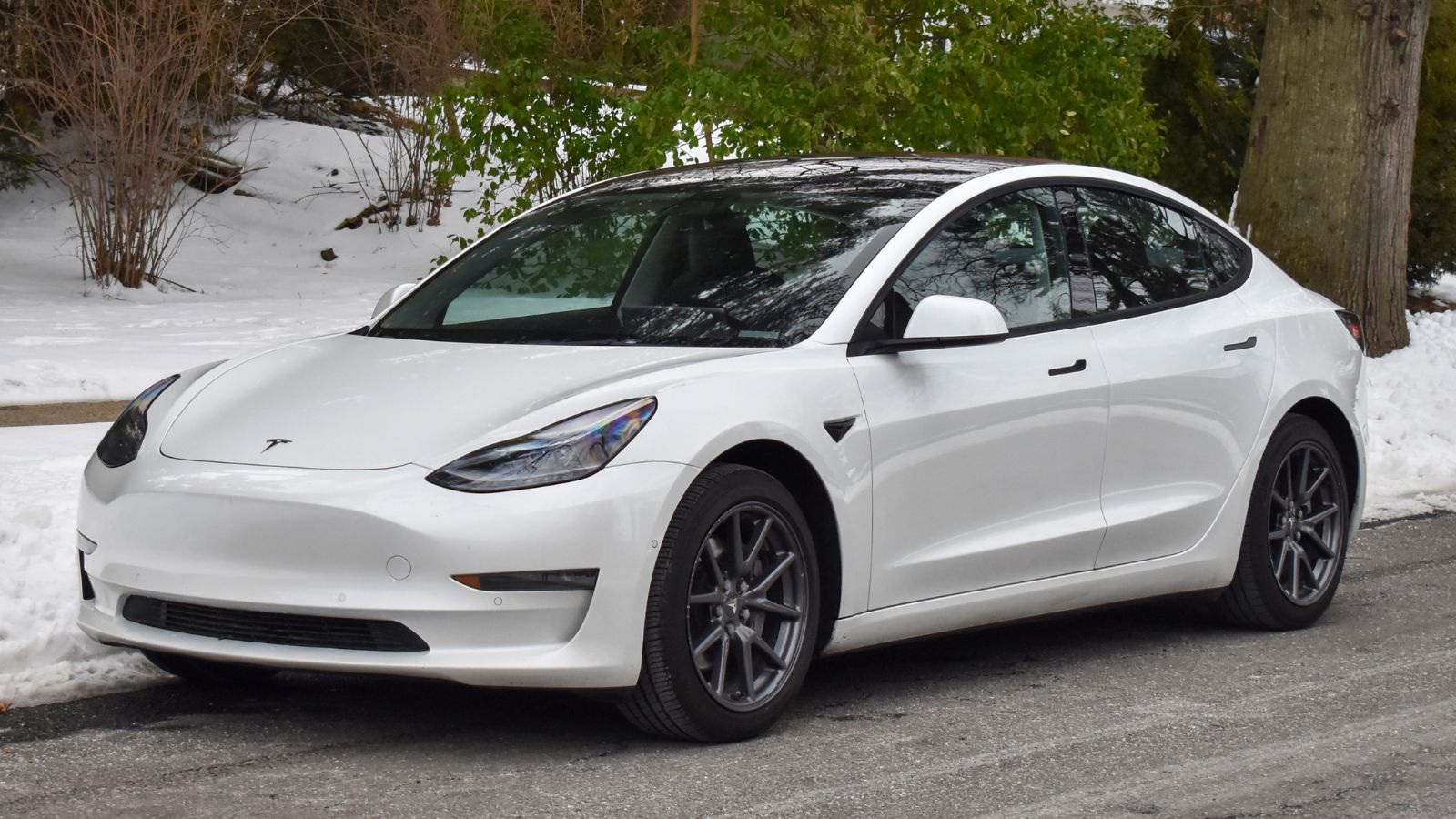
A Canadian electric car priced below $40,000 has become unavailable to order, even though Ottawa’s own records show tens of thousands of unused import spaces.
Tesla stopped accepting Canadian orders for its China-built Model 3 Premium on October 12, 2026, saying it had exhausted its import allocation. Yet federal figures updated October 9 show that 33,069 of Canada’s 49,000 annual Chinese-vehicle quota spaces remained unused.
Global Affairs Canada has now responded to questions about the discrepancy, but its explanation stops short of revealing whether Tesla faces a company-specific restriction.
The department says commercial confidentiality prevents it from disclosing individual manufacturers’ arrangements. Tesla, meanwhile, suggests the government exercises more control over import volumes than its published first-come, first-served rules indicate.
For Canadian buyers, the uncertainty has already removed one of Tesla’s least expensive vehicles from new factory ordering.
Ottawa Responds but Leaves Tesla’s Import Limit Unexplained
Global Affairs Canada has addressed the growing controversy over Tesla’s Chinese-made Model 3 imports without revealing precisely why the company cannot accept additional Canadian orders. In an October 14 statement provided to Drive Tesla Canada, department spokesperson Rachael Dolan confirmed that federal officials are consulting manufacturers about the distribution of the remaining quota. The department said those discussions are intended to improve access and inform a longer-term policy that could encourage automotive investment, Canadian suppliers and domestic employment.
However, the department declined to confirm or deny whether Tesla is operating under a company-specific import limit. Dolan explained that information concerning individual companies, shipment details and anticipated quota use is not disclosed because of commercial confidentiality. That response provides insight into Ottawa’s administrative approach but does not resolve the apparent contradiction. Tesla says its available allocation is exhausted, while the government’s national report shows substantial unused capacity. Without the manufacturer’s actual allocation or the conditions attached to it, the public cannot determine exactly what is preventing additional orders.
Federal Records Show 33,069 of 49,000 Import Spaces Remain
The federal figures are unusually clear about Canada’s overall quota utilization. Global Affairs Canada’s Export and Import Controls System report, updated at 3 p.m. Eastern on October 9, lists a first-year maximum of 49,000 Chinese-origin vehicles. Of those, 15,931 had been recorded against the quota, leaving 33,069 remaining. Approximately 67.5% of the national allowance was therefore unused at the reporting date. The quota year extends from March 1, 2026, through February 28, 2027.
The breakdown becomes more revealing when the two six-month periods are examined separately. During March through August, 15,603 vehicles were counted against an initial allowance of 24,500, leaving 8,897 spaces to carry forward. September consequently began with 33,397 available spaces, including the new half-year allowance and the unused balance. Only 328 vehicles were recorded during September, and none appeared in October as of the report’s update. These numbers establish that Canada’s nationwide limit was far from exhausted. They do not establish how much of that remaining capacity Tesla was entitled to use.
Tesla Executive Says Ottawa Sets Expected Import Limits in Advance
Tesla Canada has offered an explanation that adds another layer to the dispute. Iain Myrans, a public policy executive at the company, wrote on LinkedIn that Global Affairs Canada communicates in advance the maximum number of vehicles manufacturers can expect to import during a given period. His comments, reported October 14, suggest that the published first-come, first-served system does not fully describe how companies experience the program in practice.
Myrans pointed to Section 8(1) of Canada’s Export and Import Permits Act, which authorizes the responsible minister to issue import permits subject to specified quantities and conditions. He also noted the government’s ability to preserve access for other automakers and new market entrants. His explanation supports Tesla’s contention that a manufacturer can face a practical limit before the national quota is exhausted. However, Myrans did not disclose Tesla’s actual limit or provide an individual allocation document. His account also does not independently establish whether a formal manufacturer-specific cap, an administrative understanding or another restriction caused the ordering suspension. That distinction remains essential to an accurate assessment of the dispute.
Published Rules Promise First-Come, First-Served Access With an Exception
Ottawa’s current import instructions appear relatively straightforward at first glance. Notice to Importers No. 1168, issued August 29 and effective September 1, states that the Chinese-vehicle quota is administered on a first-come, first-served basis until further notice. Eligible manufacturers or their Canadian representatives can apply for shipment-specific permits, subject to the available quantity. The public notice does not publish a numerical ceiling for Tesla or identify separate allocations for other automotive companies.
There is, however, an important qualification. Section 3.4.6 allows Global Affairs Canada to monitor permit issuance to provide equitable access, including by setting aside part of the quota for manufacturers and new entrants. Ottawa had already consulted industry participants between April 7 and May 1 about whether future allocation policies should consider Canadian investment, domestic production and employment commitments. Those provisions help explain how discretion could exist alongside first-come, first-served language. What remains undisclosed is whether Ottawa actually exercised that discretion in Tesla’s case, what criteria were used and whether an unpublished restriction is affecting orders today.
The $39,490 Model 3 Has Disappeared From New Factory Ordering
The immediate consequence is significant for shoppers seeking a relatively affordable Tesla sedan. On October 12, the company’s Canadian configurator stopped accepting new orders for the Shanghai-built Model 3 Premium Rear-Wheel Drive and Premium All-Wheel Drive. Their listed starting manufacturer’s suggested retail prices were $39,490 and $49,990, respectively. Tesla attributed the pause to strong demand exhausting its import allocation and suggested orders could resume when additional access becomes available, potentially in March 2027.
The remaining Model 3 Performance, manufactured in the United States, carries a listed starting MSRP of $74,990. That represents a $35,500 increase over the previously available entry-level Premium version. These are suggested retail prices rather than guaranteed final transaction amounts, since additional fees and taxes can apply. Tesla’s Canadian support information also states that Model 3 vehicles are not currently eligible for the federal Electric Vehicle Affordability Program, despite the lower-priced Premium version falling below $40,000. For households comparing financing payments and total ownership costs, losing the entry-level option considerably changes the purchasing decision.
Summer Import Activity Surged Before September Deliveries Nearly Vanished
A closer examination of federal monthly utilization data provides another unusual detail. In the customs category covering fully electric passenger cars with an import value of $35,000 or less, Canada recorded 465 vehicles in June, followed by 4,743 in July and 2,597 in August. That category alone accounted for 7,805 vehicles during the first six-month period. The rapid increase coincided with Tesla’s introduction of its lower-priced Shanghai-built Model 3 Premium into the Canadian market.
The pattern changed sharply in September. Only seven vehicles were recorded in that lower-value category, compared with thousands in each of the previous two months. Another 153 higher-value electric passenger cars and 168 non-plug-in hybrids appeared in the September total, bringing the month’s overall utilization to 328. The government report does not identify individual automakers, so these figures cannot all be attributed to Tesla. Moreover, the $35,000 threshold refers to import valuation, not a Canadian showroom price. Nevertheless, the abrupt slowdown provides an important reason to investigate whether manufacturer-level administration affected the flow of vehicles.
Unused National Capacity Does Not Automatically Mean Tesla Can Import More
The central complication is that national quota utilization and an individual company’s permitted imports are different measurements. The government’s public report shows how many vehicles have been counted against the overall allowance. It does not publish Tesla’s company-specific entitlement, outstanding applications, approved future shipments or internal delivery forecasts. Consequently, 33,069 unused national spaces do not necessarily represent 33,069 permits immediately available to Tesla.
Timing creates another distinction. Under the government’s rules, importers can generally apply for shipment permits up to 30 days before an expected vehicle arrival, and the permits can remain valid for as long as 60 days. Cars awaiting shipment or covered by future arrangements may therefore not appear in a report showing completed quota utilization. Tesla could also have outstanding Canadian orders that absorb the number of vehicles it expects to import, although the company has not publicly supplied those figures. None of these possibilities proves why the suspension occurred. They demonstrate why the discrepancy requires both government and manufacturer information before responsibility can be assigned confidently.
Canada’s China Trade Agreement Was Designed to Expand EV Access
The dispute emerged from a major shift in Canadian trade policy. Beginning in October 2024, Canada imposed a 100% surtax on Chinese-made electric vehicles, in addition to the existing import tariff. The measure was intended to protect domestic automotive manufacturing but also became a significant source of tension with Beijing. During Prime Minister Mark Carney’s January 2026 visit to China, the countries reached a preliminary arrangement addressing automotive imports and trade restrictions affecting Canadian agricultural exports.
Canada subsequently removed the 100% surtax and implemented a controlled annual allowance of 49,000 Chinese-origin vehicles at a 6.1% tariff beginning March 1. Ottawa estimated that the initial quota represented less than 3% of Canada’s new-vehicle market. The government presented the arrangement as a way to expand affordable electric vehicle choices while encouraging new investment and joint ventures involving Canadian companies. It was not intended to provide unrestricted imports. Still, the current Tesla dispute highlights a potential tension between opening the market to lower-cost vehicles and regulating how much access particular manufacturers receive.
Protecting Canadian Auto Jobs May Be Influencing the Quota Debate
The federal government has made Canadian employment and industrial investment central themes of its discussions about future Chinese-vehicle imports. Its consultation documents asked whether manufacturers should receive allocations based on planned investments, production capacity, supply-chain integration or the creation of Canadian jobs. They also considered mechanisms for ensuring that quota space would not remain unused when other eligible companies could benefit from it. These were policy questions, not proof that Tesla’s current allocation was determined through an investment-based formula.
The issue is sensitive because Canadian automotive manufacturing supports approximately 125,000 direct jobs, according to federal figures, and a much larger workforce across the surrounding industry. Unifor has warned that permitting more Chinese-made vehicles could undermine domestic assembly plants and automotive suppliers. Ottawa argues that controlled market access can encourage new investment while giving consumers more affordable choices. Tesla presents an unusual case within that debate: it is an American manufacturer seeking to import vehicles from China. Its experience raises questions about how the government balances existing importers, potential new entrants, consumers and Canadian manufacturing interests without making the allocation process publicly transparent.
March 2027 Could Reset the Quota, but Buyers Have No Guarantee
Tesla’s expected March 2027 restart corresponds with the beginning of Canada’s second annual Chinese-vehicle quota period. Under the announced arrangement, the national allowance is scheduled to increase by 6.5% each year, taking it from 49,000 vehicles to 52,185 for year two. Starting then, 10% of the quota is also intended to be reserved for vehicles with a free-on-board import value of $35,000 or less. That threshold applies to import value rather than the advertised Canadian retail price.
However, a larger national allowance does not automatically guarantee that Tesla can resume taking orders on March 1. The company would still need sufficient permitted access, appropriate supply arrangements and vehicles ready for Canadian customers. Important questions also remain about existing orders and whether additional capacity might become available before the current quota year ends. The immediate issue is no longer simply whether Canada has enough unused import spaces. It is how those spaces are being administered, who can access them and whether unused capacity could support more vehicle sales. Until Ottawa or Tesla provides fuller details, the Model 3’s ordering suspension remains an unresolved test of Canada’s new trade policy.