






















Car shopping may begin on a phone, laptop or increasingly inside an AI assistant, but the final transaction is still overwhelmingly taking place in the physical world.
New global consumer research from Bain & Company finds that nine in 10 buyers complete their vehicle purchase offline, even as digital tools become embedded in almost every stage leading up to that decision. Canada was one of 11 markets included in the research, alongside the United States, China, Japan and several European countries.
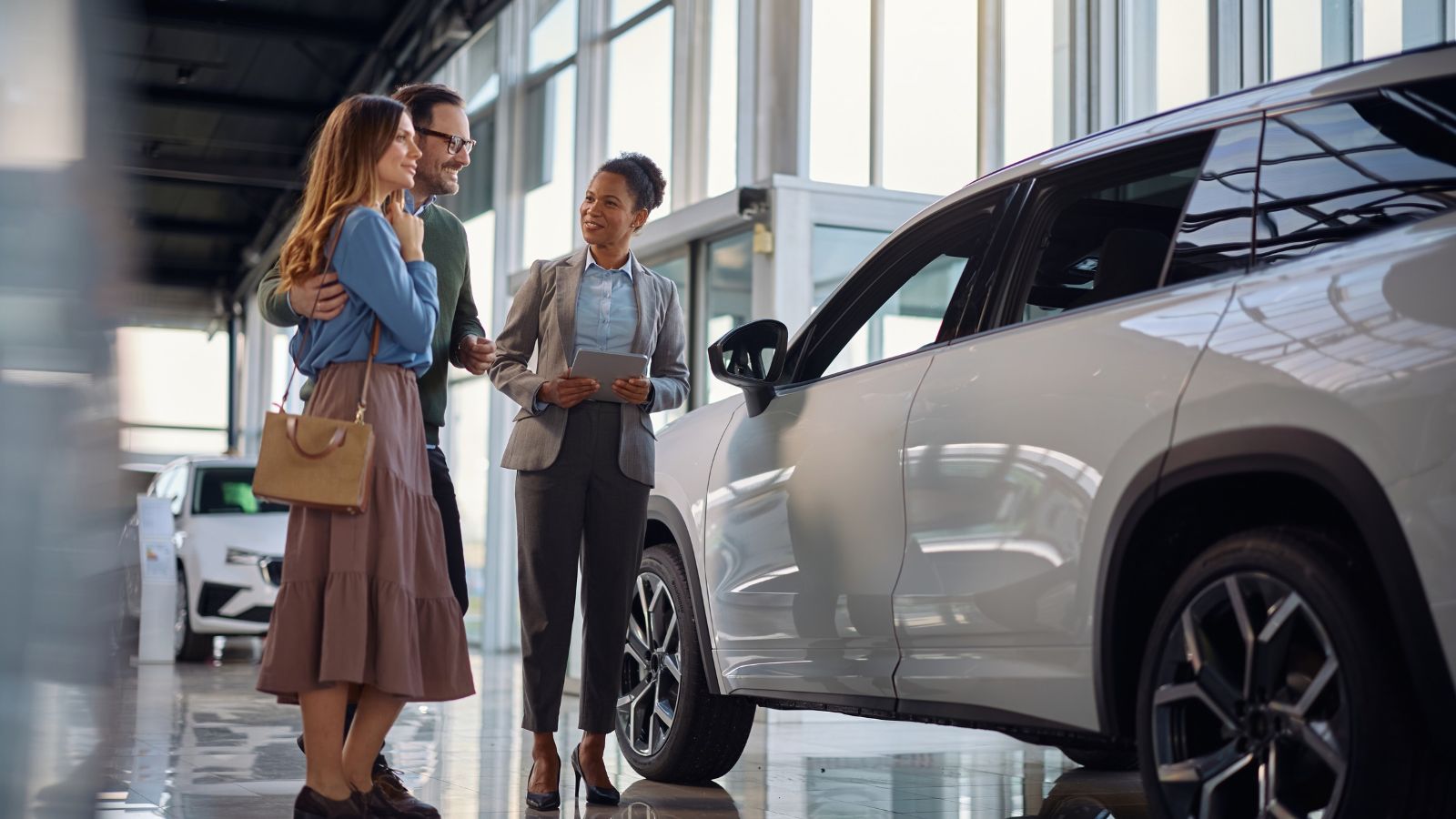
The findings challenge the idea that dealerships are simply being replaced by online vehicle shopping. Instead, the buying process is becoming a mixture of both. Consumers increasingly arrive armed with pricing, specifications and comparisons gathered online, while dealerships remain important for test drives, financing, trade-ins and the final commitment to an expensive purchase.
The Nine-in-10 Finding Is Global, Not a Canada-Only Number
Bain’s Global Automotive Consumer Survey was based on responses from more than 12,000 automotive consumers across 11 markets. The research was conducted online during the first quarter of 2026 and included Canada, the United States, United Kingdom, Germany, France, Italy, United Arab Emirates, China, India, Indonesia and Japan. Bain released its global findings on October 21. The breadth of the research provides a useful look at how shopping behaviour differs between mature automotive markets and faster-growing Asian economies.
One qualification is important for interpreting the headline result. Bain says nine in 10 consumers globally still complete their vehicle purchase offline, but its public global release does not provide a separate Canadian percentage for that question. It would therefore be inaccurate to say that precisely 90% of Canadian buyers complete their transactions at dealerships based on the publicly released figures alone. Canada contributed to the overall dataset, making the result relevant to the Canadian market, but the 90% figure represents the multinational sample rather than a Canada-specific calculation.
Most Buyers Mix Online Research With Physical Dealership Visits
The modern vehicle purchase is increasingly an omnichannel process rather than a choice between buying online or visiting a dealership. Bain found that more than 80% of respondents globally combine digital and physical interactions as they move toward a purchase. More than six in 10 begin the process online. A buyer might compare trims at home, check inventory during lunch, estimate monthly payments on a smartphone and read owner reviews before speaking to anyone employed by the dealership.
The digital journey does not necessarily eliminate the showroom. More than half of consumers in Europe, the United States and China interact with dealerships at least twice during their purchasing journey. China provides an especially interesting example: 95% of buyers use both digital and physical channels, even though more than eight in 10 say they would consider completing a purchase online. That apparent contradiction illustrates what is happening across the industry. Buyers value convenience and information online while still finding practical reasons to interact with a physical retailer before committing to one of the largest purchases most households make.
Canadian Car Shopping Was Already Moving Toward This Hybrid Model
Earlier Canadian data show that this combination of online shopping and dealership completion was developing well before Bain’s latest research. A Transport Canada study using data from DesRosiers Automotive Consultants and the Canadian Automobile Dealers Association found that fully online transactions represented only 2.4% of Canadian new-vehicle dealer sales in 2019. By 2022, that share had increased to 4.1%. Digital retailing was clearly growing, but completely online vehicle buying remained a relatively small part of the market.
The bigger change came earlier in the shopping journey. Canadian dealers reported that purchases initiated online but ultimately completed at a dealership increased from 29.7% of sales in 2019 to 42% in 2022. Dealers participating in the study expected fully online sales eventually to account for 17.1% of transactions by 2030, although that figure was a forecast rather than an observed outcome. The pattern closely resembles Bain’s 2026 global findings: consumers increasingly want to handle research, pricing and paperwork digitally without necessarily abandoning a final physical interaction with the dealership.
Canada’s Dealership Network Remains a Major Retail Business
The continuing importance of physical dealerships matters economically because Canadian automotive retail remains enormous. The Canadian Automobile Dealers Association reported 3,778 franchised new light-vehicle dealerships in Canada during 2025. Those retailers sold 1,897,055 new vehicles, approximately 2% more than in 2024. Average sales per dealership reached C$62.9 million, underscoring how much money still moves through traditional automotive retail locations even as websites and digital purchasing tools become increasingly sophisticated.
Vehicle sales are only part of the business. Canadian dealerships generated C$33.1 billion in service and parts sales in 2025 and wrote nearly 31 million repair orders, averaging more than 8,000 repair orders per dealership. CADA’s latest available economic-impact estimate, based on earlier data, attributes approximately 278,620 full-time-equivalent jobs and C$28.1 billion of Canadian GDP to the franchised dealer sector and the activity it supports. These figures also explain why dealerships are unlikely to disappear simply because consumers become comfortable researching vehicles online. A dealership often remains involved years after the original sale through maintenance, warranty work, parts and future trade-ins.
High Vehicle Prices Make Buyers Reluctant to Skip the Final Inspection
One reason buyers may still prefer a physical final step is straightforward: vehicles are expensive. Statistics Canada reported that Canadian new-car dealerships received an average of C$55,827 for every new vehicle sold in 2025, compared with C$43,567 in 2019. At that price level, a customer may be comfortable selecting colours, comparing financing scenarios or reserving inventory online while still wanting to sit in the vehicle, examine its interior and understand the final contract before taking possession.
Bain’s international findings reinforce the importance of affordability, although the firm did not publish a Canada-specific percentage in its global release. Price was identified as a leading purchasing consideration by 68% of consumers in the United States and 62% in Europe. China differed substantially, with technology and vehicle features cited by 58% of consumers and ranking ahead of price as a differentiating factor. For Canadian retailers, the broader message is that an attractive digital experience cannot compensate for an uncompetitive deal. Online tools may bring a customer closer to the showroom, but vehicle cost, financing terms and perceived value can still determine whether a transaction is completed.
Artificial Intelligence Is Joining the Vehicle Research Process
Search engines and automotive websites are no longer the only technologies influencing the early stages of a vehicle purchase. Bain found that artificial intelligence is increasingly being used to compare models, brands and available features. Among younger consumers, AI use during vehicle shopping has become particularly common. In Europe, 61% of younger buyers reported using AI, compared with 55% in the United States and 52% in Japan. Usage was considerably higher in parts of Asia, exceeding 90% in Indonesia and approaching 80% across age groups in China.
The publicly released research does not provide a comparable Canada-only AI percentage, so those international figures should not be treated as Canadian statistics. They nevertheless illustrate a significant change facing Canadian dealerships. A shopper may now arrive after asking an AI system to compare two SUVs, calculate estimated fuel costs, summarize reliability information or identify competing models within a particular budget. That can reduce the dealership’s traditional role as the customer’s first source of product knowledge. The opportunity for retailers is to provide accurate inventory, clear prices and knowledgeable staff capable of adding value after a customer has already completed substantial independent research.
EV Test Drives Give Physical Retailers Another Important Role
Electric vehicles demonstrate particularly clearly why a physical dealership interaction can still influence a purchase. Bain found that consumers who have already test-driven a battery-electric vehicle can be as much as 2.2 times more willing to consider purchasing one compared with consumers who have not driven one. The effect is especially relevant among mainstream buyers in Europe and the United States, where Bain found that consumers were less likely than premium-vehicle shoppers to have experienced an EV firsthand.
Canadian registrations suggest that more households are encountering electrified vehicles. Statistics Canada recorded 58,811 new zero-emission vehicle registrations during the second quarter of 2026, 26.7% more than during the same quarter of 2025. Zero-emission vehicles represented 10.7% of new registrations. Battery-electric registrations alone increased 37.4% year over year. For a potential first-time EV owner, a dealership can provide something a website cannot fully reproduce: the experience of regenerative braking, instant acceleration, interior technology and the vehicle’s physical dimensions. Dealers can also answer practical questions about home charging, winter operation and daily driving routines before a buyer commits.
Brand Loyalty Is Becoming Less Reliable for Established Automakers
The dealership remains important, but the badge hanging above its entrance may not command the loyalty it once did. Bain found that more than one-third of consumers in Western markets are open to considering newly entering automotive brands. U.S. buyers remain comparatively loyal to established manufacturers, while consumers in Europe are increasingly considering newer Chinese competitors. That creates an opportunity for companies trying to enter mature markets, while putting pressure on established automakers to justify familiar brand names with competitive pricing, features and customer experiences.
This matters in Canada as the competitive landscape broadens. A retailer cannot automatically assume that a customer who previously drove one manufacturer will remain with that brand when replacement time arrives. Digital research makes competing models easier to discover, and price-comparison tools make differences more visible. At the same time, an unfamiliar manufacturer may still need a trusted physical presence to convince buyers that service, warranty work and replacement parts will remain available after the purchase. Ironically, declining brand loyalty could therefore increase the importance of a strong dealership experience for newer companies trying to establish credibility with Canadian customers.
Advanced Technology Could Disrupt Loyalty Even Further
Automotive technology is also becoming a reason to change brands. Bain found dramatic regional differences in interest in vehicles equipped with at least Level 3 automated-driving capability. Approximately 84% of Chinese respondents would consider such a vehicle, compared with 47% in Europe and 40% in the United States. Level 3 systems can perform the driving task under certain defined conditions, but the human driver must remain capable of taking control when the system requests it.
Bain also found that consumers most interested in automated-driving technology are more willing to change manufacturers to obtain better functionality. That could reshape the traditional dealership relationship. Historically, customers might return to the same retailer because they trusted the service department, knew the salesperson or had years of positive experience with one brand. Increasingly, a competitor’s software, driver-assistance capabilities, infotainment system or battery technology could be enough to pull that customer away. Dealers will consequently need deeper knowledge of increasingly complex products. The showroom employee explaining a vehicle may be discussing software subscriptions, charging standards and automated-driving limitations alongside horsepower, cargo capacity and financing.
The Dealership Is Changing Rather Than Disappearing
Bain’s findings do not suggest that automotive retail is returning to an old-fashioned, entirely in-person model. More than 80% of buyers already combine digital and physical channels, and a majority begin online. Instead, the research points toward a dealership that occupies a different position in the transaction. Customers increasingly expect to perform repetitive tasks at home while using the physical location for experiences that remain difficult to digitize, including test drives, trade-in discussions, final questions, vehicle delivery and service.
Canadian dealers are already preparing for that environment. The Canadian Automobile Dealers Association’s 2026 Automotive Retail Technology Study is examining how dealerships use technology across sales, financing, insurance, service, marketing and customer engagement, with particular attention to artificial intelligence and digital lead-management systems. The strongest retailers may therefore be neither purely digital nor purely traditional. A customer should be able to move from a phone to a dealership without restarting the buying process or receiving contradictory information. Nine in 10 buyers still completing the transaction offline is a strong vote for the dealership’s continuing relevance, but it is not permission for dealerships to remain unchanged.