

























China’s automotive industry has introduced another major competitor in the premium SUV market, combining traditional manufacturing expertise with some of the country’s most advanced vehicle technology.
On October 18, 2026, Dongfeng Motor and Huawei began nationwide customer deliveries of the Epicland X9, a six-seat, extended-range electric SUV featuring Huawei’s latest assisted-driving technology and an available four-LiDAR sensor system.
The vehicle arrives with an ambitious technology package, a starting promotional price of 279,800 yuan, and an interior designed around family comfort. Its launch also demonstrates how Chinese automakers are increasingly competing through software, advanced electronics, and sophisticated vehicle design.
For Canada, the timing is significant. Ottawa has reduced tariffs on a limited number of Chinese electric vehicles, while automotive workers and privacy officials continue debating the consequences.
The X9 has not been confirmed for Canadian sale, but its arrival illustrates the changing competition Canadian policymakers are attempting to navigate.
Dongfeng and Huawei Officially Begin Delivering the Epicland X9 in China
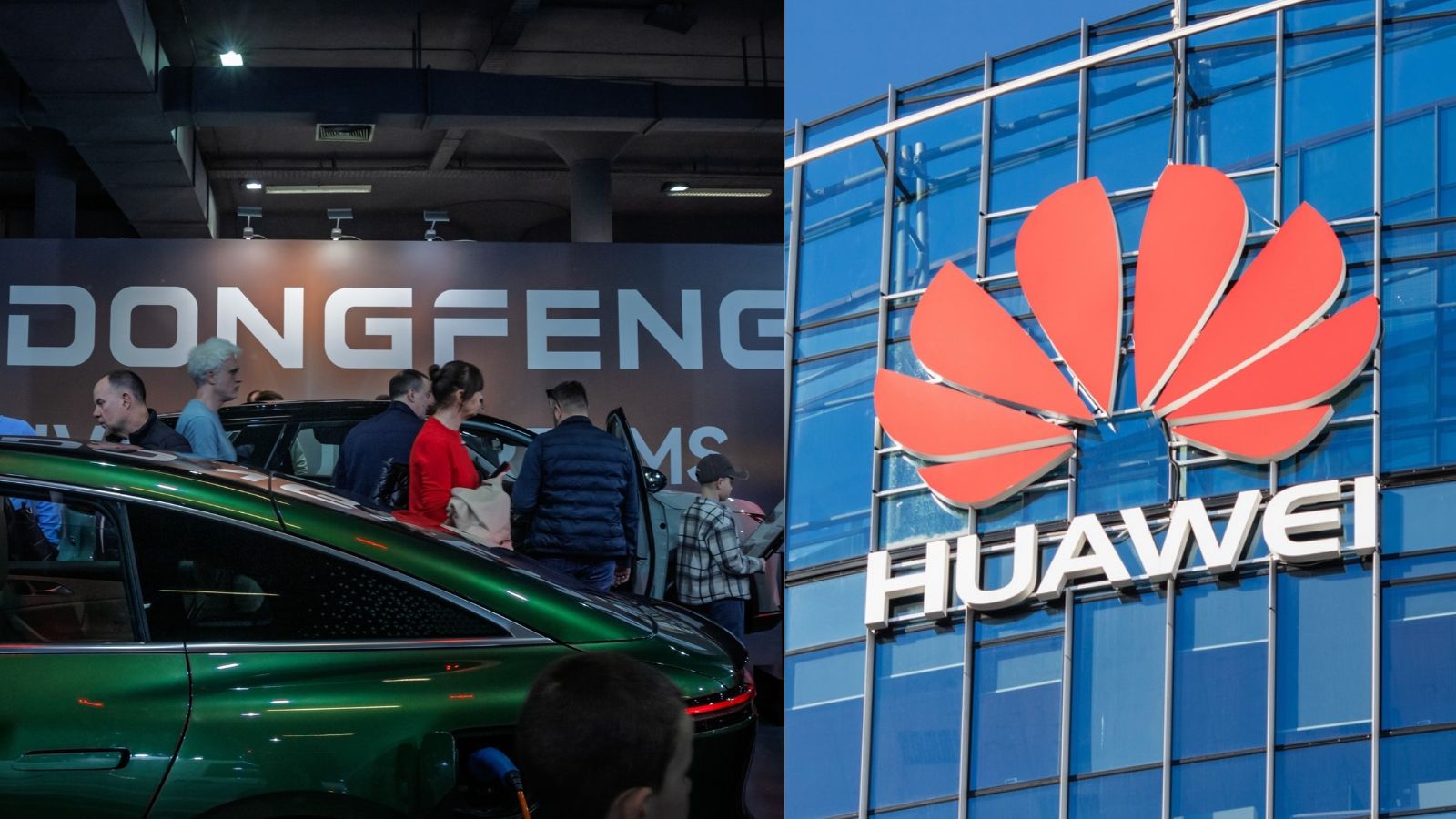
The Epicland X9 reached a significant commercial milestone on October 18, when Dongfeng and Huawei launched nationwide batch deliveries at Huawei’s Songshan Lake campus in Guangdong province. The event marked the transition from vehicle announcements and advance reservations to customer handovers. Hong Kong entertainer Aaron Kwok, who serves as the vehicle’s global ambassador, was identified as the brand’s first customer, receiving the designation of owner number 001. His involvement added publicity to an event that was already attracting attention within China’s competitive automotive industry. The ceremony also highlighted the unusually close relationship between Dongfeng, one of China’s established automotive manufacturers, and Huawei, a technology company that has become increasingly influential in vehicle software and intelligent-driving systems.
The launch follows the X9’s official market introduction on September 24, 2026. Four configurations were announced, with regular Chinese prices ranging from 289,800 to 369,800 yuan and limited-time promotional prices between 279,800 and 359,800 yuan. The company describes the vehicle as a flagship designed for a new generation of family transportation. That positioning reflects changing expectations among Chinese buyers, who increasingly evaluate premium vehicles according to their technology, cabin experience, and practical capabilities. Beginning customer deliveries is therefore an important achievement, but it does not guarantee commercial success. The manufacturer must now demonstrate that its production operations can consistently supply vehicles, meet customer expectations, and provide reliable long-term service.
The X9’s Journey From Factory Production to Customer Deliveries Took Several Months
The new SUV did not emerge overnight. Dongfeng and Huawei formally developed Epicland as a closely integrated automotive partnership, with early vehicle prototypes appearing before the X9 made its public debut at the 2026 Beijing Auto Show. On July 20, the first mass-production X9 rolled off the assembly line in Chengdu, marking a major step toward commercial manufacturing. Nationwide pre-sales opened on August 18. According to company figures reported by Chinese automotive publications, reservations exceeded 20,000 within the first 24 hours. Those numbers suggested considerable early interest, although advance orders cannot be treated as completed vehicle sales or customer deliveries. The September launch then established the final four-model lineup and revised the prices initially announced during pre-sales.
Moving from reservations to production has brought its own difficulties. On October 17, automotive industry publication Gasgoo reported that Epicland general manager Zeng Qinglin had apologized to customers experiencing extended waits for their vehicles. He attributed some delays to sourcing optional equipment and completing production-quality validation. According to the executive, the necessary checks had been completed and materials were available, allowing manufacturing and shipping operations to accelerate. His comments provide an important reminder that advanced features create additional production complexity. Sophisticated sensors, entertainment systems, and configurable equipment must be integrated without compromising quality. For buyers, an impressive specification sheet matters little if the vehicle arrives late or requires repeated repairs. The October 18 delivery ceremony represents progress, but sustained customer satisfaction will depend on what happens after the publicity surrounding the launch fades.
A 5.3-Metre SUV With Six Seats Targets Families Seeking More Space
The Epicland X9 is substantially larger than many conventional family crossovers. It measures 5,301 millimetres long, 2,015 millimetres wide, and approximately 1,820 millimetres tall, with a wheelbase of 3,120 millimetres. Its three-row interior follows a 2+2+2 arrangement, providing two seats in each row rather than a traditional three-person second-row bench. This creates a layout intended to give individual passengers more personal space. The manufacturer also emphasizes comfort in the second row, where available reclining seats feature heating, ventilation, and massage functions. Such equipment reflects a broader trend among Chinese premium automakers toward treating passenger comfort as a central selling point, particularly for families who frequently travel with children or older relatives.
The vehicle’s dimensions also support its practical ambitions. Published specifications indicate that the luggage compartment offers approximately 484 litres of storage with all six seats occupied, an important consideration for families carrying suitcases, school supplies, or sports equipment. The cabin includes multiple storage compartments and an adjustable third row intended to accommodate adults more comfortably than the occasional rear seats found in some smaller SUVs. However, the X9’s considerable size creates trade-offs. Parking in crowded urban areas and navigating narrow streets may be more challenging than in a compact crossover. Fuel consumption, insurance costs, and maintenance expenses are also important considerations that cannot be established from exterior dimensions alone. While the X9 promises substantial room and convenience, its suitability for individual households will ultimately depend on how those features perform in everyday use.
Four LiDAR Sensors Give the X9 One of Its Most Distinctive Technology Features
The X9’s headline technology involves Huawei’s advanced light detection and ranging equipment, commonly known as LiDAR. The system uses laser pulses to measure distances and help build a detailed representation of surrounding objects. Huawei’s latest 896-line, dual-optical-path LiDAR is standard across the X9 lineup. Three of the four configurations also feature three additional high-precision solid-state LiDAR sensors, creating the four-unit arrangement highlighted in the vehicle’s promotional materials. This distinction matters because the complete four-LiDAR package is not included in every version. The additional sensors are designed to improve environmental awareness around the vehicle, supplementing other technologies such as cameras and radar.
The practical objective is to help the vehicle detect obstacles, recognize complicated road environments, and support driver-assistance functions. A system combining different sensors can potentially provide information that a single sensing technology might miss. For example, cameras can identify road markings and visual features, while LiDAR contributes precise distance measurements. Huawei’s Qiankun ADS 5 system integrates information from multiple sources to support functions such as navigation-assisted driving and collision avoidance. Nevertheless, additional sensors do not automatically make a vehicle safer in every situation. Actual performance depends on software, calibration, sensor placement, weather conditions, and the driver’s actions. The X9’s four-LiDAR configuration is a notable engineering feature, but its real-world capabilities must be distinguished from the manufacturer’s technical specifications and promotional demonstrations.
Huawei ADS 5 Offers Advanced Assistance but Does Not Make the SUV Self-Driving
Huawei’s Qiankun ADS 5 is another central feature of the Epicland X9. The system supports advanced driving assistance, including navigation-related functions, assisted parking, and collision-avoidance technology. Huawei also promotes its updated WEWA 2.0 architecture, which combines cloud-based training with onboard decision-making systems. The objective is to improve how vehicles interpret complicated traffic situations and respond to potential hazards. Features such as automated emergency braking and steering assistance can be particularly relevant in crowded urban environments, where vehicles must interact with pedestrians, cyclists, and unpredictable traffic. However, the exact functions available can vary by vehicle configuration, software version, and operating environment.
Huawei’s own technical documentation makes an important limitation clear: its current passenger-vehicle ADS technology remains a driver-assistance system and cannot replace the human driver. Motorists must remain attentive and prepared to intervene whenever necessary. That distinction is especially important as marketing language surrounding intelligent vehicles becomes more ambitious. A vehicle capable of navigating certain roads with assistance is not equivalent to one authorized to operate without human supervision under all conditions. The X9’s capabilities have been developed primarily around Chinese driving environments, traffic conventions, and digital services. Whether identical functions could operate in another country would depend on local regulations, software localization, mapping arrangements, and validation. Canadian consumers should therefore not assume that advertised Chinese driving-assistance features would automatically be available or legally usable on Canadian roads.
HarmonySpace 6 Turns the Interior Into a Connected Entertainment Environment
Technology inside the X9 extends well beyond the driver-assistance system. The SUV introduces Huawei’s HarmonySpace 6 cockpit platform, featuring two adjoining 17.2-inch displays with 3.4K resolution. These screens support vehicle controls, navigation, entertainment, and other digital functions, allowing the front occupants to interact with multiple applications. The cabin also offers Huawei’s augmented-reality head-up display, designed to project driving information into the driver’s forward field of view. Additional entertainment equipment includes an available rear-seat projection system, premium audio technology, and cabin features intended to create a more personalized passenger experience. Huawei’s connected ecosystem is central to the design, combining automotive electronics with software capabilities developed across the company’s wider technology businesses.
Some features are particularly focused on families. The X9 includes an available AI-powered cabin companion called Hamomo, alongside interior sensing functions intended to recognize certain passenger activities and support convenience features. Rear-seat entertainment options are designed to make long journeys more comfortable, while the vehicle’s audio and display systems can support different experiences for passengers in separate rows. These technologies could appeal to households that frequently travel long distances or want additional entertainment options for children. However, a highly connected interior also introduces questions about software reliability, system updates, repair costs, and data protection. The long-term value of such equipment will depend on how well the manufacturer maintains it after purchase. A sophisticated digital cabin can become a genuine advantage when it remains dependable, intuitive, and secure throughout a vehicle’s ownership.
The Extended-Range Powertrain Combines Electric Driving With a Gasoline Backup
Although often discussed alongside fully electric vehicles, the Epicland X9 uses an extended-range electric powertrain. Its wheels are driven by electric motors, while a 1.5-litre turbocharged gasoline engine serves as a range extender by generating electricity when needed. This allows the vehicle to operate on battery power for shorter journeys while retaining access to gasoline for longer trips. The arrangement differs from a conventional battery-electric vehicle, which has no gasoline engine, and from traditional hybrid designs where the combustion engine can play a more direct role in propulsion. For families concerned about access to charging infrastructure, an extended-range system can offer greater flexibility without abandoning electric driving altogether.
The X9 is available with battery capacities of approximately 51.46 kWh and 74.29 kWh, supplied by CATL. Manufacturer specifications indicate that certain versions can travel up to 465 kilometres using battery power under China’s CLTC testing procedure. Combined driving range varies by configuration and testing method, with published manufacturer-related figures exceeding 1,400 kilometres under Chinese testing conditions. These are laboratory-cycle estimates, not independently verified Canadian driving results. Cold weather, highway speeds, heating demand, vehicle weight, and driving behaviour can substantially affect actual range. That distinction is particularly relevant in Canada, where winter temperatures can reduce battery efficiency and increase energy consumption. The X9’s large battery and range-extending engine provide an interesting technical solution, but Canadian performance cannot be inferred directly from Chinese certification figures.
Fast Charging and Rear-Wheel Steering Add to the SUV’s Engineering Ambitions
The X9’s performance specifications extend beyond its battery and gasoline engine. Built around an 800-volt electrical architecture, the SUV is designed to support high-power DC charging. Chinese automotive reporting cites a charging time of approximately 18 minutes to increase the battery from 20% to 80% under suitable conditions. That figure should be treated as a reported technical capability rather than a promise applicable to every charging station. Actual charging speed depends on battery temperature, the charger’s available output, the vehicle’s charging curve, and other operating conditions. The model is also available with rear-wheel drive or all-wheel drive. Published launch specifications identify a 300-kW rear-drive version and all-wheel-drive configurations offering greater combined motor output, with the highest-performance version accelerating from zero to 100 km/h in a claimed 4.81 seconds.
The chassis includes dual-chamber air suspension, electronically controlled dampers, and rear-wheel steering. The rear wheels can turn up to seven degrees in either direction, helping the manufacturer claim a minimum turning radius of approximately 5.3 metres. This feature can be useful in parking lots and other confined spaces, particularly for a vehicle measuring more than five metres long. Air suspension also allows engineers to adjust ride characteristics according to road conditions and driving preferences. These features position the X9 as more than a large family transporter. Dongfeng is attempting to combine comfort, handling, and technology in a package competitive with established premium SUVs. However, manufacturer specifications do not establish how the vehicle will perform on Canadian winter roads or whether its complex components will prove economical to maintain over many years.
The X9’s Chinese Pricing Challenges Established Premium SUV Competitors
Price is one of the most interesting aspects of the Epicland X9 launch. Its four Chinese-market configurations carry regular prices between 289,800 and 369,800 yuan, while a limited-time promotional program reduces that range to 279,800–359,800 yuan. At those prices, the SUV offers an extensive technology package, including Huawei’s ADS 5 assisted-driving system, a large touchscreen arrangement, advanced suspension equipment, and available four-LiDAR sensing. The X9 competes in China’s growing premium family SUV category against vehicles such as the Aito M9 and Li Auto L9. Each manufacturer is attempting to persuade customers that sophisticated electrified powertrains and connected technology can justify a major household purchase.
The pricing also illustrates how Chinese automakers are challenging older assumptions about the relationship between cost and equipment. Advanced driver-assistance hardware and luxury interior features were once associated mainly with much more expensive vehicles. Increasing competition among domestic manufacturers is encouraging companies to offer sophisticated equipment across broader price ranges. Nevertheless, Chinese retail prices cannot be treated as potential Canadian showroom prices. Currency conversion alone would overlook tariffs, transportation, certification costs, taxes, dealer margins, and the possibility of different vehicle specifications. The X9 also belongs to a premium category rather than China’s cheapest electric vehicle segment. For Canadian policymakers interested in improving affordability, its significance is therefore broader than any single purchase price. It demonstrates the speed at which Chinese manufacturers are expanding the technology available within different categories of the automotive market.
Canada’s New Chinese EV Import Rules Have Reopened a Contentious Trade Debate
The X9’s deliveries coincide with an important shift in Canada’s automotive trade policy. On March 1, 2026, Ottawa implemented an initial annual quota allowing up to 49,000 eligible Chinese electric vehicles to enter Canada at the most-favoured-nation tariff rate of 6.1%. The arrangement replaced the additional 100% surtax introduced in October 2024. Under the agreement announced during Prime Minister Mark Carney’s January visit to China, the quota is scheduled to increase by 6.5% annually. The government has also established provisions intended to encourage more affordable electric vehicle imports. Beginning in the second quota year, 10% of the allowance will be reserved for eligible vehicles with an import value of C$35,000 or less, increasing to 50% by the fifth year.
The new framework represents controlled access rather than unrestricted entry. Importers must obtain shipment-specific permits, and the vehicles must satisfy applicable Canadian regulations. The relevant import classifications include specified battery-electric and hybrid vehicles, but eligibility for a particular model must be established through the appropriate customs and regulatory processes. The initial quota represents less than 3% of Canada’s new-vehicle market, according to the federal government. Ottawa argues that the arrangement could improve affordability, expand consumer choice, and encourage Chinese investment in Canadian automotive manufacturing. The government also secured trade concessions affecting Canadian agricultural and seafood exports. However, none of these measures establishes that the Epicland X9 will enter Canada. Its Chinese launch and Canada’s tariff changes are separate developments, connected by the wider discussion about how much access Chinese manufacturers should receive.
Canadian Autoworkers Fear Greater Competition Could Threaten Domestic Investment
Canada’s decision to lower barriers for Chinese electric vehicles has faced strong opposition from organized labour. Unifor, which represents workers across the Canadian automotive sector, warned in January 2026 that the policy could place additional pressure on domestic manufacturing jobs and automotive suppliers. National president Lana Payne argued that lower-cost Chinese imports, supported by China’s industrial policies and manufacturing capacity, could undermine Canadian production and investment. The concerns are especially significant because Canada’s automotive industry is closely integrated with manufacturing operations in the United States. Factories, parts suppliers, logistics companies, and dealerships depend on an interconnected North American market, making international trade changes particularly consequential for employment.
Supporters of controlled Chinese vehicle imports see a different opportunity. Competition could encourage manufacturers to offer better-equipped vehicles at more attractive prices, potentially making electrified transportation accessible to a wider range of households. Ottawa also hopes that cooperation with Chinese automotive companies could lead to joint ventures and new manufacturing investments in Canada. Those benefits, however, remain dependent on actual business commitments rather than policy announcements alone. The Epicland X9 illustrates the competitive challenge particularly clearly. Its combination of a large family cabin, sophisticated software, and advanced sensing equipment demonstrates the types of products international manufacturers must increasingly compete against. For Canadian workers, the central question is whether opening the market can produce meaningful domestic investment or whether it will primarily increase imports of vehicles manufactured elsewhere.
Huawei’s Connected Technology Raises Questions About Vehicle Data and Privacy
The growing use of connected vehicle technology adds another dimension to Canada’s debate. Modern vehicles can collect information about location, driving behaviour, entertainment preferences, and interactions with digital systems. A model such as the X9, which incorporates extensive connected services, multiple displays, interior sensing, and advanced driver-assistance technology, demonstrates how much data modern automotive systems may process. This does not establish that the X9 improperly collects, shares, or stores personal information. However, it highlights why regulators increasingly examine cybersecurity, data governance, and software updates alongside conventional vehicle safety.
In April 2026, Privacy Commissioner of Canada Philippe Dufresne appeared before a parliamentary committee examining the implications of the Canada–China electric vehicle arrangement. He warned that connected vehicles can collect substantial amounts of personal information, some of which may be transferred to or stored in foreign jurisdictions under different legal protections. His office has recommended stronger rules governing cross-border data transfers. These concerns are not exclusive to Chinese manufacturers; connected vehicles from many countries rely on sophisticated data-processing systems. For Canadian consumers, relevant questions include where information is stored, who can access it, how long it is retained, and whether connected features can be disabled. As vehicles become increasingly software-dependent, security and transparency may become just as important to consumer confidence as driving range, comfort, or acceleration.
The X9’s Canadian Future Remains Unconfirmed Despite New Import Opportunities
Despite growing interest in Chinese automotive products, Dongfeng and Huawei have not announced an official Canadian launch, Canadian pricing, or a local dealership network specifically for the Epicland X9. Any commercial introduction would require more than access to Canada’s lower-tariff import quota. Transport Canada requires vehicles sold in the country to comply with applicable Canada Motor Vehicle Safety Standards. Manufacturers must also satisfy relevant import requirements, emissions regulations, and other legal obligations. Vehicles developed for foreign markets cannot automatically be imported and registered for ordinary Canadian road use simply because they are available overseas. A Canadian version could require changes to certification documentation, lighting, software, safety equipment, and other specifications.
There are also practical questions that would need answers before the X9 could become a realistic option for Canadian households. Drivers would need clarity about warranty coverage, parts availability, trained service technicians, charging compatibility, connected-service support, and the operation of assisted-driving features in Canadian conditions. Meanwhile, Epicland has outlined plans for additional vehicles, including a battery-electric SUV developed around a higher-voltage platform and several new products planned for 2027. Those plans concern its wider product expansion and should not be interpreted as Canadian launch commitments. For now, the X9’s immediate significance is its role in China’s rapidly changing automotive market. Its arrival highlights the combination of manufacturing scale, technology partnerships, and competitive pricing that is reshaping the global industry. Canada’s challenge will be deciding how to engage with that transformation while protecting consumer interests, vehicle safety, personal data, and domestic manufacturing opportunities.