


























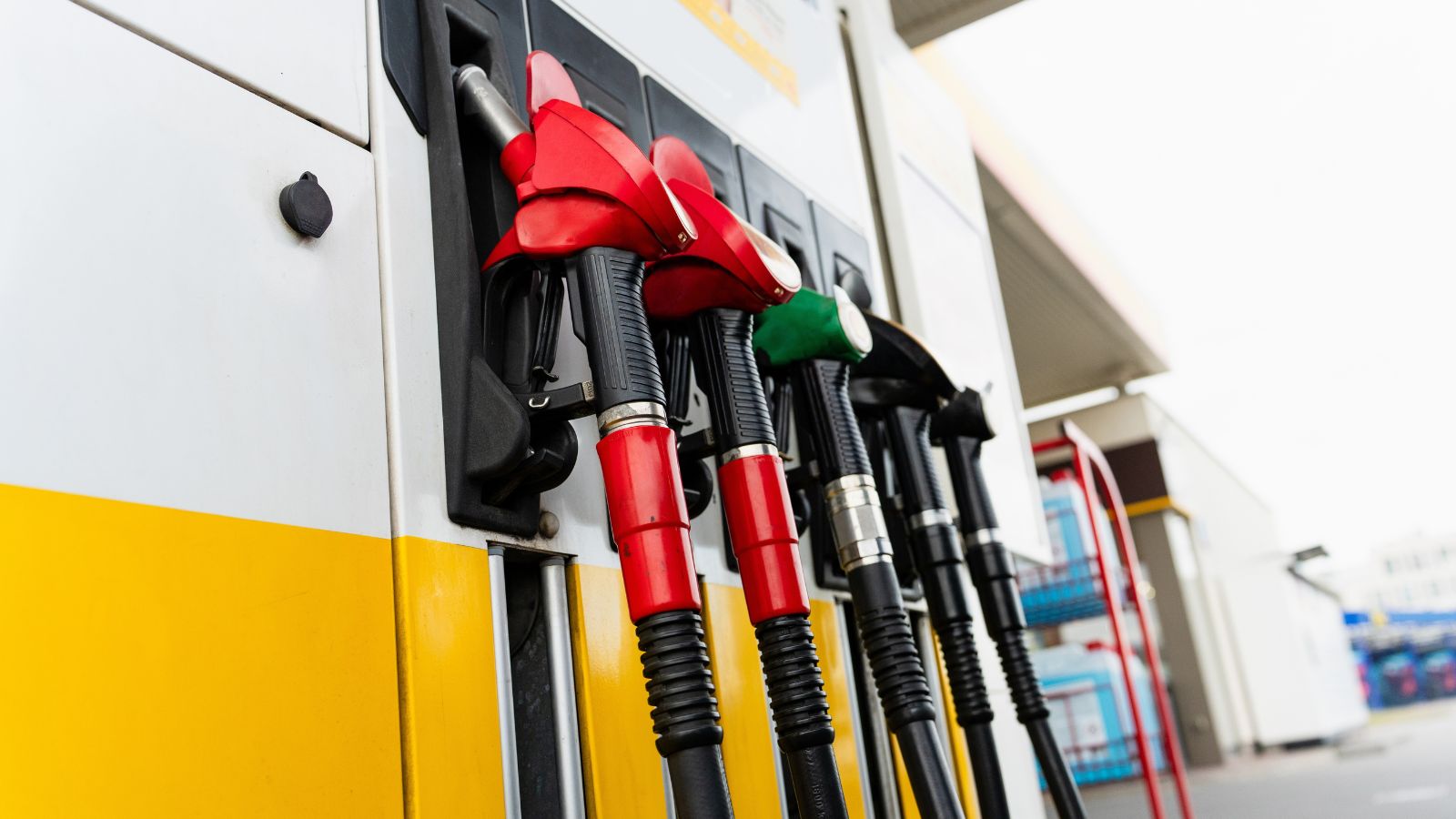
Diesel prices in the Greater Toronto Area are facing another sharp jolt, adding fresh pressure for motorists and businesses already dealing with unusually expensive fuel. Canadians for Affordable Energy is forecasting GTA diesel at 243.9 cents per litre for Thursday, September 3, an 11-cent increase from Wednesday’s forecast of 232.9 cents. Regular gasoline, by comparison, is expected to rise only two cents.
The projected increase comes as renewed conflict involving the United States and Iran has shaken global energy markets and pushed oil and refined-fuel prices higher. For diesel-dependent households, contractors and commercial fleets, an 11-cent move in a single day is more than market noise. It is another reminder of how quickly geopolitical disruptions can reach Canadian pumps.
An 11-Cent Jump Adds Up Quickly at the Pump
The GTA diesel forecast shows just how rapidly conditions have changed. Canadians for Affordable Energy lists diesel at 232.9 cents per litre for Wednesday, September 2, already seven cents higher than the previous day, before forecasting another jump to 243.9 cents on Thursday. Regular gasoline is forecast to move from 183.9 to 185.9 cents per litre over the same period. That means diesel is not merely expensive—it is moving much faster than gasoline.
For an individual driver, the arithmetic becomes noticeable quickly. An additional 11 cents per litre adds $6.60 to a 60-litre fill and $11 to a 100-litre purchase. A commercial vehicle taking 400 litres would face roughly $44 more from the one-day increase alone, assuming the forecast is fully reflected at the station. Those numbers become more significant for vehicles that refuel several times each week. The result is a price shock that can move from an electronic fuel sign into household or business budgets almost immediately.
Global Oil Markets Are Back in a Geopolitical Pressure Cooker
The GTA increase is arriving during another volatile stretch for global energy. Oil prices jumped sharply on September 1 as renewed U.S.-Iran fighting revived fears of disruption around the Strait of Hormuz. Brent crude settled at $94.65 a barrel after gaining more than 4%, while West Texas Intermediate finished above $90. Reuters reported that U.S. diesel futures also reached their highest level in roughly 52 months amid concerns involving Middle Eastern and Russian supplies.
Prices eased somewhat during September 2 trading, but the underlying risk did not disappear. Brent remained above $94 a barrel as traders assessed whether shipping through the Strait of Hormuz could continue reliably. The waterway is especially important because a substantial share of global petroleum trade normally passes through the region. For Canadian consumers, the connection is indirect but powerful: crude oil and refined fuels are globally traded commodities, meaning an overseas disruption can change wholesale replacement costs in Ontario even when Canada itself remains a major oil producer.
Diesel Is Facing Its Own Supply Problem
Drivers sometimes assume gasoline and diesel should rise or fall together because both ultimately come from crude oil. The current GTA forecasts show why that assumption can fail. While regular gasoline is expected to rise two cents on September 3, diesel is forecast to jump 11 cents. Different refining requirements, inventories, seasonal demand patterns and international trading conditions can create dramatically different movements between fuel products.
The Bank of Canada has already identified diesel as one of the commodities remaining elevated because of war-related supply disruptions. It has also noted that disruptions to both crude oil and refined-product shipments have generated higher transportation costs and fuel surcharges. That distinction matters because crude prices tell only part of the story at a diesel pump. Refinery capacity and the availability of finished distillate fuel can become just as important. When the market for diesel itself tightens, pump prices may increase much faster than crude prices alone would suggest, which helps explain why diesel users are currently seeing a much steeper forecast increase than gasoline drivers.
The Exposure Extends Far Beyond Diesel Passenger Vehicles
Diesel-powered passenger cars represent only one part of the market. Commercial trucking, delivery fleets and other transportation businesses consume large volumes of the fuel, making diesel prices an important operating-cost indicator for the broader economy. Statistics Canada reported that Canadians purchased 17.1 billion litres of road diesel in 2024. Although that was down 5.1% from 2023, the total demonstrates how deeply diesel remains embedded in Canadian transportation.
Recent business data show why another spike matters. Statistics Canada reported that 65.8% of transportation and warehousing businesses that expected input costs to create obstacles in the second quarter of 2026 identified energy as a concern. Nearly one-quarter of businesses in that sector expected to raise prices for their services during the next three months. Transport Canada also recorded millions of trucks entering Canada during 2025, underscoring the scale of road freight in integrated supply chains. A fleet operator may be able to absorb a one-day jump temporarily, but repeated increases can turn into a much larger operating-cost problem.
Another Tax Change Is Already Looming Next Week
The timing of the diesel increase is especially sensitive because a separate price change is scheduled only days later. Ottawa temporarily suspended the federal excise tax on diesel beginning April 20, 2026 as part of its response to energy-price pressures generated by the Middle East conflict. The normal federal diesel excise tax is four cents per litre, and the suspension is scheduled to remain in effect through September 7.
Unless the policy changes again, the four-cent federal levy returns on September 8. Ontario drivers also pay a provincial clear-diesel fuel tax of nine cents per litre, a rate the province made permanent after reducing it from its previous level. The scheduled federal change does not guarantee an exact four-cent pump increase on September 8 because retail and wholesale prices can move simultaneously. Still, it introduces another upward factor just days after the forecast 11-cent GTA jump. On a 60-litre fill, four cents represents another $2.40 before considering any movement in the underlying fuel market.
Higher Diesel Costs Can Travel Through the Supply Chain
A diesel increase does not necessarily remain confined to truck stops. Transportation companies often build fuel-price adjustments or surcharges into commercial contracts, allowing at least part of major fuel increases to be passed along to customers. Bank of Canada business consultations earlier this year found that transportation firms commonly use fuel adjustment clauses, although the extent of the pass-through can vary depending on contracts and the duration of high prices.
That mechanism helps explain why economists monitor transportation fuel even when measuring costs faced by consumers who never purchase diesel themselves. Goods must still move between warehouses, distribution centres and stores. The Bank of Canada has said that elevated fuel and shipping costs from the Middle East conflict are moving through Canadian supply chains and may contribute to consumer-price pressures. The effect is not automatic or uniform—competition and weak demand can force companies to absorb part of the cost—but repeated fuel increases create a harder decision for businesses already operating on narrow margins.
A Forecast Is a Warning, Not a Guaranteed Station Price
The 243.9-cent figure should be understood as a forecast rather than a mandated GTA-wide retail price. Canadians for Affordable Energy bases its projections on wholesale fuel markets and other energy-market conditions. Actual prices can differ among stations because retail margins, local competition, inventories and timing vary. A station that purchased fuel earlier may not immediately reflect the same wholesale movement as another location receiving a fresh delivery.
That distinction becomes particularly important during volatile periods. An 11-cent forecast signals the direction and magnitude analysts expect in the market, but individual motorists may see different prices depending on location and when they stop. Fuel pricing also contains several moving components: crude costs, refinery margins, retail marketing margins and taxes. When several of those components move at once, predicting the exact price on a particular sign becomes difficult. For consumers and fleet managers, the forecast is therefore most useful as an early indicator that diesel-market conditions have deteriorated substantially rather than a guarantee that every GTA station will display precisely 243.9 cents.
The Next Few Days Could Remain Highly Volatile
The immediate direction of diesel prices will depend heavily on global events. Oil retreated from intraday highs on September 2 after U.S. officials said substantial volumes had continued moving through the Strait of Hormuz, but renewed military activity has kept the risk of disruption elevated. OPEC+ is also expected to review production policy shortly, although Reuters reported that major producers were likely to leave their current output strategy unchanged.
For GTA drivers, that leaves several moving pieces converging at once: volatile crude prices, tight diesel markets, geopolitical risk and the scheduled return of the federal diesel excise tax after September 7. None guarantees that Thursday’s jump will be followed by another increase, because wholesale markets can reverse quickly. What the current numbers do show is that diesel has entered another period in which several cents per litre can appear or disappear within days. For households and businesses that rely heavily on the fuel, that kind of volatility makes budgeting almost as challenging as the high price itself.