
























Canada’s electric-vehicle market is getting something it has often lacked: a genuinely lower entry price wrapped in a practical small SUV. Kia Canada has priced the 2027 EV3 Light FWD at $36,995 before freight, fees, taxes and incentives, putting it below the company’s already affordable EV4 sedan. Kia expected the first vehicles to reach Canadian dealerships by the end of August, and dealership inventory listings now show EV3s physically in stock.
That does not mean thousands of customer handovers have suddenly occurred. Publicly available information does not provide a national count of completed EV3 deliveries. What can be confirmed is that the retail rollout has begun, eligible versions can receive the federal EV incentive, and Canadian shoppers now have an electric crossover entering territory that until recently belonged mostly to gasoline-powered vehicles.
The EV3 Has Moved From Announcement to Canadian Dealer Lots
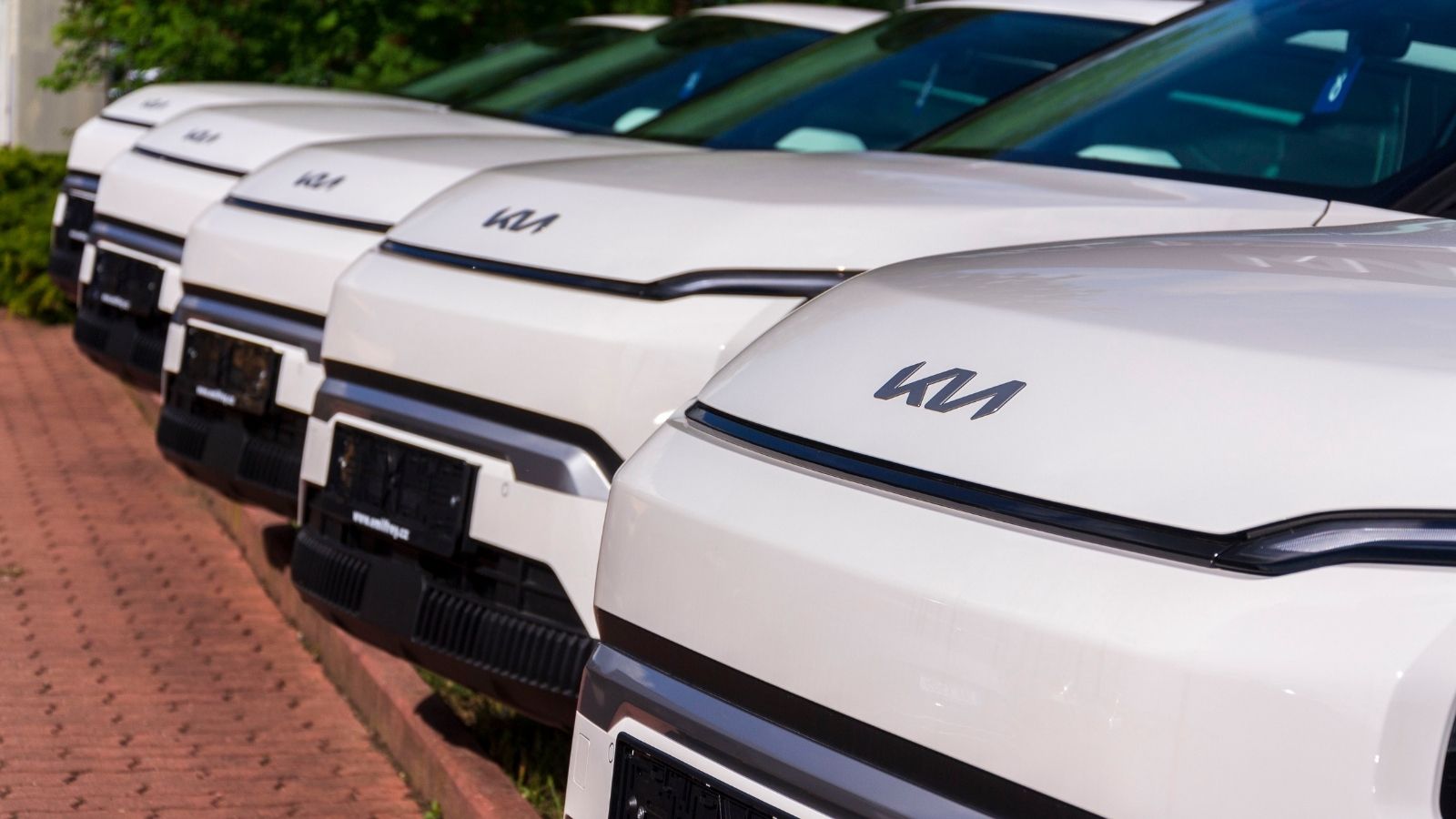
The most important change is that the EV3 is no longer simply a future product on Kia Canada’s calendar. When pricing was announced on August 13, Kia said vehicles were expected to begin arriving at dealerships later in the month. Dealer inventory now provides evidence that those arrivals are taking place. ALBI Kia Mascouche in Quebec, for example, has listed a 2027 EV3 Light FWD as an in-stock new arrival, complete with a stock number and vehicle identification number. Other Canadian Kia retailers are advertising the EV3 for sale, test drives or ordering.
That is enough to establish that the Canadian retail launch is underway, although it is important to distinguish dealership arrival from a verified nationwide total of customer handovers. Kia has not published such a figure. For early reservation holders, however, the practical difference is substantial. A vehicle that spent months on auto-show stands and future-product pages is beginning to become something customers can actually inspect, finance and take home as local allocations arrive.
The $36,995 Price Changes the Conversation Around Affordable EVs
The headline figure is a $36,995 MSRP for the front-wheel-drive EV3 Light. Kia calculates an all-in price of $39,744 before incentives and applicable sales taxes, including $2,185 in freight and as much as $564 in other fees, levies and duties. Dealers can set their own transaction prices, so buyers comparing advertisements need to pay attention to whether a figure represents MSRP, an all-in amount, an incentive-adjusted price or a dealer-specific offer. That distinction can move the apparent cost by thousands of dollars.
The broader significance is easier to see beside the rest of the market. Kia itself describes the EV3 as Canada’s lowest-priced new battery-electric vehicle based on nationally advertised pricing when it made the announcement. The vehicle also arrives with a surprisingly broad trim ladder. Wind FWD starts at $40,995, while AWD versions enter at $43,495. Land, GT-Line and GT-Line Limited models move progressively higher, with the performance-oriented GT AWD topping the range at $55,995 before freight and other charges.
Buyers Do Not Have to Accept Tiny Range for the Lower Price
Affordable EVs have historically involved a visible compromise: a smaller battery, shorter highway range or both. The EV3 Light does use the smaller of two available battery packs, but Kia estimates its 58.3-kWh battery can provide as much as 356 kilometres of driving in ideal conditions. That is enough to make the entry model more than a short-range city runabout, even though winter temperatures, highway speeds, cabin heating, payload and battery condition can all reduce real-world range.
Moving up the lineup brings an 81.4-kWh battery. Kia estimates long-range front-wheel-drive versions can reach as much as 517 kilometres, while available AWD models can reach up to approximately 451 kilometres, depending on configuration. Those figures matter in Canada, where a vehicle may have to handle a suburban commute one day and several hundred kilometres of highway travel the next. Instead of forcing every buyer into the largest battery, Kia has effectively separated the lineup between lower-cost urban-oriented ownership and longer-range configurations for households willing to spend more.
Native NACS Charging Makes the EV3 Easier to Live With
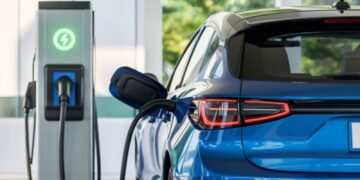
The EV3 arrives with a built-in North American Charging Standard port rather than requiring the owner to rely entirely on an adapter for NACS infrastructure. That is an increasingly important consideration as automakers and charging providers consolidate around the connector. Kia says the EV3 can charge from 10% to 80% in roughly half an hour under ideal circumstances. The 58.3-kWh battery was originally estimated at about 29 minutes, while the larger 81.4-kWh pack requires approximately 31 minutes under suitable DC fast-charging conditions.
Those numbers should not be interpreted as a promise that every highway charging stop will last half an hour. Kia specifically warns that actual speeds depend on battery temperature, charger capability, state of charge, weather and other conditions, and that a station’s advertised peak output may exceed the rate a vehicle actually receives. The EV3 uses a 400-volt electrical architecture rather than the higher-voltage architecture found in some more expensive EVs. Even so, its charging time keeps a long-distance stop within a relatively conventional meal-or-coffee-break window.
The Federal EV Rebate Can Make Eligible Transactions More Competitive
The $36,995 MSRP is only part of the affordability equation. Transport Canada’s Electric Vehicle Affordability Program currently lists the 2027 EV3 Light FWD and numerous other EV3 trims as eligible battery-electric vehicles. For qualifying purchases or leases of at least 48 months in 2026, the federal incentive can reach $5,000. Shorter leases receive smaller amounts, including $3,750 for 36 months, $2,500 for 24 months and $1,250 for 12 months.
There is an important condition. Eligibility is based on the final transaction value, which generally must not exceed $50,000 for vehicles subject to the program’s affordability cap. Transport Canada also cautions that appearing on its vehicle list does not guarantee that every transaction will qualify. Options, fees and the negotiated selling price can matter, particularly on higher EV3 trims. At the lower end of the lineup, however, the combination of a sub-$37,000 MSRP and a potential $5,000 federal incentive puts the EV3 into a price band that considerably expands the pool of households able to seriously consider a new EV.
EV3 Completes Kia’s Three-Model Push Into Lower-Priced EVs
Kia’s Canadian strategy becomes clearer when the EV3 is viewed beside the EV4 and EV5. The 2026 EV4 arrived as an electric compact sedan starting at $38,995, offering up to a Kia-estimated 552 kilometres in its long-range configuration. The larger EV5 SUV was announced from $43,495, giving families a more conventional compact-SUV package. The EV3 now undercuts both of them and gives Kia an entry in the smaller crossover category where Canadian buyers have increasingly concentrated their spending.
Together, the three models give the company several ways to address the same obstacle: electric vehicles have often cost considerably more upfront than comparable gasoline vehicles. Kia has chosen different body styles rather than trying to solve that problem with a single budget model. A commuter attracted to sedan efficiency can choose the EV4, a family wanting more cabin space can look toward the EV5, and a buyer wanting SUV styling with a smaller footprint can consider the EV3. Kia operates through nearly 200 Canadian dealers, giving those products conventional national retail reach.
The Timing Comes as Canada’s EV Market Tries to Recover
The EV3 is arriving after a difficult period for Canadian electric-vehicle sales. Statistics Canada reported that 169,972 zero-emission vehicles were sold nationally in 2025, down 35.7% from 2024. ZEVs accounted for approximately 8.7% of new motor-vehicle sales, compared with 13.8% a year earlier. The agency linked part of that decline to changes in federal and provincial purchase incentives, demonstrating how sensitive the market remained to affordability and government support.
There have since been signs of improvement. In May 2026, Canadians bought 18,308 new zero-emission vehicles, up 19.7% from May 2025. Their share of total new motor-vehicle sales increased to 9.6%, compared with 7.9% one year earlier. That does not mean Canada has returned to the rapid growth seen before incentive disruptions, but it does create a different backdrop for inexpensive new models. Automakers are no longer relying only on environmental enthusiasm. Increasingly, the competition is about monthly payments, usable range, charging convenience and whether an EV can work as an ordinary household vehicle.
Affordability May Be the EV3’s Most Important Technology
The EV3 still carries technology normally associated with more expensive electric vehicles. Depending on trim, Kia offers features such as nearly 30 inches of combined dashboard display area, wireless Apple CarPlay and Android Auto, available all-wheel drive, advanced driver-assistance technology and vehicle-to-load capability that can power compatible external equipment. The performance GT goes much further, producing a claimed 288 horsepower and 345 lb-ft of torque. Yet those specifications are probably not the most consequential part of the launch.
What makes this vehicle noteworthy is that the cheapest version starts close to the price of many mainstream combustion-engine crossovers rather than premium EV territory. The federal incentive can narrow the gap further for an eligible transaction. There will still be questions about winter range, insurance, home charging and resale value, and higher trims quickly become more expensive. But Canadian EV adoption increasingly depends on products that do not require consumers to pay a large technology premium. The EV3 is one of the clearest signs yet that competition is beginning to push that premium downward.