
















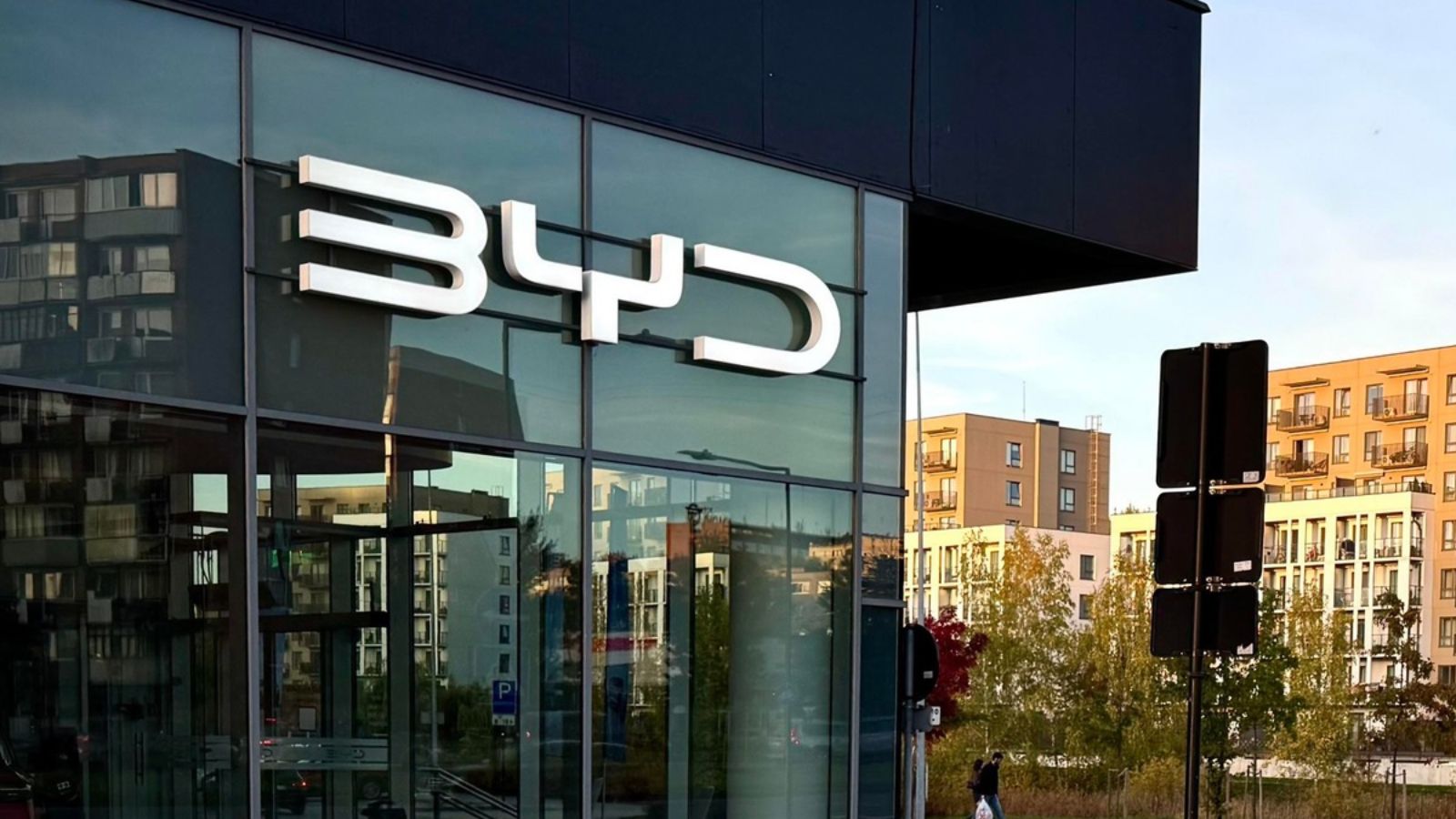
BYD is moving into territory once dominated by some of the world’s most exclusive automakers. Its new Yangwang Altior is a 5.6-metre, fully electric limousine aimed at the kind of customers who might otherwise consider a Rolls-Royce or Mercedes-Maybach. Unveiled in Abu Dhabi on November 7, the flagship combines elaborate craftsmanship, a four-motor drivetrain and a claimed driving range exceeding 1,000 kilometres. A reported US$311,500 price for a limited edition has added to the attention.
Yet the figures need context. The price is an expectation, not a finalized sticker, and the range comes from China’s CLTC testing cycle rather than an independent road test. What makes the Altior significant is not simply its specifications, but BYD’s attempt to redefine what an ultra-luxury Chinese car can be.
An Abu Dhabi Debut With a Global Message
The Altior made its world premiere on November 7 at Emirates Palace in Abu Dhabi, a setting more often associated with heads of state and high-end hospitality than new-car launches. Choosing the United Arab Emirates rather than China for the reveal underscored Yangwang’s international ambitions. The marque was established in November 2022 as BYD’s top-tier luxury division, and the Altior now sits above its U7 sedan, U8 SUV and U9 supercar in prestige and positioning.
The name is part of that message. Altior comes from the Latin word for “higher,” while its Chinese name, Dingyao, refers to the ancient ceremonial bronze vessel known as a ding and an idea of radiance. BYD says the styling took three years to develop, deliberately drawing on Chinese cultural traditions rather than simply copying European luxury conventions. At the unveiling, executive vice-president Stella Li framed the car as a statement about the future of Chinese luxury. The real challenge will be persuading buyers accustomed to famous European badges that a newer name belongs in the same conversation.
The $311,500 Price Comes With Important Fine Print
The eye-catching US$311,500 figure is linked to a particular version of the Altior, not to a confirmed starting price across the range. The four-seat Shanhe Dingyun limited edition has an expected price of 2.08 million yuan, according to Chinese-market reporting. Yangwang has opened reservations for that edition, with a 300,000-yuan deposit required in China. Its production is planned to be capped at just 399 examples worldwide, emphasizing exclusivity as much as affordability—or the lack of it.
Crucially, the 2.08-million-yuan figure remains provisional. BYD’s global unveiling described Executive and Bespoke editions, but did not publish a complete, final price list for either. A five-seat version is also expected later, outside the first reservation batch. That distinction matters because a headline price can easily be mistaken for what every customer will pay. Taxes, customization, destination charges and individual-market pricing could all change the eventual invoice. For now, the $311,500 number is best understood as an approximate U.S.-dollar equivalent of the anticipated limited-edition price, not a confirmed Canadian or American retail offer.
A 1,000-Kilometre Range Claim That Needs Context
BYD says the Altior’s second-generation Blade Battery can deliver more than 1,000 kilometres—over 621 miles—of all-electric driving range. That is a remarkable headline figure for a large limousine designed around passenger space and luxury equipment. The important qualification is the test standard: the company cites the China Light-Duty Vehicle Test Cycle (CLTC), in its combined-cycle form, rather than an independently verified highway drive or a North American government rating.
Range estimates produced under CLTC, Europe’s WLTP procedure and U.S. EPA testing are not interchangeable. Automotive comparisons have found that the difference varies substantially by vehicle, making any simple conversion unreliable. Conditions matter just as much outside the laboratory. Natural Resources Canada notes that higher speeds, temperature extremes, climate-control use and steep terrain can all shorten an electric vehicle’s range. For a chauffeur managing airport transfers, the advertised figure may provide reassurance; for a family planning a winter highway journey, it is no substitute for real-world data. Until independent tests emerge, 1,000 kilometres should be treated as BYD’s cycle-based claim, not a promise for every trip.
A Limousine Designed to Make an Entrance
There is nothing discreet about the Altior’s size. BYD lists a length of 5,600 millimetres, a width of 2,030 millimetres and a height of 1,590 millimetres, supported by a 3,500-millimetre wheelbase. Those proportions prioritize the rear passenger compartment and create the long, upright profile associated with traditional chauffeur-driven cars. Three different 21-inch wheel designs are planned, including polished disc-style wheels that reinforce the formal appearance.
The doors are just as theatrical. Conventional front doors open as far as 80 degrees, while rear-hinged coach doors swing through 90 degrees to create a wide entryway. Integrated umbrellas turn a rainy hotel arrival into a small ritual of its own. Up front, a large, ornament-like grille draws inspiration from Chinese ceremonial objects, while 12 rotating lighting elements perform a welcome sequence as the owner approaches. These features recall the sense of occasion cultivated by Rolls-Royce, but Yangwang has wrapped them in its own visual language. The question is whether that dramatic presence also feels refined in daily use.
Chinese Craftsmanship Is the Centrepiece of the Cabin
Inside, BYD is trying to make the Altior distinctive through materials that have cultural meaning, rather than relying only on larger screens. Yellow Hetian jade is hand-polished for the air vents, while Suzhou embroidery appears in the upholstery alongside cloud-inspired perforations. Traditional silk-thread techniques are used to form delicate patterns. Elsewhere, the materials include full-grain semi-aniline leather, selected natural woods, pure-wool floor mats and actual metal switches.
The attention extends to small details that occupants might notice only after several journeys. BYD says 48 decorative components are distributed across 11 positions in the interior, and their optical appearance went through more than 30 design iterations. Engineers even tested metal parts by gently tapping them with hammers to assess their sound and tactile character. That is an unusual detail in a business better known for battery chemistry and manufacturing scale. It also reflects an important truth about ultra-luxury buyers: a seat adjustment switch or door handle can shape impressions as much as horsepower. Whether the execution matches the ambition will depend on the production cars people eventually inspect and ride in.
Rear Passengers Get a Private Lounge on Wheels
The launch version uses four individual seats rather than the more conventional five-passenger arrangement, giving two rear occupants their own space on either side of a central console. BYD quotes 354 millimetres of knee room and 1,209 millimetres of rear legroom. One touch can fold the front passenger seat forward to expand the executive passenger’s view. The reclining rear chairs include leg rests and aviation-inspired zero-gravity positioning, plus mechanical massage systems with four ball-shaped massage heads.
The rest of the cabin is arranged to make time in traffic feel less like time lost. A relaxation setting coordinates the seating position, blinds, lighting, fragrance and sound. There is a 39-speaker Dynaudio system, a powered 21.4-inch overhead display capable of screen sharing during conference calls, and refrigerators at both ends of the cabin. The rear 5.5-litre compartment can cool or warm its contents, while a 532-litre luggage area provides room for travel bags. The pitch is easy to understand: the person being driven matters as much as the person holding the steering wheel.
Four Motors Bring Unusual Capabilities
Under its formal bodywork, the Altior uses BYD’s e4 platform with four independently controlled electric motors. The company says the system adjusts the driving force at each wheel more than 100 times per second. That level of control is intended to help keep the vehicle stable as grip and road conditions change, and it supports a dramatic tank-turn manoeuvre that can rotate the car in a tight space. Such tricks are attention-grabbing, especially on a vehicle roughly the length of a small room.
BYD also describes stability support during a high-speed tyre blowout and emergency flotation capability if the sedan accidentally enters water. Those are manufacturer-described safety features, not reasons to drive through flooded roads or assume any hazard can be overcome. Alongside them sits the next-generation DiSus fully active body-control system, which monitors the road ahead and adjusts suspension responses to reduce unpleasant movement. For a limousine, the most important outcome may be less spectacular than a tank turn: a calmer ride over uneven streets, without forcing rear passengers to brace for every bump.
Fast Charging and Assisted Driving Still Leave Questions
The Altior uses a second-generation Blade Battery and BYD’s FLASH Charging technology, but the company has not released all the numbers a potential owner would need. Its global announcement did not give a final battery capacity, a precise charging time or a confirmed peak charging rate for the limousine. Earlier speculation about solid-state batteries also should not be mistaken for the official specification. At launch, BYD specifically identified its second-generation Blade technology.
The electronics package is ambitious in its own right. BYD says the Altior is its first model to receive the company’s 4-nanometre Xuanji A3 assisted-driving chip, paired with the God’s Eye A system. Announced functions include parking assistance and navigation assistance on highways, expressways and urban roads, including journeys between parking spaces. These are driver-assistance claims, not proof of fully autonomous operation, and availability can depend on local rules and software. Ultra-fast charging and intelligent driving may strengthen the Altior’s case, but detailed specifications, independent demonstrations and clear descriptions of driver responsibilities will matter far more than impressive terminology.
Rolls-Royce Has More Than Specifications to Defend
The Altior’s styling and rear-seat focus make comparisons with the Rolls-Royce Ghost and Phantom inevitable. Its challenge also extends to the Mercedes-Maybach S-Class and Bentley Flying Spur, where comfort, craftsmanship and personalization carry tremendous weight. Rolls-Royce already offers an all-electric model, the Spectre, so BYD is not introducing battery power to a market that has never seen it. The Ghost, meanwhile, continues to draw on a V12 engine and a long-established tradition of bespoke appointments.
That creates an interesting divide. Yangwang can compete by publishing exceptional numbers, adopting advanced chassis systems and adding distinctive details that position it as an alternative to established ultra-luxury marques. But the oldest marques sell more than a technical specification sheet. Buyers may care about the quietness of the cabin after years of use, the feeling of the switchgear, the availability of skilled service and the confidence of commissioning a highly personalized vehicle. BYD has given prospective customers a reason to look. Convincing them to change allegiances will require a much longer demonstration.
The Hardest Test Starts After the Reveal
Unveiling the Altior in Abu Dhabi was not a random exercise in publicity. Yangwang already operates in the United Arab Emirates through Al-Futtaim Electric Mobility, which sells the U8 SUV and has established local showroom and service operations. That gives the brand a regional foothold as it courts buyers who may already have several high-end vehicles in their garages. Initial Altior reservations, however, are tied to the limited edition in China, and BYD has not announced a complete international delivery schedule or Canadian availability in its launch materials.
The scale of the challenge becomes clearer in recent sales figures. BYD sold 490,168 new-energy vehicles across its brands in October 2026, but only 258 passenger cars came from Yangwang. The flagship therefore serves a different purpose from BYD’s high-volume models: it is designed to attract attention, demonstrate technological capability and reshape perceptions of the company. Whether that works will depend on things less photogenic than a glittering grille—final pricing, dependable servicing, verified range, charging access and the experience of the first owners. The Altior has made its entrance; the luxury-market verdict remains to be written.