


















• About
  • Contact
AutoIgloo
  • News & Trends
    Porsche Profit Rebounds From €40 Million to €1.74 Billion After Costly Electric-Car Strategy Reset

    Porsche Profit Rebounds From €40 Million to €1.74 Billion After Costly Electric-Car Strategy Reset

    Mercedes Slashes 2026 Car Profit-Margin Forecast to 2%–3% as Chinese Competition Squeezes German Automakers

    Mercedes Slashes 2026 Car Profit-Margin Forecast to 2%–3% as Chinese Competition Squeezes German Automakers

    GM Readies New Gas and Duramax Engines for Silverado HD and Sierra HD Ahead of November Production

    GM Leaves the New York Stock Exchange for Nasdaq as Automaker Pushes Deeper Into Self-Driving Technology

    Chinese Automaker Great Wall Picks Bulgaria for 50,000-SUV Factory as Tariffs Reshape Global Car Production

    Chinese Automaker Great Wall Picks Bulgaria for 50,000-SUV Factory as Tariffs Reshape Global Car Production

    Canada-U.S. Auto Tariff Talks Go Down to the Wire With 50% Duties Three Days Away

    U.S. and Canada Negotiate Auto Tariff Relief as Trump’s 50% Deadline Approaches

    Tesla Falls Outside Top 10 in EV Innovation Ranking as Geely, Volkswagen and BYD Lead

    Tesla Quietly Raises Canadian Model 3 Range to 584 km—But Buyers Still Can’t Order It

  • Car Reviews
    Mitsubishi Outlander Review: Is It Still the Underrated Family SUV?

    Mitsubishi Outlander Review: Is It Still the Underrated Family SUV?

    19 Cars With Windshields That Crack Constantly on Canadian Highways

    Subaru Forester vs Toyota RAV4: Which SUV Is Better for Canadian Winters?

    20 Cars Canadians Should Avoid If They Hate Expensive Windshield Replacements

    Hyundai Tucson vs Kia Sportage: Which Compact SUV Is the Better Everyday Buy?

    BYD, CATL and Xiaomi Are in the Mix for Xi’s Washington Trip as Canada and U.S. Split on Chinese EV Access

    Toyota RAV4 Plug-In Hybrid vs Regular Hybrid: Which One Should Canadians Buy?

    17 Vehicles That Are Quietly Getting Crushed by Insurance Costs in Canada

    Honda CR-V Hybrid Review: The Family SUV That Plays It Safe

    2026 Toyota RAV4 vs Honda CR-V: Which SUV Makes More Sense for Canadians?

    2026 Toyota RAV4 vs Honda CR-V: Which SUV Makes More Sense for Canadians?

  • Buying Guides
    Mitsubishi Outlander Review: Is It Still the Underrated Family SUV?

    Mitsubishi Outlander Review: Is It Still the Underrated Family SUV?

    16 Used SUVs That Suddenly Don’t Look Like Smart Buys in Canada

    Nissan Rogue vs Honda CR-V: Which SUV Feels Better After the Test Drive?

    19 Cars With Windshields That Crack Constantly on Canadian Highways

    Subaru Forester vs Toyota RAV4: Which SUV Is Better for Canadian Winters?

    Mazda CX-5 vs Mazda CX-50: Which One Feels More Premium for the Money?

    Mazda CX-5 vs Mazda CX-50: Which One Feels More Premium for the Money?

    17 Vehicles That Are Quietly Getting Crushed by Insurance Costs in Canada

    Honda CR-V Hybrid Review: The Family SUV That Plays It Safe

    18 Cars With Parts Prices So Wild They’re Becoming Hard to Own in Canada

    Is the New Toyota RAV4 Still the Safest Bet in Canada?

  • Comparisons
    19 Cars With Windshields That Crack Constantly on Canadian Highways

    Subaru Forester vs Toyota RAV4: Which SUV Is Better for Canadian Winters?

    21 Vehicles With the Best Real-World Fuel Economy in Canada (Not Just the Sticker)

    Toyota Corolla Cross vs Honda HR-V: Which Small SUV Is Less Compromised?

    20 Cars Canadians Should Avoid If They Hate Expensive Windshield Replacements

    Hyundai Tucson vs Kia Sportage: Which Compact SUV Is the Better Everyday Buy?

    BYD, CATL and Xiaomi Are in the Mix for Xi’s Washington Trip as Canada and U.S. Split on Chinese EV Access

    Toyota RAV4 Plug-In Hybrid vs Regular Hybrid: Which One Should Canadians Buy?

    Honda Asked Suppliers for 30% Parts Cost Cuts as $9.4-Billion Savings Drive Hits Global Supply Chain

    Why Some Buyers Are Choosing Older Hondas Over Newer SUVs

    25 EV Charging Mistakes Canadians Make in March (That Wreck Range)

    Why Some Canadians Are Choosing Hybrids Over Full EVs Again

  • EVs & Hybrids
    BYD, CATL and Xiaomi Are in the Mix for Xi’s Washington Trip as Canada and U.S. Split on Chinese EV Access

    Toyota RAV4 Plug-In Hybrid vs Regular Hybrid: Which One Should Canadians Buy?

    Geely Auto’s Core Profit Jumps 46% as Chinese EV Expansion Accelerates — With Canada Now Opening to Geely-Owned Lotus

    Geely Confirms Canadian Vehicle Sales for 2027 as Chinese Automakers Challenge Established Brands

    18 Cars That Will Feel Dated Fast as New Chinese EVs Arrive

    12 EVs Now Price Below $41,000 in Canada—Fiat 500e Falls Under $30,000 With Rebate

    The Used EV Question Canadians Should Ask Before Buying One

    The Used EV Question Canadians Should Ask Before Buying One

    Why Some EV Owners Are Getting Sticker Shock From Home Charging Setups

    Why Some EV Owners Are Getting Sticker Shock From Home Charging Setups

    20 Signs Your Car Battery Is About to Leave You Stranded

    Canadian Auto Jobs Become a Central Fault Line as Ottawa Reveals Why It Rejected U.S. Vehicle Terms

  • More
    • Pricing & Deals
    • Winter Driving
    • Ownership & Maintenance
No Result
View All Result
AutoIgloo
No Result
View All Result

Home » News & Trends

Mercedes Slashes 2026 Car Profit-Margin Forecast to 2%–3% as Chinese Competition Squeezes German Automakers

Nate Brewer by Nate Brewer
October 27, 2026
Reading Time: 7 mins read
A A
Photo Credit: Shutterstock

Photo Credit: Shutterstock

465
SHARES
1.5k
VIEWS
Share on FacebookShare on Twitter

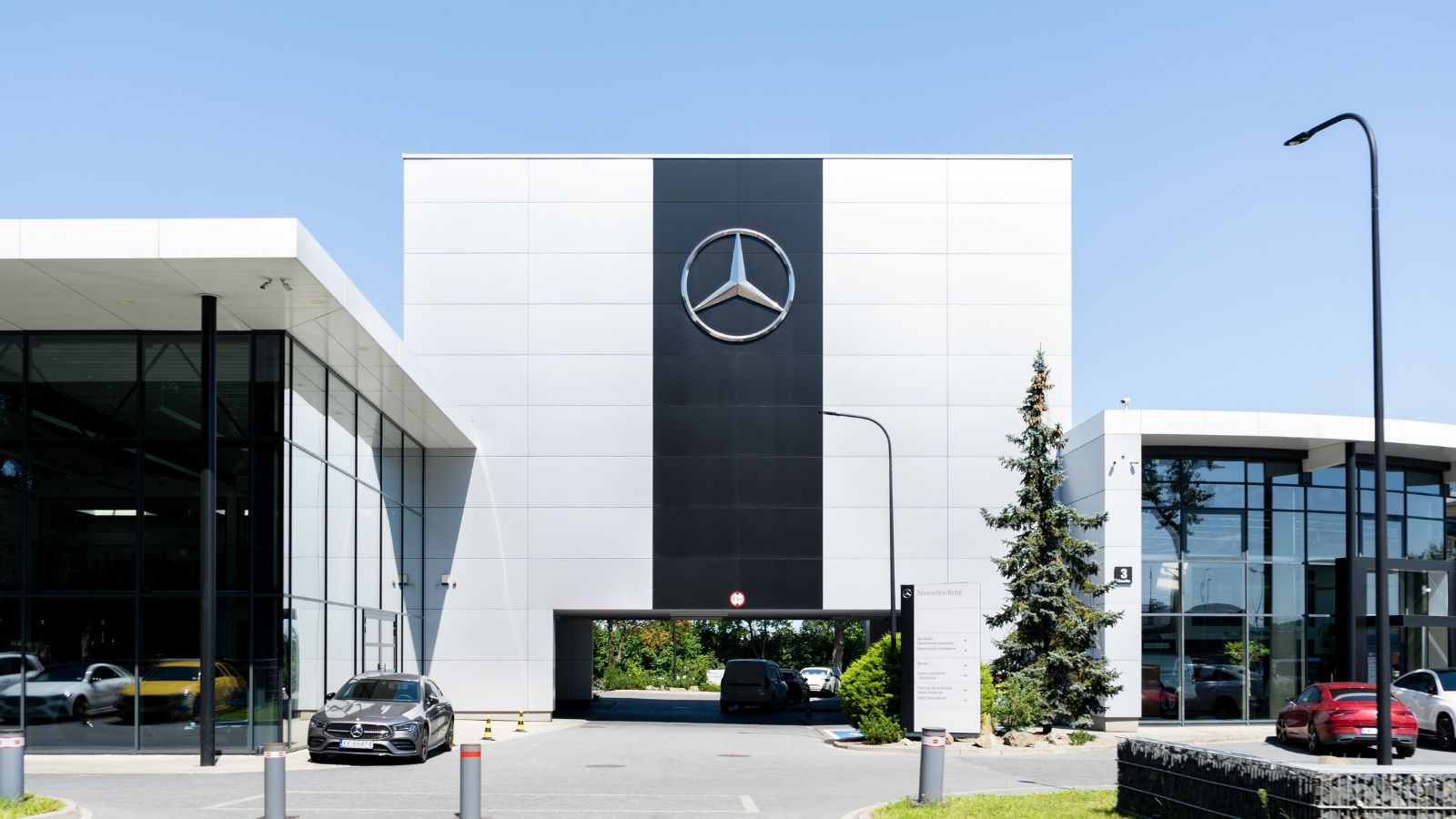
Mercedes-Benz has delivered a stark reminder that even the world’s most recognizable luxury car brands are not immune to financial pressure. On October 27, 2026, the German automaker lowered its full-year profit-margin forecast for its core passenger-car business to just 2%–3%, down from its previous expectation of 3%–5%.

The downgrade comes as weakening demand in China, fierce competition from domestic manufacturers, and rising production costs threaten profitability. Despite encouraging electric-vehicle sales in other markets, Mercedes is struggling to defend the premium pricing that has long supported its business. With BMW and Volkswagen facing similar challenges, the warning highlights a fundamental shift in the global automotive industry, where traditional German engineering prestige is increasingly being tested by Chinese competitors offering advanced technology at competitive prices.

A 2%–3% Margin Is More Than a Small Adjustment

Mercedes’ new target concerns adjusted return on sales at its passenger-car division, a measure of adjusted operating profit relative to revenue. At 2%–3%, the forecast implies roughly €2–€3 in adjusted operating earnings for every €100 of car sales. The previous range was €3–€5. The percentages may look modest, but the reduction matters for a manufacturer investing heavily in electric vehicles, digital systems and new models. The revised target suggests those investments must now be supported by a substantially thinner operating cushion.

The comparison with recent years is revealing. Mercedes-Benz Cars achieved a 5.0% adjusted margin in 2025, already down from 8.1% in 2024. Adjusted operating profit at the division fell from about €8.7 billion to €4.8 billion over that period. With the 2026 range now lower still, every price concession and additional manufacturing expense becomes harder to absorb. Mercedes is not predicting that its car division will lose money. It is warning that the profitability once associated with selling premium vehicles has narrowed dramatically.

A 31% Sales Plunge Shows How Much China Matters

The clearest evidence of the problem is in Mercedes-Benz’s Chinese delivery figures. In the third quarter of 2026, the company sold 86,800 passenger cars in China, a 31% decline from the same period a year earlier. Across the first nine months, Chinese deliveries totaled 297,000, down 29%. China still accounted for more than one-fifth of worldwide Mercedes-Benz Cars deliveries in the latest quarter, making its weakness difficult for the rest of the business to absorb.

The impact reaches familiar models, not just experimental electric vehicles. Mercedes said the GLC SUV and E-Class together represented nearly two-thirds of its Chinese passenger-car sales and held up better than the broader market. Yet even that resilience could not prevent the overall plunge. For a luxury buyer comparing a GLC with an increasingly wide range of domestic alternatives, the decision is no longer automatically settled by the three-pointed star. Fewer deliveries reduce revenue opportunities and can make costly manufacturing and retail networks less efficient.

Chinese Competitors Are No Longer Just Selling Cheap Cars

China’s challenge goes far beyond one disappointing quarter. According to the International Energy Agency, electric vehicles, including plug-in hybrids, accounted for nearly 55% of new-car sales in China in 2025. Chinese manufacturers supplied about 60% of electric cars sold worldwide that year. They have built scale in batteries, vehicle electronics and manufacturing while expanding the range of models available to buyers. The result is a market in which local competitors can combine attractive prices with features that once distinguished imported luxury cars.

Mercedes executives have acknowledged the shift. At the Beijing auto show in April, chief executive Ola Källenius said the company would avoid a damaging price war, even if that meant surrendering some lower-margin sales. He also described younger Chinese consumers as more willing to consider different brands. BYD and other Chinese manufacturers are moving beyond affordable cars toward premium territory. For Mercedes, preserving its appeal means competing on software, driver-assistance technology and customer experience without sacrificing the pricing discipline needed to earn a profit.

Even Mercedes’ Most Expensive Models Are Feeling the Pressure

Mercedes has long counted on its most expensive vehicles to reinforce the brand’s image and support its premium positioning. Yet the Top-End category, which includes Mercedes-AMG and Maybach models, the G-Class and S-Class, sold 53,900 vehicles worldwide in the third quarter. That was a 21% decline from a year earlier, much steeper than the 8% drop across the passenger-car division. These vehicles represented 13.2% of quarterly car deliveries, highlighting the pressure on an important part of the model mix.

There is a distinction between weakened demand and a permanent loss of appeal. Mercedes attributed the Top-End decline partly to China’s difficult market and partly to model changeovers. It also reported that S-Class sales outside China more than doubled compared with the second quarter as the updated model reached buyers. For a company whose business case relies on distinctive high-end products, those conflicting signals matter. Fresh models may revive showroom traffic, but restoring the mix of profitable sales will be difficult if Chinese customers continue moving toward alternatives.

Record Electric-Vehicle Sales Offer a Glimmer of Hope

Not every Mercedes sales number points downward. Mercedes-Benz Cars delivered a record 68,400 fully electric vehicles in the third quarter, up 61% from a year earlier and 29% from the previous quarter. Battery-electric models made up 16.8% of passenger-car deliveries worldwide. When plug-in hybrids are included, one in four Mercedes cars sold during the period had a charging plug. Electric GLC, CLA, GLB and GLA variants were booked out in Europe for the remainder of 2026, with orders extending into 2027.

That demand is an important counterweight to the gloomy profit outlook. Mercedes said the electric GLC was a major growth driver, while European battery-electric deliveries climbed 78% year on year. The wider market is shifting, too: battery-electric cars accounted for 22.7% of new EU registrations in the first nine months of 2026, according to industry association ACEA. But stronger EV volumes do not by themselves prove stronger earnings. Mercedes still has to translate product interest into sustainable margins after manufacturing, development and sales costs.

Stronger Sales in Europe and America Cannot Offset China’s Decline

Mercedes is finding buyers in markets outside China, but the growth is not large enough to reverse the global decline. Third-quarter passenger-car deliveries rose 5% in Europe to 168,700, including a 13% increase in Germany. North American sales grew 4% to 83,200, while U.S. deliveries increased 6%. The brand refreshed its American SUV lineup in September with the latest GLE, GLE Coupé and GLS reaching dealerships, showing that product updates are still capable of bringing customers into showrooms.

The contrast with China is striking. Across all regions excluding China, Mercedes-Benz Cars sales increased just 1% in the quarter, while global sales fell 8% to 407,200 vehicles. That gap illustrates why healthy markets cannot simply compensate for lost Chinese business. A vehicle bought in Munich or Los Angeles does not automatically replace one that would have been sold in Beijing; customers, model preferences and competitive pressures differ. Geographic diversification helps Mercedes withstand regional shocks, but the figures show that China’s downturn remains the decisive drag.

Higher Fourth-Quarter Costs Deepen the Problem

China is not the only force behind the forecast change. In its October 27 notice, Mercedes said it anticipates higher costs in the final three months of 2026, including more expensive materials. A luxury vehicle combines complex electronics, batteries, engines, interiors and safety systems; changes in component costs are therefore hard to ignore. Pressured sales prices make that squeeze worse: when customers demand greater value, passing rising factory costs immediately through to sticker prices becomes increasingly difficult. Mercedes did not disclose a detailed breakdown of the expected fourth-quarter increase, so attributing it to any single commodity would be speculative.

The warning reaches beyond the passenger-car margin. Management now expects group earnings before interest and taxes to be around the 2025 level of €5.82 billion rather than significantly higher, as forecast earlier. The revision comes despite more than €3.5 billion in profit benefits from efficiency measures at Mercedes-Benz Cars in 2025. Cost cutting still matters, but it cannot fully compensate when an enormous customer market retreats at the same time that production inputs become more expensive.

Cash Flow and the Market Reaction Reveal Investor Anxiety

The third-quarter numbers reveal why investors reacted sharply. Mercedes reported preliminary group operating earnings of €1.77 billion, above analysts’ €1.6 billion consensus, and a 2.5% adjusted Cars margin, fractionally ahead of the expected 2.4%. Those figures might ordinarily allow management to point to resilience. Yet industrial free cash flow totaled only €172 million, far below the €422 million consensus, showing that accounting earnings and cash generation are telling different stories.

The company also downgraded its full-year industrial free-cash-flow forecast from slightly below the 2025 level to significantly below it. Last year’s industrial free cash flow was €5.4 billion. Mercedes shares dropped as much as 5.5% during European trading on October 27 as investors processed the warning. The profitable Vans and Financial Services businesses provide some stability, and their annual margin and return-on-equity guidance was unchanged. But healthy pockets elsewhere in the group cannot eliminate concerns about the cash available to fund the next generation of vehicles.

BMW and Volkswagen Face the Same Pressure—but Different Numbers

Mercedes is the latest member of Germany’s luxury-industrial establishment to acknowledge that conditions have deteriorated. In June, BMW cut its projected 2026 automotive operating margin to 1%–3%, from 4%–6%, citing China among several major pressures. Volkswagen followed in September, forecasting a group operating margin of no more than 1% rather than the prior 4%–5.5%. Its outlook also reflects around €10 billion of special charges, including a major Porsche goodwill impairment, so the percentages cannot be compared directly with Mercedes’ adjusted car-division forecast.

The problem is also appearing closer to home. An October report from DBS, using European automobile industry figures, calculated that BYD, SAIC, Chery and Leapmotor nearly doubled their combined EU new-car-registration share to 6.6% in the first half of 2026 from 3.4% a year earlier. German manufacturers must therefore protect their Chinese business while facing increasingly capable Chinese brands in Europe. The struggle is not simply about selling more vehicles; it is also about earning a satisfactory return on every sale.

New Models, Local Technology and a Difficult Road Back

Mercedes is responding with the biggest product launch program in its history, planning more than 40 new or updated models through 2027. In China, the company has outlined seven China-exclusive models across 2025–2027 and driver-assistance technology co-developed with local specialist Momenta. Locally tailored vehicles are already reaching customers: Mercedes introduced the electric GLC L in July and a locally produced GLE L SUV in September. The intention is clear: preserve the feel of a Mercedes while meeting expectations shaped by China’s fast-moving technology market.

The second half of the response is financial discipline. Mercedes has outlined plans to cut production costs per vehicle by roughly 10% from 2027 compared with 2024, helped by automation, leaner operations and supplier savings. Its full third-quarter report is scheduled for October 28, a day after the profit warning, and should provide more context for a difficult end to 2026. The test ahead is whether fresh vehicles, stronger localization and lower costs can restore margins without compromising the qualities that make a premium badge valuable.


Recommended.

The EV Charging Habit That Can Annoy Everyone Around You

Plug-Free EV Charging Arrives With an 11-kW Parking Pad Built to Work at –30°C

September 15, 2026
Why Some Drivers Regret Buying Big Wheels and Low-Profile Tires

20 Signs Your Tires Are Telling You Something Is Wrong

August 12, 2026

Trending.

Canada’s Ballard Puts a 250,000-Mile Performance Guarantee Behind Hydrogen Buses

Canada’s Ballard Puts a 250,000-Mile Performance Guarantee Behind Hydrogen Buses

October 2, 2026
Canada’s Auto Industry Says Tariff Fight Has Already Cost the Sector More Than $100 Billion

Trump’s 50% Canada Auto-Tariff Threat Is Now Forcing Automakers to Plan Around a January 1 Deadline

September 27, 2026
10 Reasons the Canadian Car Market Feels Different Heading Into Summer

Canadian Auto Sales Rise 3.4% for a Fourth Straight Month—but 2026 Still Trails Last Year

October 3, 2026
PBO Warns U.S. Tariff War Threatens Up to 185,000 Canadian Jobs, With Auto Manufacturing Among Hardest Hit

PBO Warns U.S. Tariff War Threatens Up to 185,000 Canadian Jobs, With Auto Manufacturing Among Hardest Hit

October 21, 2026
16 Cars That Could Be Hit Hardest by Canada’s New Price Pressures

Ford Says F-150 Production Is Back—but Parts Shortage Will Still Hit Third-Quarter Shipments

October 1, 2026
  • About
  • Contact
  • Privacy Policy
  • Disclaimer
  • Editorial Policies
  • Terms and Conditions
A Revir Media Group Website

2026 Autoigloo - © All rights reserved

No Result
View All Result
  • News & Trends
  • Car Reviews
  • Buying Guides
  • Comparisons
  • EVs & Hybrids
  • More
    • Pricing & Deals
    • Winter Driving
    • Ownership & Maintenance

2026 Autoigloo - © All rights reserved

This website uses cookies. By continuing to use this website you are giving consent to cookies being used. Visit our Privacy and Cookie Policy.